
Back in the day, actual human beings wired computer circuitry by hand. Then along came integrated circuits, and now the technology is so advanced that tens of billions of transistors can be put on a single chip no bigger than a dime. The complexity of these nanoscale integrated circuits makes it difficult to make the most of their design, says Zhuo Feng, an assistant professor of electrical and computer engineering at Michigan Technological University. That’s because software used to design computer chips hasn’t kept pace with the hardware in these emerging computing systems.
MORE
When you get sick, your physician may take a sample of your blood, send it to the lab and wait for results. In the near future, however, doctors may be able to run those tests almost instantly on a piece of plastic about the size of credit card.
MORE
 Michigan Technological University has named Dan Fuhrmann to the Dave House Professorship in Computer Engineering. Fuhrmann is chair of Michigan Tech’s Department of Electrical and Computer Engineering (ECE).
MORE
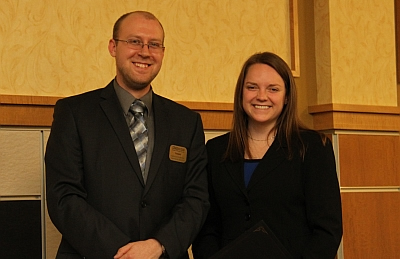
Kaitlyn Bunker, Electrical and Computer Engineering, First Place, Posters, presented by Howard Haselhuhn of GSG, High Dimension Droop Control for Wind Resources in DC Microgrids
The main events of this symposium were a Poster Presentation Session and a Research Colloquium sponsored
by the Graduate Student Government
There is a report for the Graduate Research Colloquium 2014 with photos and awards.
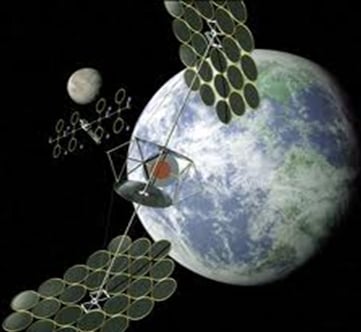 Michigan Technological University, in collaboration with professionals from NASA, the Naval Research Laboratory, and the Space Solar Power Institute, hosted a Space Solar Power (SSP) workshop to clarify the challenges facing SSP implementation. The workshop was held in conjunction with the IEEE International Conference on Wireless for Space and Extreme Environments at Baltimore, MD, November 7 – 9, 2013. Researchers from Industry and Academia of many countries including India, Japan, UK and USA participated in this event.
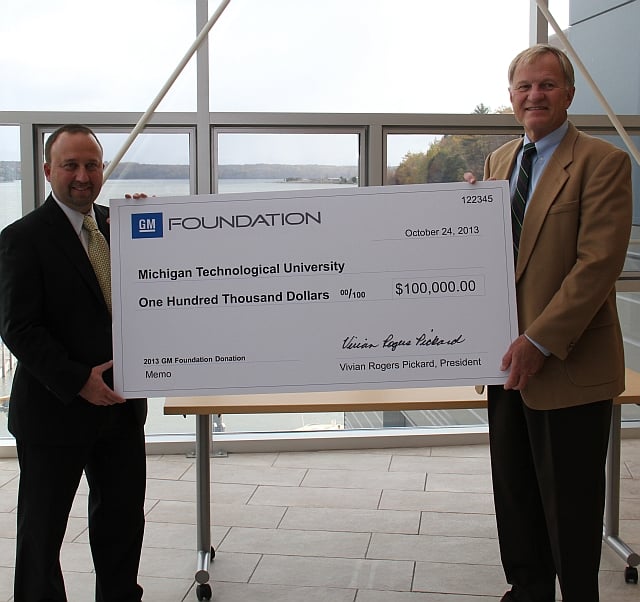
The General Motors Foundation has given Michigan Tech a $100,000 grant through its University Partner Program. The gift will support a variety of student activities, including the Advanced Hybrid Electric Vehicle (HEV) and Advanced Motorsports Enterprises, environmental engineering senior design projects, student groups and diversity programs.
Solar farms are a no-brainer in warm and sunny places, but what about in northern climes where snow can cover and even shut down the panels?
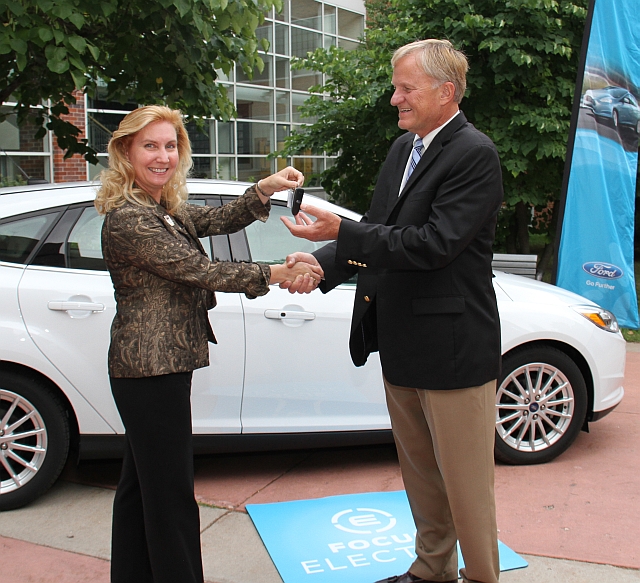
Ford Motor Company has donated a 2012 Focus all-electric vehicle to the Department of Electrical and Computer Engineering. The department is supplying the vehicle to the Hybrid Electric Vehicle Enterprise, providing students the opportunity to experience and work on state-of-the-art electric vehicle technology.
 The Women in Computer Science presented a Silicon Valley Careers panel discussion about careers in Silicon Valley on Wednesday, Sept. 18, 2013, at the Memorial Union Ballroom B.
Devyani Kamdar, Executive Director at Palo Alto Institute and Stephen Kahng, Founder and former Chairman and CEO Power Computing Corp., a Michigan Tech ’72 Electrical Engineering alumnus speaking at the panel discussion about careers in Silicon Valley sponsored by the Women in Computer Science. Stephen “Steve” Kahng, a computer engineer best known for his design of the Leading Edge Model D, founded the company in November 1993. Most recently, Mr. Kahng has been devoting most of his time to philanthropy and non-profit work. He is currently on the Board of the Hoover Institution at Stanford University and the Committee for Human Rights in North Korea. He is also an active Board member at the Asian Art Museum of San Francisco.
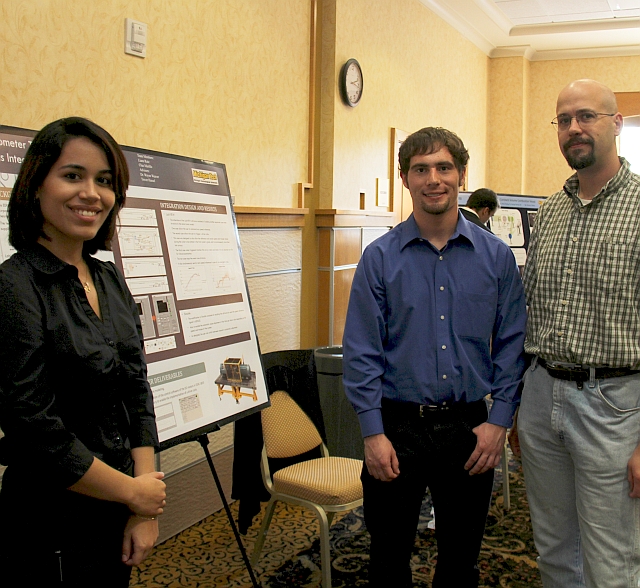 Students in the Research Experience for Undergraduates REU summer 2013 programpresented posters on research projects they have worked on over the summer. The project topics include: measurement of diesel emission particulate matter, experimental hybrid vehicle fuel system, lithium ion battery characterization and SOC measurement, hybrid vehicle dynamometer test stand development, heavy duty truck driving simulation, and measuring temperature variations in combustion vessels.