
As we start a new academic year, this column from the Chronicle of Higher Education reminds us that although it’s important to work hard, don’t forget to make time for yourself. We all need to participate in activities that bring us joy outside of academics.
Articles about professional development and seminar announcements.
Students interested in academic careers will find this article filled with helpful tips about interviewing with administrators. It discusses what to expect and how to prepare.
Companion articles discuss how to interview in general, and how to conduct a teaching demonstration.
Faculty interviews often take place over one or two days, and contain multiple components. Preparing for the interview properly and knowing what to expect can help you be more successful and less stressed.
The American Society of Engineering Education recently published a short article, “Tips for a Winning Research Proposal.” This clear article gives concrete tips and additional resources for common pitfalls to avoid when preparing a research proposal. For example, did you know that for some agencies, half of the research proposals are rejected simply because they didn’t adhere to the proposal requirements? These tips could help your proposal be funded. These tips can be applied to fellowship proposals as well as research proposals.
This article from Slate discusses the hiring process in the humanities. Although targeted to the humanities, the timing of job searches and the types of materials requested are similar for most academic job searches. Read this with a bit of thick skin, as the comments are fairly harsh about the whole process.
PhD students Ankit Vora (ECE) and Jephias Gwamuri (MSE) co-authored a paper with Joshua Pearce (MSE/ECE), Paul Bergstrom (ECE) and Durdu Guney (ECE) titled “Multi-resonant Silver Nano-disk Patterned Thin Film Amorphous Silicon Solar Cells For Staebler-Wronski Effect Compensation,” in the “Journal of Applied Physics.”
Published in Tech Today.
The J. Robert Van Pelt and John and Ruanne Opie Library is offering introductory EndNote workshops. EndNote is a citation management software that helps you easily create and manage bibliographic information and incorporate references into your writing.
Upcoming sessions will be held:
EndNote Basic I – Tuesday, September 16 , 5:00 p.m.
This workshop will introduce users to creating and managing references using the citation management software EndNote. No prior knowledge of EndNote is necessary. In this workshop participants will learn how to construct an Endnote Library in order to effectively organize references and create custom and smart groups to efficiently manage references.
EndNote Basic II – Thursday, September 25, 6:15 p.m.
This workshop will introduce users to incorporating EndNote Library citations into a written document (MS Word). Attending EndNote Basic I or prior knowledge of building and managing an EndNote Library is recommended. In this workshop participants will learn how to successfully incorporate Endnote Library references into their writing process (MS Word), and locate, identify, and import specialized output styles.
Seating for these workshops is limited and registration is required. To register please visit the library’s Workshops calendar.
Our instruction rooms have EN X7 on Windows workstations. Attendees may bring their own laptops with EN X7 downloaded prior to the session. Visit the library’s Citation Support page to download.
The Department of Computer Science is offering local students free, hands-on instruction in the basics of computer programming and computer science.
Starting Sept. 13, Copper Country Programmers meets from 11 a.m. to 1 p.m. on Saturdays during the academic year at the Van Pelt and Opie Library. Computer science faculty and students will teach the fundamentals of programming, starting with simple languages like HTML and BASIC and progressing to the well known and widely used Java language.
Graduate students Ankit Vora (ECE) and Jephias Gwamuri (EMSE) co-authored “Exchanging Ohmic Losses in Metamaterial Absorbers with Useful Optical Absorption for Photovoltaics, in Scientific Reports” with Anand Kulkarni, Joshua Pearce (MSE/ECE) and Durdu Güney (ECE). It is available online at Scientific Reports.
Published in Tech Today.
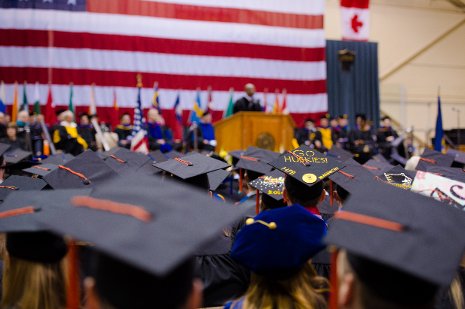
On campuses across the country, students are ascending one side of a stage, shaking hands, and descending as graduates, careers and experiences and possibilities laid out before them.
These are a few snapshots of one. But not just one. Rebecca Miner is finishing her third Tech degree today, a doctorate in Rhetoric and Technical Communication. Her family is seated in a skybox in the arena while she’s up near the stage with the rest of the newly minted PhDs. It’s quiet in the arena. Warm. The only constant sound, aside from the voices calling names, is the sound of camera shutters capturing every moment ten times over.
Read the full news story.
Published in Tech Today by Kevin Hodur, content specialist
Michigan Tech has given its 2014 Bhakta Rath Research Award to two scientists who have developed a fast, effective and inexpensive way to purify synthetic DNA and peptide molecules.
Their discovery could ultimately be used to heal. Peptides have the potential to fight some of the most intractable diseases, and DNA is a critical element of gene therapy.
Read the full news story.
Published in Tech Today by Marcia Goodrich, senior content specialist