Search Results for "thesis and dissertations acrobat tips"

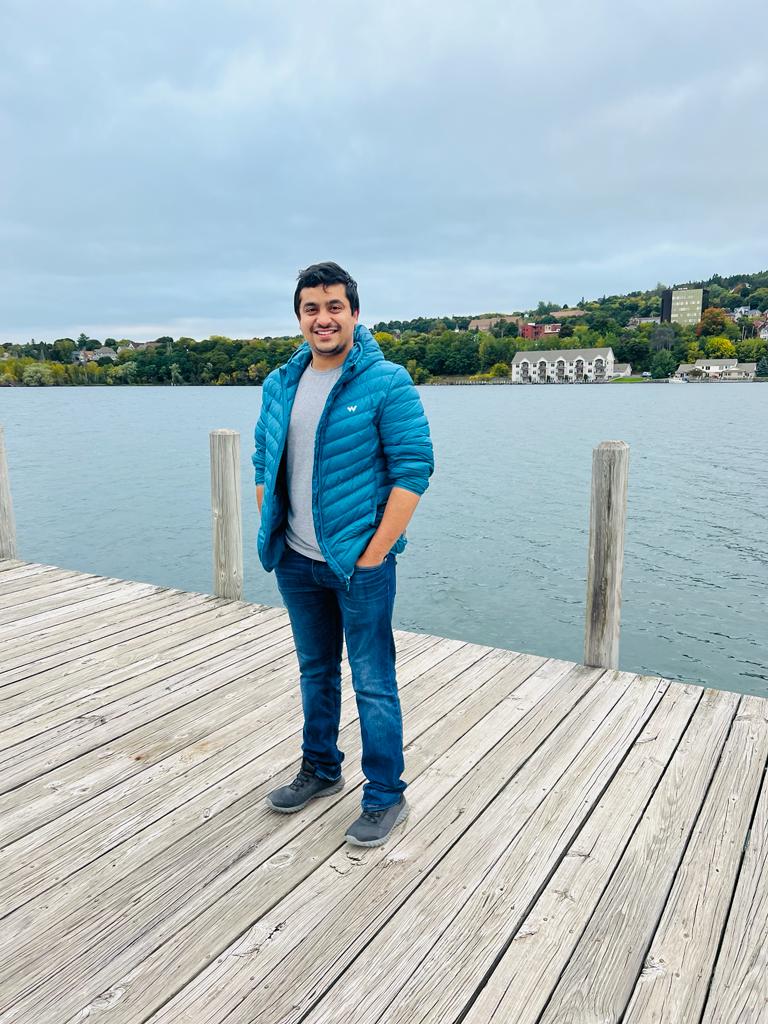
Doctoral Finishing Fellowship – Summer 2024 Recipient – Sam Groetsch

Samuel Groetsch standing in front of a wall, indoors
Sam Groetsch – Physics

Ever since my freshman year of high school when another older student approached me to join a physics club sponsored by Fermilab which focused on cosmic ray air showers, I’ve been fond of both the theoretical and experimental side of physics. It is quite the coincidence, or perhaps the exact opposite, that my research now focuses on detecting some of the highest energy gamma-ray air showers with HAWC.

After attending a very large high school in a suburb of Chicago, I decided to apply to Tech after a family friend recommended the school and I immediately enjoyed the smaller and closer-knit feel of Tech. I did both my undergraduate (B.S. in Physics and B.S. in Computational Math) and my graduate studies at Tech and the end of my academic journey with Tech is a very bittersweet moment for me. My Ph.D. thesis is mostly focused on using gamma-rays detected by HAWC over nearly a decade to create a catalog of some of the most extreme galactic particle accelerators like supernova remnants, pulsars, and micro-quasars. Catalogs historically have provided useful information to both theorists and other experiments to help guide and accelerate research in and beyond the field of astrophysics. To help create this catalog and assist future analysis work in the HAWC collaboration I developed a software framework to automate source finding in the HAWC dataset.

I want to thank many different organizations and people who have helped me throughout my university journey. First, the Graduate Dean Awards Advisory Panel for providing their wonderful support to help me finish strong. Second, my advisor Prof. Huentemeyer along with our research group for the invaluable support they’ve provided to me during my Ph.D. studies. Third, the physics department as a whole because without their support both personally and fiscally throughout both my undergrad and grad experience I would not have made it to where I am today.

DOE Office of Science Graduate Fellowships

The Department of Energy (DOE) Office of Science (SC) has established the DOE Office of Science Graduate Fellowship ( DOE SCGF) program to support outstanding students to pursue graduate training in basic research in areas of physics, biology, chemistry, mathematics, engineering, computational sciences, and environmental sciences relevant to the Office of Science and to encourage the development of the next generation scientific and technical talent in the U.S.

The Fellowship award provides partial tuition support, an annual stipend for living expenses, and a research stipend for full-time graduate study and thesis/dissertation research at a U.S. academic institution for three years.

Application deadline is November 30th

Please email jglehman@mtu.edu if you are interested in applying.

Doctoral Finishing Fellowship – Spring 2022 Recipient – Upendra Yadav

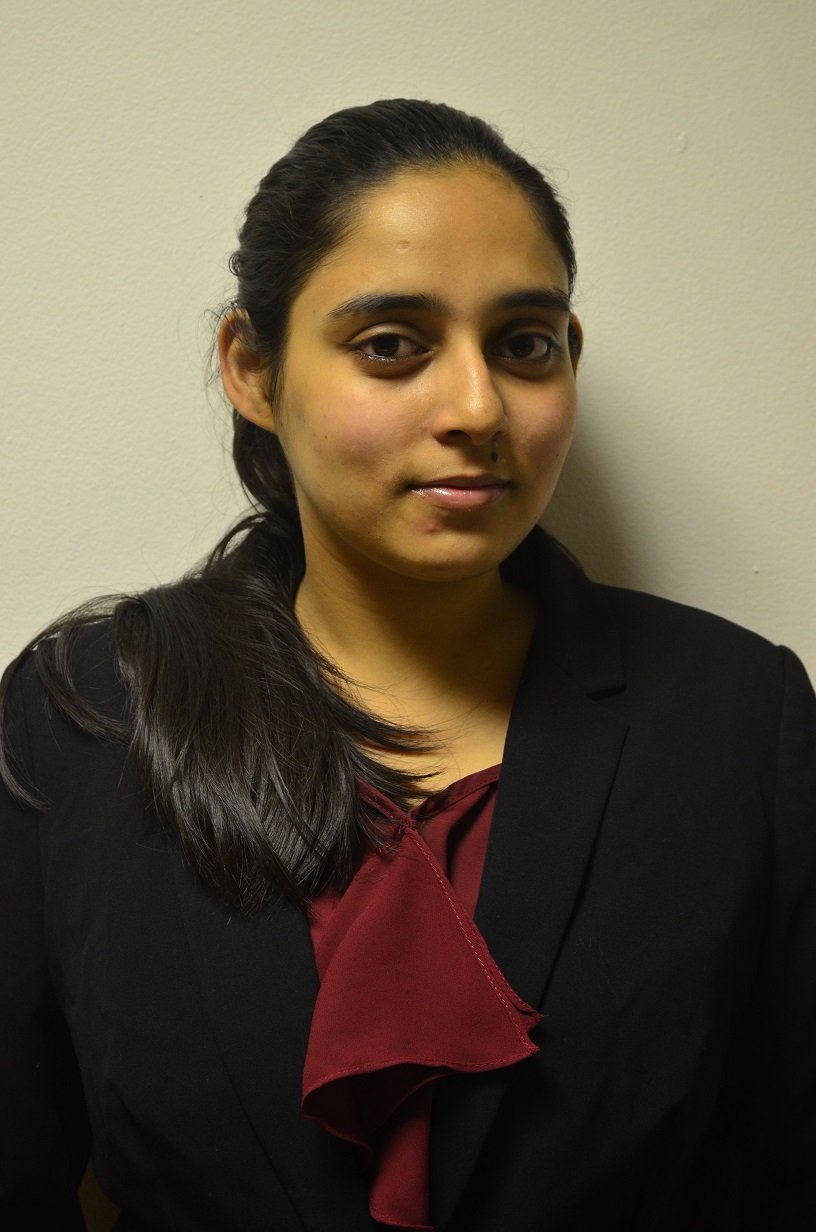
I started working on my PhD in Fall 2017 at the Mechanical Engineering – Engineering Mechanics department with Dr. Susanta Ghosh. Previous to this, I obtained my masters’ degree from the Indian Institute of Technology (IIT), Bombay, India, in Aerospace Engineering and a Bachelors’ degree from Malaviya National Institute of Technology (MNIT), Jaipur, India. During my masters’, I was awarded the DAAD fellowship to work on my thesis at Leibniz University Hannover, Germany.

At Michigan Tech, I worked on several different projects. I began working on Micro-architectured glass materials and developed a novel analytical model to simulate the complex behavior of these materials. In another project, I developed an atomistic-continuum model to simulate large area mono-layers of Transition Metal Dichalcogenides (TMDs). This model can be used to obtain the deformation of mono-layer TMDs under various loading conditions and can provide a way to alter their optical, electrical, and mechanical properties in a controlled manner. In collaboration with Shashank Pathrudkar, we developed a novel Machine learning model to predict the high-dimensional deformation of multi-walled carbon nanotubes. This model is as accurate as of the atomistic-continuum model while being several orders of magnitude faster. I am currently working on extending these models for several other applications.

I would like to thank my advisor, Dr. Susanta Ghosh, for his support and guidance at each step. I would also like to thank the Graduate Dean Awards Advisory Panel and the dean for awarding me the finishing fellowship. This fellowship will help in completing all the work on time, including writing and defending my dissertation.

Doctoral Finishing Fellowship – Spring 2022 Recipient – Victor Claremboux

I completed my B.S. (2015) and M.S. (2020) in Chemical Engineering at Michigan Technological University. As a graduate student I am completing my studies with Professor Kawatra in the Department of Chemical Engineering. My work has focused on the efficient and sustainable processing of raw and waste materials in mineral processing, which includes iron ore processing, carbon dioxide capture and utilization, and rare earth extraction from waste materials such as red mud. This work has led to several publications, including a highly cited review on the flotation of iron ores. My dissertation will build upon my master’s thesis and focus on understanding the intricacies of pelletizing iron ore to minimize waste and environmental concerns such as fine dusts.
I am grateful to Professor Kawatra and my committee for the support and guidance he has provided over my years at Michigan Tech, to my fellow graduate students under Professor Kawatra for being there to bounce ideas off of and to share insightful discussions with, and to my high school chemistry teacher who suggested Michigan Technological University to me in the first place.

Doctoral Finishing Fellowship – Summer 2024 Recipient – Revanth Mattey

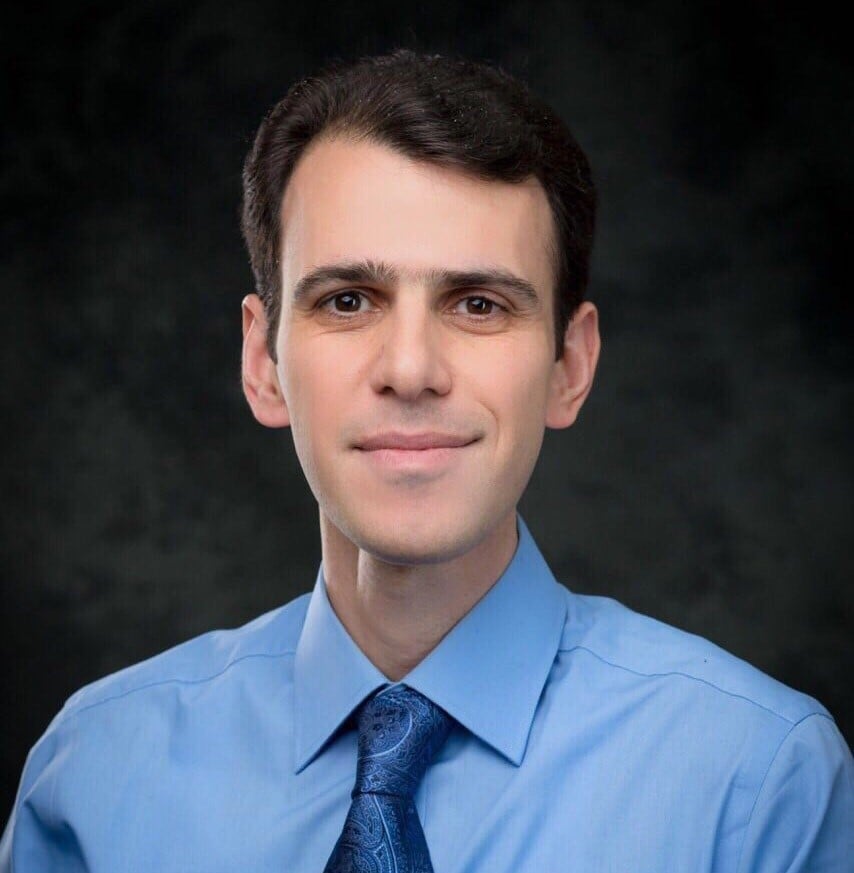
Revanth Mattey leaning against a table, indoors, wearing suit and tie
Revanth Mattey –
Mechanical Engineering-Engineering Mechanics

I am deeply grateful and honored to receive the Finishing Fellowship Award from the graduate school and the graduate dean’s advisory panel.

My journey at Michigan Tech began in 2018 when I commenced my graduate studies. Working alongside Dr. Susanta Ghosh, I completed my Master’s thesis in 2021. The research I conducted during this time inspired me to pursue a Ph.D. I’ve since dedicated myself to exploring phase field modeling and its applications in computational fracture mechanics, as well as employing Machine Learning to solve these intricate mathematical models.

My research aims to harness machine learning techniques to streamline computationally intensive simulations across various fields such as mechanics, phase separation, and weather prediction. These models hold tremendous potential for accelerating simulations of complex material failures and other physical systems described by partial differential equations.

I express my heartfelt gratitude to the graduate school for recognizing me with the Finishing Fellowship Award. This acknowledgment serves as a driving force as I enter the final phase of my Ph.D. journey, reflecting the university’s confidence and support in my work. I extend my sincere thanks to Dr. Ghosh for the invaluable opportunity to be part of his research group. His trust and encouragement have been instrumental throughout my Master’s and Ph.D. endeavors. I’d also like to acknowledge the unwavering support of the faculty and staff of the MEEM department during my academic journey.

Once I complete my PhD I will be joining Idaho National Laboratory as a post-doctoral researcher. I am eagerly looking forward to completing my doctoral research and continuing to advance in my academic career.

Doctoral Finishing Fellowship – Spring 2023 Recipient – Xuewei Cao

I am currently a Ph.D. candidate in the Department of Mathematical Sciences starting in the Fall of 2018. My advisor is professor Qiuying Sha. Prior to joining MTU, I obtained a Master’s degree in System Theory from the School of Systems Science at Beijing Normal University (2018) and a Bachelor’s degree in Statistics from the Department of Mathematical Sciences at Heilongjiang University (2015). My research is in statistical genetics. I focus on the development of novel statistical methods and efficient bioinformatical tools to find genetic variants or genes related to complex diseases and traits, such as type II diabetes, chronic obstructive pulmonary disease, et al. One of my main projects is incorporating the genotype and phenotype association network to simultaneously analyze multiple phenotypes and multiple genotypes and improve the power to identify genes that are associated with complex diseases by using the constructed network. I also work on serval collaborative interdisciplinary projects falling in statistical genetics, RNA sequencing data analyses, clinical statistical problems, etc.

I would like to express my deepest gratitude to the Graduate Dean Awards Advisory Panel for the support, which allows me to focus on such cutting-edge research here at Michigan Tech and prepare the thesis/manuscripts for publication in the coming spring. I also want to thank my advisors Professor Qiuying Sha and Professor Shuanglin Zhang for all of their valuable guidance and support over the last four years, and I am extremely grateful to the graduate program in Math Department for their constant help and generous support throughout my entire graduate school studies.

Xuewei’s Finishing Fellowship was generously supported by the Neil Hakala Endowed Fellowship.

Grad Student Writes about Finns, Labor Unrest and a Radical Heritage; Book Signing Scheduled

by John Gagnon, promotional writer

There is an old story about soft-spoken, reticent Finns.

A Swede and a Finn stand at the bar, drinks in hand.

“Cheers,” says the Swede.

“Did we come to talk or drink?” says the Finn.

Gary Kaunonen, a graduate student in the rhetoric and technical communication program, is of Finnish heritage but definitely doesn’t fit that proverbial mold. Indeed, he is effusive–in speech and writing–about a subject that is dear to his heart and mind: Finnish immigrant labor and political activity in the Keweenaw.

A native of Minnesota, Kaunonen has written a book, “Challenge Accepted: A Finnish Immigrant Response to Industrial America in Michigan’s Copper Country,” which was just published by Michigan State University Press. The book is his master’s thesis in Tech’s industrial archaeology program.

The Michigan Tech Archives will host a presentation and book signing by Kaunonen at 4 p.m., Tuesday, August 17, in the East Reading Room of the Van Pelt and Opie Library.

Kaunonen calls the book “a honed-in look” at Finnish immigrants and their living and working conditions–and often radical union activities–in the years 1904-14. The backdrop of this history, Kaunonen says, was a “lopsided distribution of prosperity” that led to “proletarian consciousness” and a “struggle for the betterment of lives.” All of it was “a powder keg” that exploded into violence on the copper range in the 1913-14 Copper Strike and the infamous Italian Hall disaster, in both of which Finns had “a huge and significant role.”

“The upstart Finnish immigrants,” he writes, “often stumbled and stammered in awkward directions, but for a time that took a back seat to working class solidarity. They seldom wavered in their bold attempt to shape their lives into what they perceived to be a more just and equal existence.”

These immigrants had marked reputations. “Finns were respected workers,” he says, “but they were also suspected agitators. They had a big impact on labor relations in this area. They resisted company dictates and mandates. They challenged the inequalities of the traditional mining and industrial society.”

His research led him to the archives at both Michigan Tech and Finlandia University, where he sought material culture–what he calls the “hard evidence” of historic circumstances. He notes, for instance, that Hancock’s leftist newspaper, Tyomies (The Worker), moved to bigger and bigger buildings and bought bigger printing presses to accommodate a burgeoning readership and a growing business. Tyomies would become a communist organ.

Kaunonen can tell the story of immigrant Finns without championing any specific cause. “I’m not casting aspersions on the mining,” he says. “But you had these huge mining companies and the vast amount of wealth and inequality they created—and then you had this little ethnic group trying to make a place for themselves. I have a soft spot in my heart for the underdog. Not that I wholly agree with everything they did, but they should certainly have a place at the table, so to speak, in telling their story.”

He went to college just to play baseball. He quit because of injuries, poked around, and worked in factories. Then the drifter became a father. “I decided I was wasting my life. I thought, well, my daughter is here, and how can I lecture her on working hard and using your gifts if I don’t do that myself. So I decided to go back to school.”

That proved to be a purposeful enterprise. He earned three bachelor’s degrees from Minnesota State University-Mankato, his IA master’s at Michigan Tech, and is now a PhD student here. Previously, he was an archivist at Finlandia. It’s been “a winding road” that has become a quest. He has now written two books on Finnish immigrants. An earlier one, “Finns in Michigan,” also was published by Michigan State University Press.

In his endeavors, Kaunonen is grateful for what he calls “a slew of good professors” in social sciences and now humanities. “They inspired me by what they did and currently do.”

As did his family.

“I write because I have an admiration for my parents and grandparents. All of them were members of the working class”—both grandfathers worked on the Minnesota iron range–“and I’m kind of honoring them and their contributions to American labor.”

Published in Tech Today.

Email from the Dean to Graduate Students

Dear Colleagues,

As you have heard from the President Koubek, the health, safety, and security of our campus and our community is most important to us.  We need to make substantial changes in how we go about our daily lives in response to the evolving COVID-19 threat. This is a rapidly changing situation so we will, no doubt, need to continuously adjust our responses as we learn more.  For comprehensive and up-to-date information please see the University’s COVID-19 web page

In response to the evolving COVID-19 situation, the Graduate School is committed to doing all we can to make the rest of the semester as healthy and productive as possible.  Here are some issues the Graduate School is asking faculty to consider. 

I.  Research progress

Per the President’s memo, all instruction at Michigan Tech must be delivered virtually till 17 April 2020.  I am sure you are wondering how this will impact progress in your research group. How should ongoing research involving graduate students be handled?  This will undoubtedly vary with research group and depend on the nature of research, the need for physical presence in the laboratory, and the individual group members comfort, attitude and tolerance in this rapidly evolving situation. The Vice President for Research’s Office will be posting guidelines to help clarify general expectations soon.   Please see the email from Kathleen Halverson, VPR, for additional information regarding research labs.

The University campus is not closed. Students, faculty, and staff can be on campus, and people can interact in small groups (less than 25). Under those guidelines, research and interactions among advisors, students, and staff may continue. 

However, appropriate precautions should be taken and the option to continue research and research-related meetings remotely must be accommodated.  In particular, remote attendance (e.g. via Zoom or Google Hangout) for group meetings among students, advisors, and staff is strongly advised. For research requiring physical presence in a laboratory, lab schedules and social distancing practices should minimize interpersonal exposure. 

Please communicate with your graduate students about how you plan to organize your research group, no later than March 18.   Clearly communicate your expectations and timelines with your students.  Be creative with regards to how to accomplish research work, meetings, writing projects and other activities so that students make research progress in a positive educational experience. 

If you have students returning from travel, please follow the university guidelines University guidelines and ask anyone who has traveled in the past 14 days to fill out the University’s Returning Travelers form. Social-distancing, self-isolation, and self-monitoring are the best ways to contain the spread of COVID-19 (Sections IV and V).

II.  Defenses, research proposal examinations, and qualifying examinations

Spring (and especially mid to late spring) is a time when many graduate students schedule dissertation/thesis/report defenses, research proposal examinations and qualifying examinations.   These milestones typically include a public presentation followed by an in-depth examination by the advisory committee members.  Commensurate with the current policy of virtual instruction until April 17, all oral examinations and defenses must be conducted virtually (for example, via Zoom) to allow all interested to participate.  Please make arrangements well in advance to accommodate this need.  The student should contact IT (it-help@mtu.edu, 906-487-1111) for assistance at least 5 business days in advance to appropriately schedule staffing and potential equipment usage. The in-depth examination with some or all of the advisory committee members can be conducted face-to-face if it is agreeable to those participating.  

Michigan Technological University IT Department offers Zoom (log in with Michigan Tech ID and password) for Web conferencing support. Zoom will allow you to share your screen, webcam and microphone with up to 100 participants.  The IT Knowledge Base on Conferencing includes helpful information on web conferencing options and support.

III.  Graduate School Emergency Fund

Funds from the Graduate School Emergency Fund is available to assist graduate students with emergencies and financial hardships. 

Stay healthy and follow the guidance from the university and CDC.  If you have questions or concerns, please do not hesitate to email me or Will Cantrell (cantrell@mtu.edu) or Jacque Smith (jacque@mtui.edu).  The Graduate School and the University will do our best to keep you apprised as new developments occur at University’s COVID-19 web page.     

With best wishes,

Dean Pushpa Murthy

Associate Provost and Dean of the Graduate School
Michigan Technological University
Houghton, MI-49931

This email account is monitored by staff in the Graduate School.  Please reply to this email with any questions you have.
Michigan Tech Graduate School
gradschool@mtu.edu
906-487-2327 (voice)
906-487-2284 (fax)

Resources for current students:
http://www.mtu.edu/gradschool/resources-for/students/

Graduate Student Writing Groups

At the Multiliteracies Center, in Walker room 107, we offer Graduate Student Writing Groups for graduate students at any level.

The groups are available for working on projects (planning and writing), proposals, conference papers, posters, presentations and defenses. They are discussion based to allow students to explain their project to other students and get feedback from peers. Evidence shows that we retain 75 – 90% of what we teach others as opposed to only 10% of what we read.

Jester Itliong Represents Michigan Tech as MAGS 3MT Finalist

Michigan Tech physics PhD candidate Jester Itliong recently proved the importance of clear communication and high impact research on a regional stage. Competing at the Midwestern Association of Graduate Schools (MAGS) Three Minute Thesis (3MT) competition in Kansas City, Missouri, on March 27, 2026, Itliong advanced to the final round, placing him among the top researchers in the Midwest.

The 3MT competition challenges graduate students to explain years of complex research in a three minute presentation suitable for a general audience using only one static PowerPoint slide. Itliong earned his spot as Michigan Tech’s sole representative after winning first place at the university’s local 3MT competition in December 2025.

Molecular Choreography

Among the competitors from major institutions across the region, Itliong stood out with his presentation, Molecular Choreography: The Physics of Flow in Ionic Polymers. Advised by Issei Nakamura, associate professor of physics, Itliong’s research focuses on soft condensed matter.

Using coarse grained molecular dynamics simulations, he investigates how molecular features like size, charge, and polarity govern viscosity and ion transport in ionic liquids. These materials are essential for next generation batteries and ion conducting membranes because they allow for charge transport without the need for volatile solvents. By bridging the gap between molecular design and macroscopic behavior, his work provides the insights needed to tailor these materials for better performance in clean energy and electronics.

A Passion for Communication

Reaching the MAGS finals is a significant milestone. Out of the dozens of university winners who presented in the preliminary heats, only 10 were selected to move on to the final stage. Itliong’s ability to translate the abstract physics of polymer flow into an engaging narrative highlighted the caliber of research being conducted in the Michigan Tech Department of Physics.

While he values the analytical rigor of his simulations, Itliong is especially passionate about communicating science. He has presented his work at the APS March Meeting annually since 2023 and now entering the final stage of his doctoral program.

The Graduate School and the Graduate Student Government (GSG) congratulate Jester on his success at MAGS. His achievement underscores the importance of the 3MT mission: helping graduate students develop the skills to communicate the value of their work to the public, policymakers, and industry leaders.

Jester wishes to thank the Graduate Dean Awards Advisory Panel, the Department of Physics, and Dr. Nakamura for their continued support.

To learn more about graduate research opportunities and upcoming competitions, visit the Michigan Tech Graduate School Fellowships Page.