
The Department of Electrical and Computer Engineering is pleased to announce a two-day workshop on cyber-physical security for power infrastructure and transportation to be held on campus July 30-31, 2019. Experts from industry and the academy will share information on current threats and countermeasures to protect power infrastructure and transportation systems.
Registration protocols will support 13 hours of continuing education for professional license holders.
More detailed information on the workshop can be found on the ECE blog.
The cost for Michigan Tech faculty and staff to attend is $100, and the cost for students is $25. Register for the workshop on the online store. To receive the discount, faculty and staff must use the promotional code MTUFAC, and students must use the code MTUSTU on the registration form checkout page.
Questions about the workshop can be directed to ECE at 7-2550 or ece@mtu.edu.
 Timothy Havens (CC/ICC) was General Co-Chair of the 2019 IEEE International Conference on Fuzzy Systems in New Orleans, LA, June 23 to 26. At the conference, Havens presented his paper, “Machine Learning of Choquet Integral Regression with Respect to a Bounded Capacity (or Non-monotonic Fuzzy Measure),” and served on the panel, “Publishing in IEEE Transactions on Fuzzy Systems.”
 Zhuo Feng (ECE/ICC) is Principal Investigator on a project that has received a $500,000 research and development grant from the National Science Foundation. This potential three-year project is titled, “SHF: Small: Spectral Reduction of Large Graphs and Circuit Networks.”
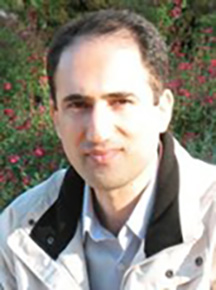 The article “Topology-Specific Synthesis of Self-Stabilizing Parameterized Systems With Constant-Space Processes,” authored by Ali Ebnenasir (SAS/CS) and Alex Klinkhamer, has been accepted for publication in the journal IEEE Transactions on Software Engineering. Read the full article here:
  Soner Onder (SAS, CS) will present a keynote address titled “Form Follows Function: The Case for Continuing ILP and General Purpose Computing Research” at the International Conference on Embedded Computer Systems: Architectures, Modeling and Simulation (SAMOS XIX), Samos Island, Greece, on July 7, 2019.
 The article “Topology-Specific Synthesis of Self-Stabilizing Parameterized Systems With Constant-Space Processes,” authored by Ali Ebnenasir (SAS/CS) and Alex Klinkhamer, has been accepted for publication in the journal IEEE Transactions on Software Engineering. Read the full article here:

 By Karen S. Johnson, ICC Communications Director