
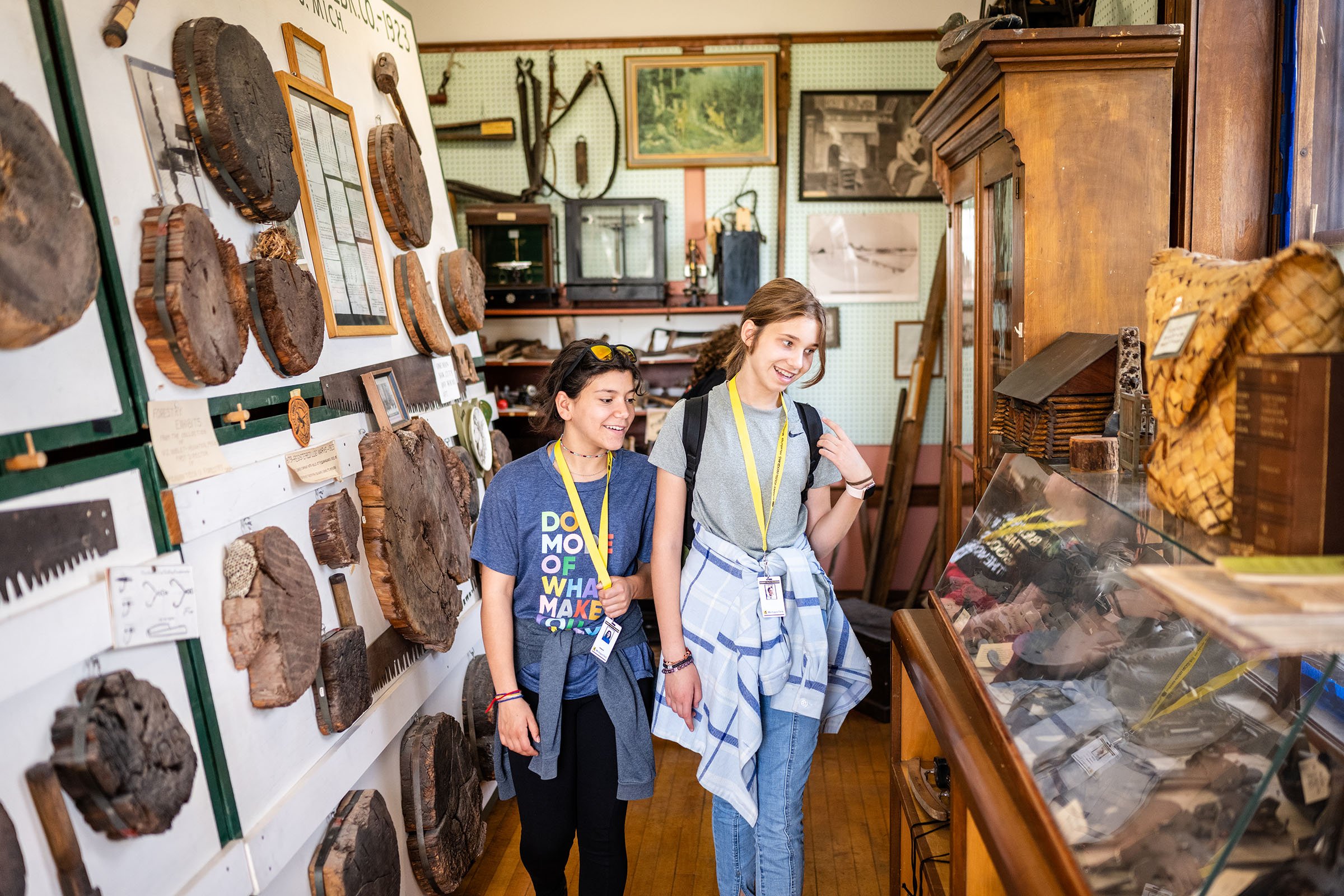
Registration is now live for Michigan Tech’s 2026 Summer Youth Programs. Each summer, nearly 1,000 middle and high school students from around the world immerse themselves in hands-on learning through week-long career explorations designed to help them discover college pathways and real-world opportunities. Whether they’re noodling over neuroscience, curious about chemistry, or enthusiastic about ecology, the extraordinary courses include many offerings in the College of Sciences and Arts (CSA).
“These programs go far beyond what a student might encounter in high school or middle school and give students a taste of what it might be like to study a particular topic in more depth as a college student or young professional,” said Maria Bergstrom, CSA associate dean for undergraduate education.
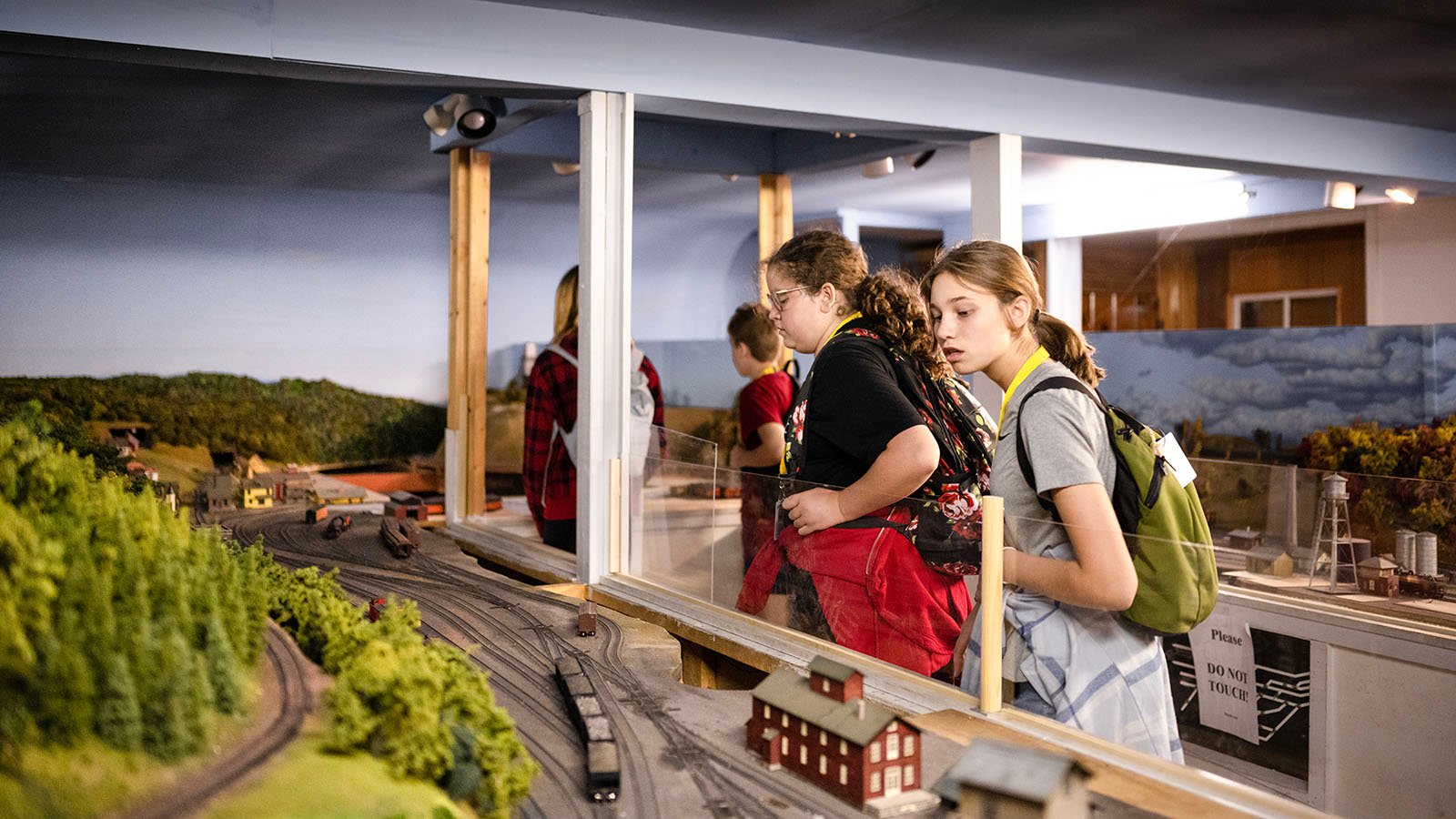
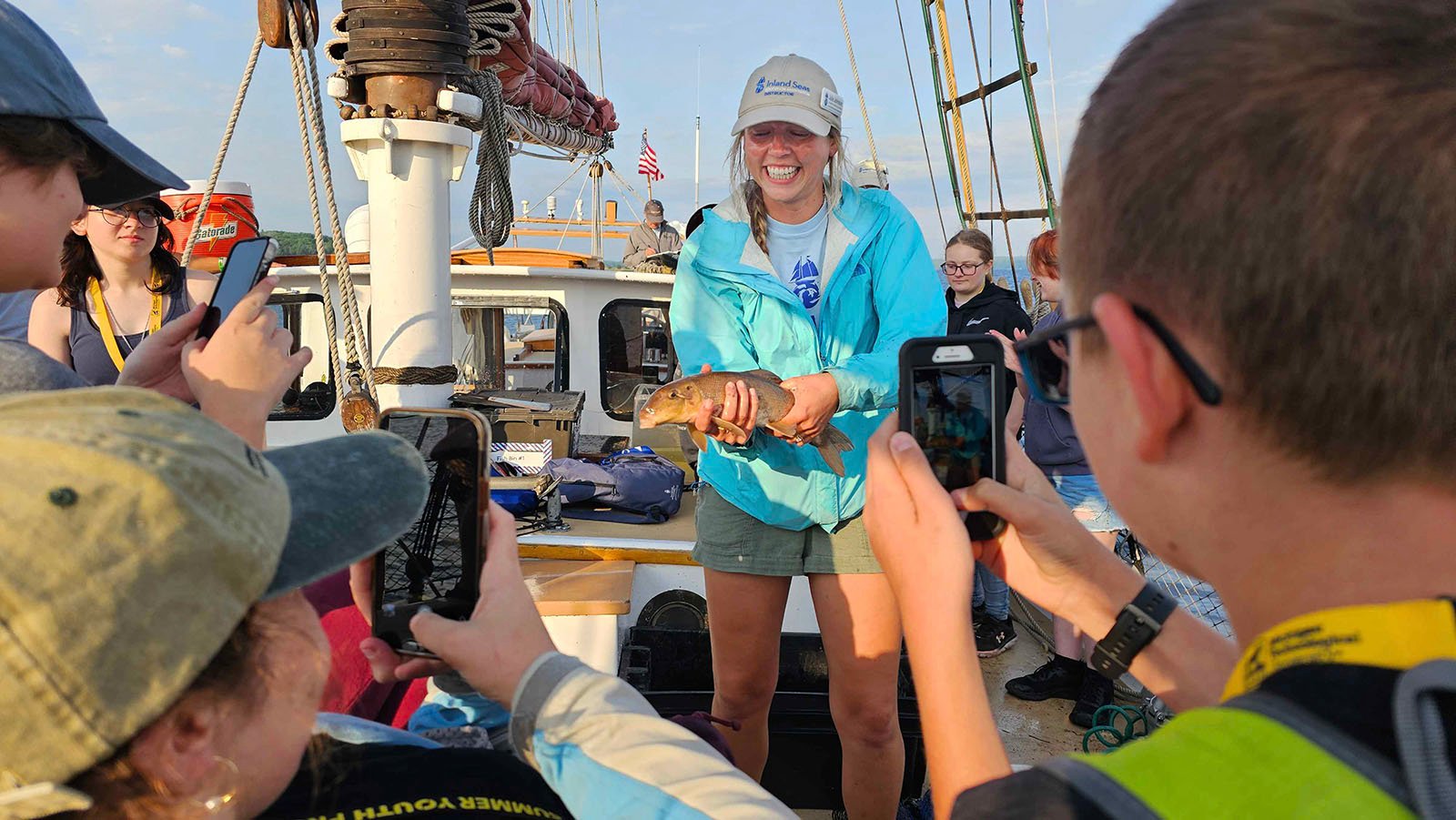
Many programs include field trips to campus and community sites where students can put their learning into action. Live-in students from out of town get a taste of college life, staying in Wadsworth Hall. Local students – and those with family in the area – can commute. There are advantages to both options, including cost savings for local students who aren’t staying on campus but will still get to know a side of the local area they’ve never seen before. Either way, every student participating will delve into their area of interest alongside other enthusiastic learners, led by knowledgeable faculty who enjoy working with young students.
“Interacting in small groups of students with a faculty member makes these week-long experiences particularly exciting—students get the benefit of faculty expertise while also meeting new friends and encountering new challenges together,” said Bergstrom.
This guide was created to help prospective students and their families choose the SYP CSA camp experience that’s the right fit for their interests.
Discover Your Future in Healthcare
Healthcare is a continually growing field, with many career options to explore. Fields like nursing, medical lab science, human biology, kinesiology, and neuroscience have a lot in common, but professionals in these jobs may have widely differing daily responsibilities. In this course, instructor Claire Danielson, biological sciences assistant teaching professor and Medical Laboratory Science program director, will help students examine a wide range of healthcare interests, giving them an idea of all the possible paths open to them in this career field.
“Students who enjoy helping people, science, or learning more about human health may find this course especially interesting,” said Danielson. “Even if you’re not sure healthcare is for you, the course is a great way to investigate your options and get a clearer idea of what different healthcare careers involve.”
Students will learn how human movement and physical activity are integral to health. They’ll participate in nursing simulations, discover the medical laboratory, and engage in a variety of hands-on activities. Hands-on, interactive activities include nursing simulations, microscopy, dissections, and real-world examples of healthcare work. The course is very participatory, giving students the chance to ask questions, try new things, and learn by doing rather than just listening.
“Instead of learning from a textbook, students see how different roles fit together in real healthcare settings, which helps them better understand what working in healthcare is actually like,” said Danielson.
Fantastic Worlds and Where to Find Them
Step into the writer’s multiverse! In this creative writing camp, instructor Jenni Nance will guide students to find inspiration in the world around them.
“Because the creative writer is first and foremost a talented observer, we will mine our fantastic worlds from familiar spaces,” said Nance. “From looking at flora through a jeweler’s loupe to rendering alien planets from the crystals in the gem shop, this course is about making the familiar strange.”
As they write, read, and investigate, students will invent new worlds, reimagine reality, and bring their own sci-fi stories to life. They’ll meet real authors, trade ideas with other storytellers, and stretch their imaginations. Each student will write a complete short story during their week at camp.
“While worldbuilding encourages boundless imagination, the storyteller has to make sure their world makes sense to the general reader,” said Nance. “This course will help develop consistent narration and characterization from both a top-down and bottom-up process.”
Sense of Place: Outdoor Experiences for Environmental Stewardship
Creating connections to place is essential for establishing knowledge and good practices of environmental stewardship. This summer, an all-new SYP course invites students to grow their understanding of ethical stewardship through daily connections at Prince’s Point, located on Soo Line Trail along the edge of Portage Canal. Instructors Erika Vye, a geosciences research scientist, and Valoree Gagnon, an affiliated assistant professor of humanities, will guide students through the Five Element Qi Gong practice — an experience that integrates slow, flowing movements, focused breathing, and meditation to cultivate energy and balance.
“This course originates from a deep-rooted friendship and a shared love for the Keweenaw’s lands and waters,” said Vye. “We weave together two powerful practices by blending mind-body meditation with environmental stewardship. This course transforms what were once independent programs into a single, daily practice designed to deepen students’ connection to place.”
Finally, students will demonstrate their stewardship experiences and practices by creating a personal anthology using reflection, mixed media, poetry, and illustration. Students who like to be outside, are interested in finding tools to help reduce stress, and wish to deepen their appreciation of land and water will benefit from this course.
Nature Photography
Ian Raymond, assistant teaching professor of media production, will lead students in mastering the art of digital photography by diving into the Keweenaw Peninsula through the lens of a camera. Students will learn how to take professional-level photographs, learning all the basics—including exposure, composition, and color—that will separate their imagery from the average smartphone camera roll shot
“Students who have an interest in photography and want to see the beautiful sights around the Keweenaw should take this course,” said Raymond. “We’ll hike forest trails to photograph trees and waterfalls, and walk along beaches to take photos of Lake Superior.”
To complete their journey, photographers in training will learn how to edit photos. Each student prints their best masterpiece and takes their favorite landscape home.
Paper & Pixels: Traditional and Digital Media Art
Digital graphics are everywhere—on phones, TVs, and computers, as small as business cards and as big as billboards. Seeing something every day and understanding how to make it aren’t the same. Samantha Canevez, Humanities digital media specialist, will take students on a journey of understanding through the intersection of traditional art and modern digital design in this hands-on 2D media course.
“There are a lot of resources online for this kind of work, and I’ve used many of them! But working behind a screen can be isolating,” said Canevez. “By sharing the lab with peers, getting real-time feedback on work, and integrating traditional art exercises into our practice, I’m hoping to show that it doesn’t have to be, and that there are many wonderful communities of creators to be found who can support each other’s creative pursuits.”
In Michigan Tech’s Humanities Digital Media Zone (HDMZ), students will work with industry-standard software and hardware for creating digital graphics, including the Adobe Creative Cloud Suite, Wacom graphics tablets, iPad Pros, and more. Students will begin with traditional drawing, then move on to exercises bridging the gap between digital and traditional media.
“I really want students to see some of the different ways that new and old techniques can be mixed, blended up, and molded into something new,” said Canevez.
Whether you’re interested in illustration, animation, design, or creative expression, this course offers a dynamic introduction to the tools and techniques of contemporary digital art.
Building The Scene: Intro to 3D Graphics
Canevez is also teaching a new, advanced course in the HDMZ this year that teaches 3D graphics and animation. Students will learn how to build a 3D scene from scratch, including polygon modeling and sculpting, texturing, rigging, lighting, and animation.
“It sounds simple, but it’s gonna take some work! Getting familiar with the 3D workflow can be challenging at first, but we’ll work through the basics with exercises in modeling,” said Canevez. “The goal is to make the whole process less intimidating and give students the skills and confidence to go home and keep making their own 3D graphics!”
Students who are interested in art, media like animation and video games, or just like to make things and want to try something new, will enjoy this course. It is also designed to appeal to students with an architectural mind who enjoy creative problem-solving through learning a new tool and putting things together. Although it’s an advanced course, no previous experience is necessary, and all necessary resources will be provided.
Introduction to Computational Physics
Students in this course will build confidence using computers to model the world and make sense of data with computational physics in a supportive, low-pressure environment. Students who enjoy problem-solving, math, physics, coding, or data analysis will delight in visualizing mathematical equations as they discover the world of physics! Instructor Issei Nakamura, associate physics professor, will teach computer simulation methods applied to mechanics, electromagnetism, electric circuits, nuclear reactions, and astrophysics. No prior programming experience is required.
“The course is beginner-friendly and hands-on, with guided sandbox time that lets students explore at their own pace while still getting targeted support,” said Nakamura.
The week blends multiple formats: short logic and computational-thinking warm-ups, hands-on lab activities, interactive simulations, data visualization and curve fitting, introductory coding practice—with room for students to choose a language when ready—and guided open experimentation time, where students can pursue a mini project with instructor support.
“Students see the full loop from a physical experiment to a computational model: measure real data, visualize it, then write simple code to investigate scenarios beyond the lab,” said Nakamura.
Chemistry: The Central Science
Chemistry is often called the “central science” because it focuses on molecules andhow they are made, characterized, and interact with each other and the environment. The Central Science course helps students understand how deeply chemistry is connected to daily life.
Students will study how medicines are made, why materials degrade over time, and what chemicals are present in the foods we eat. Guided by Chemistry Professor Shiyue Fang, students will take part in video tutorials and hands-on experiments like isolating DNA from saliva using methods similar to those of forensic scientists.
“This course is an excellent choice for students who are still uncovering which science or technology fields interest them most,” said Fang. “Once a student has a strong chemistry foundation, it is often easy for them to enter other fields in advanced studies, including life sciences, materials science, food science, medicine, forensics, energy, and environmental science.”
Browse the Catalog
Other courses from the College of Sciences and Arts in this year’s SYP lineup include:
- Nature x Numbers: See where outdoor exploration meets cutting-edge technology and data science.
- Brains & Behavior: Neuroscience 101: Discover how brains—human and otherwise—shape thought, movement, and perception.
- Engineering Psychology: Find out how people and technology work together.
- How the World Works: Law and Leadership: Unlock the mysteries of how the legal world works.
- Voices of Change: Intro to Civic Engagement: Step into the world of law, government, and civics through hands-on activities, debates, and role-playing challenges.
- Think Global, Act Local: Adventures in Sustainability: Dig into local food systems, renewable energy, and land conservation to discover how people are protecting the planet and building more resilient communities.
- Field Investigations in Environmental Impacts: Learn how human activity impacts ecosystems and what evidence-based solutions may help mitigate the human impact.
- Geo-Mapping the Keweenaw: Delve into the geological formations of the Keweenaw, uncovering their significance to the region’s economic history.
Since 1972, SYP has helped thousands of students learn more about themselves and their aspirations, fostering entrepreneurship and creativity. In addition to support from Michigan Tech faculty and staff, campers also get to know their SYP counselors, who are Tech students, many of whom attended SYP camp themselves. Browse the full course catalogue and get more info on the week-long experiences, including transportation, scholarships, and meals, on the Summer Youth Programs website.
About the College of Sciences and Arts
The College of Sciences and Arts is a global center of academic excellence in the sciences, humanities, and arts for a technological world. Our teacher-scholar model is a foundation for experiential learning, innovative research and scholarship, and civic leadership. The College offers 33 bachelor’s degrees in biological sciences, chemistry, humanities, kinesiology and Integrative physiology, mathematical sciences, physics, psychology and human factors, social sciences, and visual and performing arts. We are home to Michigan Tech’s pre-health professions and ROTC programs. The College offers 25 graduate degrees and certificates. We conduct approximately $12 million in externally funded research in health and wellness, sustainability and resiliency, and the human-technology frontier.
Follow the College on Facebook, Instagram, LinkedIn, X and the CSA blog. Questions? Contact us at csa@mtu.edu.