Continuous Improvement Blog

Posts under the ‘Resources’ category

Michigan Lean Consortium

Tuesday, June 5th, 2012

Greetings,

I just wanted to pass along a great resource to the campus community: The Michigan Lean Consortium (MLC).

I have been in touch with some board members from the MLC for a few months now, they are making great strides to bring Lean practice to Michigan businesses.  One of our Lean training consultants  is the Secretary of the MLC, Mike Taubitz.

The MLC offers Lean learning events which are typically many driving hours away from Michigan Tech.  However, they have now begun recording these sessions.  Read about their latest event on Lean Leadership and find links to watch the recording HERE. 

-Wendy

Books Available for Loan

Tuesday, May 15th, 2012

Hello Michigan Tech Staff and Faculty,

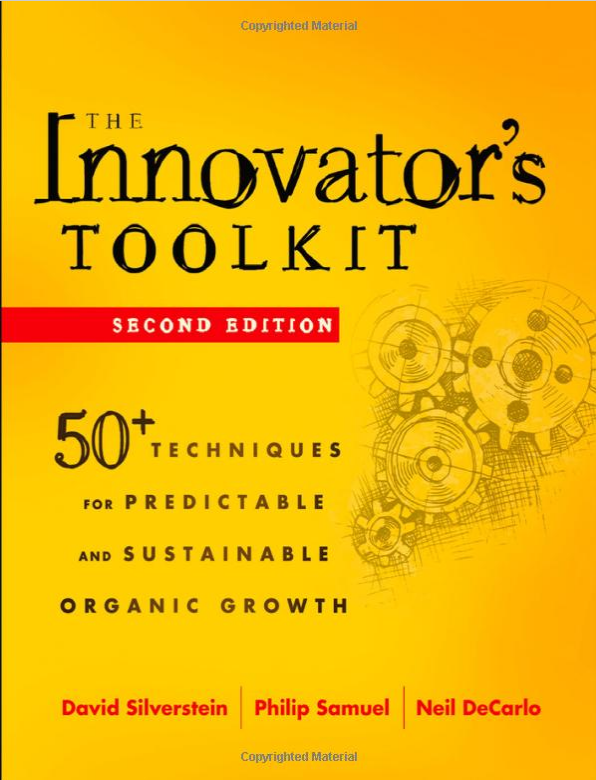
If you are interested in expanding your continuous improvement knowledge, consider checking out a book from the new ”Lean Library” in the process improvement office.  We will also be expanding our collection in the next few weeks so any recommendations you have would be much appreciated.

“Why?”

Tuesday, December 13th, 2011

By: Megan Johnson, Student Process Improvement Coordinator

In order to solve problems and make improvements, we need to encourage ourselves and people who are involved in a process to question it.

“This is my process, and it doesn’t work as well as I think it should.  Why?“

By asking “Why?” you can identify problems and their root cause allowing you to work towards making the right improvement.  One simple method for solving problems is just that—asking “Why?”  Again and again and again until you get to that root cause.  To learn more about the 5 Whys technique, click here.

Kaizen Profile Updated

Tuesday, August 23rd, 2011

On the tools and templates pageon the Continuous Improvement Website you can download an updated Kaizen Profile Template.   A Kaizen Profile is used in preparation for a kaizen event; it is a tool that is typically filled our by the team leader with assistance from a Facilitator.  Changes were made to the flow of the template to mimic the typical dialog and problem discussion had between a Facilitator and a team leader.  Additionally a new section was added to list the department of each team member.

Going to the Gemba

Thursday, July 28th, 2011

Guest Post by Megan Johnson, Student Process Improvement Coordinator

“Gemba” is a Japanese term meaning “the real place.”  When you hear of someone who is “going to the Gemba” or doing a “Gemba walk,” they are going to the actual place where the work is being done, where value is being created or added.  To really understand a process it is critical that person go to the gemba to observe what is actually happening. 

When visiting the gemba, you should ask open ended questions to hear about the process from those who are closest to the work.   

Going to the gemba should be a daily task for leaders.  When leaders go to the gemba, it provides them with an opportunity to observe a process first-hand, build relationships with those they supervise, to listen, help work through roadblocks encountered, and to help problem solve—as well as encouraging others to problem solve.

Gemba Walks, Jim Womack’s newest book is a collection of compiled letters and essays about this topic.  View more about the book HERE.

Gemba Walk webinar

Monday, June 20th, 2011

The Lean Enterprise Institute is putting on a free webinar this Thursday.  Check it out here: http://www.lean.org/events/june_23_webinar.cfm

LEI is a great resource for lean training and networking.  I have been to two workshops and highly recommend them!

The Lean Journey

Thursday, June 2nd, 2011

Karen Martinposted a link to a blog on her facebook page.  It shed some light on on the daunting  Lean Journey.  This was a refreshing post about what the lean journey, or lean maturity rather, looks and ”feels” like.   Click HERE to read the blog post.

PDCA and the “Cash Hub”

Monday, April 25th, 2011

The Plan-Do-Check-Adjust (PDCA) cycle is the backbone of an improvement event.  It is a four step model for carrying out a change.  Here is a real life example of what PDCA can look like:

Plan: Recognize an opportunity and plan a change.  Collect Baseline Data and gather information.

Auxiliary Services identified an area that needed improvement.  Problem Statement:

“Cash accounting and financial reporting is decentralized and inconsistent among the operational units of the Memorial Union, Dining Services, Merchandising and Rozsa Center.  This is causing: unclean month end reports, delays in deposits and remittances, and stopped work when employees are out.”

Do: Observe and analyze the current process, design an improved process, test the change.

A team was formed and met for five days.  They analyzed problems and brainstormed solutions.  As a result, by day five a new cash accounting process was implemented. 

A hub and spoke model was created, and the 16 operational units began sending their accounting to the newly created “cash hub.”  Each operational unit would submit a daily cash bag to the cash hub.  The hub model allowed for the following:

  • A controlled environment for cash accounting to be completed
  • Staff specialists in cash accounting
  • Work that continues even if an employee is out

Check: Review the new process and monitor the results.  Is it working?

Cash hub staff continued to collect data and performed additional monitoring of the new system.  A few areas for improvement were observed:

  • Numerous bag errors being submitted to the hub
  • Numerous hours were spent fixing and deciphering the errors
  • 2 new units need to feed into the hub
  • No time to handle new units

Adjust: Modify and make improvements as needed.  Continue to check and adjust, or PDCA again if the change didn’t work. 

Standardized work sheets and visual aids were created to help the staff at each operational unit submit an error free bag.  Feedback loops were also created for error tracking.  As a result of their monitoring and continued improvements, the Auxiliary Services cash hub has been seeing results. 

Manager of Process Improvement

136W Wadsworth Hall
1400 Townsend Drive
Houghton, MI 49931

Ph. 906-487-3180
Email: wmdavis@mtu.edu

Michigan Technological University

1400 Townsend Drive
Houghton, Michigan 49931-1295
906-487-1885

See a Problem?

Email the Webmaster

Protected by Akismet | Blog with WordPress