Category: Students

Ana Dyreson: Solar Energy in Cold Climates

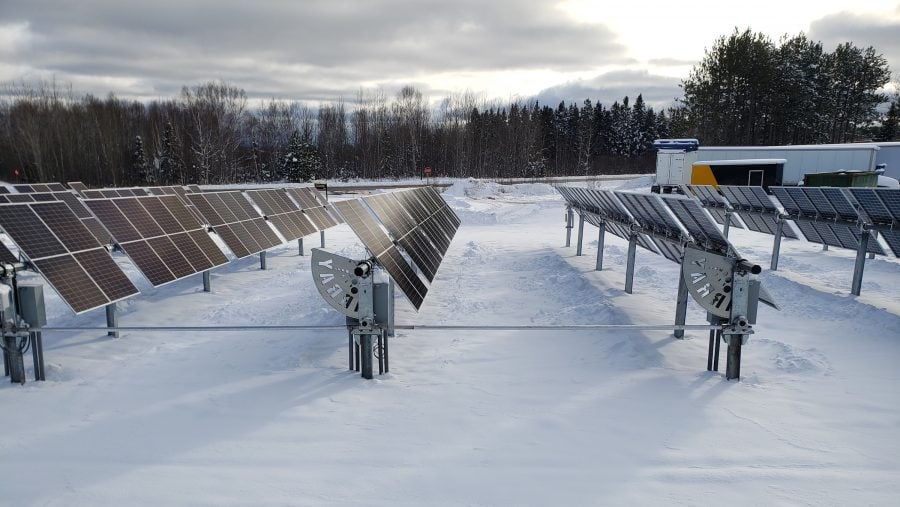
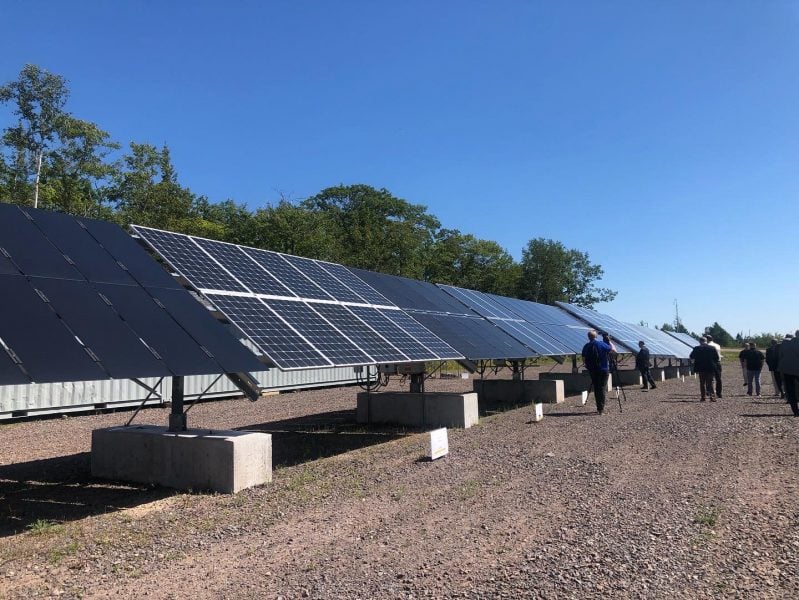
This single-axis solar photovoltaic system is located at a Michigan Tech’s APS Labs site near Calumet, Michigan.

Ana Dyreson recently shared her knowledge on Husky Bites, a free, interactive Zoom webinar hosted by Dean Janet Callahan. Get the full scoop and register for future sessions of Husky Bites at mtu.edu/huskybites.

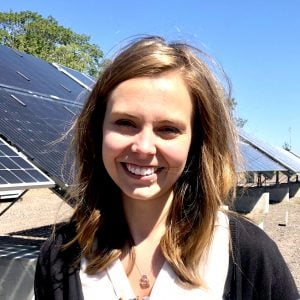
Ana Dyreson

Ana Dyreson is an assistant professor of Mechanical Engineering-Engineering Mechanics at Michigan Tech. Her work centers on solar and alternative energy—and the impacts of climate change on those systems in the U.S. Great Lakes region through her Great Lakes Energy Group.

“In the last few decades, solar photovoltaics (PV) have become extremely cost-competitive,” she says. “This economic reality, combined with a push for decarbonization of the electric power sector in general, means that large-scale solar PV is growing—not only in traditional southern climates but also in the north where significant snow can reduce power output.”

Joining in on the conversaton were two of Dr. Dyreson’s PhD students at Michigan Tech, Ayush Chutani and Shelbie Davis. Each presented their research on how to better understand just how solar PV systems shed snow, in particular, single-axis tracking systems. They also delved into some of the modeling they’ve done to explore how widespread snow events might impact future power system operations.

“We are energy engineers who work in the context of a changing environment.”

Dr. Ana Dyreson’s Great Lakes Energy Group
Ayush Chutani

Dyreson and her team use energy analysis and grid-scale modeling to study the performance of renewable technologies.

“Our research links power plant-level thermodynamic models, climate models, hydrology models, and electricity grid operation models—all to understand how weather and climate change impact future power systems,” she explains.

Starting last August, Dyreson began conducting research at the U.S. Department of Energy Solar Energy Regional Test Center (RTC), a newly built Michigan Tech facility operated by the Advanced Power Systems Laboratory (APS LABS) at Michigan Tech. Dyreson’s research on single-axis tracking systems is possible thanks to the support of Array Technologies, Inc., who supplied a ten-row, single-axis tracking solar system and continues to partner on research.

To learn more about earning a degree or graduate certificate online, Michigan Tech Global Campus is a good place to start. 

Under the technical oversight of Sandia National Laboratories, the RTC program represents a consortium of five outdoor solar research sites across the U.S. that evaluate the performance and reliability of emerging PV technologies. 

Shelbie Davis

The RTC program gives U.S. solar companies access to these sites and to the technical expertise of Sandia and its academic partners, to drive both product innovation and commercialization of new high-efficiency solar products.

Last December 2022, Dyreson was awarded a grant just shy of $500,000 from the Alfred P. Sloan Foundation for a project called “Electrification and Climate Resilience in the Rural North: Challenges and Opportunities.” She’ll be identifying social and technological challenges to resilient and equitable low-carbon electrification. And she’ll be seeking answers to questions on how to best electrify the energy sector while adapting electric power systems to climate change, including this one: Which are the most technically feasible and socially acceptable system pathways?

Dr. Dyreson earned her PhD in Mechanical Engineering at the University of Wisconsin–Madison and her MS in Mechanical Engineering at Northern Arizona University. She conducted post-doctoral research in electricity grid modeling at the US National Renewable Energy Laboratory (NREL). Dr. Dyreson holds a BS in Engineering Mechanics from University of Wisconsin–Madison, and she’s a registered Professional Engineer in Wisconsin.

Shelbie took this photo at Michigan Tech’s new solar energy DOE Regional Test Center.

“I am lucky to work with talented PhD students including Ayush and Shelbie,” says Dyreson. “They each have unique professional backgrounds and personal interests in the work that they do, and it’s fun to see their work unfold.”

“Although we had never met, I sought Ana out as my faculty advisor before I even started at Michigan Tech,” says Shelbie. “I was fascinated by her work with alternative energy systems, specifically solar power. And Ayush has been a great PhD colleague and resource, as he is further in his PhD process and is also focusing on solar energy generation.”

Shelbie is earning her PhD in Mechanical Engineering from Michigan Tech remotely, while working as a laboratory manager and instructor in the Department of Mechanical Engineering at Saint Martin’s University in Lacey, Washington, near Olympia, the state capitol. Within the College of Engineering at Michigan Tech, students can earn a PhD remotely in either Mechanical Engineering or Civil Engineering. 

“I have not yet met Shelbie in person yet but we meet over Zoom calls on a regular basis to share our research progress and goals,” notes Ayush. “ I hope to meet her sometime soon!” 

In November 2021, Ayush was one of a Michigan Tech delegation at the 26th United Nations climate change summit, COP26, in Glasgow, Scotland. In fact, Ayush was previously a guest on Husky Bites to share his experiences at COP26, along with Sarah Green, professor of chemistry at Michigan Tech. 

Then, last November Chutani traveled to Sharm el-Sheikh, Egypt to attend COP27 again with Dr. Green and the Michigan Tech delegation.

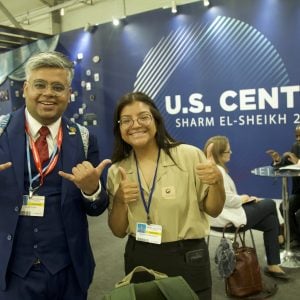
Ayush Chutani takes part in a discussion panel at COP27 (Ayush is third from the right).

“Energy is something you cannot taste, see, or touch, yet it powers our lives—what magic!” 

Ana Dyreson
Dr. Dyreson is passionate about teaching and improving the diversity of Mechanical Engineering as a discipline.

Prof. Dyreson, how did you first get into engineering? What sparked your interest?

From a young age I have been interested in how society manages energy. Following one of my older sisters into engineering was an obvious way to explore this passion, and lead me to mechanical engineering and work on renewable energy and electric power systems.

Hometown, family?

I am from Portage, Wisconsin. I grew up on a south central Wisconsin farm with my parents and three sisters.

Any hobbies? Pets? What do you like to do in your spare time?

I enjoy spending time with my family, especially biking and camping together. I love to run in all weather conditions, by myself or in a group, on road or trail, for fun or for competition—I love to run!

Ayush, how did you first get into engineering? What sparked your interest?

Ayush and co-delegate at COP27

I first got into engineering after looking at my dad’s use of Auto CAD software to make plans for houses since he is a civil engineer and then also the shows on Nat Geo and Discovery channel played a big role in shaping me towards engineering. Also in India, if you are good at science then pretty much you dream to go into IITs which are the best engineering colleges in India so in a way, the path to engineering paved its own way.

Hometown, family?

I am from Faridabad city, which lies south of New Delhi, India, and is a part of NCR (National Capital Region). I have my mom and dad in my family, but no siblings.  

Any pets? What do you like to do in your spare time?

I do not have a pet—yet—but I am thinking of either adopting a cat that looks like a lion (Lion King, and name would be of course Simba) or a corgi, because the queen of England loved them. 

I am a decent cook so food dictates some of my spare time. I also draw and sketch, so as long as I am inspired I will create some art piece. During the rest of the time, I consume a lot of virtual media, like movies, TV shows, Anime, magazines, Reddit discussion forums and yes Youtube. 
Shelbie’s first visit to the shore of Lake Superior

Shelbie, how did you first get into engineering? What sparked your interest?

As a child, I loved puzzles. When the puzzles became too easy, I would flip them over and put them together without the pictures. As I grew up, I enjoyed knowing how things worked, which eventually led me to pursue mechanical engineering. After taking many sustainable engineering classes in college, I was hooked on understanding the complexities of energy generation and electric power systems.

Hometown, family?

I was born in Seattle, Washington. We moved when I was four to Manson, a small town in eastern Washington. At age ten, we moved back to Olympia, Washington where I spent my middle school and high school years with my mom, dad, and my dog. I am an only child.

What do you like to do for fun?

When I am not working at Saint Martin’s University or working on my PhD, I enjoy traveling with my husband and dog, Sunny. We love exploring new places by either doing day trips or weekend trips. I love to see new things and meet interesting people.

Research note:

Dyreson’s research on single-axis tracking systems is part of a project led by Sandia National Laboratories and funded by the U.S. Department of Energy Solar Energy Technologies office Award Number 38527.

Read more:

MTU, Sandia to Cut Ribbon on New DOE Regional Test Center for Emerging Solar Technologies

Watch:

During Husky Bites, Dr Dyreson explains the impacts of snow on high solar-share power systems of the future, from the solar module to the power grid.

Check out the full session of Dr. Ana Dyreson’s Husky Bites webinar.

Volunteer to Judge at Michigan Tech’s Design Expo 2023


Save the date! Design Expo will be held on campus at Michigan Tech on Tuesday, April 18, 2023, from 10 am to 2 pm.

Interested in supporting Michigan Tech students as they engage in hands-on, discovery-based learning? Volunteer to serve as a judge at Design Expo 2023.

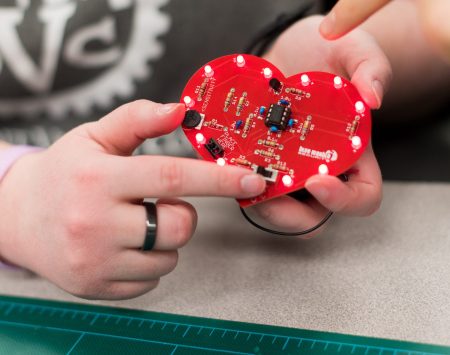
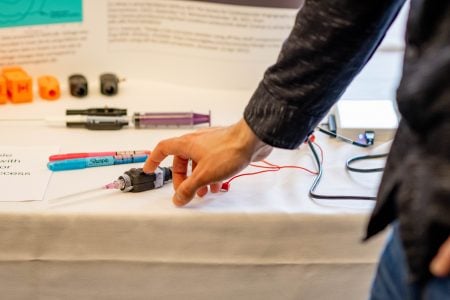
A finger points at a small student-designed device on a table
More than 1,000 students showcase their team projects at Michigan Tech’s Design Expo, now in its 23rd year.

“We welcome judges from various professions, disciplines, and backgrounds to serve as judge,” says Briana Tucker, Enterprise Program associate director at Michigan Tech.

Now is the time to register to serve as a distinguished judge at Design Expo, coming up on Tuesday, April 18, 2023 from 10 am to 2 pm. This year the annual event will be held in person in two locations on campus at Michigan Tech: the J. Robert Van Pelt and John and Ruanne Opie Library, and the Memorial Union Ballroom.

Hosted by the Enterprise Program and the College of Engineering, Design Expo highlights hands-on, discovery-based learning at Michigan Tech. More than 1,000 students in Enterprise, Senior Design, and other Student Project teams will showcase their work and compete for awards.

In-person judging on the day of the event usually takes about an hour, depending on the number of volunteers.

Who should judge?

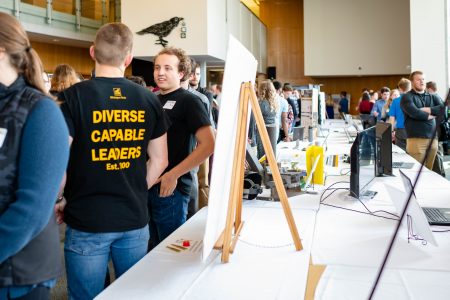
Sudents take part at design Expo while at their tables and posters.
A scene from Design Expo 2022
  • Anyone with interest in supporting our students as they engage in hands-on, discovery-based learning
  • Alumni
  • Industry representatives
  • Faculty and staff 
  • Community members

This year, prior to the event on April 18, judges will gain access to a digital gallery of student-created videos, in order to preview the videos prior to judging.

Design Expo 2023 is generously supported by industry and University sponsorship, including over 100 project and program supporters who make a strategic investment in our educational mission at Michigan Tech.

Sign up here to serve as a Distinguished Judge
at Design Expo on April 18, 2023.

Please visit Michigan Tech’s Design Expo Judges and Guests page for more information and to register to judge as soon as possible.

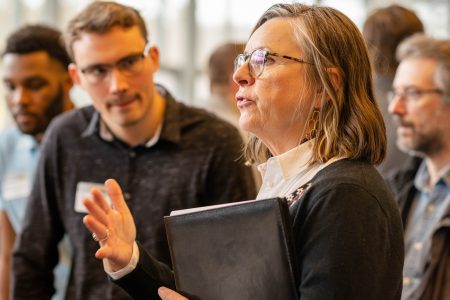
A judge talks to a student while other judges and students look on, at Design Expo
Volunteer judges play an important role at Michigan Tech’s Design Expo.

The Duties of a Design Expo Judge:

  1. Attend Design Expo for about an hour, sometime between 10 a.m. and 2 p.m. on April 18, 2023, to visit assigned teams.
  2. Review and score assigned team videos via RocketJudge, an online platform prior to the start of Design Expo.
  3. Each judge will be assigned 3-5 teams to score throughout the judging period. 

“Whether a judge or simply a guest, your involvement in Design Expo is greatly valued by our student teams.”

Briana Tucker, The Enterprise Program

Questions? 

Feel free to contact Briana Tucker, Associate Director, Programming and Campus Engagement
The Enterprise Program at bctucker@mtu.edu

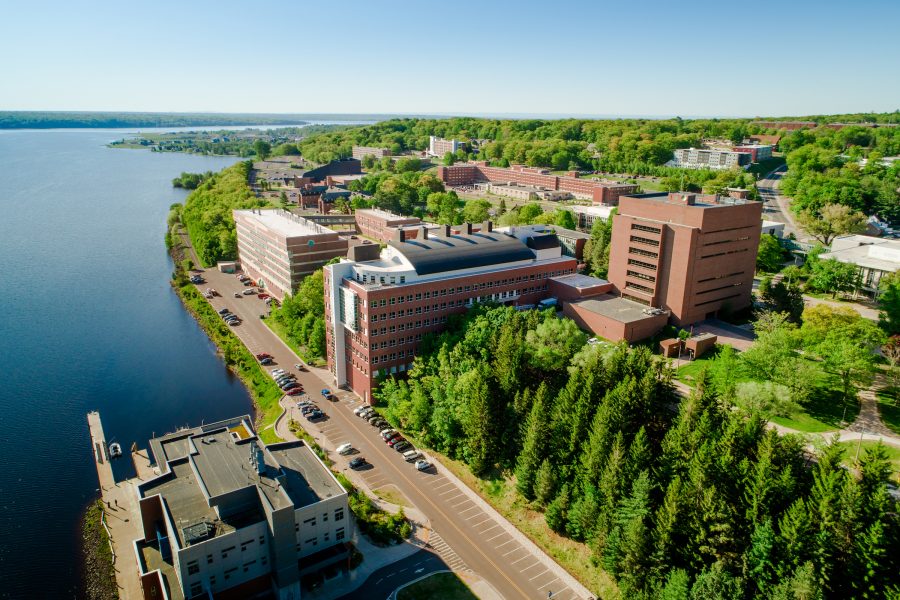
Aerial view of the Michigan Tech campus in the late spring.
Did you know that Design Expo at Michigan Tech is now in its 23rd year? Save the date: Tuesday, April 18, 2023!

SAE Winter Baja Invitational: Driving Innovation from the Ground Up

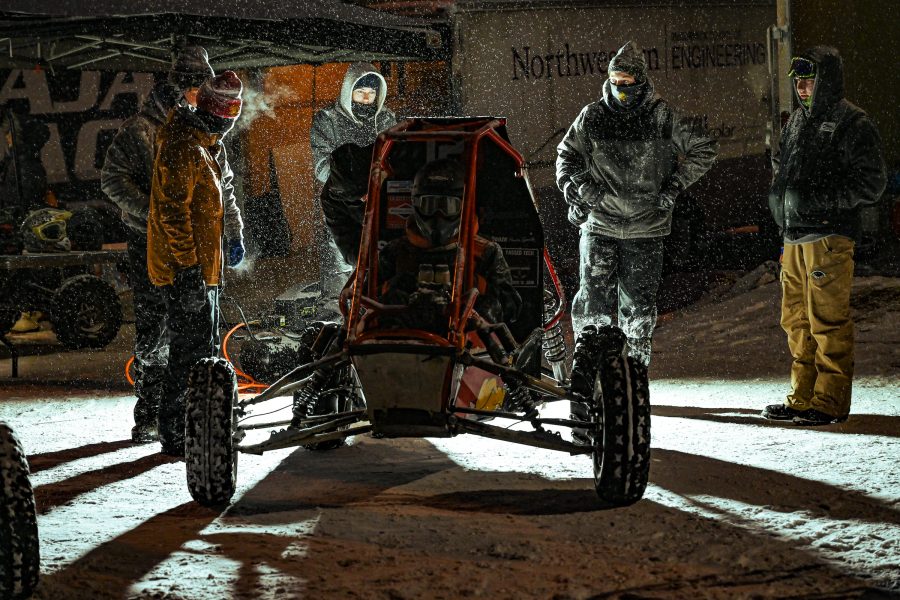
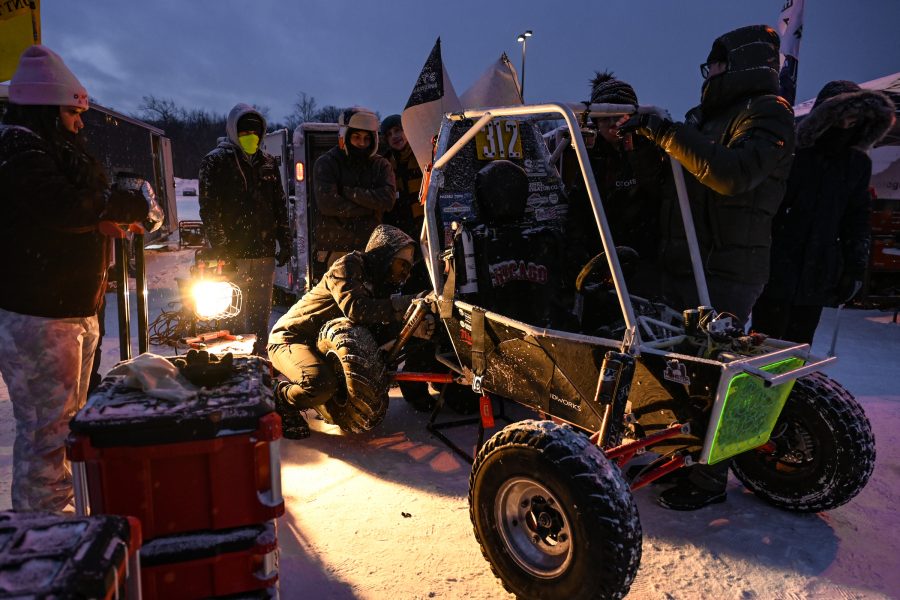
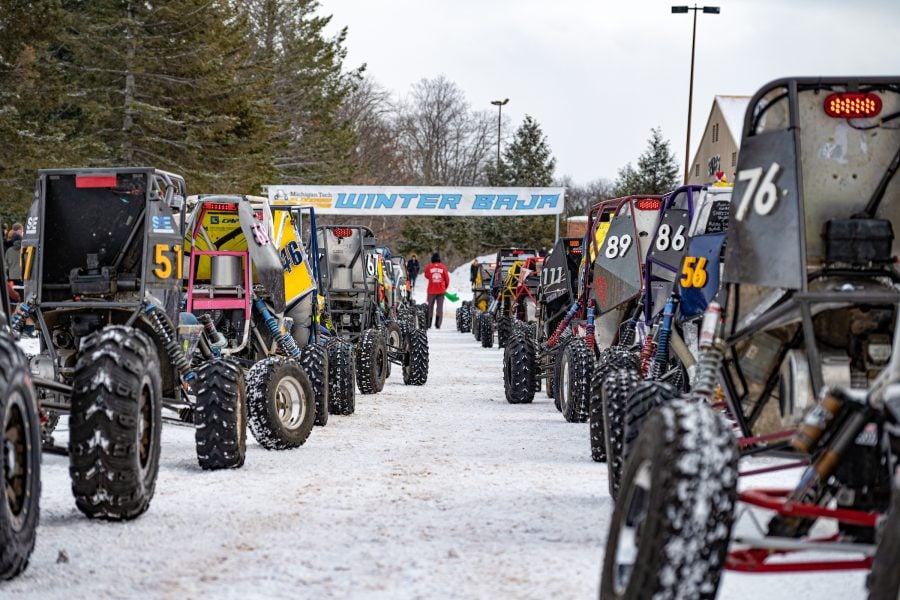
Michigan Tech is the home of the Winter Baja Invitational, which recently brought 22 universities and 45 student-built off-road vehicles to campus on January 28, 2023.

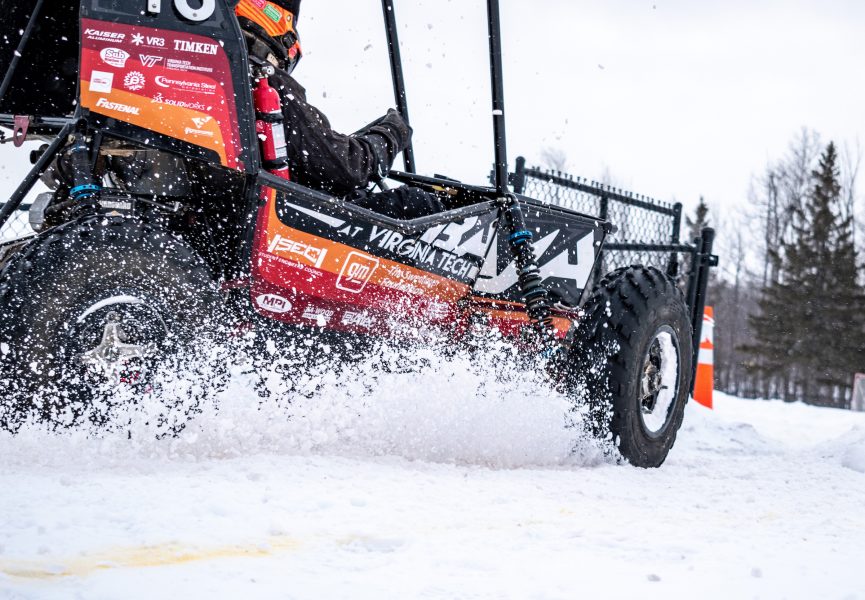
Winter Baja is one of the most exciting invitational events in the SAE Collegiate Design Series. It also serves as a frozen dress rehearsal for the official SAE International Baja competitions, which take place each spring and summer in different locations across the country. Student engineers design and build their vehicles from scratch around an SAE-designated engine.

Blizzard Baja, a student-led team, part of Michigan Tech’s award-winning Enterprise program, organizes this event annually—on top of designing and building a new vehicle for entrance into one or more of the national SAE Baja events. 

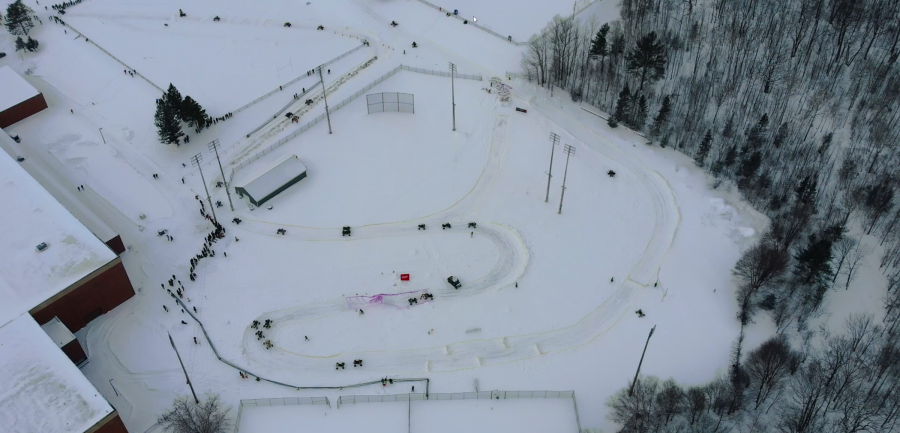
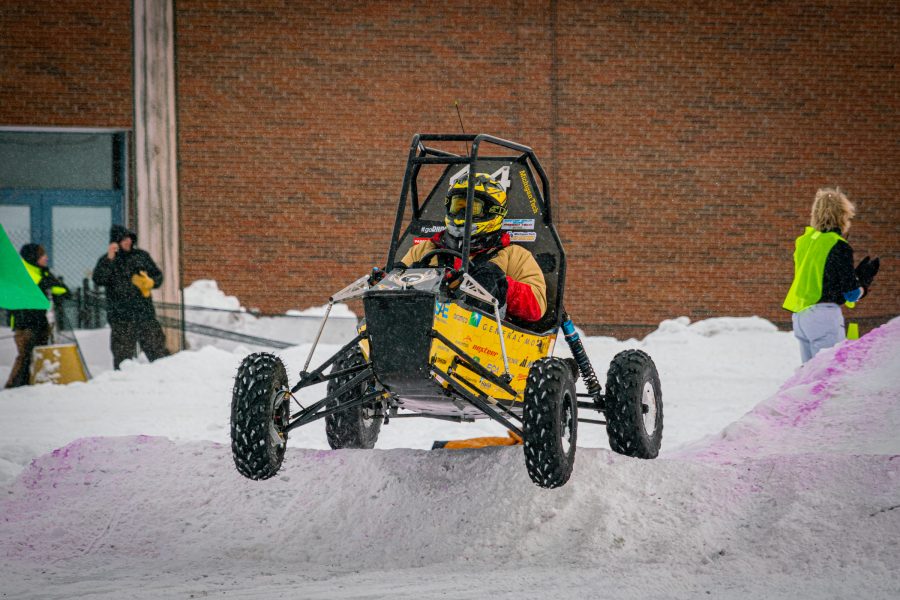
This year, Winter Baja was held on Saturday, January 28, 2023, near the Student Development Complex at Michigan Technological University. It attracted 45 off-road vehicles from 22 universities, which raced around a one-mile snow/ice circuit course.

The day started with the pickled egg slalom race. This event requires drivers to reach the end of the course, hop out of their vehicle and eat a pickled egg. Then a new driver must jump in the vehicle and drive it back to the starting line. Next was the hill climb race, where vehicles drive as high as possible up the snow bank. 

Michigan Tech Blizzard Baja Enterprise team hosts the SAE Winter Baja Competition every year, and takes part in the competition, as well.

Finally, the main event—the endurance race—started at 10:30 AM as cars gridded up at the starting line. TV6 News reporter Tristan Hendrick covered the event: Michigan Tech hosted annual Baja race to give students work experience.

University of Iowa’s Iowa Baja came in first, with 55 laps around the course. Results of the endurance race are available here: https://winterbaja.enterprise.mtu.edu/downloads/WinterBaja2023FinalLapResults.pdf

Congratulations to The Iowa Baja, University of Iowa, which took first place in the endurance race, completing 55 laps around the course in 3:39:02.
Virginia Tech’s Baja Valkyrie took second, completing 51 laps in 3:39:27.

The Michigan Tech Blizzard Baja Enterprise team is advised by Kevin Johnson, assistant teach professor in the Department of Manufacturing and Mechanical Engineering Technology, and Steven Ma, professor of practice in the Department of Mechanical Engineering-Engineering Mechanics.

Michigan Tech computer engineering student Rithik Sawant served as this year’s Winter Baja Coordinator. “The 42nd annual Winter Baja Race this year was one of the largest we have ever held,” he said.

“Winter Baja is the ultimate test for your vehicle—we don’t skimp on the difficulty of the track and size of the jumps.”

Rithik Sawant

Michigan Tech’s Baja team has a long history of success in SAE competitions since the 1970s. Students use modern engineering and manufacturing processes to enhance vehicle performance by focusing on reduction of vehicle mass, maximization of drivetrain efficiency, improvement of driver visibility and comfort, and optimization of off-road vehicle handling and maneuverability.

The 2023 SAE Winter Baja Competition events took place around the clock on January 28 at Michigan Tech.

The Winter Baja Invitational pays tribute to the roots of the Baja SAE Collegiate Design Series and began at Michigan Tech in 1981. Michigan Tech professors emeritus Bill Shapton and Larry Evers created the event to provide students with hands-on engineering experience. One of the first baja races led students through beaver dams and sand pits, from the abandoned Keweenaw town of Mandan up to Copper Harbor. It evolved into a global engineering series with annual official SAE collegiate Baja racing events taking place in North America, South Africa, Brazil, and South Korea.

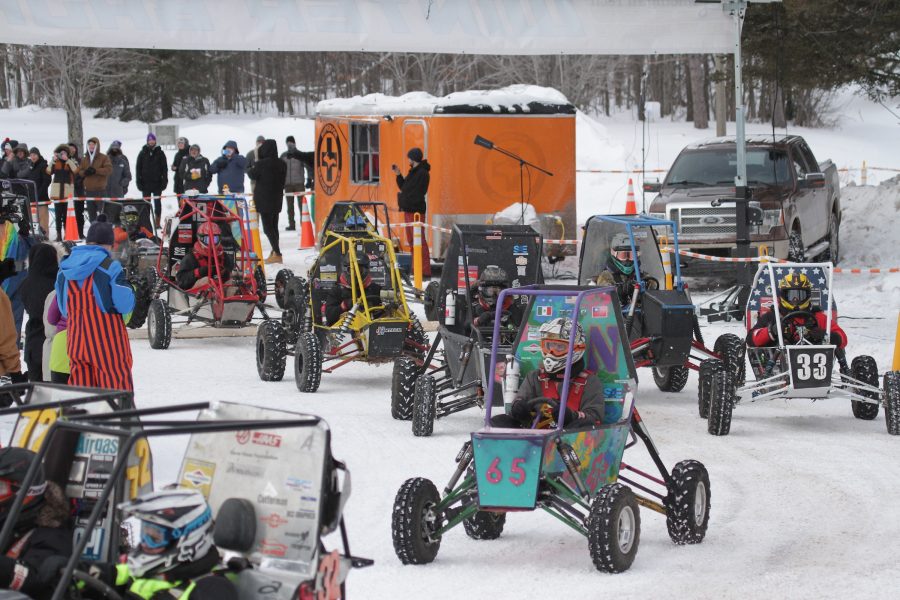
The starting lineup for the endurance race.
MTU Blizzard Baja’s test vehicle, Hornet, competed with a new front suspension system for research and development.

SAE Winter Baja 2023 Event Sponsors

Special thanks to all SAE Winter Baja event sponsors: McLaren Engineering, Milwaukee Tool, TeamTech, Daimler Truck, Kohler, Caterpillar, Pratt Miller, Ford, Professional Fabricating, Extreme Canopy, and locally, Diamond House International, LevelUp, Keweenaw Petroleum Service, Houghton Powersports, Houghton Fire Department, and Superior Search and Rescue.

Winter Baja photography by: Andrew Erickson, Mackenzie Johnson, and Peter LaMantia.

Joe Foster: Geospatial Imagery

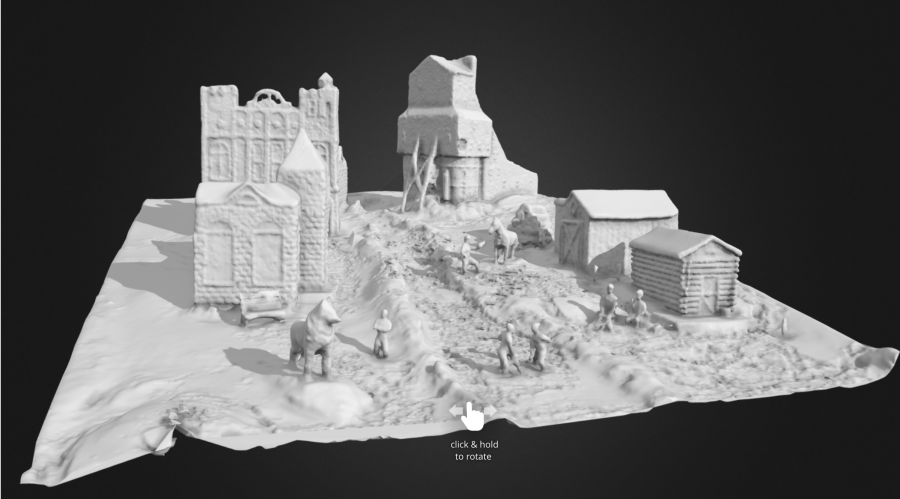
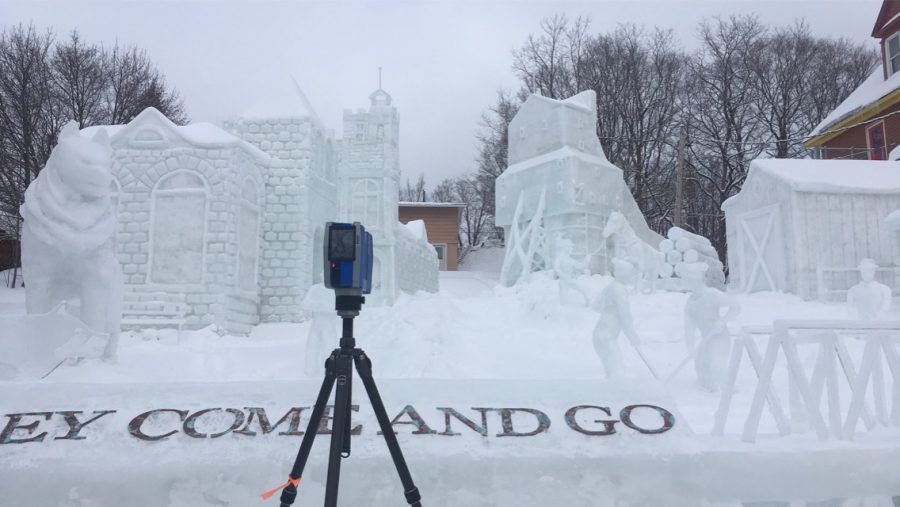
AFTER: A 3d-printed Winter Carnival snow statue created by Michigan Tech students, one that never has to melt!

Joe Foster will share his knowledge on Husky Bites, a free, interactive Zoom webinar Monday, 2/6 at 6 pm ET. Learn something new in just 30 minutes or so, with time after for Q&A! Get the full scoop and register at mtu.edu/huskybites.

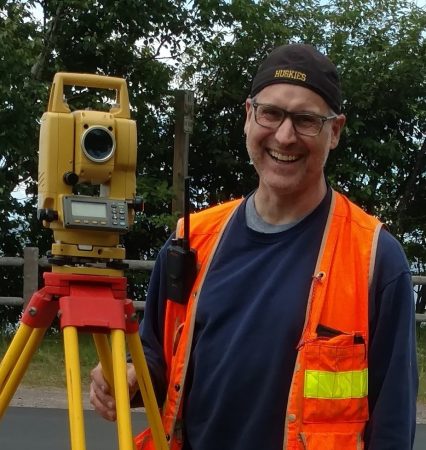
Joe Foster

What are you doing for supper this Monday 2/6 at 6ET? Grab a bite with Dean Janet Callahan and Joe Foster, Professor of Practice in the Department of Civil, Environmental, and Geospatial Engineering at Michigan Tech. Joining in will be four of his geospatial engineering students—Brayden Brincks, Wes Hyslop, Case Vander Heide, and Jacob Wysko. They’re all three members and leaders of the Douglass Houghton Student Chapter of the National Society of Professional Surveyors (aka DHSC of NSPS).

During Husky Bites they’ll share details of their unique new endeavor at Michigan Tech’s annual Winter Carnival (coming up soon, February 8-13, 2023.) 

One of the most thrilling things featured at Winter Carnival are the larger-than-life snow statues built by a Michigan Tech students—spectacular, elaborate displays of snow and ice. When Winter Carnival comes to a close the statues eventually melt. While there are lots of photos to remember them by—now there’s something much more tangible.

BEFORE: Winter Carnival 2022’s winning snow statue, by Phi Kappa Tau. Look familiar? Scroll back up to compare.

Recently, Foster and his students have found a way to take the love of Winter Carnival one step further using LIDAR (Light Imaging Detecting and Radar) to scan the snow statues, with help from Michigan Tech’s Great Lakes Research Center, plus top-of-the-line equipment and support from Seiler Instrument & Manufacturing.

“LIDAR data collected from this endeavor, literally millions of points, enables us to 3D-print an entire snow creation as a trophy, given to each of the prize-winning snow sculpture student teams,” Foster explains. 

During Husky Bites, they’ll walk us through the process and show us the amazing results.

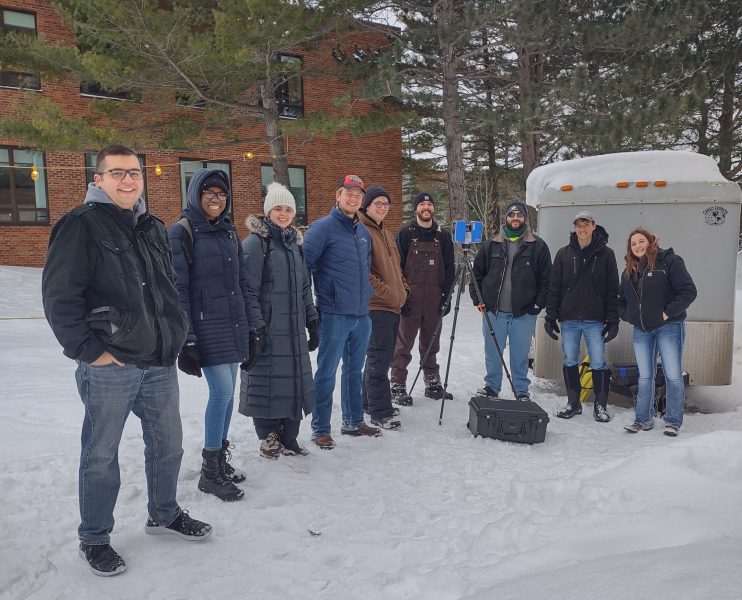
Joe Foster snapped this photo of his geospatial engineering students during Winter Carnival last year.

Professor Foster, how did you first get into engineering? What sparked your interest?

I first got interested in Surveying/Geospatial Engineering while studying forestry at Michigan Tech. Surveying was one of the courses in the program. That’s where I learned there could be an entire profession centered on surveying alone. I was hooked. It incorporated everything I had come to enjoy about forestry—working outside, using sophisticated equipment, drafting, and actually putting all the math I had learned to practical use. After earning my first bachelor’s degree in Forestry, I decided to get a second bachelor’s degree in Surveying and to pursue that as my career. 

Hometown?
I was born and raised in Muskegon, Michigan, but spent a fair amount of time in the U.P. over the years visiting. I have strong family ties to the U.P. I came to Michigan Tech after graduating from Mona Shores High School in the fall of 1982. I’m glad to be back in the Copper Country.

Any hobbies? Pets? What do you like to do in your spare time?
I spend time outdoors enjoying what the Copper Country has to offer.  And I always have my “sidekick” Deirdre (5 year old hound mix rescue) with me.

Brayden Bricks hangs out with Chief on a suspension bridge he built himself using recycled materials.

Brayden, how did you first get into engineering? What sparked your interest?

As with most students in high school, I was not exactly sure what I wanted to do after graduation. However, I was decent in mathematics and enjoyed both indoor and outdoor work. While the field of geospatial engineering is often unadvertised, with a little research I found it to contain a wide range of career opportunities, a very strong future outlook, and a dense concentration of “good” people—people you are willing and want to spend your entire career working with. Michigan Tech was the second closest school I found (11.5 hours from home compared to Eastern Tennessee’s 11.25 hour drive).

Michigan Tech was the first (and only) university I visited in high school. When I met Prof. Foster during my trip I knew Michigan Tech—and the rest of the very welcoming Houghton community—was a perfect fit.

Hometown and family?
I grew up on a farm outside of Maryville, Missouri, a small college town about the same size as Houghton, near the Iowa, Nebraska, and Kansas state borders in the heartland of the country. I have one younger sister who will be graduating high school this year. And yes, it does snow, but only 15″ a year on average. 

Any hobbies? Pets? What do you like to do in your spare time?
In the winter I enjoy downhill and cross country skiing, and when the snow is not on the ground you can probably find me “gravel cycling.” I also have two pets back home, Tater a small toy poodle, and Chief, a large black lab. In addition to the community at DHSC I can often be found hanging with friends from Saint AL’s, a student parish here at Tech.

“I first met Professor Foster while visiting Michigan Tech. Since then, he has been a supportive teacher, and a great advisor.”

Brayden Bricks
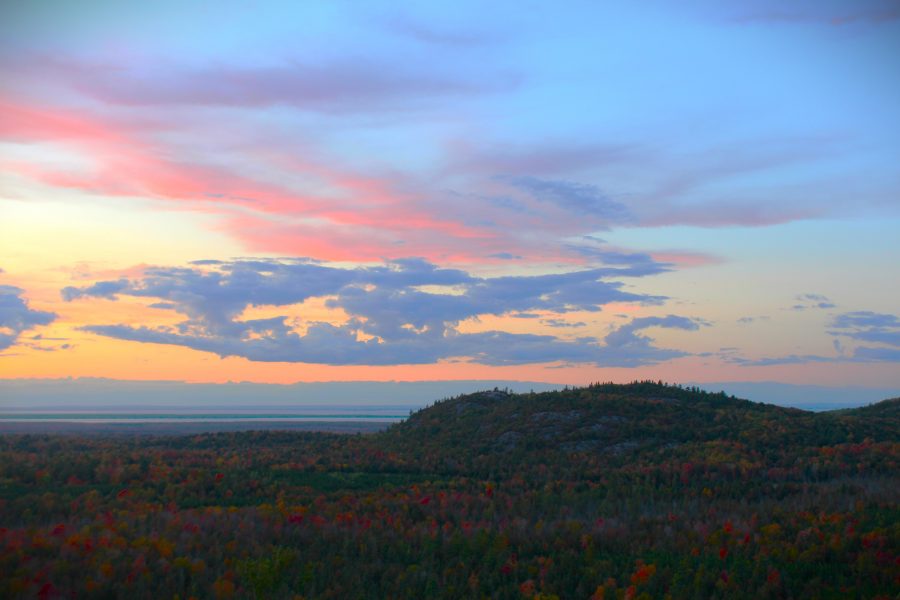
Photo of the Arvon Range, by Wes Hyslop
Wes Hyslop, on a recent trip to Colorado.

Wes, how did you first get into engineering? What sparked your interest?

I kind of stumbled into Land Surveying/Geospatial Engineering as a major, like a lot of students do. I came to Tech after a gap semester after high school. One of the classes I ended up taking was Intro to Surveying. From there I just kind of fell in love with the profession and everything that goes into it. The technology, ability to have my office be the great outdoors, and the history behind it all heavily sparked my interest.

Hometown, family?
I was born in Laurium, Michigan, but have lived in Houghton for the last 18 years. My father is a lecturer in the Department of Forestry and head of the MGIS program (that’s Master of Geographic Information Science) at Michigan Tech. My mother runs her own small business, and I have three brothers.

Any hobbies? Pets? What do you like to do in your spare time?
I enjoy basketball, hiking, fishing, and hunting, and doing basically anything outdoors in my free time. I have two dogs—a Viszla and a Chesapeake Bay Retriever Mix, as well as a cat.

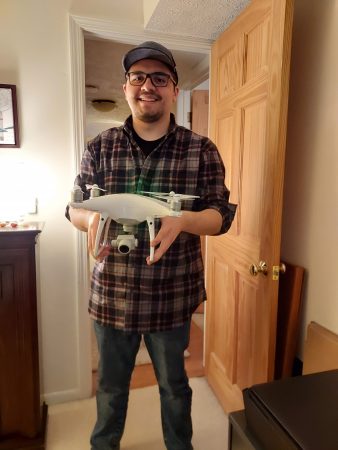
Jacob Wysko has loved computer software ever since he was five years old, and these days he also enjoys flying drones.

Jacob, how did you first get into engineering? What sparked your interest?

Ever since I was young, I’ve always had a keen interest in mapmaking and cartography. I liked to make detailed maps of the house and property that I grew up in. Finding out that there is a degree and career based around making detailed and accurate surveys really sparked my interest. 

I initially started out in Computer Science, thinking I wanted a job that utilized technology, but after learning of the Geospatial Engineering program, I discovered that I could combine both of these aspects—technology and mapping—into a career. It’s been a wonderful experience being able to use and learn the latest technology that surveyors and geoinformaticists use to map the world.

Hometown, family?
I lived in Haslett, Michigan until about the age of 12, then moved to Okemos, Michigan. I attended and graduated from Haslett Public Schools. My dad is an electrician for the Enbridge pipeline station in Mackinaw City, and my mom owns a local healthcare business in the Greater Lansing area.

Any hobbies? Pets? What do you like to do in your spare time?
I have a strong computer background. My mom always tells the story of how when I was age five or six, my granddad got me a cheap, hand-me-down Windows XP computer that had no internet access. I would play on that computer and look through all the settings and learn all the features of each program. Because of that, my primary hobby today is software development. I find it thrilling to slave and ponder over a problem that I could make a computer solve—I love spending hours crafting and perfecting code to make some sort of software. Besides that, I also enjoy flying drones, playing bass guitar, and practicing stenography.

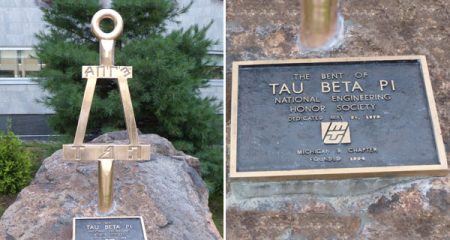
Tau Beta Pi Honor Society at Michigan Tech Initiates 13 New Members

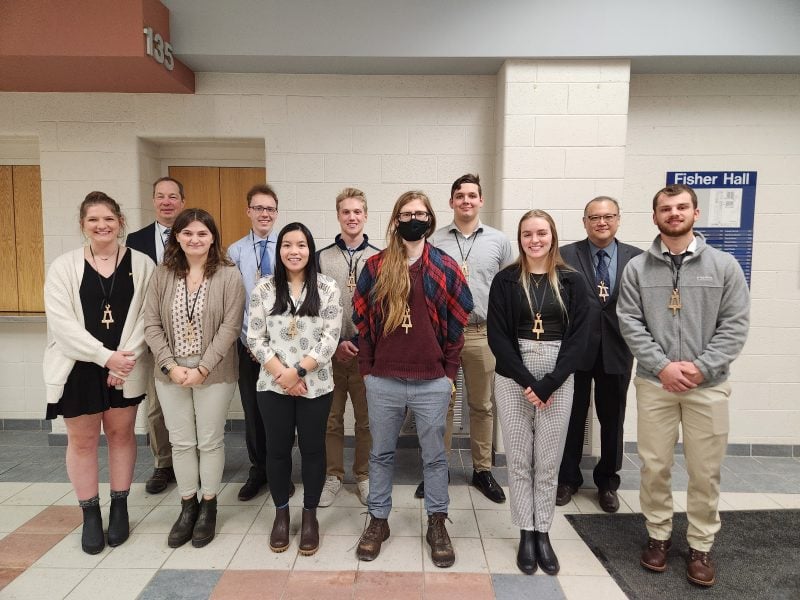
Congratulations to our Fall 2022 Tau Beta Pi Initiates! (Not pictured here: Yifan Zhang and Nathan Machiorlatti.)

The College of Engineering inducted 11 students and two eminent engineers into the Michigan Tech chapter of Tau Beta Pi at the end of the Fall 2022 semester.

Tau Beta Pi is a nationally recognized engineering honor society and is the only one that recognizes all engineering professions. Students who join are the top 1/8th of their junior class, top 1/5th of their senior class, or the top 1/5th of graduate students who have completed 50% of their coursework. The society celebrates those who have distinguished scholarship and exemplary character, and members strive to maintain integrity and excellence in engineering.

Fall 2022 Initiates

Undergraduate Students:

Brodey Bevins, Civil Engineering
David Bradbury, Biomedical Engineering
Erin Ganschow, Environmental Engineering
Heather Goetz, Mechanical Engineering
Madison Ide, Biomedical Engineering
Samuel Kuipers, Civil Engineering
Michael Loucks, Mechanical Engineering

Graduate Students:

Anna Li Holey, MS Environmental Engineering
Nathan Machiorlatti, MS Civil Engineering
North Yates, PhD Mechanical Engineering-Engineering Mechanics
Yifan Zhang, MS Environmental Engineering

Eminent Engineers

Dr. Jin Choi, Professor and Chair, Department of Electrical and Computer Engineering
Dr. Jason Blough, Interim Chair and Distinguished Professor, Department of Mechanical Engineering-Engineering Mechanics

Engineering Ambassadors and SWE Host Engineering Day on MLK Day 2023

MLK Day of Service graphic.

On Martin Luther King Jr. Day, the Society of Women Engineers (SWE) and Engineering Ambassadors (EA) hosted an Engineering Day at Barkell Elementary in Hancock, Michigan. Students from SWE, EA, Tau Beta Pi and Circle K “made it a day on, not a day off” through introducing kindergarten through fifth grade students to engineering.

Kindergarten and first grade students learned about buoyancy and stability through designing a constructing a foil boat to hold a load. Second and third grade students learned about potential and kinetic energy as they designed and constructed roller coasters for marbles. The fourth and fifth graders were introduced to series circuits as they constructed a BouncyBot.

We thank the Tech students for volunteering and the Barkell Elementary students for their enthusiasm and willingness to learn.

By Jaclyn Johnson, Mechanical Engineering-Engineering Mechanics and Gretchen Hein, Manufacturing and Mechanical Engineering Technology.

Sliding into the Future of Mont Ripley

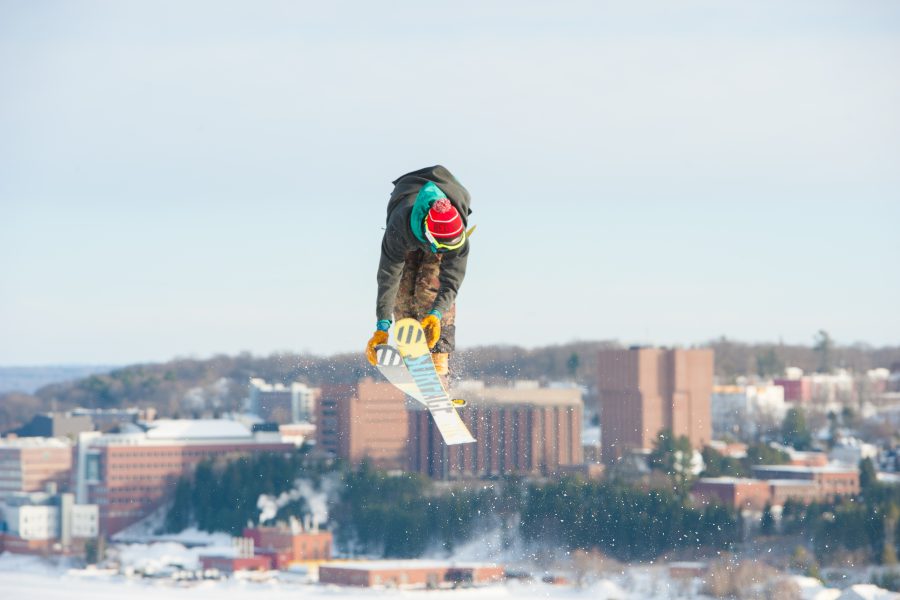
A Michigan Tech student takes the ultimate study break: snowboarding at Michigan Tech’s Mont Ripley
Nick wearing his blue Mt Ripley Shirt
Nick Sirdenis, General Manager, Mont Ripley

Nick Sirdenis, General Manager of Mont Ripley, Michigan Tech’s very own ski area, plus Dan Dalquist, and Josie Stalmack generously shared their knowledge on Husky Bites, a free, interactive Zoom webinar hosted by Dean Janet Callahan. Here’s the link to watch a recording of their session on YouTube. Get the full scoop, and see a listing of all the (60+) recorded sessions at mtu.edu/huskybites.

What are you doing for supper Monday night 1/23 at 6 ET? Grab a bite with Nick Sirdenis, general manager Mont Ripley Ski Area at Michigan Tech. Joining will be Dan Dalquist, ski instructor supervisor for the Ski & Snowboard School, as well as Josie Stalmack, senior in biomedical engineering and student president of the Mont Ripley Ski Patrol. They’ll share plans to some future plans for Mont Ripley, including an updated and larger chalet, a true beginner run from top to bottom, and more parking.

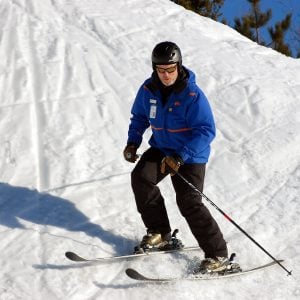
Dan skiing
Dan Dalquist, Mont Ripley Ski School Supervisor

Mont Ripley welcomes all snow enthusiasts. The ski area is owned by Michigan Tech and sits in the middle of Houghton and Hancock, just a mile from campus. Mont Ripley is a star attraction of the scenic Keweenaw Peninsula, home to the most snow in the Midwest. Although Mont Ripley has a great learning area, it is mostly well known for its challenging terrain, from urban backcountry glades to terrain parks with more than thirty features—including jumps and slides. During Husky Bites, Sirdenis will talk about some new features at Mont Ripley currently in planning stages, plus one now in the works.

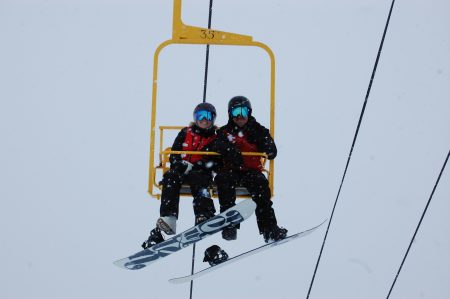
Two people on a chair lift
Josie Stalmack studies biomedical engineering at Michigan Tech. Here she is with her dad, also an MTU alum, patrolling together on the Husky Ski Lift at Mont Ripley.

Sirdenis graduated in 1979 from the Ski Area Management program at Gogebic Community College. He managed Blackjack Ski Area from 1981-2000 and lived in Ironwood Michigan. He was hired as a consultant in 1998 to design the snowmaking system and to oversee the construction, and then was hired as the general manager of Mt. Ripley. Originally from Detroit, Sirdenis and his wife Julie have 3 children and his entire family enjoys skiing.

Dan Dalquist is a Houghton High School and Michigan Tech alum and started skiing at Mont Ripley in the 1966-67 season, and joined the Mont Ripley Ski Patrol in January 1971. He became a professional ski instructor in 2001. For Dan, skiing at Mont Ripley was, and still is, a family event. His children learned to ski at 2 years old and they both still ski. All 4 of his grandchildren also ski. Dan graduated from Michigan Tech with a BSBA in Marketing Management in 1976.

“Nick and I have known each other since he first started at MTU,” says Dalquist. “And Josie is a fellow ski patroller who I’ve been privileged to work with. As a matter of fact, Josie’s dad is an MTU grad. He came to Tech as a patroller, and I was on the Michigan Tech Ski Patrol at that time, too, so I helped introduce Thad to Mont Ripley.”

An uphill view of the chair lift on Mont Ripley
An especially gorgeous day on Mont Ripley at Michigan Tech

An Ann Arbor native, Josie Stalmack learned to ski as soon as she could walk and picked up snowboarding when she was about 7 years old. Skiing and snowboarding have always been a part of her life, as her dad is a member of the National Ski Patrol. What really drew her to Michigan Tech was Mont Ripley and the fact that she could get certified and join the ski patrol.

“Nick and I have known each other since he started at MTU,” says Dan. “Josie is a fellow ski patroller I have been privileged to work with. Her dad is a MTU grad, too. I trained him to become a ski patroller when he was at Tech!”

“I met both Nick and Dan by joining the Mont Ripley Ski Patrol. Both have such a loving passion for skiing and Mont Ripley. I am just happy to be a part of such a wonderful ski hill.”

Josie Stalmack
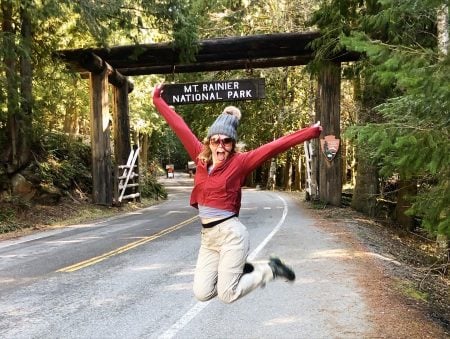
Josie does a happy jump in front of the Mount Rainier lodge sign
Josie took a recent trip to another Mont, this one in Washington state: Mount Rainier

Nick, what do you like to do in your spare time?
Skiing, fishing, motorcycle riding. We always have dogs and birds, right now Ziggy the whippet and Sylvia the Pug and Yani the canary. I love doing construction. You’ll usually find sawdust in my pocket.

Dan, what do you like to do in your spare time?
I list cross country skiing, ice skating and snowshoeing as my winter hobbies. I also bicycle: mountain bike and road bike, plus boating, fishing, and reading.

Josie, where did you grow up?
I grew up in Ann Arbor, Michigan. I am the youngest of four, with two older brothers and an older sister. I am also blessed with a wonderful brother-in-law, two nieces and a nephew. Lastly, I am engaged to be married, so I am also gaining a whole other family!

Any hobbies?
Outside of skiing and snowboarding, I really enjoy weightlifting, hiking and backpacking, reading, baking, and spending time with friends and family.

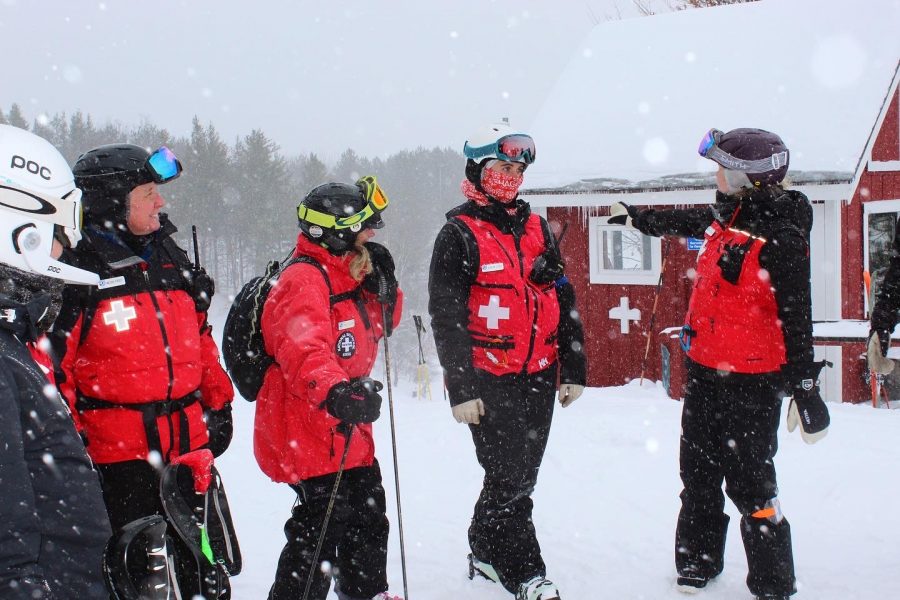
Ski patrol stand at Mont Ripley and talk.
Members of Mont Ripley Ski Patrol
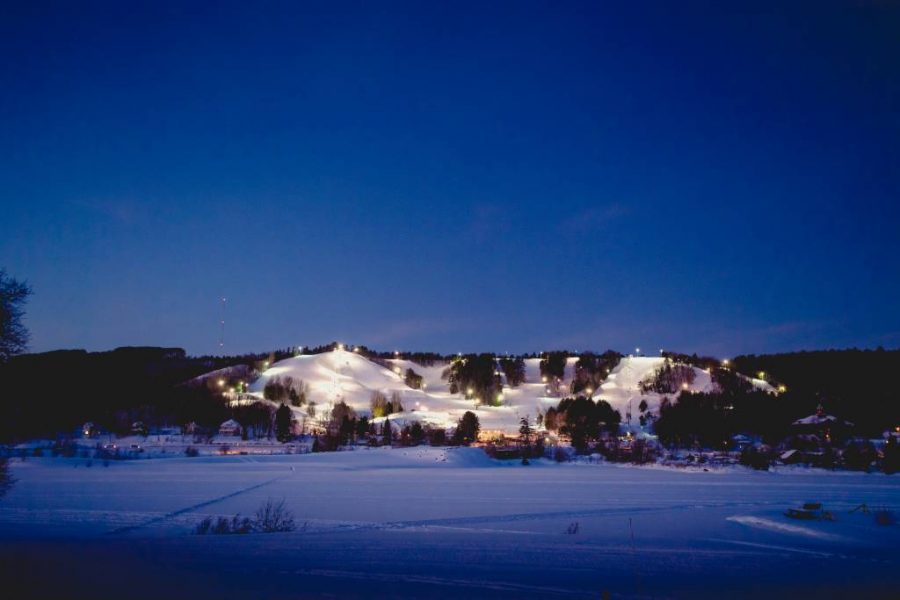
lights on Mont Ripley twinkle in the distance
View of Michigan Tech’s Mont Ripley Ski Area from across Portage Canal

Click here to make a donation to the Mt. Ripley Expansion Fund

Joint ROTC Commissioning Ceremony December 17

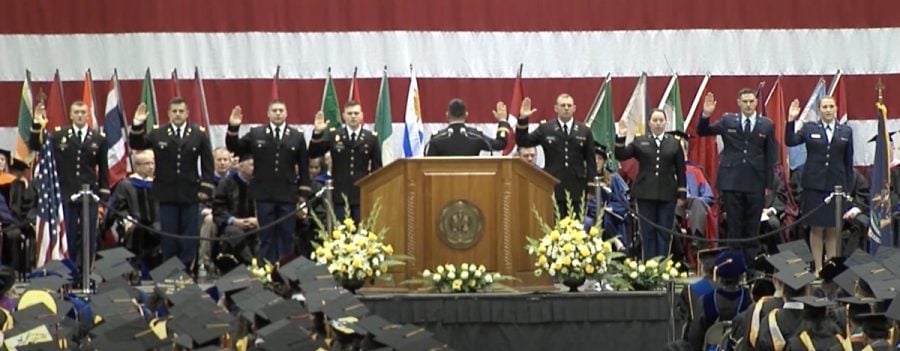
Spring 2019 commencement ceremony with cadets on stage.

The Air Force and Army ROTC invite you to the Fall 2022 Commissioning Ceremony on Saturday (Dec. 17) at 7:30 a.m. at the Rozsa Center.

This semester we have three Air Force cadets and five Army cadets commissioning.

Those commissioning are from the following programs:

Civil Engineering | Environmental Engineering | Mathematics | Mechanical Engineering

We will also be streaming the ceremony if you prefer to watch it live on YouTube.

SWE Section Establishes Endowed Scholarship

Congratulations to Michigan Tech’s SWE Section as they announce the creation of a new endowed scholarship!

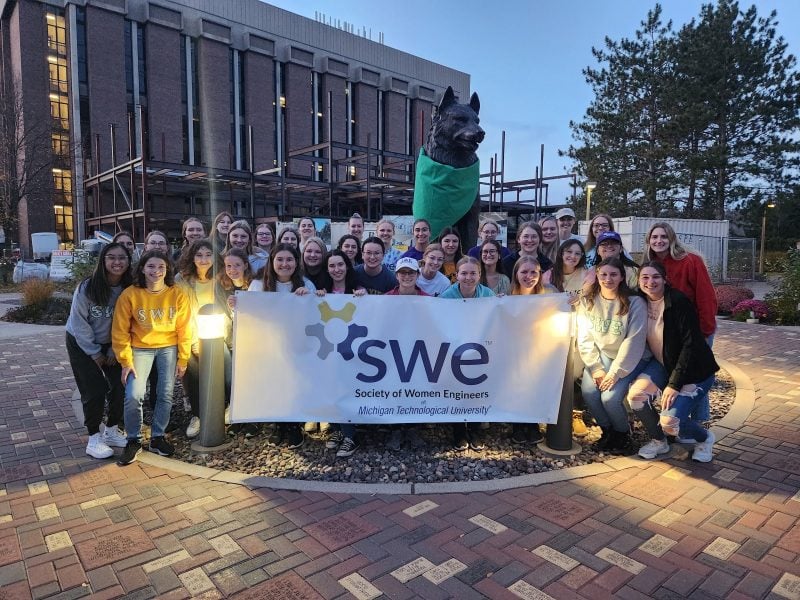
The Society of Women Engineers (SWE) Section at Michigan Tech is excited to announce the creation of a new endowed scholarship.

“The scholarship is in honor of our alumnae and alumni who have been part of our section since 1976,” says SWE advisor, Associate Teaching Professor Gretchen Hein.

“Eight years ago, in 2014, we hosted the SWE Region H Conference,” Hein explains. “With the funds received from SWE, we began saving with the goal of establishing an endowed scholarship. At long last, we have met our goal and will begin awarding an annual $1,000 endowed scholarship in 2026 to an active SWE section member.”

The new scholarship is in addition to the current section scholarships being awarded annually, notes Hein.

Michigan Tech SWE logo with gear

“As the President of SWE at Michigan Tech, I am excited that our section can provide an additional scholarship opportunity for our members,” said Aerith Cruz, a third year Management Information Systems student. “Our mission is threefold: ‘to stimulate women to achieve their full potential in careers as engineers and leaders, expand the image of the engineering profession as a positive force in improving the quality of life, and demonstrate the value of diversity.’ The establishment of our endowed scholarship demonstrates our dedication to support the future of SWE at Michigan Tech.”

Details regarding the scholarship application process will be announced in 2026. The process will mirror SWE’s current scholarship application where students complete a short essay, have a cumulative GPA of 3.0 or higher, and provide a copy of their resume and a letter of recommendation.

Adds Hein: “Members of Michigan Tech’s SWE section greatly appreciate the guidance and assistance received from Jim Desrochers, director for corporate relations at Michigan Tech, and also Michigan Tech SWE advisor Elizabeth Hoy, director of business and program development at Michigan Tech’s Great Lakes Research Center. And we thank the University and our current and alumni members for their support!”

Would you like to support the SWE Endowed Scholarship?

Donations are welcome! Contribute via check or credit card. Visit mtu.edu/givenow for online donations or to find the mail-in form.

Key points:

  1. Gift Type is “Make a one time gift”
  2. Enter your gift amount
  3. Gift Designation: Select “Other” and enter “SWE Endowed Scholarship #5471″

SWE Congratulates Our Graduating Seniors and Scholarship Recipients

The Society of Women Engineers (SWE) Section at Michigan Tech congratulates our graduating seniors: Sophie Stewart and Audrey Levanen (mechanical engineering) and Kiira Hadden (biomedical engineering). We look forward to hearing from them as alumnae!

The section awarded two scholarships to active upper-division students. We are so proud of the accomplishments of Natalie Hodges (dual major: electrical and computer engineering) and Alli Hummel (civil engineering).

We will be awarding two scholarships in the spring to first- and second-year active members and will be posting the application information during the spring semester.

By Gretchen Hein, Advisor, Society of Women Engineers.

Five Times in a Row: Michigan Tech Students Earn First Place in ASM Undergraduate Design Competition–Again!

Michigan Tech’ 550-ton Breda direct extrusion press, just one of several tools used by MSE students at Michigan Tech.

Many engineers remember the excitement of applying their classroom knowledge to their capstone senior design project while also being a bit overwhelmed about how to actually do it. 

Paul Sanders, Patrick Horvath Professor of Materials Science and Engineering at Michigan Tech

Back in 2010, this challenge was recognized in Materials Science and Engineering (MSE) by Michigan Tech Professor Mark Plichta, an innovator in project-based engineering education, and Northwestern University Professor Greg Olson, a leader in the relatively new field of computational materials engineering. 

The two selected then Assistant Professor Paul Sanders, (who had a Michigan Tech BS and a Northwestern PhD and materials design experience at Ford Motor Company) to implement their vision for MSE capstone senior design. This vision involved using computational materials engineering—a tool that, at the time, was only taught in graduate school. Sanders (somewhat unknowingly) accepted the challenge, and through a sometimes bumpy, continuous improvement process developed the current curriculum in MSE at Michigan Tech.

“Michigan Tech undergrads, with their application mindset, hands-on, problem-solving skills, and openness to mentorship, provided the ideal culture for this endeavor.”

Paul Sanders

One condition of Olson, who provided the computational engineering software tool Thermo-Calc, was that Michigan Tech compete in the ASM Undergraduate Design Competition, an event that started in 2008 with Northwestern University winning first place. The Michigan Tech strategy was to utilize traditional hypothesis-based inquiry through application of engineering statistics coupled with design of experiments (DOEs) in both the modeling and laboratory environment. Eventually a methods course was developed for spring of the junior year that included a semester-long project to demonstrate the tools, followed by two semesters of the capstone senior design course. Prof. Sanders led this coursework and scoped projects to fit the Michigan Tech methodology. Long-term industry sponsors Eck Industries, ArcelorMittal, and Waupaca Foundry were critical to implementing the vision by providing industry-relevant projects that would allow students to use the toolset taught in the curriculum.

Michigan Tech first entered the ASM Design Competition in 2012 earning second place (Northwestern was first). Michigan Tech’s first five entries earned second place three times and third place twice. Starting in 2018, Michigan Tech started winning…and continued winning…for 5 years in a row. This is a credit not only to the student work on these projects, but also to the methodology and support of industry sponsors. As Janet Callahan, Dean of the College of Engineering at Michigan Tech states, “We’re very proud of our world-class senior design students’ experience. Where else do teams win first place five years in a row, for alloy design, in an era where it isn’t about randomly mixing elements, but rather, about predictive modeling based on known materials parameters? These projects⁠—centered on fundamentally interesting questions, are coupled with faculty and industry expertise. No wonder we’re the go-to place for materials engineers!”

Dr. Julio G. Maldonado, ASM Foundation, presents the award to Michigan Tech seniors Isabella Wakeham Jaszczak (2nd from left) Jacob Longstreth, (3rd from left) Jake Klotz (right). Team member Nick Hopp was unable to attend the conference and awards ceremony.

The student team that completed the “five-peat” in 2022 designed a process for modeling the extrusion of aluminum-magnesium (Al-Mg) alloys with cerium (Ce) additions that can maintain their strength at service temperatures up to 400°F. This student team was unique in that there was only one MSE student on the team, Isabella Wakeham Jaszczak, and three mechanical engineering students, Nick Hopp, Jake Klotz, and Jacob Longstreth. Even though the team graduated in spring of 2022, three of the four team members accepted their award at ASM International’s IMAT Conference in New Orleans on September 12, 2022. 

“The success of the MSE senior design program is due not only to current students embracing the time-consuming process of project engineering, but also our loyal alumni who provide the projects that continuously improve our process.”

Paul Sanders

Cerium is the most abundant (and lowest cost) rare earth element, and Ce is known to improve the properties of aluminum. Given that rare earths are often mined together and that the demand is higher for heavier rare earths, there is excess cerium. The project sponsor David Weiss, vice president of research and development at Eck Industries, collaborates on research teams who identify beneficial uses and markets for cerium in order to improve the economics of mining rare earth. Weiss suggested applying Ce to Al extrusion for Eck’s customer, Eaton Corporation.

Extrusion is the process of forming long, two-dimensional cross-sections by forcing hot metal through a die. The students were tasked with modeling the extrusion of Al-Mg-Ce alloys to predict the necessary extrusion force and resultant flow rate. The team used a DOE-based strategy to develop a deformation model for the alloy using elevated-temperature compression testing coupled with MATLAB data analysis. Material model parameters were then entered into the commercial extrusion modeling software Inspire Extrude from Altair to calculate the extrusion force and flow rate. These predictions were tested in Michigan Tech laboratories by permanent mold casting the custom Al-Mg-Ce alloys followed by extrusion on a 550-ton Breda direct extrusion press, donated by Alcoa. To better understand the project, please see the students’ excellent four-minute video .

No small feat: Michigan Tech engineering students designed a process for modeling the extrusion of aluminum-magnesium (Al-Mg) alloys with cerium (Ce) additions. These alloys can maintain their strength at service temperatures up to 400°F. Pictured above, extruding one of the alloys.

“My decision to return to Michigan Tech as an MSE faculty member was motivated in large part by the type of students Michigan Tech attracts,” reflects Sanders, now the Patrick Horvath Professor of Materials Science and Engineering. “They are smart, hardworking, and willing to learn.”