
Category: Research

MTU Geophysics Students Conduct Paleomagnetic Research in Iceland

Researchers in reflective gear walk along a rocky shore in Iceland.
Geophysics students Sam Jensen and Miah Mol joined an MTU-led research team this summer studying paleomagnetism in northwestern Iceland. (Photo courtesy of the Department of Geology and Mining Engineering and Sciences)

While some students spend their summer vacations at the beach, budding geophysicists Sam Jensen and Miah Mol opted for something a little more down to earth—literally.

Jensen, a second-year master’s student in geophysics, and Mol, a junior double-majoring in geology and applied geophysics, spent six weeks this summer in Iceland as part of a National Science Foundation-funded paleomagnetic research project, studying prehistoric magnetic fields found in the geological landscape of northwestern Iceland.

All aboard! Michigan Tech’s Rail Transportation Program is Leading the Way

Railroad tracks curving around a green hill with shrubs on either side.
Michigan Tech’s Rail Transportation Program (RTP) has been a leader in rail education and technology for nearly 20 years.

For over 15 years, Michigan Tech’s Rail Transportation Program (RTP) has been committed to developing tomorrow’s leaders in rail engineering. As part of the Michigan Tech Transportation Institute (MTTI) and Department of Civil, Environmental, and Geospatial Engineering (CEGE), RTP has served as a beacon of research, education, and innovation for rail enthusiasts from high school students to expert faculty and everyone in between.

Michigan Tech’s one-of-a-kind program was founded in 2007 by Pasi Lautala, then a recent Michigan Tech doctoral graduate, now long-time faculty member, who serves as director of both RTP and MTTI. Since its inception, the program’s goal has been three-fold: education, research, and outreach.

Interdisciplinary Health Research Engineered to Benefit Communities

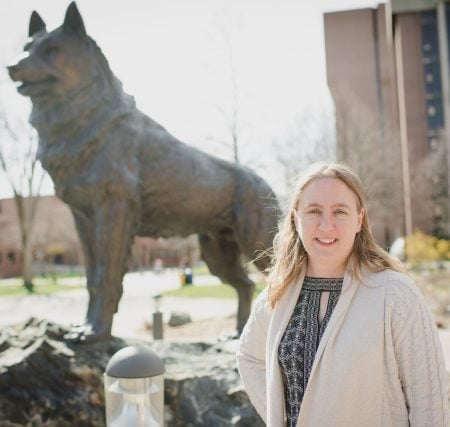
Caryn Heldt in front of the Husky Statue.
Caryn Heldt and other researchers at Tech are working on cross-disciplinary approaches to achieve impactful breakthroughs for improved public health. This photo was taken before completion of the new H-STEM Complex on campus, which has further accelerated opportunities for collaboration.

Chemical Engineering Professor Caryn Heldt exemplifies how research at Michigan Tech crosses disciplines—and crosses the globe. The James and Lorna Mack Chair in Continuous Processing, Heldt is also an affiliate professor in biological sciences at Michigan Tech, and directs the University’s Health Research Institute.

Aside from the benefit to communities, internships and similar collaborations benefit Michigan Tech researchers, said Heldt. “International partnerships are really key to expanding your research network, research ideas, and to be able to have your research out into industry and be applied.”

College of Engineering Welcomes New Faculty Members

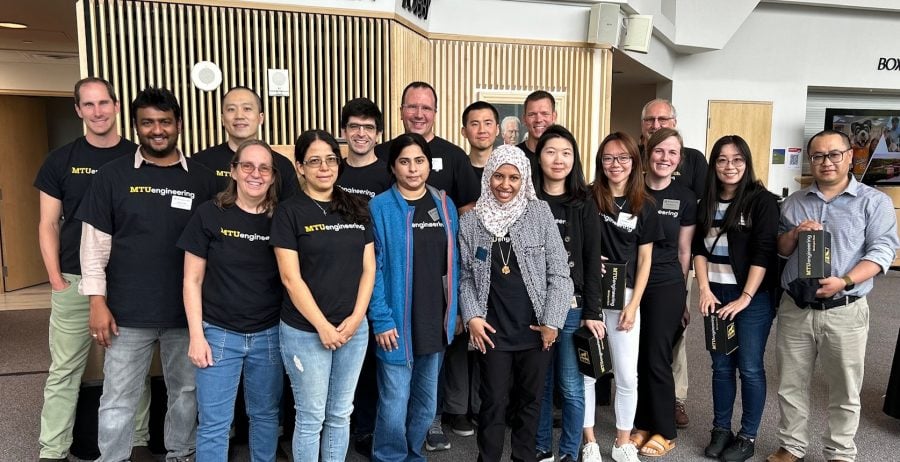
Dean Michelle Scherer in a group with the sixteen new faculty.
Earlier this semester, Dean Michelle Scherer welcomed 16 new faculty members to the College of Engineering.

The Michigan Tech College of Engineering is pleased to welcome 16 new faculty members across eight departments this year. These new faculty members bring a wide range of specializations in robotics, geomechanics, cancer tissue engineering, snow hydrology, and more. These brilliant educators and researchers join us from all over the world, including five Michigan Tech College of Engineering alumni. Welcome Huskies!

Read more about our new faculty:

Taking Tech Farther North: GMES Alum Caleb Kaminski on His Journey to Alaska

Caleb Kaminski in a parka with a knit hat and sunglasses outside in the snow.
Caleb Kaminski, geological engineering alumni, outside Utqiagvik, Alaska during an Arctic research expedition.

It all started with a geology course. After graduating high school, Michigan Tech alumnus Caleb Kaminski wasn’t sure what to study, but he knew it would be STEM-related. While working towards his associate’s degree at West Shore Community College, Kaminski tried it all, from aquacultural science to computer science to physics. “But everything clicked when I stumbled upon an introductory geology course,” says Kaminski. “I was hooked instantly!”

Even then, Kaminski knew he wanted his academic career to include more than just geology. “When I discovered Michigan Tech offered a degree in geological engineering, I was sure I found the right path to embark on. It combined my newfound love for geology with the challenging engineering component I was eager to be challenged by. And just like that, I found my perfect academic match!”

Machine Learning Model Aims to Break Cubic Scaling Barrier of Quantum Mechanics

Susanta Ghosh
Susanta Ghosh is co-author on a paper recently published in npj Computational Materials.

Susanta Ghosh, an assistant professor in the Department of Mechanical and Aerospace Engineering, is co-author on a paper titled Electronic structure prediction of multi-million atom systems through uncertainty quantification enabled transfer learning, which was published August 12 in npj Computational Materials.

Multidisciplinary Team Publishes on Self-Disinfecting Coating

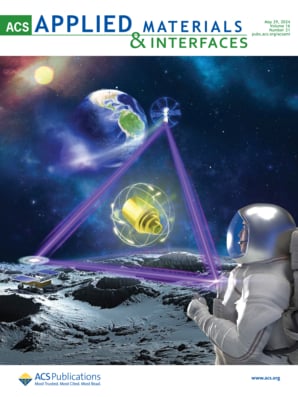
ACS Applied Materials and Interfaces cover.

Professors Bruce Lee (BioMed) and Caryn Heldt (ChE/HRI) are co-authors of a new paper published in ACS Applied Materials & Interfaces.

The paper is titled “Utilizing Rapid Hydrogen Peroxide Generation from 6-Hydroxycatechol to Design Moisture-Activated, Self-Disinfecting Coating.”

The paper describes the use of a novel biomimetic coating that could be activated to generate disinfectant when wetted, such as by moisture found in respiratory droplets. This moisture-activated coating was demonstrated to disinfect various strains of bacteria and viruses and can potentially be used as a self-disinfecting coating to limit the spread of various types of infections.

Ph.D. student Fatemeh Razaviamri (biomedical engineering) is the lead author of this paper. Additional co-authors are Sneha Singh ’23 (M.S. Chemical Engineering), postdoctoral researcher James Manuel (BioMed), Ph.D. student Zhongtian Zhang (biomedical engineering) and laboratory technician Lynn M. Manchester (ChE).

Fatemeh Razaviamri, Sneha Singh, James Manuel, Zhongtian Zhang, Lynn M. Manchester, Caryn L. Heldt, and Bruce P. Lee
ACS Appl. Mater. Interfaces 2024, 16, 21, 26998–27010
Publication Date: May 15, 2024
https://doi.org/10.1021/acsami.4c00213

Spring 2024 REF Awards Announced

The Vice President for Research Office (VPR) announces the Spring 2024 Research Excellence Fund (REF) award recipients. Congratulations to each of the awardees.

The REF team also wishes to thank the individual REF reviewers and review panelists, as well as the deans and department chairs, for their time spent on this important internal research award process.

The principal investigators of the awarded projects include:

Research Seed Grants:

Jiehong Guo
Jiehong Guo
Yixin Liu
Yixin Liu
Bhisham Sharma
Bhisham Sharma

Chris Middlebrook to Discuss MTU Semiconductor Learning Opportunities as Panelist for UPEDA Meeting

Christopher Middlebrook (ECE) was a panelist at a meeting on May 9 hosted by the Upper Peninsula Economic Development Alliance (UPEDA). The event took place at Northern Michigan University. Distinguished leaders from universities and community colleges in Michigan’s Upper Peninsula discussed innovations in the higher education landscape of the U.P. Panel discussions will explore challenges and collaborative opportunities with the workforce.

Middlebrook, a professor in the Department of Electrical and Computer Engineering, will discuss the new semiconductor-focused curriculum and learning paths now being developed at Michigan Tech — both for traditional undergraduate engineering students, and for other individuals interested in short-term, flexible training to jump-start career paths for in-demand job roles in the semiconductor industry in Michigan.

A wide range of students will be eligible to participate in the new semiconductor learning programs at Michigan Tech, including high school students, University students, community college students, job seekers and veterans. Learning will occur online, on campus at Michigan Tech and on-site at industry partner locations. Scholarships, transportation, child care and other wraparound services will be available to support students. Much of the new curriculum will kick off in fall 2024, said Middlebrook, with further details to be announced. To receive updates via email, add your information to the Michigan Tech Electronics Hub sign-up form.

Some opportunities for high school students will be happening this summer through Michigan Tech’s Summer Youth Programs (SYP). The week of July 21-26, students in grades 9-11 can attend NEXT Scholars: Semiconductors, a weeklong exploration offered on campus. Full sponsorship of the cost is available for 12 students for the program. “This will allow students to attend at no cost, which is very exciting and such a wonderful opportunity,” noted Middlebrook.

ECE Professor Chris Middlebrook

In addition, students who take part in two additional SYP sessions, Women in Engineering (June 16-21) and Engineering Scholars (June 23-28), will have opportunities for hands-on semiconductor fabrication activities and field trips to nearby Calumet Electronics.

MTU has received grants totaling $970,000 from the Michigan Economic Development Corporation to support a major expansion of semiconductor education and training programs for workforce development in Michigan. The amount includes $770,000 for the semiconductor curriculum work and $200,000 for the Michigander Scholars Program.

“Our overall goal is to form a talent pipeline to meet Michigan’s increased demand for skilled engineers and technicians in the semiconductor industry, where jobs are projected to grow at least 11% in the next five years,” said Middlebrook.

At Michigan Tech, Middlebrook teaches courses in electrical and computer engineering, with active research in electrical and optical interconnects and platforms. He serves as the faculty advisor for the IPC-Electronics student chapter at Michigan Tech, and directs the Plexus Innovation Center, a professional-grade, electronics-focused makerspace.

2024 World Water Day: GLRC Student Poster Award Winners

22 March World Water Day 2024 Water for Peace banner.

Congratulations to the Great Lakes Research Center (GLRC) Student Poster Award winners, in recognition of World Water Day 2024.

The GLRC winner for the Undergraduate Research and Scholarship Symposium coordinated by the Pavlis Honors College on March 22 was:

A big thank-you to our graduate student judges: master’s students Hunter Roose and Ryan Heines (both Biological Sciences) and Cassandra Reed-VanDam (Applied Ecology).

The GLRC winners at the Graduate Student Government (GSG) Graduate Research Colloquium on March 26 placed as follows:

Thank you to all the student participants and their GLRC-affiliated advisors.

By the Great Lakes Research Center.