Category: Engineering Fundamentals

MTU Systems Engineering Capstone Team Receives NASA Johnson Space Center APEX Award

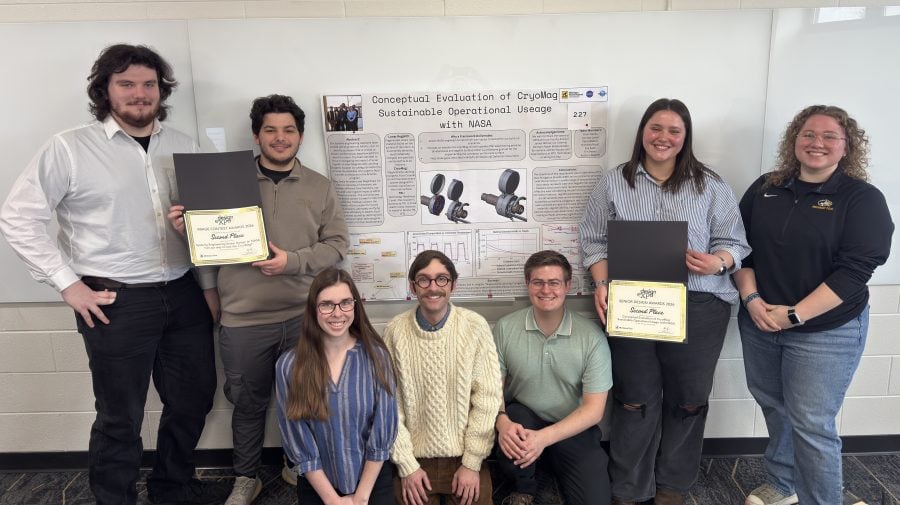
The Michigan Tech systems engineering capstone team poses with their research poster and certificates at the 2026 MTU Design Expo.
The Michigan Tech Systems Engineering capstone team received the APEX Award for their collaborative work with NASA’s Johnson Space Center. The team also took home second place in the Senior Design Awards at the 2026 Michigan Tech Design Expo. (Photos courtesy of MTU Department of Engineering Fundamentals)

Michigan Tech students are earning NASA awards for work designed to make future Artemis missions more reliable!

This summer, the Bachelor of Science in Engineering (BSE) capstone team received an “Awesome Performance in EXploration DIvision” 2026 APEX Award from NASA’s Johnson Space Center for their Senior Design project titled “Conceptual Evaluation of CryoMag Sustainable Operational Usage with NASA.” The team seeks to develop a framework to mitigate the impact of lunar regolith on CryoMag connectors to increase the reliability of cryogenic fluid transfer on lunar missions.

This year’s award-winning team was led by Katie Walters and includes Brian Marku, Connor Jones, Nicholas Wyatt, Ella Santi, Tim Peters, and Kathryn Bugbee.
College of Engineering Celebrates New and Promoted Faculty

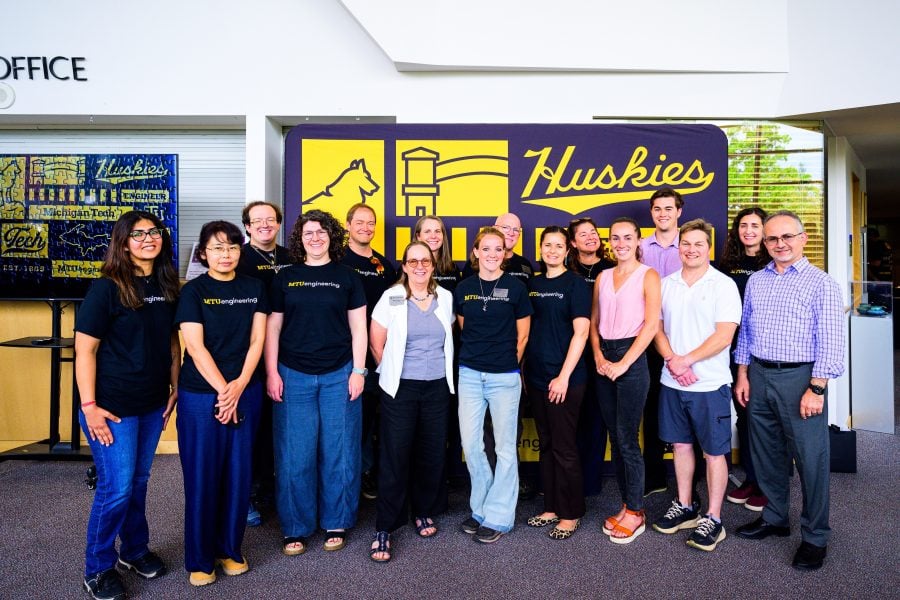
New faculty and staff from Michigan Tech’s College of Engineering pose with Dean Michelle Scherer in front of an MTU-branded photo backdrop.
The College of Engineering welcomed new faculty and staff before the start of the 2026-2027 academic year, where newly promoted faculty were also celebrated.

The College of Engineering kicked off the 2026-2027 academic year by welcoming seven new faculty members this August. The new faculty members bring a wealth of academic and industry experience to support new and expanding programs in aerospace engineering, ecological engineering, and more.

Dean Michelle Scherer also recognized the promotions of nine faculty members, highlighting their continued excellence in research, education, and mentorship.

“These faculty members are moving and shaking in their fields and are engineering new and innovative approaches to help make people’s lives better and educate the next generation of engineers,” said Scherer. “I could not be more delighted to see all of them recognized with well-earned promotions. Keep your eyes on this group!”

College of Engineering Welcomes New Faculty Members

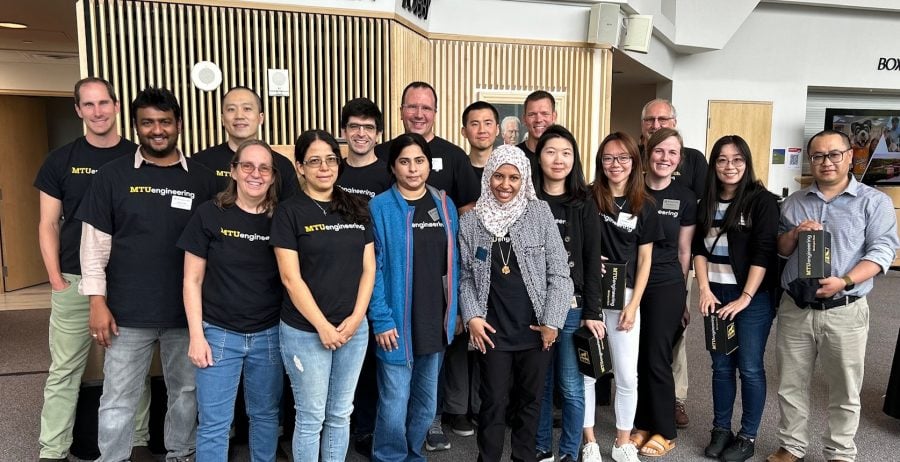
Dean Michelle Scherer in a group with the sixteen new faculty.
Earlier this semester, Dean Michelle Scherer welcomed 16 new faculty members to the College of Engineering.

The Michigan Tech College of Engineering is pleased to welcome 16 new faculty members across eight departments this year. These new faculty members bring a wide range of specializations in robotics, geomechanics, cancer tissue engineering, snow hydrology, and more. These brilliant educators and researchers join us from all over the world, including five Michigan Tech College of Engineering alumni. Welcome Huskies!

Read more about our new faculty:

Dean’s Teaching Showcase: First-Year Engineering Team

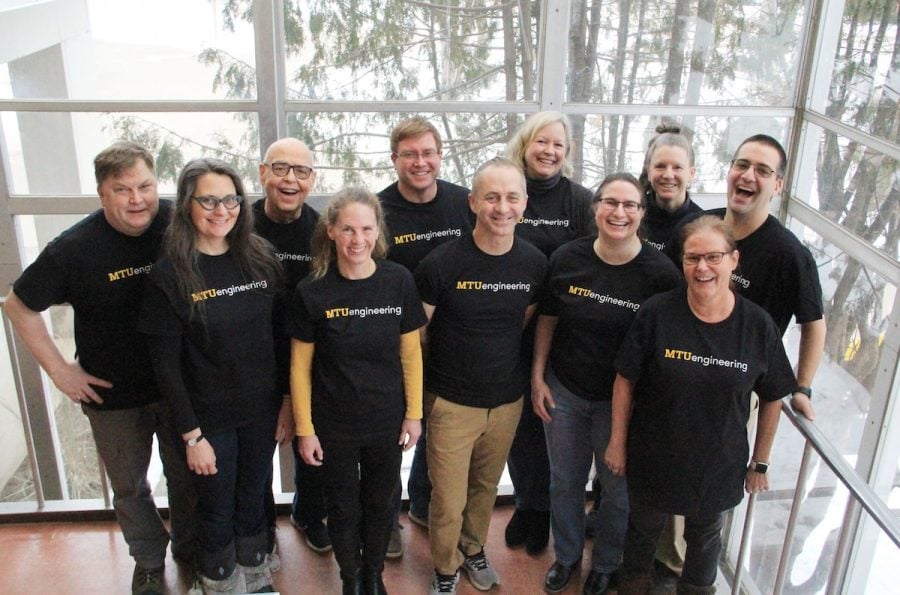
Group of eleven faculty and staff standing by a window.
L–R: Ken Thiemann, Michelle Jarvie-Eggart, Jon Sticklen, AJ Hamlin, Matt Barron, Brett Hamlin, Mary Raber, Amber Kemppainen, Amy Monte, Darlene Saari, and James Bittner.

College of Engineering Dean Audra Morse has selected the core first-year engineering faculty team from the Department of Engineering Fundamentals (EF) for the Deans’ Teaching Showcase for their work in developing and delivering an innovative learning experience. The team includes Matt Barron, James Bittner, Gabriel Draughon, Amy (AJ) Hamlin, Brett Hamlin, Michelle Jarvie-Eggart, Amber Kemppainen, Amy Monte and Ken Thiemann, and is supported by staff, students and adjunct instructors who are essential to the team’s mission. The team will be recognized at an end-of-term event with other showcase members and is a candidate for the CTL Instructional Award Series.

Gabriel Draughon
Gabriel Draughon

The team implements many high-impact practices across 11 sections of ENG1101 and ENG1102, serving 800-1,000 students per semester. Students enter with a wide variety of skills and attributes. The team adopts many strategies to ensure all students develop the knowledge and mindsets needed to succeed in second-year classes associated with 18 different majors.

This passionate team of educators continually pushes the boundaries of pedagogy in order to meet students where they are at and support their growth throughout their first year. Their practices include cohort scheduling that places students in several of the same classes together, making it easier to form study groups and friendships; flipped classrooms that foster hands-on learning during class time; and undergraduate near-peer mentors from the innovative LEarning with Academic Partners (LEAP) program who support the active learning environment.

The team embraces the Kern Entrepreneurial Engineering Network (KEEN) framework, which fosters a mindset of curiosity, building connections across disciplines and creating value for others. By using project-based learning and design thinking, students identify opportunities, design solutions using the tools and mindsets of engineering problem solving, and build and test prototypes.

“The EF team is a role model for collaborative instructional teams,” noted Mary Raber, EF’s department chair. “Everyone has participated in professional development opportunities such as entrepreneurial-minded learning, design thinking and inclusive STEM teaching to build their educational skill set. Together, they create an inspiring and dynamic learning environment for students while supporting their growth and development as first-year college students.”

Student evaluations reflect the team’s positive impact, with typically high ratings and positive feedback that includes comments such as, “I really enjoyed your enthusiasm towards the curriculum and found it very helpful that you would sit down and work through something if I had a question,” and “The enthusiastic and engaging energy you bring to the class gives a boost of energy and makes me feel more motivated,” and “Your enthusiasm and interest in our learning was great and the hands-on activities and team projects allowed a lot of room for creativity and personal interest!”

Morse commended the EF Team for their success. “Their diligence in continually innovating the first-year engineering program is phenomenal and key to Engineering’s high first-year retention rate,” she said. “The team constantly looks for ways to help our students succeed, helping them in the critical transition into college, and building their skills so they can be successful in their major.”

By the Jackson Center for Teaching and Learning.

Michigan Tech to Hold NSF Innovation-Corps Bootcamp

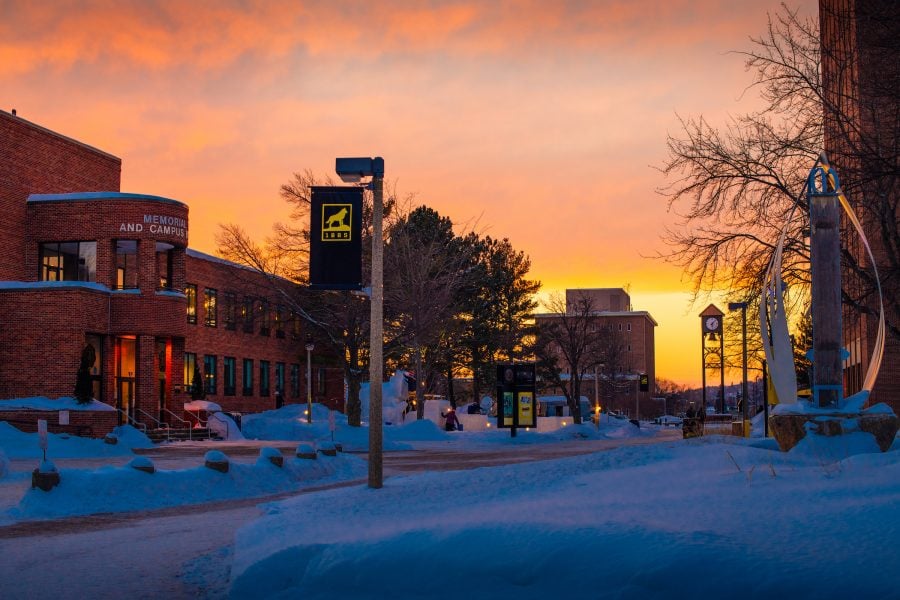
Winter campus with snow and sunset

Michigan Tech MS and PhD students will attend a free National Science Foundation (NSF) Innovation-Corps Bootcamp on campus on Thursday Feb. 29 and Friday March 1 to explore tools of design and innovation—and learn how to apply them to their career paths. 

The intensive workshop quickly reached its capacity, so facilitators are already planning to add another NSF I-Corps Bootcamp later this year for interested MTU graduate students.

Launched in 2011, the NSF Innovation Corps, or I-Corps, trains scientists and engineers to carry their promising ideas and technologies beyond the university and into the marketplace to benefit society. Michigan Tech has been part of the NSF I-Corps Site program since 2015—introducing the entrepreneurial mindset to over 300 researchers, faculty, staff and students, and helping teams assess the commercial potential of more than 150 technologies.

In an effort to nurture a regional innovation ecosystem and move more discoveries from the research lab to the real world, the NSF established a Great Lakes Innovation Corps Hub in 2021. The 11-university Hub is led by the University of Michigan (U-M), and it’s one of five Hubs across the country. Michigan Tech is a member of the Great Lakes Innovation Corps Hub, along with Purdue University, the University of Illinois Urbana-Champaign, the University of Toledo, the University of Minnesota, Iowa State University, Missouri University of Science and Technology, the University of Akron, the University of Chicago, and the University of Wisconsin-Milwaukee.
The Great Lakes I-Corps Hub aims to connect people at a large scale to increase the “effective density” of the Midwest’s innovation ecosystem. Mary Raber, Michigan Tech I-Corps principal investigator and chair of the Department of Engineering Fundamentals, leads the program at Michigan Tech.

NSF I-Corps Bootcamp Eligibility:

  • MTU graduate students enrolled in Ph.D. or M.S. programs
  • No business idea or prior experience with I-Corps is necessary
  • Faculty advisor support is required

NSF I-Corp Bootcamp Benefits:

  • Grow your network
  • Develop/improve your problem solving and identification capabilities
  • Improve your leadership skills
  • Explore career paths that use your knowledge and skills
  • Stipend of $300 is available upon successful completion of the program

Apply at:  https://bit.ly/GradBootcamp2024 

Note: the session is full, but interested students can still apply in order to get on the MTU I-Corps waiting list for the next Bootcamp.

Swirling blue dots logo of the NSF I-Corps Hub - Great Lakes Region

MTU Engineering Welcomes 18 New Faculty Members

The College is honored to welcome 18 new faculty members this fall. They bring a range of expertise among seven multidisciplinary research areas: Energy and Sustainability, Advanced Manufacturing, Autonomy and Mobility, Engineering Infrastructure, Engineering for Health, Space and Aerospace, and Navigating our Environment.

Department of Civil, Environmental, and Geospatial Engineering

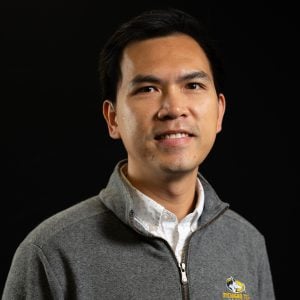
Quang Tran

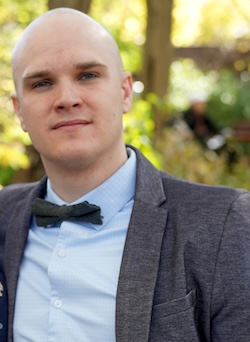
Dr. Quang Tran joins the faculty as an assistant professor. He comes to Michigan Tech from Harvard Medical School, Harvard affiliated hospitals, and the UIUC Bioacoustics Research Lab, where he dedicated three years to postdoctoral research. Dr. Tran earned a PhD in Civil Engineering at the University of Illinois Urbana-Champaign, an MS in Civil and Environmental Engineering at California State University, Fullerton, and a BS in Industrial and System Engineering at Ho Chi Minh University of Technology, Vietnam. His research focuses on non-invasive ultrasound for material characterization applications in civil engineering and biomedical fields, diagnosing and monitoring the health of infrastructures and humans.

Ishi Keenum

Dr. Ishi Keenum joins the faculty as an assistant professor. She comes to Michigan Tech from the National Institute of Standards and Technology (NIST), where she completed postdoctoral research. She earned a BS in at the University of Michigan, and an MS and PhD at Virginia Tech, all in Environmental Engineering. Keenum serves as the lead of the bioinformatic working group for the International Microbiome and Multi’Omics Standards Alliance (IMMSA). Her research is focused on the dissemination and treatment of antibiotic resistance through wastewater and water systems, and the microbiology of water systems.

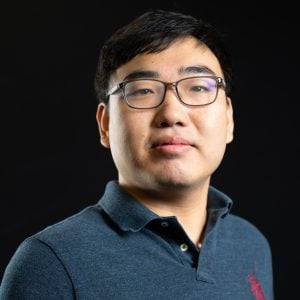
Bo Xiao

Dr. Bo Xiao joins the faculty as assistant professor. He comes to Michigan Tech from Hong Kong Polytechnic University, where he worked as a research assistant professor. He earned a BEng in Civil Engineering at Xi’an University of Architecture and Technology in China, an MS from Concordia University in Canada, and a PhD at the University of Alberta, Canada. His research seeks to advance the digital transformation of the construction industry by adopting automated technologies, including artificial intelligence (AI), robotics, and digital twinning, for modular construction, as well as visual monitoring of construction sites.

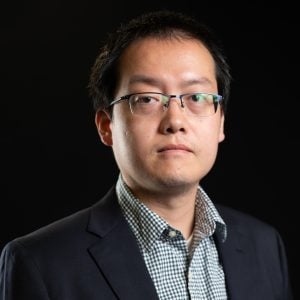
Mazi Erfani

Dr. Mazi Erfani joins the faculty as an assistant professor. He comes to Michigan Tech from the University of Maryland, College Park, where he earned a PhD in Civil Engineering. He earned a BS in Civil Engineering and MSc, in Construction Engineering and Management at the University of Tehran in Iran. His research interests include data-driven infrastructure management, Smart construction, equity and diversity, risk management, text analytics and natural language processing, and AI modeling.

Kerri Sleeman

Kerri Sleeman joins the faculty as a professor of practice. After working in the automotive and construction industries as an engineer she joined Michigan Tech staff, directing MTU Facilities Management. She earned a BS in Mechanical Engineering and an MS in Engineering, both at Michigan Tech. Sleeman brings strong industry experience to students in the Construction Management Program, and will increase sustainable construction course offerings for students.
John Bean

John Bean joins Michigan Tech as a visiting professor of practice in the Department of Civil, Environmental, and Geospatial Engineering. He earned an MS in Civil and Structural Engineering at the University of Connecticut and a BS in Civil Engineering at the University of New Hampshire. He also earned a graduate certificate in Surveying Engineering at the University of Maine. His focus for teaching includes surveying, mapping and database support to engineering field-based research projects. He has over 40 years of experience in surveying, civil engineering, and GIS, both in teaching and in practice. His work has taken him to Antarctica, the North Slope of Alaska, and the Mojave Desert, among other places.

Jennifer Miller

Jennifer Miller joins the faculty as a professor of practice. She earned a Master’s in Business Administration at Central Michigan University and a BS in Civil Engineering at Michigan Tech. Her teaching interests focus on construction management. She has more than 20 years of construction experience, including working for General Contractors, Specialty Contractors, design firms, and governmental entities including Michigan Department of Transportation.

Department of Electrical and Computer Engineering

Anna Stuhlmacher

Dr. Anna Stuhlmacher joins the faculty as an assistant professor. She comes to Michigan Tech from the University of Michigan. She earned a BS at Boston University and an MS and PhD at the University of Michigan, all in electrical engineering. She interned at the National Renewable Energy Laboratory (NREL), and grew up in the Chicago area. Her research explores optimizing and controlling distributed energy resources (like solar panels, batteries, and electric vehicles) in the power grid to provide flexibility in the transition to more sustainable and reliable energy systems.

Department of Engineering Fundamentals

Gabriel Draughon

Dr. Gabriel Draughon joins the faculty as an assistant teaching professor. He comes to Michigan Tech from the University of Michigan, where he earned an MS and PhD in Civil Engineering (Intelligent Systems). He earned a BS in Biosystems Engineering at the University of Kentucky. His research and teaching interests involve Smart Cities, and how sensing technologies in urban settings help better understand how people move through, interact with, and derive benefits from social infrastructure.

Department of Chemical Engineering

Kaiwu Huang

Dr. Kaiwu Huang comes to Michigan Tech from Virginia Tech, where he worked as a research associate in the Department of Mining and Minerals Engineering. He earned a BS in Mining and Minerals Engineering at China University of Mining and Technology in Beijing, and an MS and PhD in Mining and Minerals Engineering at Virginia Tech. His research focus is on sustainable mining, including mineral processing, mineral flotation, solid/liquid separation, carbon ore beneficiation, rare earth extraction, and copper concentration.

Luis Manzano

Dr. Luis Manzano comes to Michigan Tech from Monterrey, Mexico, where he earned an MS and PhD in Biotechnology at the Instituto Tecnologico y de Estudios Superiores de Monterrey (ITESM). He earned his undergraduate degree in Biotechnology Engineering, Universidad Politécnica de Pachuca. His research focuses on the sustainable purification of PEG-modified proteins/enzymes (PEGylated), used as biopharmaceuticals in the treatment of disease and potentially in the recovery and purification of anticancer, low-molecular weight compounds such as flavonoids.

Department of Manufacturing and Mechanical Engineering Technology

Rachel Store

Rachel Store joins the faculty as an assistant teaching professor. She earned a BS and MS in Mechanical Engineering, both at Michigan Tech. Her research focus is on friction stir processing and Lean and Quality manufacturing. Her teaching and research interests include additive manufacturing, forming processes, and materials manufacturing with friction stir processing.

Department of Material Science and Engineering

Alexandra Glover

Dr. Alexandra Glover joins the faculty as an assistant professor. She comes to Michigan Tech from Los Alamos National Laboratory, where she worked as a research and development engineer with Sigma Division. Glover earned an MS and PhD at the Colorado School of Mines in Metallurgical and Materials Engineering, and a BS in Materials Science and Engineering at Michigan Tech. Her research interests include mechanical behavior of materials, strengthening mechanisms, deformation processing and design for manufacturing, steels, shape memory alloys, and deformation induced phase transformations.

Joshua Mueller

Dr. Joshua Mueller joins the faculty as an assistant professor. He comes to Michigan Tech from the Dynamic-Structure Design and Engineering Group at Los Alamos National Laboratory, where he worked as a research and development engineer. Mueller earned an MS and PhD at the Colorado School of Mines in Metallurgical and Materials Engineering, and a BS in Materials Science and Engineering at University of Wisconsin-Madison. His research interests include physical metallurgy, phase transformations, thermodynamics, and microstructure evolution.

Sriram Vijayan

Dr. Sriram Vijayan joins Michigan Tech as an assistant professor. He earned a PhD in Materials Science and Engineering at the University of Connecticut, a Master’s in Materials Engineering at the Indian Institute of Technology, Madras, and a Bachelors in Materials Engineering at Jawaharlal Nehru Technological University. His research interests include understanding microstructural evolution in materials under complex thermal conditions,
process-structure-property relationships of additively manufactured builds, and materials for nuclear reactor applications.

Department of Mechanical Engineering-Engineering Mechanics

Shawn Brueshaber

Dr. Shawn Brueshaber comes to Michigan Tech from Western Michigan University, where he earned an MS and PhD in Mechanical Engineering. He earned a BS in Aerospace Engineering at Embry-Riddle Aeronautical University in Daytona Beach, Florida. After graduating, he spent several years in industry. His research is focused on the polar atmospheric dynamics of the giant planets—Jupiter, Saturn, Uranus, and Neptune, with a goal of developing a comprehensive theory of weather and climate applicable to all planetary bodies with an atmosphere.

Chad Walber

Dr. Chad Walber joins the faculty as an Associate Teaching Professor. He earned an MS and PhD in Mechanical Engineering at Michigan Tech, and a BS in both Electrical Engineering and Mechanical Engineering, also from Tech. He worked at PCB Piezotronics as a research and development engineer and at Michigan Tech as a visiting professor of practice. His teaching and research focus includes metrology, dynamic systems, noise and vibration, acoustics, and the test and measurement of those quantities, including developing specification and calibration standards for microphones and sound level meters.

Bhisham Sharma

Dr. Bhisham Sharma joins the faculty as an associate professor. He comes to Michigan Tech from Wichita State University, where he worked as an assistant professor in the Department of Aerospace Engineering. He earned an MS and PhD in Aeronautical and Astronautical Engineering at Purdue University, and a BS in Mechanical Engineering at the University of Pune in Pune, India. Sharma was also a post-doctoral research associate and a visiting assistant professor at Purdue. His research involves the overlap of solid mechanics, structural dynamics, acoustics, and advanced manufacturing. He investigates the fundamental mechanics and acoustics of novel engineered material systems such as acoustic metamaterials, phononic structures, architected lattice structures, stochastic foams, and advanced manufacturing.
.

Marty Lagina to Deliver First Year Engineering Series Lecture at Michigan Tech on Monday, October 2

“Engineering school teaches you how things work, and also to know what you don’t know,” says Marty Lagina.

Marty Lagina will deliver the First-Year Engineering Series Lecture to Michigan Tech’s incoming engineering majors this Monday, October 2 at 6 pm. The lecture will take place on campus at the Rozsa Center Auditorium.

Lagina is CEO of Heritage Sustainable Energy. He is also a winemaker, and an executive producer of the long-running reality TV show, The Curse of Oak Island, now in its 11th season on the History Channel—and, he is a Michigan Tech engineering alumnus.

The title of Lagina’s lecture is “I’m Not Here to Give You Advice.”

“The First-Year Engineering Series Lecture provides an exciting opportunity for our students to hear from some of the nation’s most innovative engineering leaders,” says Mary Raber, chair of the Department of Engineering Fundamentals. “It gives them a sense of the many different career paths that are open to engineering graduates—career paths that allow them to positively impact the world,” she adds.

Throughout his life, Lagina says his engineering education has given him the confidence to try new things. “I was thinking of going to law school, and my father told me: ‘You would make a better lawyer if you knew how things worked.’ So I went to Michigan Tech to study engineering and I liked it. And it prepared me very well for what turned out to be a very multifaceted career.”

Lagina graduated from Michigan Tech with his mechanical engineering degree in 1977, then took a job as a petroleum engineer for Amoco. Then, a few years later while attending law school at the University of Michigan, he worked as an independent petroleum engineer consultant, hired by various Michigan corporations regarding petroleum exploration and production.

“I was a law student, putting together oil deals, working out of a room the size of a walk-in closet,” Lagina recalls. “We drilled 14 dry holes in a row until we finally drilled a decent oil well. It put us in business.”

Lagina’s partner in that first consulting business was Craig Tester, another Michigan Tech mechanical engineering alumnus. They were former college roommates. Once Lagina earned his JD, the two founded Terra Energy to pioneer the exploration and development of the Antrim shale natural gas resources of Michigan, which they did—successfully developing over $3 billion of oil and natural gas resources.

“My education at Michigan Tech is what gives me the confidence for innovation.”

Marty Lagina

When he turned 40, Lagina decided to change course. He formed Heritage Sustainable Energy, a renewable energy provider. Heritage has successfully developed a series of wind and solar projects in Michigan, which in the aggregate, can power the equivalent of 57,000 average Michigan homes.

Heritage Sustainable Energy’s projects include 84 Wind Turbines and 6 Solar PV Array facilities, all in Michigan. And sheep!

In 2006, Lagina started doing some unusual exploring to solve a 228 year old mystery. Featured on the History Channel, Lagina, his family and friends attempt to solve “The Curse of Oak Island,” based on the long, complicated history of treasure hunting on a Nova Scotia island.

It turned out to be a VERY difficult engineering project.

Part National Treasure, part Indiana Jones, the hit docu-series, now in its 11th season, follows their exploits as they attempt to—literally—get to the bottom of the ‘money pit’ on the island that has given up some clues, booby traps, bizarre hints and puzzle pieces. Theories of what is buried include treasures from Solomon’s temple, the Holy Grail, the Knights Templar and numerous other sources.

First, they had to purchase a controlling interest in the North Atlantic island. “And everything is difficult,” Lagina says. “There have been shafts and tunnels installed by previous searchers for 200-plus years, so you need to figure out if you are discovering something from the original works or not.”

Tester, an expert on drilling, resistivity, and more, also appears on The Curse of Oak Island.

Pictured above: Oak Island, Nova Scotia, Canada, August 1931. Format: glass plate negative.

Born in Kingsford on Michigan’s Upper Peninsula, Lagina has spent nearly all his life living in Michigan. His background is in engineering and the energy business, but with family ties to one of Italy’s premier winegrowing areas, a passion for wine is in his blood.

He founded Mari Vineyards in 1999 (the same year he was inducted into Michigan Tech’s ME-EM Academy). His goal: to make world-class red wines in northern Michigan but with a nod to the Italian style of his ancestors.

The winery’s namesake is Lagina’s Grandmother (Nonna), an Italian immigrant who settled in the Iron Mountain area of Michigan’s Upper Peninsula. Lagina has fond memories of her fermenting wine in the basement of her home.

Mari Vineyards is situated on 60 acres in Traverse City. The winery is largely carbon neutral and built from UP dolomite stone, dug from the bases of wind turbines. “Winemaking is an art, but it’s also highly technical,” he adds.

Read about the extensive and innovative sustainability practices at Mari Vineyards.

“Engineering school teaches you how things work, and also to know what you don’t know,” says Lagina.

When choosing to go forward with a new venture Lagina makes sure it meets all of these criteria: “It must be interesting; look like there could be some fun; must be legal and ethical; needs to have a good chance to make money AND (bonus points awarded) if it provides extra benefits for society.”

“It must be interesting; look like there could be some fun; must be legal and ethical; needs to have a good chance to make money AND (bonus points awarded) if it provides extra benefits for society.”

Marty Lagina’s criteria when choosing to go forward with a new venture.

Joint ROTC Commissioning Ceremony April 28, 2023

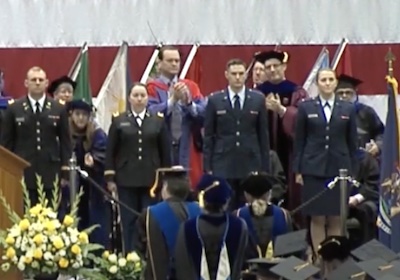
Cadets at the ceremony.

The Air Force and Army ROTC invite you to the Spring 2023 Commissioning Ceremony on Friday (April 28) from 7-9 p.m. at the Rozsa Center.

This semester we have 11 Air Force cadets and five Army cadets commissioning. Those commissioning are from the following programs:

Biological Sciences | Civil Engineering | Computer Science | Cybersecurity | Electrical Engineering | Engineering Fundamentals | Engineering Management | Environmental Engineering | Forestry | Mathematics | Mechanical Engineering | Physics

We will also be streaming the ceremony if you prefer to watch it live on YouTube. The stream will go live 15 minutes prior to the ceremony.

By Air Force and Army ROTC.

Engineering Students Interviewed About Design Expo 2023

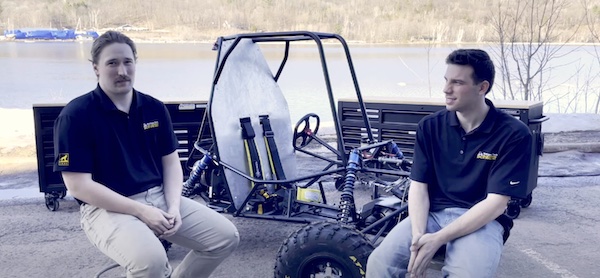
Two students seating outside near the waterfront next to an off-road vehicle.
Mechanical engineering students in the Blizzard Baja Enterprise.

Michigan Technological University opens Design Expo to underclassmen

Briana Tucker and Nagesh Hatti (Enterprise) were quoted by WZMQ 19 News in coverage of Michigan Tech’s 2023 Design Expo, held Tuesday (April 18) at the Van Pelt and Opie Library and Memorial Union Building.

The Michigan Tech Baja Racing Team showcased their new car at the expo as well. This year they’ve been mandated to build a four-wheel car in order to compete and the team says they use the tools from class in every cylinder of their project.

Read more at WZMQ 19 News, by Mitchell Rife.

Michigan Tech University holds 23rd annual Design Expo with wide project variety

Tucker, senior Ryan Peckham (electrical engineering) and first-year engineering student Andrew Brenner were interviewed for a WLUC TV6 broadcast segment, and first-year chemical engineering students Ethan LeGrave, Veronica North, and Bailey Wright were mentioned in the accompanying story.

The Wireless Communications Enterprise (WCE) team showcased several of their projects.

Read more at WLUC TV6, by Colin Jackson.

Feats of innovation

The Daily Mining Gazette also covered Expo, mentioning students Breanna Gorman and Cade Meyer.

Breanna Gorman, president of the Enterprise team and fourth-year electrical engineering major showcased a portable battery pack intended for military backpacks.

Cade Meyer, a fourth-year mechanical engineering student was part of the Velovations Enterprise team. They focus on bicycle design projects.

Read more at the Daily Mining Gazette, by Aidan Reilly.

It’s Engineers Week 2023!

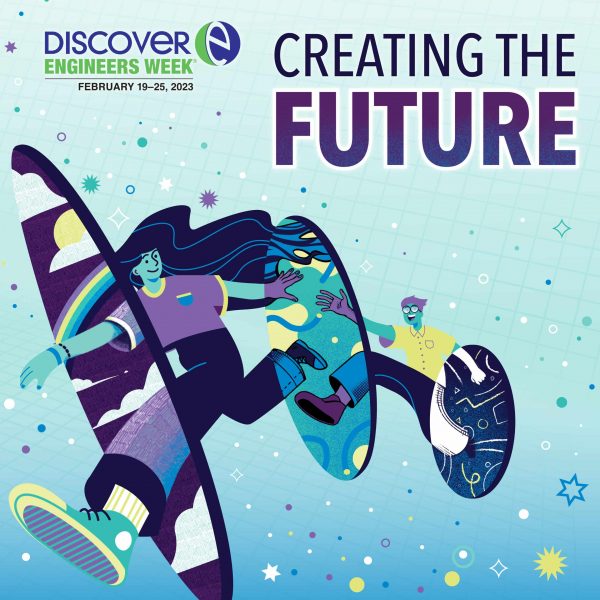
It’s Eweek 2023! Join us for some special events on campus at Michigan Tech.

We’re celebrating National Engineers Week (Feb. 19-25). Everyone’s invited to special events on campus sponsored by Tau Beta Pi, the Engineering Honor Society student chapter at Michigan Tech.

Founded by the National Society of Professional Engineers in 1951, Eweek is celebrated each February around the time of George Washington’s birthday, February 22, because Washington is considered by many to be the first U.S. engineer.

At Michigan Tech, the week is celebrated with special events on campus all hosted by student organizations. Everyone is welcome! Please feel free to stop by and check out Eweek events as your schedule allows:


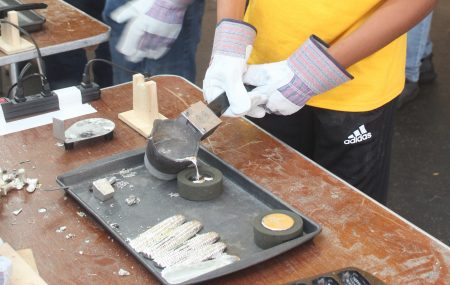
Ever wanted to try your hand in the Michigan Tech Foundry? Make something small, come pick it up later, after it cools!

Monday, Feb. 20
Metal foundry in a box with Materials United, 1-3 PM
M&M Engineering Building U109


Do you know Michigan Tech Mind Trekkers yet? If not, you must!

Tuesday, Feb. 21
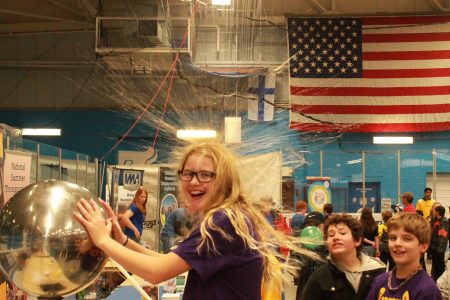
Demonstrations with Mind Trekkers, 11AM-1PM
Fisher Hall Lobby


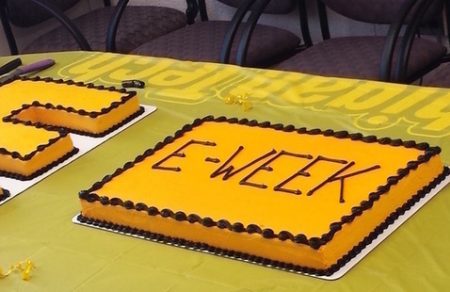
Delicious cake from Roy’s Bakery – a great way to celebrate, relax for a while in the Engineering Fundamentals department, and add a treat to your day.


Wednesday, Feb. 22
E-Week Cake, courtesy of the Department of Engineering Fundamentals, 11AM-2PM
Dillman 112


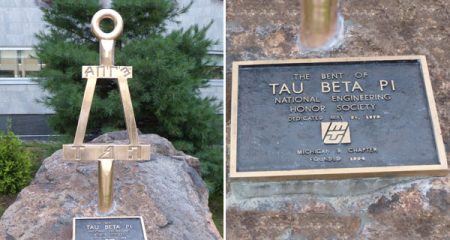
The Tau Beta Pi “bent” is located on campus at Michigan Tech.

Thursday, Feb. 23
Tau Beta Pi Alumni Panel,
5-6PM
Dow Building, room 0642

Zoom: https://michigantech.zoom.us/j/82536199550

Panelists:

Katelyn Ramthun BME/ME) – Product Engineer at Plexus
Jennifer Larimer (ChemE) – Research Scientist at Dow
Quinn Horn (PhD MSE) – Principal Engineer at Exponent
Tim Obermann (MSEE) – Director of Power Tool Technology at Milwaukee Tool


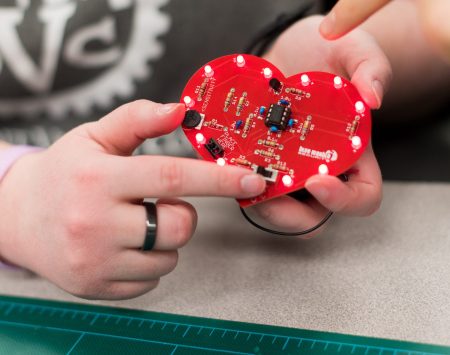
Learn how to solder your own circuit board—with students in the Blue Marble Security Enterprise, at the team’s headquarters on campus.

Friday, Feb. 24
Circuit Boards with Blue Marble Security Enterprise, 4-6 PM
EERC Building – 0738


One important goal: to motivate youth to pursue engineering careers in order to provide a diverse and vigorous engineering workforce.

Nationwide, Eweek is a formal coalition of more than 70 engineering, education, and cultural societies, and more than 50 corporations and government agencies. This year’s theme: Creating the Future. Dedicated to raising public awareness of engineers’ positive contributions to quality of life, Eweek promotes recognition among parents, teachers, and students of the importance of a technical education and a high level of math, science, and technology literacy. One important goal: to motivate youth to pursue engineering careers in order to provide a diverse and vigorous engineering workforce.