Category: HCC

Hongyu An: Curious About the World and Exploring the Unknown

by Karen S. Johnson, Communications Director, ICC

“A scientist should be a person who is always curious about nature and the world, and who tries to explore the unknown.” –Hongyu An, Assistant Professor, Electrical and Computer Engineering
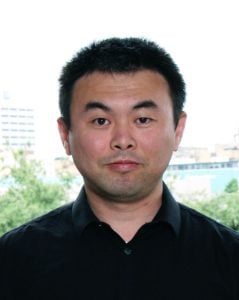
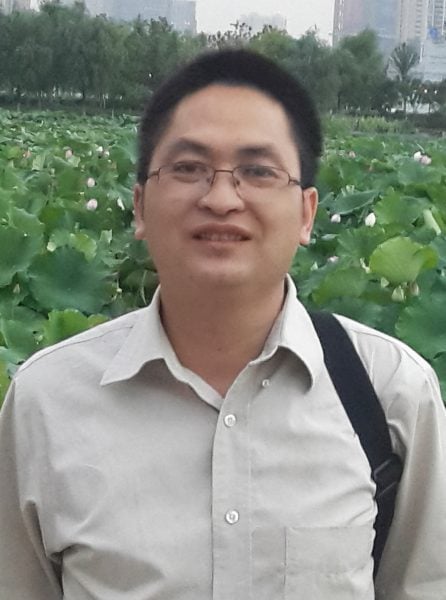
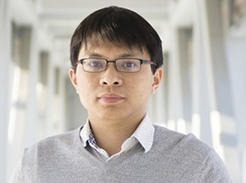
Hongyu An, Assistant Professor, ECE

Exploring science and technology is always exciting for new Assistant Professor Hongyu An, Electrical and Computer Engineering. He says he is “very pleased to have the chance to mentor the next generation and share my knowledge and experience with undergraduate and graduate students.”

Several things drew Hongyu An to Michigan Tech, including his observation that as an institution Michigan Tech cares about its employees. “The excellent professors, smart students, and the supportive environment are the main reasons I joined Michigan Tech,” he says. “As a new faculty member, I am facing a lot of new challenges. There is great support in my department (ECE) and through the ICC.”

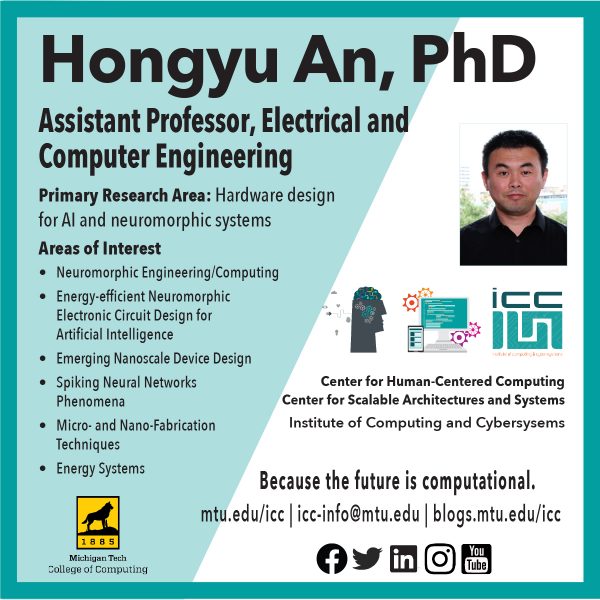
Hongyu is a member of two Institute of Computing and Cybersystems (ICC) research centers: Human-Centered Computing and Scalable Architectures and Systems. He also sees synergies with the Center for Cyber-Physical Systems.

“It is my great pleasure and honor to be a member of the ICC,” Hongyu says. “ I can collaborate with the experts in HCC for exploring the brain and artificial intelligence, and the professors in SAS for hardware and architecture designs. Moreover, the neuromorphic chips I am working on can potentially be applied to Cyber-Physical Systems.”

Hongyu’s primary research area is hardware design for AI and neuromorphic systems. He believes that Artificial Intelligence is probably one of the most challenging research topics in science, noting that recent work in deep learning and artificial neural networks is demonstrating great progress in approaching artificial intelligence. 

“But the traditional computers under von Neumann architecture cannot keep up with the development of neural networks and deep learning,” he cautions. “My research is addressing this challenge by using a new hardware design, from device to architecture levels.”

Hongyu’s teaching interests include VLSI, Circuits, and Electromagnetics. Desribing his teaching philosophy, he notes that making complicated things simple is more challenging than making simple things complicated, and that he strives for the former. This academic year, An is teaching EE 4271 VLSI Design and mentoring ECE master’s student, Sarvani Marthi Sarvani, whose project aims to design a silicon retina through CMOS and Memristors.

Hongyu and his research team are also investigating associative memory learning, a new learning method that aims to create a neuromorphic system that can learn from its surroundings directly. 

“Associative memory is a widespread self-learning method in biological livings, which enables the nervoussystem to remember the relationship between two concurrent events,” Hongyu explains. “Through this learning method, dogs can learn the sound of bells as a sign of food; people can remember a word representing an object.”

“The significance of rebuilding associative memory at a behavioral level not only reveals a way of designing a brain-like, self-learning neuromorphic system, it is also to explore a method of comprehending the learning mechanism of a nervous system,” he adds.

And finally, beyond his work as a professor and scientist Hongyu hopes that he is “a good husband to my wife, a good father to my sons, and a good son to my parents.”

Hongyu completed his Ph.D. in electrical engineering at Virginia Tech, his M.S. in electrical engineering at Missouri University of Science and Technology, and his B.S. in electrical engineering at Shenyang University of Technology.

Recent Publications

An, Hongyu, Mohammad Shah Al-Mamun, Marius K. Orlowski, Lingjia Liu, and Yang Yi. “Robust Deep Reservoir Computing through Reliable Memristor with Improved Heat Dissipation Capability. IEEE Transactions on Computer-Aided Design of Integrated Circuits and Systems (2020).

An, Hongyu, Qiyuan An, and Yang Yi. “Realizing Behavior Level Associative Memory Learning Through Three-Dimensional Memristor-Based Neuromorphic Circuits. IEEE Transactions on Emerging Topics in Computational Intelligence (2019).
Founded in 2015, the Institute of Computing and Cybersystems (ICC) promotes collaborative, cross-disciplinary research and learning experiences in the areas of computing education, cyber-physical systems, cybersecurity, data sciences, human-centered computing, and scalable architectures and systems, for the benefit of Michigan Technological University and society at large.

The ICC creates and supports an arena in which faculty and students work collaboratively across organizational boundaries in an environment that mirrors contemporary technological innovation. The ICC’s 55 members represent more than 20 academic disciplines at Michigan Tech.

NSF Research to Study Household Dynamics in Pandemic

David Watkins (CEE/SFI) is the principal investigator on a project that has received a $190,764 research and development grant from the National Science Foundation (NSF).

The project is titled “RAPID: COVID-19, Consumption, and Multi-dimensional Analysis of Risk (C-CAR)“. Chelsea Schelly (SS/SFI), Robert Handler (ChE/SFI) and Charles Wallace (CS/SFI) are co-PIs on this one-year project.

Extract

The COVID-19 pandemic has transformed household dynamics and dramatically changed food, energy, and water consumption within the home. Stay-at-home orders and social distancing has caused U.S. households to shift to working and schooling from home, curtail outside activities, and stop eating in restaurants. Furthermore, as many households face job loss and increasing home utility and grocery bills, U.S. residents are experiencing the economic impacts of the crisis, while at the same time assessing and responding to health risks. The project team has a unique opportunity to study these shifting household consumption and behavioral responses and quantify the associated economic and environmental impacts. The team will collect household food, energy, and water consumption data as well as survey response data from 180 participating households in one Midwestern county and compare it to data collected before the stay-at-home orders were put in place.

Read more at the National Science Foundation.

Kelly Steelman Presents at ASEE

Kelly Steelman, interim department chair and associate professor, Cognitive and Learning Sciences, presented her paper, “Work in Progress: Student Perception of Computer Programming Within Engineering Education: An Investigation of Attitudes, Beliefs, and Behaviors” at the 2020 ASEE Virtual Conference, June 22-26, 2020.

Co-authors of the paper are Michelle Jarvie-Eggart (EF), Kay Tislar (CLS), Charles Wallace (CC), Nathan Naser (GMES), Briana Bettin (CS) and Leo Ureel (CS), all from Michigan Tech.

Abstract
Although most engineering faculty and professionals view computer programming as an essential part of an undergraduate engineering curriculum, engineering students do not always share this viewpoint. In fact, engineering students—especially those outside of computer and electrical engineering—may not realize the value of computer programming skills until after they have graduated and advanced in their career (Sterian, Dunne, & Blauch, 2005). Failure to find value in computer programming may have negative consequences for learning. Indeed, engineering students who do not view programming as interesting or useful show poorer performance on tests of programming concepts than students who do (Lingar, Williams, and McCord, 2017). This finding is consistent with theories of technology acceptance (e.g., Davis, 1989, Venkatesh, et al., 2003) that emphasize perceived usefulness as a key determinant of attitudes toward a technology and subsequent use or disuse of it. Accordingly, to better support student learning, engineering coursework should include specific interventions that emphasize the utility of programming skills for a career in engineering. Intervention effectiveness, however, may depend in part on the characteristics of the individual learners, including their prior programming experience, their openness to new experiences, and their beliefs about the nature of intelligence. The purpose of the current work is to understand engineering students’ attitudes toward and experiences with computer programming as well as to assess the relationship between their attitudes and experiences and their mindset toward their own intelligence. 101 engineering students participated in the study as part of a general education psychology course. Participants completed a computer language inventory and three surveys. The first survey inquired about students’ computer programming experiences and attitudes (Hoegh and Moskal, 2009). The second survey posed questions related to different aspects of openness to experience (Woo et al., 2014): intellectual efficiency, ingenuity, curiosity, aesthetics, tolerance, and depth. Finally, the third survey probed participants’ beliefs about the nature of intelligence and whether it is fixed or can be developed (Dweck, 1999). This paper will present the results of these surveys and explore the correlations among the various scales. The implications for engineering education interventions will be discussed.

Download the paper here.

Citation
Steelman, K. S., & Jarvie-Eggart, M. E., & Tislar, K. L., & Wallace, C., & Manser, N. D., & Bettin, B. C., & Ureel, L. C. (2020, June), Work in Progress: Student Perception of Computer Programming within Engineering Education: An Investigation of Attitudes, Beliefs, and Behaviors Paper presented at 2020 ASEE Virtual Annual Conference Content Access, Virtual On line . https://peer.asee.org/35683

ICC Releases FY19 Annual Report

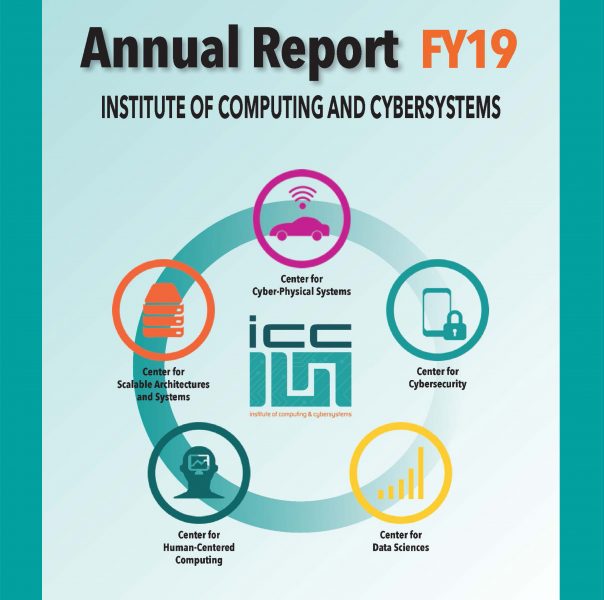
The Institute of Computing and Cybersystems has released its FY 19 Annual Report, which can be viewed and downloaded on the ICC website.

We had a strong year in 2018-19,” says Timothy Havens, director of the ICC and associate dean for research, College of Computing.

“In FY20, new awards and research expenditures were even stronger, and I look forward to sharing more accomplishments with you in the coming months.”

Tim Havens, ICC Director

Computing Awards COVID-19 Research Seed Grants

Michigan Tech College of Computing

The College of Computing is pleased to announce that it has awarded five faculty seed grants, which will provide immediate funding in support of research projects addressing critical needs during the current global pandemic.

Tim Havens, College of Computing associate dean for research, said that the faculty seed grants will enable progress in new research that has the potential to make an impact on the current research. Additional details will be shared soon.

Congratulations to the winning teams!

Guy Hembroff (AC, HI): “Development of a Novel Hospital Use Resource Prediction Model to Improve Local Community Pandemic Disaster Planning”

Leo Ureel (CS) and Charles Wallace (CS): “Classroom Cyber-Physical Simulation of Disease Transmission”

Bo Chen (CS): “Mobile Devices Can Help Mitigate Spreading of Coronavirus”

Nathir Rawashdeh (AC, MERET): “A Tele-Operated Mobile Robot for Sterilizing Indoor Space Using UV Light” (A special thanks to Paul Williams, who’s generous gift to support AI and robotics research made this grant possible)

Weihua Zhou (AC, HI) and Jinshan Tang (AC, MERET): “KD4COVID19: An Open Research Platform Using Feature Engineering and Machine Learning for Knowledge Discovery and Risk Stratification of COVID-19″

Samantha Smith to Present Talk for ACSHF Forum

The first Applied Cognitive Science and Human Factors (ACSHF) Forum of the Spring 2020 semester will be held from 2 to 3 p.m. Monday (Jan. 13) in Meese 109. Samantha Smith (CLS), will present “The Relationship between Cerebral Hemovelocity and Vigilance: Sample versus Individual Outcomes, and Future Directions.”

High workload, stress, and fatigue may negatively impact operator performance in critical roles. A means to monitor ongoing performance would be useful to intercede when deficits are detected, but it is not often possible to detect these deficits in real-world tasks, in real-time. However, it has shown that cerebral blood flow velocity (CBFV), a measure of changes in cognitive metabolic activity, declines alongside performance in sustained attention tasks. Thus, CBFV has been proposed as a potential way to monitor operators for indirect insight into cognitive state and performance.

This presentation will discuss a recent study exploring the relationship between CBFV and vigilance performance at the sample versus individual level and will propose the use of Recurrence Quantification Analysis to further explore the complex relationship between psychophysiological metrics and cognitive performance over time.

BASIC Program Featured on TV 6-WLUC UPSide

Kelly Steelman

Building Adult Skills in Computing, or BASIC, is a program where anyone in the community who has questions about computers, smart phones, or tablets, can receive individual instruction. The BASIC program tutors, all Michigan Tech students, and faculty mentor Kelly Steelman, member of the ICC’s Center for Human-Centered Computing, were featured on the TV6 feature UPsiders on November 25, 2019.

View the video on Facebook here: https://www.facebook.com/uppermichiganssource/videos/2669673899926711/.

More about BASIC:

Since 2011, Michigan Tech students and faculty have been helping Copper Country community members improve their basic computer skills through the free tutoring program Building Adult Skills in Computing (BASIC).

The sessions take place every Saturday morning from 10:00 to 11:00 at the Portage Lake District Library, Houghton, when Michigan Tech classes are in session. Up to 15 tutors are available this semester and all community members are welcome. Computer experience is not necessary and an appointment is not required.

“As the digital revolution continues to transform our society, many older adults and other groups are being left behind,” said Charles Wallace, associate professor of computer science. “Using computers, smartphones and other digital devices remains unfamiliar territory for many and it can be a source of great anxiety.”

Wallace explains that through this free tutoring, the BASIC program aims to overcome this anxiety and build the computer skills and digital literacy needed for participants to effectively operate digital devices and technology and safely find the information they need.

For more information, please contact Charles Wallace (906-487-3431, wallace@mtu.edu) or Kelly Steelman, associate professor of cognitive and learning sciences (906-487-2792, steelman@mtu.edu).

Robert Pastel Presents at Social Science History Association Annual Meeting

Robert Pastel

Robert Pastel (Computer Science/ICC Center for Human Centered Computing), along with Gary Spikberg (MS Industrial Heritage and Archaeology) and Don Lafreniere (SS/GLRC), presented “A Semiautomated approach to Creating Record Linkages and High Resolution Geocoding Across Historical Datasets” at the annual meeting of the Social Science History Association, which took place November 21-24, 2019, in Chicago, IL.

The Social Science History Association is an interdisciplinary organization that publishes a journal, Social Science History, organizes an annual conference, supports graduate student travel to the conference, and awards book prizes. With scholars from history, economics, sociology, demography, anthropology, and other social sciences, the association brings together scholars in thematic networks where they can explore common questions.

ACSHF Forum Monday

Beth Veinott

One challenge affecting a variety of teams, such as software development, engineering, military, and crisis management, is overconfidence in the effectiveness of their plans.  Referred to as the planning fallacy, Buehler et al. (1994) suggests that ignoring past failures is a key cognitive element in this phenomenon. This talk summarizes recent experiments examinin the effect of counterfactual reasoning strategies, thinking about what might have happened under different circumstances, on people’s reasons, confidence and predictions.

Leveraging a collaborative, structured analytic technique called the Premortem, this project extends research on counterfactual reasoning to estimates in planning. The results will be discussed in the context of advances in machine learning, AI, and crowdsourcing that have changed the information available to teams.

Charles Wallace is Associate Dean for Curriculum and Instruction

Charles Wallace

Charles Wallace, Associate Professor of Computer Science and member of the ICC’s Center for Human-Centered Computing, has been appointed Associate Dean for Curriculum and  Instruction for the College of Computing, effective immediately. Wallace has been teaching in the Department of Computer Science for 19 years, and he has a long track record of education research and building collaboration with Cognitive & Learning Sciences, Engineering, Humanities, and Social Sciences.

“Chuck brings to his new role an extensive breadth of experience that spans from outreach to curricular development to collaborations with multiple units across campus,” says Adrienne Minerick, dean of the College of Computing. “In this new role, he will help build campus collaborations to create additional pathways for Michigan Tech students to engage with computing curricula, and facilitate conversations within the College of Computing that enable creative, agile options for our students.”

“Barriers between computing and other disciplines are artificial and unproductive,” Wallace says. “Computing competencies are essential for Michigan Tech graduates in all fields, and the College and University should commit to building educational options housed in the College of Computing but available and accessible to all students.”

Wallace adds that students in the College of Computing should be free – and actively encouraged – to explore application areas where their skills can be used. He also wants to explore ways to build flexibility into Computing academic programs, maintaining the solid technical core that Michigan Tech graduates are known for, but also allowing students to pursue applications of their computing competencies in other disciplines.

Vision Statement from Charles Wallace:

Here are a few points that I consider vital to the future of computing education, based on 19 years of experience in the Computer Science Department, a long track record of education research, and extensive collaboration with Cognitive & Learning Sciences, Engineering, Humanities, and Social Sciences.

Barriers between computing and other disciplines are artificial and unproductive.  Computing competencies are essential for Michigan Tech graduates in all fields.  The College and University should commit to building educational options housed in the College of Computing but available and accessible to all students.  This will require an earnest and focused investment in personnel – we cannot do it solely with the current cohort of instructors, who are already stretched thinly with increased enrollment in core computing programs.

Conversely, students in the College of Computing should be free and even encouraged to explore application areas where their skills can be brought to bear.  Complex degree requirements can hinder such exploration.  We should explore ways to build flexibility into our programs, maintaining the solid technical core that Michigan Tech graduates are known for, but also allowing students to pursue applications of their computing competencies in other disciplines.

Computing students are citizens, not just producers.  The degree programs in Michigan Tech’s Computer Science Department have a long and venerable tradition of preparing students who can “produce” – hit the ground running in the workplace and build high quality solutions. That is a precious gift, and we should not deprive future students of it – but the future demands more. Our world is increasingly dominated by computing – and by extension, dominated by human beings who understand computing. Michigan Tech graduates of the College of Computing must be known not only for the technical “value” that they produce, but also the ability to question and critique digital technology, to be empathetic and articulate ambassadors and leaders in the new digital order of the future.

There are two promising ways in which we can build better computing citizens. First, an awareness of the social and ethical consequences of computing must be woven into our curricula, not just taught as external service courses.  Second, service learning is a way to expose students to the human contexts of computing technology. There are many ways to get students involved in our community, but these have not been harnessed outside of ad hoc outreach efforts. Interaction with the community should be built into the academic experience of computing students.

Computing competencies include values and attitudes, not just skills and knowledge. Alumni of our degree programs acknowledge that collaboration and communication are essential components of their professional lives.  These competencies involve not only skills but also values and attitudes – willingness and even eagerness to engage with others, resilience in the face of uncertainty or ambiguity, and adaptability in the face of changing requirements.  To prepare students for the highly collaborative computing workplace, courses in the College of Computing should embrace the opportunities and challenges of working in diverse teams. As with ethics, issues of teamwork and communication must be integrated into “disciplinary” courses, not left to service courses or external experiences like internships.

These curricular pathways hold promise not only to develop competent computing professionals of the future, but also to attract a more diverse constituency to the College of Computing student body.