Category: Research

Abe Stone: Making a Difference and Making Headlines

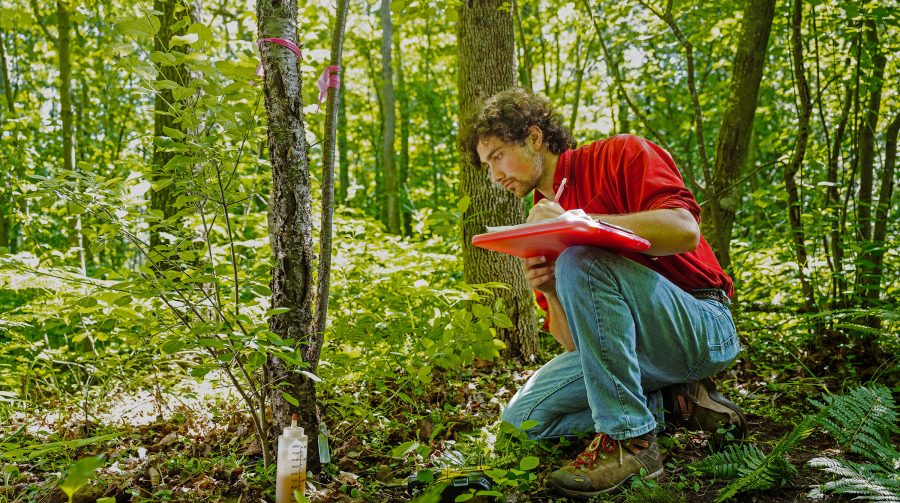
Undergraduate researcher Abe Stone records inoculation data in his notebook.

Michigan Tech undergraduate researcher Abe Stone has been garnering headlines for his work. The ecology and evolutionary biology major demonstrates the adage that science isn’t done until it’s communicated. He also illustrates how the Summer Undergraduate Research Fellowship program helps students conduct impactful interdisciplinary research.

Stone was most recently quoted by The Cool Down in a story about SuperPurp, his unconventional fungus-based treatment aimed at controlling the spread of invasive buckthorn trees that threaten to engulf forest landscapes in the Midwest. The story referenced the research’s debut on Michigan Tech’s Unscripted Research Blog, and was picked up by Yahoo! News. Stone was also interviewed by ABC-10 in Marquette.

Stone was a guest on the Mushroom Revival podcast in June to talk about his research journey to Michigan Tech, where he worked to develop a sprayable fungus as a more efficient way to propagate chondrostereum purpureum, the pathogen that causes silverleaf disease in trees. Nicknamed SuperPurp and developed in the College of Forest Resources and Environmental Science’s forest microbiology lab, it’s a locally sourced chemical-free alternative to control buckthorn that could help to slow the spread of invasive buckthorn without harming nearby species.

New Institute Brings Keweenaw Time Traveler to the World—And New Researchers to Keweenaw

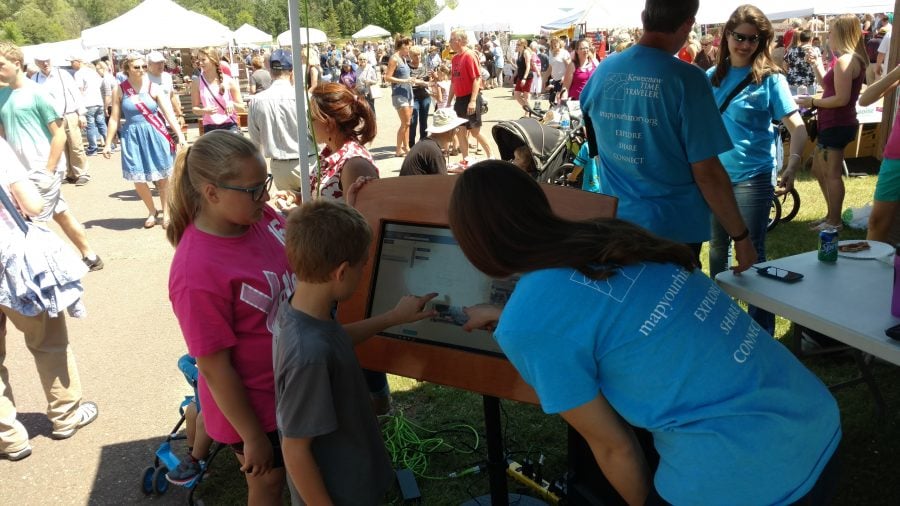
Deep-mapping projects like Keweenaw Time Traveler can engage communities in meaningful, multi-generational explorations. (Image courtesy KeTT)

An advanced institute in the spatial and digital humanities is coming to Michigan Tech.

Don Lafreniere, a professor of geography and geographic information science (GIS) in Tech’s Department of Social Sciences is leading a team of researchers, staff, and students from Michigan Tech and Wayne State University on project that will develop the National Endowment for the Humanities (NEH) Community Deep Mapping Institute. The project is supported by a $250,000 NEH grant.

Two CSA Faculty Recognized for Outstanding Contributions to Michigan Tech

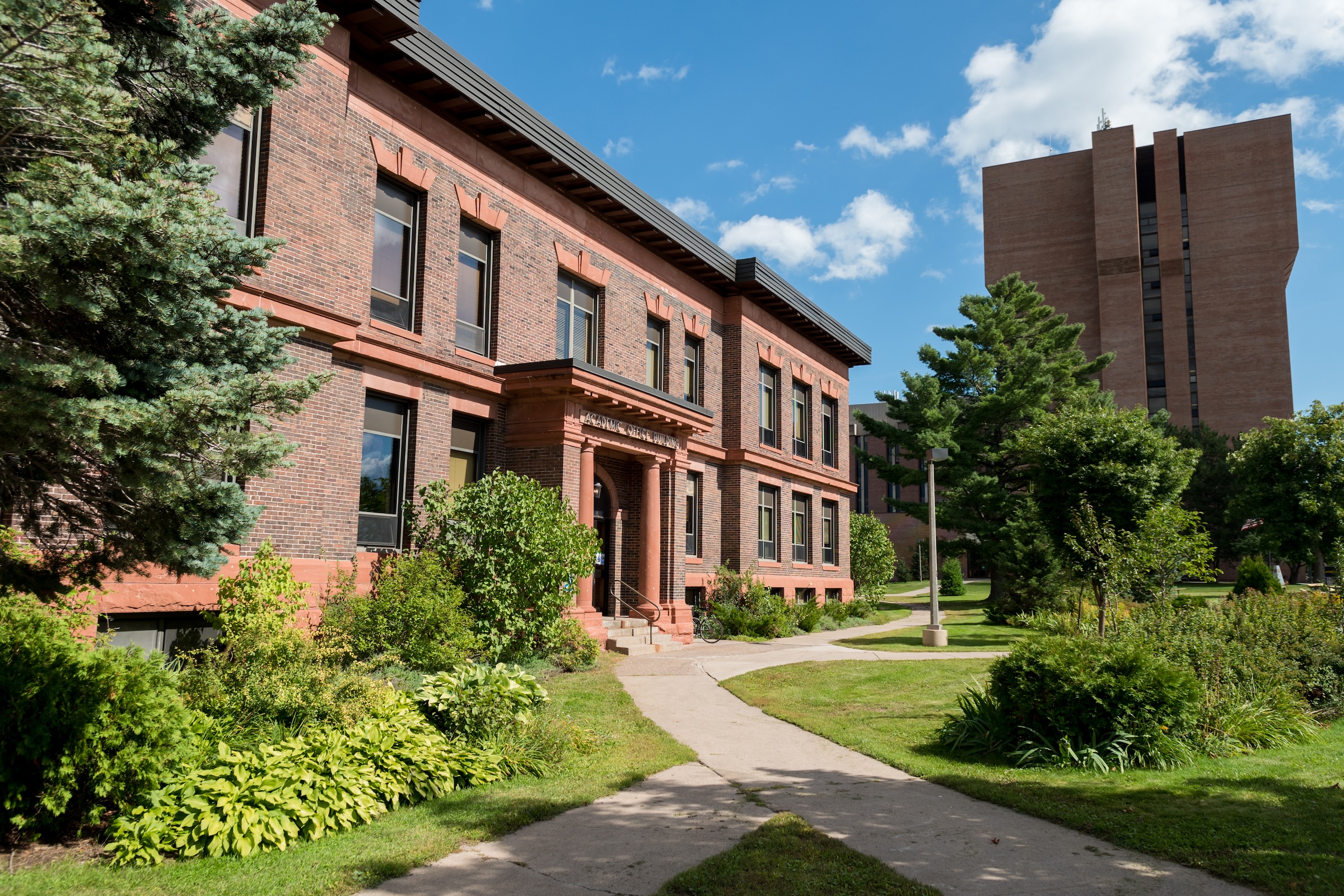
Brick two story building with concrete walkways in front, surrounded by green grass, shrubs, and trees.
The Social Sciences Department, home department of University Professor Kathy Halvorsen is housed in the AOB Building on the Michigan Tech campus.

Kathy Halvorsen and Quiying Sha have been honored for their substantial contributions to teaching, research, and service and are among seven professors recognized through Michigan Tech’s Distinguished and University Professorships. They represent a small percentage of faculty recognized with these awards by the Office of the Provost and Senior Vice President for Academic Affairs.

University Professors represent no more than two percent of the total number of tenured and tenure-track faculty at Michigan Tech. Since its inception in 2020, four of the seven University Professors have hailed from the College of Sciences and Arts, including three from the Department of Physics. Halvorsen is the first recipient from the Department of Social Sciences.

Distinguished Professors represent no more than 10 percent of the number of tenured and tenure-track faculty in a specific college or school. Since its inception in 2018, four of the 11 Distinguished Professors have been chosen from the College of Sciences and Arts. Sha is the first recipient from the Department of Mathematical Sciences.

Academic Alchemist: Chemistry Professor Named Associate Dean of Graduate Research and Education

The College of Sciences and Arts is pleased to announce Ashutosh Tiwari as our first Associate Dean for Graduate Research and Education. He officially started in this brand new position on July 1 and will be working closely with Interim Dean of the College of Sciences and Arts Ravindra Pandey.

In this new role, Dr. Tiwari serves as the College’s primary point person for issues related to graduate education, identifying interdisciplinary research opportunities and online graduate certificate programs within the University.

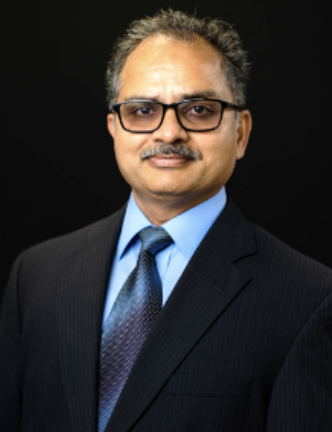
Ashutosh Tiwari
Ashutosh Tiwari, Associate Dean for Graduate Research and Education

A broadly trained protein chemist and cell biologist, Dr. Tiwari is a professor of chemistry at Tech. His research is in the area of ‘protein aggregation diseases’ with emphasis on age-related neurodegenerative disorders such as Amyotrophic Lateral Sclerosis (ALS), Alzheimer’s disease (AD), Parkinson’s disease (PD), prion diseases, and Huntington’s disease (HD). He has received numerous grants as PI or as Co-PI  from the National Institutes of Health, the ALS Therapy Alliance, Amyotrophic Lateral Sclerosis Association (ALSA), and the MTU Research Excellence Fund.

“I have served the University for almost 14 years and am excited to be Associate Dean,” said Tiwari. “The College has a number of exciting research initiatives crossing disciplines such as turning plastics into protein for use as an emergency food source; investigating physics and chemistry of cloud formation; understanding the impacts of multitasking on cognitive performance; using hydropower to store energy in old hard-metal mines; and understanding the ways in which new media technologies can facilitate the spread of misinformation. I want to seek out other exciting collaborations. Plus, the College is a diverse and productive unit with a strong record of excellence in graduate research and education. I will use my experiences mentoring successful graduate students to advance the goals of our college.”

Needless to say, we are pleased to have Dr. Tiwari lead this important initiative.

Michigan Tech Opens COVID-19 Testing Lab

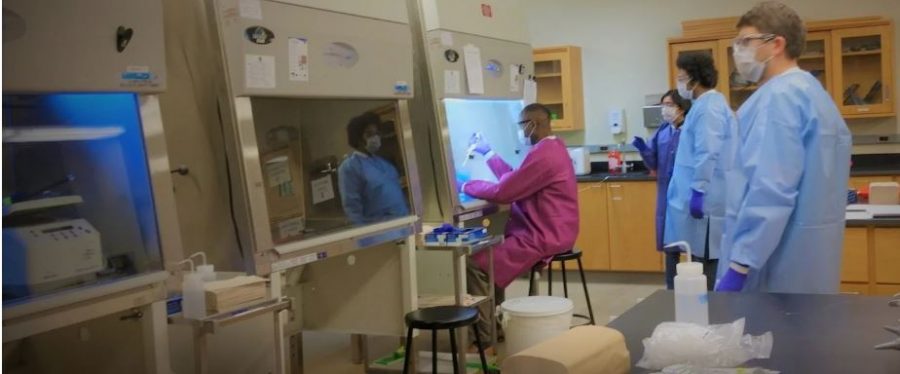
Researchers in a lab doing covid-19 testing.

Starting this week, Michigan Technological University will begin testing patient samples for COVID-19, working alongside regional health care providers. With delays in testing across the nation, rural and remote regions like the Upper Peninsula have been hard pressed to get enough tests for patients. But there is hope.

Michigan Tech has partnered with local hospitals to begin receiving and testing patient samples on campus to save doctors and health care providers at least 24 hours, and up to a week, of waiting for COVID-19 test results. The lab has the capacity to run 40 samples per hour on two machines, and the team has plans to expand with more equipment and staffing.

Read the full story on Michigan Tech News.

Call for Applications: Songer Research Award for Human Health Research

2018-19 Songer Award Recipients. Pictured Left to Right: Abby Sutherland, Billiane Kenyon, Jeremy Bigalke, Rupsa Basu, Matthew Songer, and Laura Songer.

Matthew Songer, (Biological Sciences ’79) and Laura Songer (Biological Sciences ’80) have generously donated funds to the College of Sciences and Arts (CSA) to support a research project competition for undergraduate and graduate students. Remembering their own eagerness to engage in research during their undergraduate years, the Songers established these awards to stimulate and encourage opportunities for original research by current Michigan Tech students. The College is extremely grateful for the Songers’ continuing interest in, and support of, Michigan Tech’s programs in human health and medicine. This is the second year of the competition.

Students may propose an innovative medically-oriented research project in any area of human health. The best projects will demonstrate the potential to have broad impact on improving human life. This research will be pursued in consultation with faculty members within the College of Sciences and Arts. In the Spring of 2019, the Songer’s gift will support one award for undergraduate research ($4,000) and a second award for graduate research ($6,000). Matching funds from the College may allow two additional awards.

Any Michigan Tech student interested in exploring a medically related question under the guidance of faculty in the College of Sciences and Arts may apply. Students majoring in any degree program in the college, including both traditional (i.e., biological sciences, kinesiology, chemistry) and nontraditional (i.e., physics, psychology, social science, bioethics, computer science, mathematics) programs related to human health may propose research projects connected to human health. Students are encouraged to propose original, stand-alone projects with expected durations of 6 – 12 months. The committee also encourages applications from CSA students who seek to continue research projects initiated through other campus mechanisms, such as the Summer Undergraduate Research Fellowship (SURF) program, Pavlis Honors College activities or the Graduate Research Forum (GRF).

Funds from a Songer Award may be used to purchase or acquire research materials and equipment needed to perform the proposed research project. Access to and research time utilizing University core research facilities, including computing, may be supported. Requests to acquire a personal computer will be scrutinized and must be fully justified. Page charges for publications also may be covered with award funds, as will travel to appropriate academic meetings. This award may not be used for salary or compensation for the student or consulting faculty.

To apply:

  • Students should prepare a research project statement (up to five pages in length) that describes the background, methods to be used, and research objectives. The statement also should provide a detailed description of the experiments planned and expected outcomes. Students must indicate where they will carry out their project and attach a separate list of references/citations to relevant scientific literature.
  • The application package also should provide a concise title and brief summary (1 page) written for lay audiences.
  • A separate budget page should indicate how funds will be used.
  • A short letter from a consulting faculty member must verify that the student defined an original project and was the primary author of the proposal. The faculty member should also confirm her/his willingness to oversee the project. This faculty letter is not intended to serve as a recommendation on behalf of the student’s project.

Submit applications as a single PDF file to the Office of the College of Sciences and Arts by 4:00 p.m. Monday, April 22. Applications may be emailed to djhemmer@mtu.edu.

The selection committee will consist of Matthew Songer, Laura Songer, Shekhar Joshi (BioSci) and Megan Frost (KIP). The committee will review undergraduate and graduate proposals separately and will seek additional comments about the proposed research on an ad-hoc basis from reviewers familiar with the topic of the research proposal. Primary review criteria will be the originality and potential impact of the proposed study, as well as its feasibility and appropriateness for Michigan Tech’s facilities.

The committee expects to announce the recipients by early May of 2019. This one-time research award will be administered by the faculty advisor of the successful student investigator. Students will be expected to secure any necessary IRB approval before funds will be released. Funds must be expended by the end of spring semester 2020; extensions will not be granted. Recipients must submit a detailed report to the selection committee, including a description of results and an accounting of finds utilized, no later than June 30, 2020.

Any questions may be directed to Megan Frost (mcfrost@mtu.edu), David Hemmer (djhemmer@mtu.edu) or Shekhar Joshi (cpjoshi@mtu.edu).

CSA Researchers Participate in first TechTalks

Screen Shot 2016-11-16 at 11.55.24 AMOn Thursday, November 10, 2016, several researchers gave two minute presentations for the inaugural TechTalks session of the Michigan Tech Research Forum. Seven of the 13 researchers presented work from CSA disciplines, including the Distinguished Lecture:

  • Steven Elmer– Department of Kinesiology and Integrative Physiology, Exercise As a Form of Medicine
  • Yang Yang – Department of Mathematical Sciences, Numerical Methods for Partial Differential Equations
  • Selin Philip – Department of Coginitive and Learning Sciences, Creating a Culture of Better Mental/Behavioral Health among the American Indians in the Keweenaw
  • Loredana Valenzano– Department of Chemistry, Molecules, Surfaces, Crystals: A Quantum Chemical Quest from Fundamentals to Applications.
  • Nabanita Saikia – Department of Physics, Emergent Frontiers in 2D Nanomaterials for Biomolecular Recongition and Self-Assembly.
  • Lynn Mazzoleni– Department of Chemistry, Introducing the New 2D-Liquid Chromatograph and High-Resolution Mass Spectrometer in the Chemical Advanced Resoulation Methods (ChARM) Core Facility at Michigan Tech.
  • Tarum Dam – Department of Chemistry, Enriching Health-Related Research Through Glycobiological Approaches.

Michigan Tech Research Forum events are presented by the Office of the Provost and Vice President for Academic Affairs in coordination with the Office of the Vice President of Research. Additional TechTalks sessions are coming up in Spring 2017. Interested in nominating yourself or others? Use this online form.

Browse the Twitter conversations in “TechTalks 2016: Take One,” by Allison Mills.


Distinguished Lecture –image151928-pers

Richelle Winkler gave the inaugural Michigan Tech Research Forum Distinguished Lecture on Thursday, October 13 at 4:00 p.m. in the Memorial Union Alumni Lounge. She discussed Making Research Matter: Democratizing Science and Other Lofty Goals.

Professor Hugh Gorman nominated Winkler, an associate professor of sociology and demography, for “community engaged scholarship” that extends across the Michigan Tech campus. Examples of Winkler’s projects include examining the feasibility—social and technical—of using mine water for geothermal heating systems in Calumet and examining the social, economic, and technical aspects of improving recycling in Houghton County. Both projects involve students and community members, and both have real impact in the communities. Winkler also conducts research on the changing demographics of anglers and hunters—and the implications for policy. She presented on this subject at the Department of Biological Sciences last spring.

Syd Johnson Presents on Head Trauma

L. Syd M Johnson
L. Syd M Johnson

The final KIP Faculty and Graduate Student seminar was held on Friday Dec. 4, at 3pm in the ATDC Conference Room. Dr. Syd Johnson from the Department of Humanities presented on the ethical and legal implications surrounding concussions and CTE (chronic traumatic en​cephalopathy). This is timely as there is a new movie out this month called “Concussion” (features Will Smith) which highlights Dr. Bennet Omalu’s discovery of CTE in NFL athletes and how his scientific findings were challenged by the NFL. Below are a few background links that might be of interest. This should be a great talk to wrap up the fall seminar series!

Head trauma: Key questions on CTE lack answers

From the Department of Humanities.

HOUGHTON – Decades after the first research on concussions and chronic head trauma, there’s a widespread effort to mitigate their damage. But many of the most pressing questions still don’t have answers.

Read more at the Mining Gazette, by Garrett Neese (subscription required).