The College of Sciences and Arts announces nine new faculty appointments for this academic year. These faculty bring a wide variety of knowledge and skills to the College, our students, and our research. Their individual areas of expertise include dark-room photography, photonics characterization techniques, human-AI interactions, political science and jazz history. Please join us in welcoming these Huskies to their new positions!
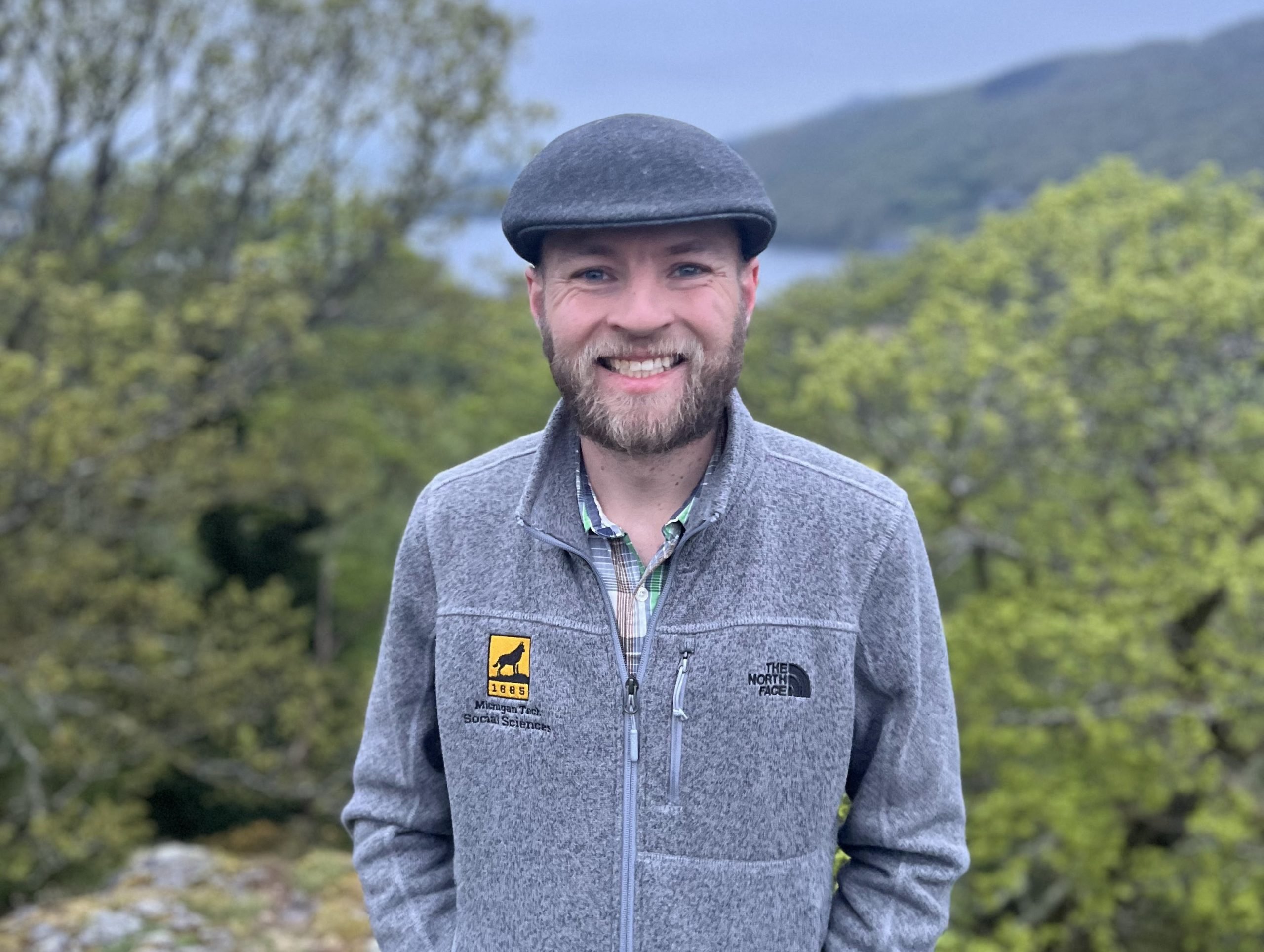
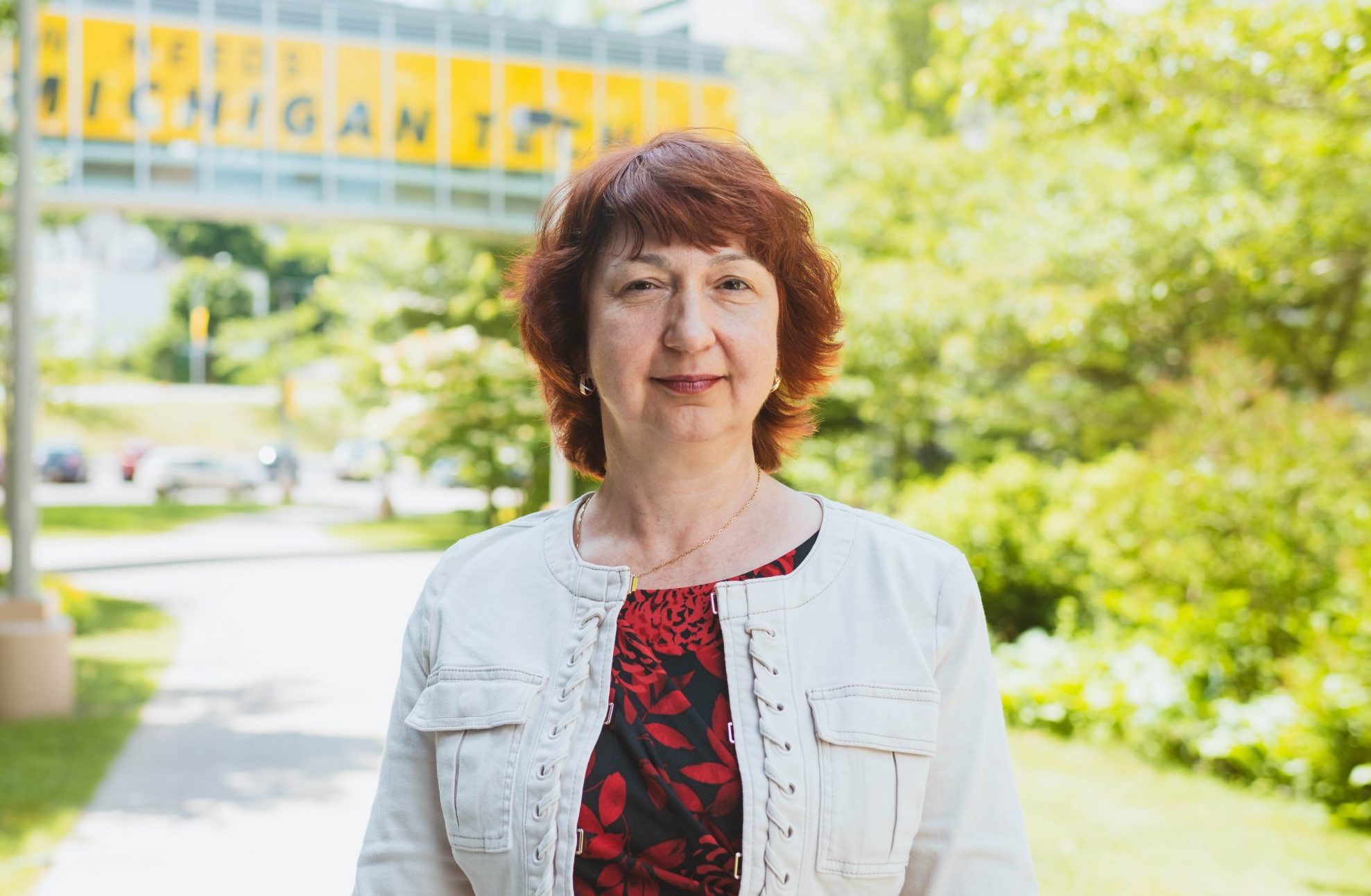
Mark Rhodes, associate professor of geography in Tech’s social sciences department, is one of two scholars selected as a 2025-26 Fulbright US Scholar within the Fulbright-Schuman European Union Affairs Program.
Rhodes’s research leverages Michigan Tech’s unique focus on industrial heritage and archaeology and environmental and energy policy to understand the policy process behind Europe’s industrial heritage. Tech offers the world’s only industrial heritage and archaeology PhD program in the world.
“So many communities around the world, including those in our own back yard and where I’m from in the Illinois Rust Belt, are struggling to navigate deindustrialization,” said Rhodes. “Europe seems to have gotten much more creative in how to not only continue sustainable industrial production but use those former facilities in innovative ways that preserve communities and economic livelihoods.”
Mark Rhodes is spending six months continuing his work on European heritage site policies, designation, and narratives.
Rhodes noted that Europe, known as one of the first regions in the world to begin a shift away from extractive and manufacturing economic activities, has also been a global leader in preserving, interpreting, and managing difficult cultural and economic transitions. Europe has 48 industrial World Heritage Sites, as designated by UNESCO, the United Nations Educational, Scientific and Cultural Organization. In addition, the European Route of Industrial Heritage connects more than 2,400 individual sites. Rhodes’s work explores how EU policy shapes the relationships and laws impacting site designation and narrative, along with understanding how the two are interconnected. His research—spanning the EU—combines in-depth interviews, archival work, and institutional analysis to better understand and inform industrial heritage best practices.
He’ll spend six months in Halle, Germany, hosted by Martin Luther University’s Center for Interdisciplinary Area Studies and Institute of Geosciences and Geography. The Fulbright-Schuman Program, is administered by the Fulbright Commission in Belgium, is jointly financed by the US Department of State and the European Union’s (EU) European Commission. The fellowship aims to strengthen international relations between the US and EU by supporting policymakers and scholars focused on US-EU relations, EU Policy, or EU institutions.
Michigan Tech’s College of Sciences and Arts welcomes Rodica Curtu as the new chair of the Department of Mathematical Sciences, effective July 1. Curtu comes to Michigan Tech from the University of Iowa, where she recently brought the math graduate program into the Internship Network in the Mathematical Sciences and served as faculty senate president.
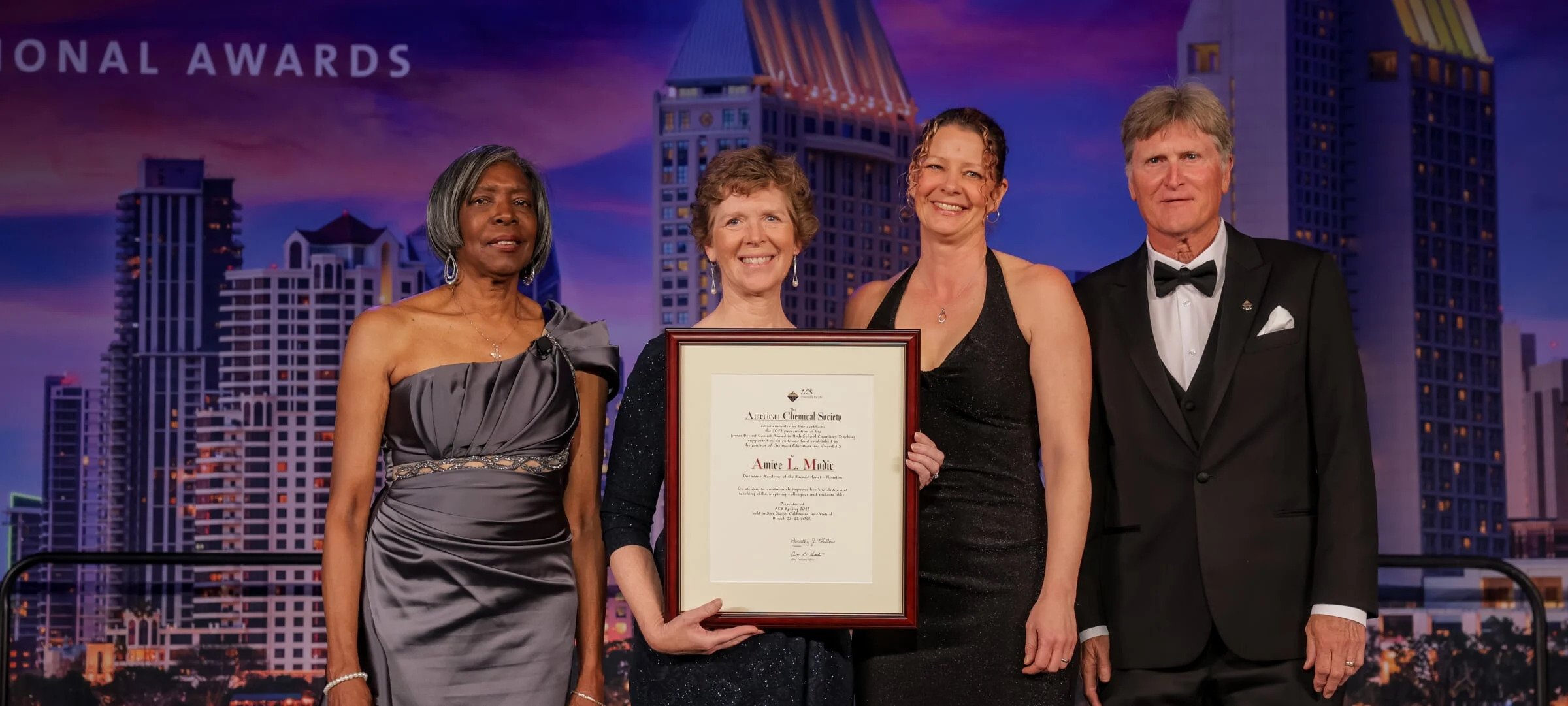
Michigan Tech chemistry alumna Amiee (Larchar) Modic ’84 earned the 2025 James Bryant Conant Award in High School Chemistry Teaching for her authenticity, enthusiasm, and ability to inspire.
Mary Christine Stevens, undergraduate student speaker for the 2025 spring commencement, has sampled much of what Michigan Tech has to offer during her time as a student—a philosophy she happily passes on to current and future students. As Stevens prepares to graduate from Michigan Tech and Pavlis Honors College, she looks back on the time spent earning her bachelor of arts in English with a minor in French, she recalls the advice she received from her father when she first started her college journey.
“He told me to try everything,” Stevens said. “College is the last time in life you’ll have this much freedom and these few responsibilities.”
Thomas Werner, a North American fruit fly expert, entomologist and biological sciences professor of genetics and developmental biology is celebrating the release of his latest volume documenting fruit flies across the continent—and Huskies are invited.
Whether it’s a rave in the hot sun throwing beach balls and sipping fruity drinks or a long, relaxing week on the couch, the spring-breaker stereotype doesn’t typically involve long hours of learning and labor. But thanks to Michigan Tech Student Leadership and Involvement (SLI), Huskies have options. Alternative Spring Break (ASB) gives students across campus the opportunity to spend their time off serving communities around the world—and having a different kind of fun in the process.
Nyasha Milanzi wasn’t entirely surprised to win the Rising Black Scientists Award. She had a feeling. And she’d worked hard on her application.
“This is probably coincidental, but I actually wrote in my diary that I was going to win the prize after I submitted it,” said the graduate research assistant, who is slated to receive her master’s degree in sustainable communities this year. “I felt my essay was well written and thought I was going to win the prize, so I wrote it down.”
Michigan Tech visual and performing arts students explore big questions through art. Allison Lewis ’26, a theatre and entertainment technology major and art minor, approached the final project for her art and design class by inviting others to share their experiences. The project prompt, “the human condition,” inspired Lewis’ interactive mural of her mother.
The size of the project is deliberate.“My mom is a really large influence in my life and I feel like I carry her with me the most,” said Lewis, “I wanted to not only celebrate her but let people celebrate the people in their lives who influenced them and who they are made up of.”