
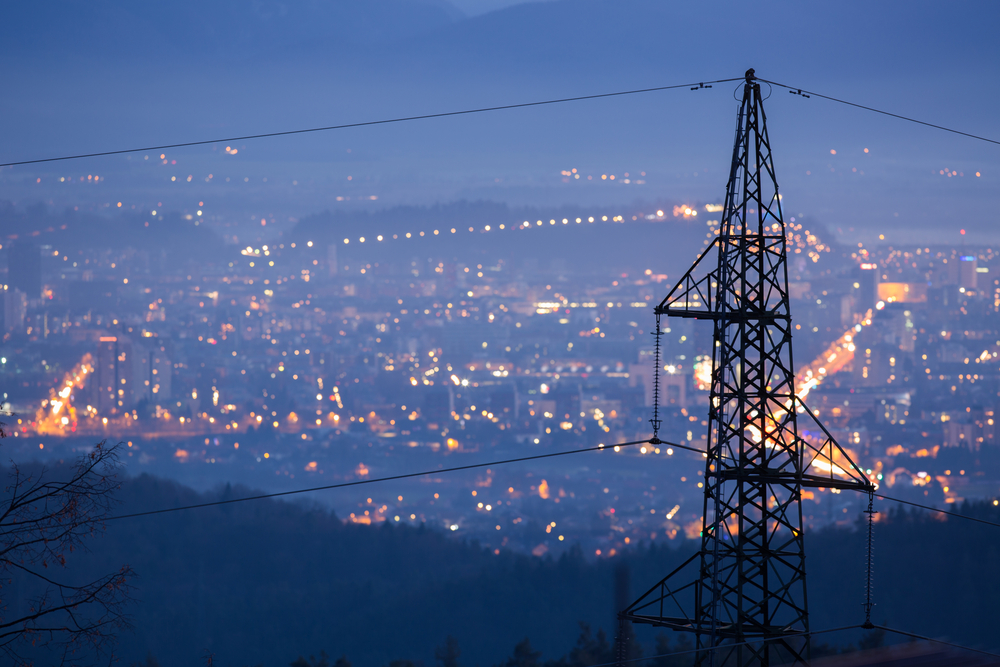
Chee-Wooi Ten answers: Are Power Grids Prepared to Withstand Cyber Threats?

powergridstory-20170906In an interview with @ForensicMag, ECE associate professor Chee-Wooi Ten answers the Virtual Case Notes question: Are Power Grids Prepared to Withstand Cyber Threats?

Ten says an effective approach to improving cybersecurity for power grids would be to encourage cooperation between those with knowledge about cybersecurity and those with knowledge about power grids and their physical components, so the two can work together to assess the risks and how they can best be dealt with.

Read more for the complete story by associate editor Laura French.

Fridays with Fuhrmann: August Odds and Ends

FWFimage_201700901Greetings to everyone from the chair’s office in the ECE Department! Here we are again, at the cusp of a new academic year at Michigan Tech. The new students have already been on campus for a week, for orientation, and classes start next Tuesday. As much as I love the beautiful quiet summers here, I get energized by the new and returning students, the new faculty members across campus, and the overall “buzz” of activity that accompanies the new year. Game on!

One little indicator of the increased level of activity is the increase in my e-mail. I have a nerdy little system where I track my e-mail pretty carefully, in an effort not to lose or overlook stuff, and part of that includes jotting down the number of e-mails in my inbox over every 24-hour period. Over the summer, right up until last Friday, that number was just under 100 e-mails per day. Starting this past Monday, that number jumped up to an average of 143 per day – a 43% increase! Not all of those required immediate action on my part, thank goodness. Our provost, Jackie Huntoon, tells me that she processes around 400 e-mails a day, and I don’t know how she does it. If one can handle 100 messages an hour, which is about my pace, that means spending half the day just conducting business by e-mail. I do notice that on those days where I am sitting in my office sending out e-mails to everyone, I end up with a lot more in my inbox. Funny how that works. Elon Musk, the entrepreneur behind Tesla and SpaceX, joked in an interview recently that e-mail was one of his “core competencies” although based on my experience I’m not entirely sure he was kidding.

Interested readers of FWF, if there are any, may notice that I kind of disappeared in the month of August. I don’t have much in the way of explanation, other than 1) I got busy, or 2) I got lazy. It actually was a busier August than usual. At any rate, I am back in the saddle and ready to share with you more random thoughts on a weekly basis as the semester progresses.

Today I will play “catch-up” with a few paragraphs about what has been on my mind the past month. Any of these topics could have turned into an entire column but I will try to keep it brief.

Alumni Reunions. Michigan Tech held its annual reunion celebration on campus in the first week of August. As always it was great to re-connect with so many Huskies from our past. For the second year in a row the pasty picnic was moved indoors to the MUB due to the threat of rain. Last year it was just that – a threat – but this year it rained cats and dogs so moving it was a good call. [My all-time favorite kid joke: “Hey, it’s raining cats and dogs!” “I know, I just stepped in a poodle.”] At the Friday night awards dinner, we gave the “Honorary Alumni” award to our good friend John Dau from DTE. This award is given to someone who is not an alumnus of Michigan Tech but who has been so engaged with the university that we can pretend he or she is anyway. That was a wonderful evening and I can’t think of a more fitting recipient than John. The entire week is a good opportunity to remind the alumni, and ourselves, that they carry the Michigan Tech “brand” with them their entire lives, and anything we do to move the university forward is a positive reflection on them, even when they have been away from campus for many years.

Copperman Triathlon. I bring this up just as an example of how wonderful it is to be in the Copper Country in the summer (see paragraph 1). The Copperman Triathlon is a very well-run local athletic event up in Copper Harbor, and I have enjoyed participating in it several times. It was held on August 5 this year. The distances are a little bit non-standard, but it is close to Olympic distance – 1/2-mile swim, 23-mile bike, 5-mile run. It can be done individually or in teams – I have done both – and this year I was on a team with Jesse Depue, daughter of retired Michigan Tech colleagues Chris and Carl Anderson, and Joan Becker, our very own Graduate Program Coordinator in the ECE Department. Our team name was “Trust Me, I’m an Engineer”. Jesse absolutely crushed it with a 13-minute swim, and Joan was flying on the bike at 1:12:30. I turned in a mediocre 47 minutes on the run, but hey, I was off the couch and enjoying a stunningly beautiful day in the Keweenaw. I’ll take it.

Charlottesville. From the sublime to the despicable. The events in Charlottesville really set me back and may have had something to do with why I just stopped writing for a couple of weeks, because I had such a hard time finding the words. It goes without saying, but I will say it anyway, that hatred, racism, white supremacy, Nazism, the KKK, and everything that goes with them and everything that they stand for are absolutely deplorable. What is more disconcerting to me is that there is even any debate about this. Seriously, how hard is it to condemn Nazis? There was no end of commentary to be found on social media, and two videos I really liked came from Arnold Schwarzenegger and Jim Jefferies. Schwarzenegger grew up in Austria, and in his video he commented on the soul-crushing effects of Nazism on those who served, and lost, in the German army in WWII. Jefferies, an Australian comedian and fairly recent addition to the Comedy Central line-up on cable TV, made a serious point about how we cannot pretend these neo-Nazis are not part of us (I will skip over his anatomical analogy, even though it was pretty good. Google it.) To his point, we as electrical engineers, computer engineers, and computer scientists have to come to grips with the fact that something we have created – the Internet – has a lot to do with the resurgence of hatred in our society. I have seen some of this stuff, and it is appalling to read what these cowardly little Internet trolls are saying about their fellow human beings under the cover of anonymity. I spend a lot of time here extolling the virtues of all the good things that electrical engineers have brought to this world. The Internet is one of those things, but it has a dark side that is way worse than anyone probably imagined 30 years ago. That hatred is now coming out into the open in ways that we are going to have to deal with, one way or another. I don’t have any good answers – I am just really worried.

Computing at Michigan Tech. Ah…coming back to the collective efforts of those who are actually trying to be a positive contribution to the planet. As we look forward to a season of leadership change here at Michigan Tech, with ongoing searches for the president and three deans, there are some who see a good opportunity for other types of changes as well. I am thinking particularly of change as it relates to computing and information sciences and how Michigan Tech will position itself in the years and decades to come. I count myself among those who would welcome a serious look at this issue. On Friday, August 18, Provost Jackie Huntoon convened a large group of stakeholders in computing at Michigan Tech for an all-day retreat where we explored a lot of different aspects of our approach to computing here. In attendance, and making two powerful presentations, was ECE alumnus Dave House, whom I have written about here before. Dave made the point that technology is changing rapidly in the Fourth Industrial Revolution, and that Michigan Tech needs to adapt and be a leader in 4th IR technologies if we are to remain relevant. I couldn’t agree more. The whole point of the retreat was to open up hearts and minds to the possibility of change; no proposals were put on the table. This is going to be a long process, with lots of input from constituencies internal and external to Michigan Tech, and I have confidence that Provost Huntoon will guide that process effectively. This is something that is on my mind a lot these days, so you may be reading a lot more about it this year.

Personnel Changes. This year the ECE Department welcomes Dr. Tony Pinar as our new Lecturer and coordinator of the Senior Design program. I have asked Tony to concentrate this year on the quality and consistency of the student experience in Senior Design, and I know he will do exactly that. We also welcome Dr. John Pakkala, who will serve as our new Graduate Academic Advisor for course-option MS student. Both Tony and John hold PhDs from the department – Tony just last year under the direction of Prof. Tim Havens, and John many years ago under the direction of Prof. Jeff Burl. We are also dealing with the rather sudden resignation of Associate Professor Shiyan Hu, who has taken a chaired professor position at a university in Europe. I wrote recently about Shiyan’s exemplary professional service activity, and ironically it was this very activity that made him attractive for recruiting elsewhere. This is a blow for the ECE Department, but we congratulate Shiyan on his success and wish him all the best.

Well, I believe this brings us up to the present. We get one more breather, Labor Day weekend, before classes get underway next week. Make it a good one!

– Dan

Daniel R. Fuhrmann
Dave House Professor and Chair
Department of Electrical and Computer Engineering
Michigan Technological University
NSF Funding for Semouchkina on Transformation Optics

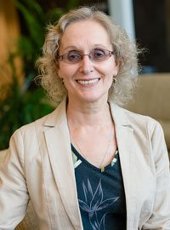
Elena Semouchkina
Elena Semouchkina

Elena Semouchkina (ECE/ICC), is the principal investigator on a project that has received a $337,217 research and development grant from the National Science Foundation (NSF). The project is “Developing Anisotropic Media for Transformation Optics by Using Dielectric Photonic Crystals.” This is a three-year project.

Abstract

Transformation optics (TO) is based on coordinate transformations, which require proper spatial dispersions of the media parameters. Such media force electromagnetic (EM) waves, moving in the original coordinate system, to behave as if they propagate in a transformed coordinate system. Thus TO introduces a new powerful technique for designing advanced EM devices with superior functionalities. Coordinate transformations can be derived for compressing, expanding, bending, or twisting space, enabling designs of invisibility cloaks, field concentrators, perfect lenses, beam shifters, etc., that may bring advances to various areas of human life. Realization of these devices depends on the possibility of creating media with prescribed EM properties, in particular, directional refractive indices to provide wave propagation with superluminal phase velocities and high refractive indices in the normal direction to cause wave movement along curvilinear paths. Originally, artificial metamaterials (MMs) composed of tiny metallic resonators were chosen for building transformation media. However, a number of serious challenges were encountered, such as extremely narrow frequency band of operation and the high losses in metal elements. The proposed approach is to use dielectric photonic crystals to overcome these major limitations of MM media. This project will allow graduate and undergraduate students, especially women in engineering, to participate in theoretical and experimental EM research. Outreach activities include lectures and hands-on projects in several youth programs to K-12 students.

Read more at the National Science Foundation.

Former UPPCO CEO, Distinguished Tech Almunus, Elio Argentati Dies

Elio Argentati
Elio Argentati

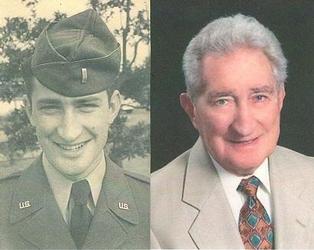
Funeral services were held over the weekend for the former CEO of the Upper Peninsula Power Company and a distinguished Michigan Tech Alumnus, Elio Argentati.

Argentati, of Iron River, passed away Tuesday (Aug. 22, 2017) at Aspirus Hospital in Iron River, he was 89.

According to his obituary on the Jacobs Funeral Home website, Argentati was a 1950 graduate of the Michigan College of Mining and Technology (now Michigan Technological University) with a bachelor’s degree in electrical engineering.

He joined the Upper Peninsula Power Company in 1960 as an applications engineer and rose up through the ranks eventually becoming president, chairman of the board and CEO in the corporate office in Houghton, retiring in 1994.

He was active in the Michigan Tech Alumni Association and a member of the Golden M Club. In 2012 he was awarded the Board of Control Silver Medal.

Funeral services were held Saturday at St. Agnes Catholic Church in Iron River, with interment in the Resthaven Cemetery in Iron River.

Fridays with Fuhrmann: The Third Leg

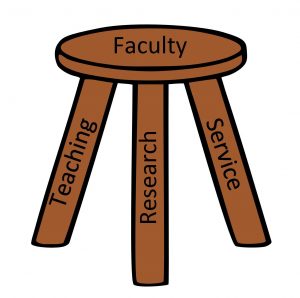
FWFimage_20170728Following up on posts earlier this summer about university teaching and research, I thought this week I would write a few lines about the third piece in the academic triumvirate – service.

Teaching, research, and service are often listed together as the responsibilities of a university faculty member. Research is all about the discovery of new knowledge and teaching is all about sharing that knowledge with the next generation. Service, in this context, refers to all the things that we do to maintain a healthy community and an environment where those first two activities can thrive.

Service activities are normally divided into two broad categories – university service and professional service. University service includes all the things that we do for our own institutions, beyond teaching courses and carrying out research projects. Professional service are all those things we do to maintain the professional communities outside of the university, often but not always centered around a shared interest in a particular area of research or scholarship.

University service is closely connected with the concept of shared governance, a principle which maintains that the faculty have an important voice in the academic programs and policies of the institution. Since we have a voice in those policies and programs, it is incumbent upon the faculty to exercise that right through participation in a myriad of committees and other governance bodies that either make recommendations to the university administration (in the case of policy) or have the authority to make decisions (in the case of academic programs and requirements). This can happen at multiple levels. In the department, we have faculty committees that oversee our undergraduate and graduate academic programs, organize seminars, manage our various communication activities, ensure compliance with accreditation requirements, maintain our laboratories and other departmental facilities. The faculty as a whole has the authority to vote on any changes to our academic programs, provided they are consistent with university-wide standards.

At the university level, at Michigan Tech we have a governance body, comprising both faculty and staff, called the University Senate. Each academic department has one representative, chosen by the departmental faculty, and there are some at-large members as well. The primary responsibility of the Senate is the oversight of academic programs: all new academic programs at Michigan Tech have to go through a rigorous Senate vetting process that the proposing departments consider onerous at the time but in the end plays an important and valuable role in quality control. The Senate also makes recommendations on non-academic matters that have an impact on faculty, staff, and students, such as the sabbaticals, benefits, and compensation. Most of the Senate meetings I have been to (usually because the ECE Department has some proposal up for a vote) are pretty boring but I am first to admit that the work is important and I thank all the representatives for their service. Saeid Nooshabadi has been the ECE rep for several years, and now that Saeid is off on sabbatical Chris Middlebrook is taking over this year.

Most faculty members are involved in some form of professional service outside the university, most often but not always related to technical areas of interest. Everyone on the ECE faculty (I’m pretty sure) is a member of the IEEE, the Institute of Electrical and Electronic Engineers, which incidentally is the largest technical organization in the world. The IEEE has a ton of activities related to the dissemination of technical information, including journals, conferences, and workshops. There are all sorts of ways to participate in those activities, such as being on technical committees, organizing workshops or sessions at conferences, or serving as an editor or associate editor for a journal. Generally speaking, I consider reviewing papers for journals and conferences as research activity and not service activity; something moves into the service category when there is more of an administrative function involved, such as being a conference organizer or a journal editor. That’s a subtle distinction and probably not all that important, although I do keep it in mind when doing faculty performance reviews.

There are lots of other professional organizations out there besides the IEEE, such as the American Society of Engineering Education (ASEE) and the Association for Computing Machinery (ACM), and no end of opportunities to serve. Volunteers are rarely compensated for their time, but such service is expected of academic personnel, which in effect means that the universities that pay faculty salaries are footing the bill for all these professional organizations. That’s not meant to be a complaint; the organizations and the universities have consistent missions and as such, one could view the professional organizations as extensions of the entire university system taken as a whole. The system works as long as everyone does their part.

I often take advantage of this blog to brag on someone in the ECE Department, and today is no exception. One of ECE faculty members most active in professional service over the past couple of years is Prof. Shiyan Hu. Shiyan is an associate professor on the computer engineering side of the department, with interests in design automation and cyber-physical systems. He led the establishment of the new IEEE Technical Committee on Cyber-Physical Systems, whose membership includes 21 IEEE Fellows and 12 current or former Editors-in-Chief for IEEE or ACM Transactions. He is the co-Editor-in-Chief for the new journal IET Cyber-Physical Systems: Theory and Applications, and has established two new IEEE workshops, Cross-Layer Cyber-Physical System Security and Design Automation for Cyber-Physical Systems. Over the years he has been an associate editor for three different IEEE Transactions, and he has been a special issue guest editor for the five others, including an upcoming special issue of the IEEE Proceedings, on Design Automation for Cyber-Physical Systems (watch for it in 2018.) Shiyan is bringing a lot of visibility to ECE at Michigan Tech and we certainly appreciate it.

In these past few columns I have attempted to emphasize not only what we do in academics, but why we do it. In the case of service, I see service as being all about building communities. In many aspects of academics, there is an element of competition: departments compete against each other within universities, individuals compete nationally and internationally for priority and respect in their research, and universities compete with one another for prestige, with the most visible example of the latter being the rankings put forth by U.S. News and World Report. Competition is healthy for spurring innovation and motivating us to be the best that we can be, but it also has the unhealthy side effect of building walls and turning us against one another. Through our service activity, whether internal or external to the university, we have the opportunity to build communities of like-minded individuals who agree to support each other, and maybe even set the rules of engagement for orderly and fair competition. It gives us the chance to reflect on the fact that, at the end of the day, we really are all in this together. I believe that the balance between striving to be our best individually, while supporting each other to be our best collectively, is a beautiful thing about being in academics and one of the reasons that we stay in these positions for as long as we do.

– Dan

Daniel R. Fuhrmann
Dave House Professor and Chair
Michigan Technological University

Havens and Pinar Present in Naples and Attend Invited Workshop in UK

fuzz ieee 2017Tim Havens (ECE/CS) and Tony Pinar (ECE) presented several papers at the IEEE International Conference on Fuzzy Systems in Naples, Italy. Havens also chaired a session on Innovations in Fuzzy Inference.

The conference took place July 9-12, 2017.

Havens and Pinar also attend the Invited Workshop on the Future of Fuzzy Sets and Systems in Rothley, UK. This event invited leading researchers from around the globe for a two-day workshop to discuss future directions and strategies, in particular, to cybersecurity. The event was hosted by the University of Nottingham, UK, and sponsored by the National Cyber Security Centre, part of UK’s GCHQ.

Fridays with Fuhrmann: European Vacation

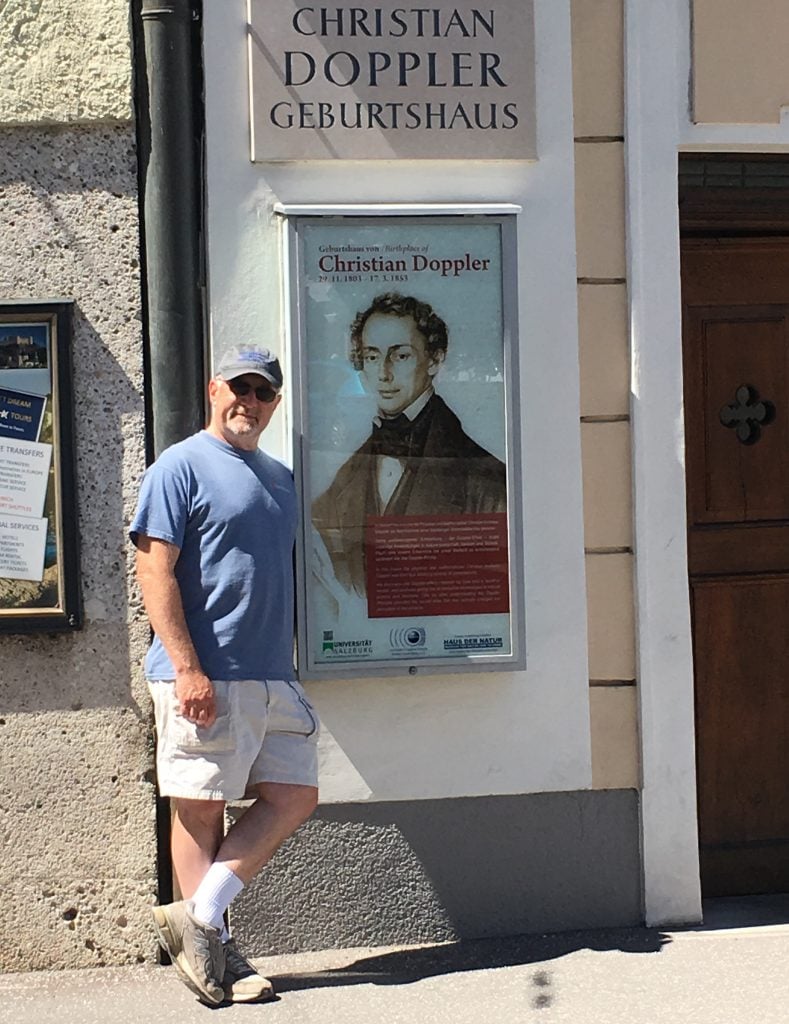
FWF-image-20170721-v2FWF is taking a break this week, while my family and I visit Central Europe: Munich, Salzburg, Vienna, and Prague. Here is a photo of yours truly, looking like a typical American tourist, standing in front of the birthplace of Christian Doppler in Salzburg. Many of the readers of this column will know the importance of Doppler in radar signal processing.

Having a wonderful time – will be back next week.

– Dan

Daniel R. Fuhrmann
Dave House Professor and Chair
Department of Electrical and Computer Engineering
Michigan Technological University
SYP Students Visit MFF

MFF SYPMichigan Tech’s Microfabrication Core Facility (MFF) was host to 15 students, ages 12-14, from the Summer Youth Program (SYP) Tuesday (July 18, 2017).

The students learned about the fabrication of silicon-based devices and how silicon wafers are produced. Additionally, they had hands-on experience in the cleanroom and used the photolithography process to transfer a pattern on a photomask to a silicon wafer. The pattern had a scale on it from 100 um (diameter of a human hair) to 1 um (diameter of bacteria) to allow the students to understand the scale that MFF users work at.

The students also hand cleaved silicon wafers to produce dies of gold Michigan Tech logos as a keepsake for their time in the MFF. A similar event is planned for another SYP group this Tuesday (July 25).

By Electrical and Computer Engineering. Read more at the Microfabrication Core Facility, by Chito Kendrick.

Students experience day in Microfabrication Facility

HOUGHTON — Michigan Tech’s Microfabrication Core Facility provided students with a glimpse of the microfabrication process.

The students suited up and worked in the cleanroom to learn about fabricating silicon-based products. At the end, silicon wafers were transformed into dies of gold Michigan Tech logos through the process of photolithography.

Read more and watch the video at ABC 10 News, by Rick Allen.

Summer Youth at Microfabrication Facility
Chito Kendrick
Chito Kendrick

Fridays with Fuhrmann: Striking the Balance

Associate Professor Tim Havens and graduate students

Happy New Year! Today marks the end of Fiscal Year 2017 at Michigan Tech, as it does for many other universities and businesses. This is the year boundary that really matters for anyone doing accounting or record-keeping at the university. For the past couple of weeks, a lot of staff members have been hard at work, making sure our financial house is in order. In July we will start the process of looking back at the past year, preparing year-end reports, and seeing how we did relative to a lot of different metrics. Of course, at the same time we are starting all over again with FY 2018. It’s the circle of life.

Earlier this month I offered some views on our fundamental motivation for being in this line of work – why we teach and why we do research. Today I thought it would be good to take a look at the interplay between teaching and research in the university setting.

In one of those earlier posts I made the observation that we are not a business, rather we are an institution that serves the public good and as such we have multiple stakeholders that we try to keep happy. That same notion about multiple stakeholders holds true at the individual faculty member as well, and if not managed properly it can lead to a lot of stress. In one sense the faculty members are accountable to only one person – me, the department chair – but in reality their performance depends in large part on keeping a lot of other people happy. On the teaching side, there are the students of course, one of our most important constituencies, and sometimes the parents, who generally only surface when things are not going well. There are also department colleagues, as we depend on each other to teach all the necessary prerequisite material for the next course or courses, to make sure a course plays its proper role in the overall curriculum, and to provide documentation needed for accreditation. In research, faculty are held accountable by their external program managers, who often do not understand that we have multiple obligations, by their national and international professional colleagues who provide anonymous peer review of the work, and by journal editors and conference organizers who expect timely compliance with paper reviews and other research-related activity. It’s a lot to juggle!

Even if we simply divide our activity into two broad areas, teaching and research, it can be a struggle to find the right balance between the two. They are often seen to be in conflict, two polar opposites competing for our attention. Students wonder why the faculty are wasting time doing research when they should be available 24/7 for questions and concerns. Research sponsors wonder why faculty are putting so much into teaching when they should be setting the world on fire with their latest scholarly achievements. Faculty members themselves are conflicted, feeling that they enjoy one activity while getting messages that they should spend more time on the other. Sometimes those are mixed messages, since at a place like Michigan Tech there are multiple gatekeepers for promotion and tenure, and there is the concern that different people have different opinions about what is important.

I believe that the answer to this conflict is not to see this as a conflict at all. Even though this is hard to pull off all the time, I still believe in the old-fashioned notion of the teacher-scholar, the person who has a high-level research or scholarly program in his or her own right, and is passionate about educating the next generation of students to make their own contributions to the field. This is really where the magic happens at a university. People who are brilliant scientists, engineers, mathematicians, or thinkers in any discipline, and are not jerks about it but instead really care about students and their education, are like gold at a place like Michigan Tech. The trick to making this work is to see that teaching and research are not pulling in opposite directions but are actually two sides of the same coin – the quest for new knowledge.

A strong research program can have a beneficial impact on one’s teaching. Sometimes we think that the teacher brings the results of his or her latest cutting-edge research into the classroom, keeping students current and motivated, but actually I do not think that is completely correct. Especially if we are talking about undergraduates, most cutting edge technology is beyond them – they are just not ready. After all, the faculty member has a head start on them by at least five years and probably more like 20 or 30. I think the real value of the research program, as it applies to teaching, is that it allows the teacher to know what is important and what is not in the fundamentals. In fact, it gives the faculty member the certainty that the fundamentals really are important, and that certainty will lead to clarity and passion. Sometimes we have to say “trust me, you really need to know this and you will thank me someday”. I get that that does not always work without some taste of good things to come. Here the faculty need to lead by example, demonstrating the kinds of things that can be accomplished if you follow their lead, without overwhelming students with details beyond their comprehension (the so-called “fire hose of knowledge.”)

The mutual benefits of teaching and research go the other direction too. Some of the key attributes of good teaching are, one has to be prepared, one has to be organized, and one has to communicate effectively. The discipline that comes with doing those three things on a regular weekly schedule can pay huge dividends in research programs, where often there is not the same pressure to break one big task down into lots of little tasks. The best teachers are the ones who know how to explain difficult concepts clearly, and clear communication goes hand-in-hand with clear thinking. I have often had the experience where just talking about some problem I am wrestling with leads to new and better ways of thinking about it. Put another way, in order to understand a problem one needs to be able to explain it well, and if you do not understand the problem chances are you are not going to understand the solution. Again, it all comes back to the fact that seeking knowledge and communicating knowledge are really not all that far apart; quite the opposite, they are complementary.

The way we learn things and the way we explain them are often quite different. When I think I know something pretty well, I can lay it out in a linear fashion: I say “here is concept A, which leads to concept B, which in turn implies concept C.” Mathematical proofs usually work this way. If I have been working on something for a while, and having some success, it is very satisfying to put things down in a neat set of notes with the proper flow of one idea into the next. The problem is, with 99% certainty that is not the way I learned the material. Usually I learn things in a more circular fashion, going forward and back and sometimes in random directions, figuring out bits and pieces and eventually figuring out how they are linked together. When the pieces are in place, and I want to convince someone of my results, then my explanation will be nice and linear. This is precisely how most of us organize our lectures and our courses: a nice logical flow from the beginning to the end. Actually I think this is perfectly acceptable. We just have to understand that our students, just like us, are not going to learn the material that way. Instead, they will get part of the lecture, then through homework, labs, and studying for tests they will go around and around in circles until it starts to make sense. Perhaps the goal should not be to have students comprehend a topic in that nice linear fashion from the very beginning, but rather to come to a linear understanding of that topic in the end. My point here is that this circular or random nature of discovery/learning, and the linear nature of understanding/explaining, are quite complementary and are mirrored in the way we do teaching and research.

Bringing this closer to home, I thought I would brag a little bit about one of our own. Tim Havens, an associate professor with a joint appointment in ECE and Computer Science, has found the sweet spot when it comes to balancing teaching and research. He is one of our most active researchers in the ECE Department, with a portfolio of funded projects in computational intelligence and signal processing totaling about $250k per year in research expenditures. He is the Director of the Center for Data Sciences, within the Institute for Computing and Cybersystems, and is also the Director of the non-departmental MS in Data Sciences professional degree program. As a teacher, he can cover just about anything in the computer engineering curriculum, from sophomore-level digital logic design to graduate-level machine learning, and he always gets outstanding student course evaluations. Having been to several of his recent graduate student thesis and dissertation defenses, I am impressed by the quality of his students’ work, and by the level of enthusiasm and camaraderie among the students in his research group. He is an outstanding example for all of us. Tim, feel free to use the comment feature of this blog if you want to tell us how you do it.

Next week is Fourth of July – have a safe and happy holiday!

– Dan

Daniel R. Fuhrmann
Dave House Professor and Chair
Department of Electrical and Computer Engineering
Michigan Technological University

Fridays with Fuhrmann: Summer Solstice and Signal Processing

FunintheUP.com photo

A very happy midsummer to all from the northern reaches of Michigan! This is the season for long days in the Keweenaw, and I thought it would be fun this week to explore some of the basic mathematical facts about sunrise, sunset, and the length of days, and throw in a little signal processing to boot.

First off, while the days are long this time of year, what makes them seem longer here is the timing of sunrise and sunset. Yes, we are pretty far north compared to most of the 48 contiguous states, but we are not really that far north. At 47 degrees N latitude, we are at about the same latitude as the northern tip of Maine, we are slightly south of Seattle, south of most of Canada and all of Alaska, and well south of all of Great Britain and Scandinavia. Our longest days in the summer are about 16 hours, and the shortest days in the winter are about 8 hours. There are plenty of places on the globe with greater variation in the length of day than that. The reason we think the days are so long right now is because of a quirk in the time zone map. Like all but three counties in the Upper Peninsula, Houghton County is in the Eastern time zone, despite the fact that we are slight west of Chicago, which is in the Central time zone. The story goes that we are on Eastern time so that we would be in the same time zone as the bankers and mine owners on the East Coast, 100 years ago. As a result, this time of year the sunset occurs around 9:50pm, and twilight extends for another hour or so after that. For those of us working at Tech and leaving around 4 or 5pm, it’s like another whole day to play outside.

This year the summer solstice occurred on Wednesday, June 21. While we often think of the solstice as a day, in fact it is a particular moment in time when the Earth’s axis of rotation is most tilted toward the Sun. At that instant, the axis of rotation is co-planar with the axis of revolution of the Earth around the Sun, and the Sun shines directly down on the Tropic of Cancer. This year the solstice occurred at 12:24am EDT, on Wednesday, July 21. The time of the summer solstice moves forward about 6 hours, or one quarter of a day, each year, as the period of revolution of the Earth around the Sun is about 365-1/4 days. The 1/4 day is why we have a leap year ever four years, and on those years the time of the summer solstice moves back 18 hours from the previous year. Oddly enough, part of the reason we say the solstice occurred on June 21 this year has to do with Daylight Saving Time; if we were on Standard Time the solstice would have occurred on Tuesday, June 20, at 11:24pm. As it turns out the longest day of the year, measured from sunrise to sunset, was actually June 20.

Here is a little-known fact which has fascinated me ever since I discovered it. The longest day of the year does not coincide with either the earliest sunrise or the latest sunset. At our latitude, the earliest sunrise occurs about 5 days before the solstice, and the latest sunset occurs about 5 days after. That means that, at the time of this writing, we have not even seen the latest sunset this year; that will occur on Sunday, July 25, at 9:54:06 p.m. The sunset time is not changing quickly, though: on both June 24 and June 26, sunset is at 9:54:05 p.m. Those who understand the basic concept from Calculus 101, that the slope of a function is zero at its maximum, will appreciate that.

The length of the day is defined as the time between sunrise and sunset, or if we want to do an arithmetic calculation, it is the sunset time minus the sunrise time. The addition or subtraction of two periodic functions that are synchronized in time is an important concept from the course I teach, EE1110, Essential Mathematics for Electrical Engineering. There we consider a particular class of functions, called sinusoids, and show that as long as two sinusoids have exactly the same frequency, then the sum or difference will also be a sinusoid, and furthermore there is a straightforward algorithm to figure out where the peaks and valleys of the sum (or difference) will be relative to the peaks and valleys of the signals being added or subtracted. In the case of the sunrise and sunset times, we already see that the earliest sunrise and the latest sunset are offset by about 10 days at our latitude, and that the longest day will occur somewhere in the middle.

Thinking there might be an interesting connection between electrical engineering and astronomy, I figured I would just go ahead and look at the numerical data in MATLAB and see if I could use it to illustrate EE1110 principles. There are lots of places on the Internet to find sunrise and sunset data times; here is one operated by the U.S. Navy: http://aa.usno.navy.mil/data/docs/RS_OneYear.php. What is nice about this site is that it provides the data for an entire year, in a format that is easy to cut and paste into an Excel spreadsheet. So, that is exactly what I did: I put the 2017 data into Excel, then imported it into MATLAB, then reformatted it so that times are expressed in minutes (from midnight) and kept everything in Eastern Standard Time. I also got rid of the months and dates, simply numbering the days sequentially starting with Day 0 being January 1, 2017. All of that took longer than it should have, but now I have the data conveniently in a .mat file.

The upper panel in Figure 1 below shows the time of the sunrise (in green) and sunset (in red), measured in minutes from midnight, Eastern Standard Time, as a function of the day, for the entire year 2017. In the lower panel I show the length of the day (in blue), in minutes, which is simply the sunset function minus the sunrise function. For point of reference, one full day is 1440 minutes.

Figure 1
Figure 1

Here is where I got the first of three surprises in this little exercise. The sunrise and sunset functions are quite asymmetric, in the sense that they do not look the same when you flip them upside down. The latest sunset occurs after the summer solstice, whereas the earliest sunset occurs before the winter solstice, which means that the time from a peak to valley is considerably shorter, like 20 days, then the time from a valley to a peak. We see the same behavior in the sunrise data. Now the symmetry of sinusoids is important to a lot of the EE1110 theory, and because of the asymmetry issue we cannot use sinusoids to model sunrise and sunset data. Consequently, the idea of using sunrise and sunset times as an illustrative example of EE1110 concepts is out the window. Dang!

We are not done yet, however. As can be observed in the lower panel, the length of day function does exhibit symmetry, in fact it looks downright sinusoidal. So, I thought maybe we could throw some of our signal processing tools (well beyond the scope of EE1110) at this data and see if we can determine the period, or time for one complete cycle. To make this a little more accurate, I decided to look at four consecutive year’s worth of data, from 2017 to 2020. This data is shown in the Figure 2 below, which is essentially the same as Figure 1 except it goes for four years. To compute the period, or more precisely the frequency (the inverse of the period, in cycles per day), I used a common technique from signal processing of computing the Discrete Fourier Transform (DFT) of the data, using an algorithm called the Fast Fourier Transform (FFT), and looking for the point at which the DFT reaches its maximum. For those following along at this point, I subtracted off the mean of the data, and zero-padded it out to 65536 data points before computing the DFT. Doing these kinds of calculations in MATLAB comes very easily to me after many years of signal processing research; it’s the kind of stuff I can sit at my desk and bang away and have it work right the first time.

Figure 2
Figure 2

Except…I made a crucial mistake, and got the second surprise. The absolute value of the DFT of the length-of-day data is shown in Figure 3 below. The horizontal axis has units of frequency, in cycles/day. I was able to zoom in and find the frequency at which the DFT reaches a peak, and that value is 0.002762 cycles/day. 1 over this should be the correct period for one revolution, right? Wrong. 1/0.002762 = 362.06 days. I knew that can’t possibly be right – the period should 365.25 days. Where did I go wrong? It turns out I fell into a common trap (that I often rail against) of using the DFT without thinking carefully about the interpretation of the results. I had “known” forever that the best way to determine the frequency of a single sinusoid is to the compute the Fourier Transform and look for a maximum. That result is part of the collective wisdom of everyone in signal processing, and goes back at least to the often cited paper by D. Rife and R. Boorstyn, “Single Tone Parameter Estimation from Discrete-Time Observations,” IEEE Trans. Information Theory, September 1974. Well, I went back to that paper and found my error. Rife and Boorstyn consider the frequency estimation for a function called a complex exponential, sometimes called a complex sinusoid. (EE1110 students know all about complex exponentials, right?) For complex exponentials, computing the Fourier Transform and looking for a peak is exactly the right thing to do. However, a real sinusoid, like our length-of-day data, is actually the sum of two complex exponentials, one at a positive frequency and one at a negative frequency. The Fourier Transforms of those two complex exponentials can interfere with one another in such a way that the peaks can be shifted from what we would consider the correct location, in this case some 3.2 days (or the equivalent error in frequency). After some reflection I realized that the only way to really get the frequency right – that I could think of, anyway – is to do what is called nonlinear least-squares estimation, which essentially means looking exhaustively across all sinusoids for one that comes closest to matching the given data. Without going into too much more detail, I did exactly that for my length-of-day data and came up with a frequency of 0.002738 cycles/day, which corresponds to the period I expected, 365.25 days.

Figure 3
Figure 3

Last observation, and last surprise. I mentioned above that, before taking the Discrete Fourier Transform, I subtracted off the mean value. Out of curiosity, I went back and looked at that mean value; it was 734 minutes, or 12 hours and 14 minutes. Hold on, I thought – how can the average length of day be anything other than 12 hours? Every spot on the Earth enjoys equal amounts of light and darkness over one entire year, so the average has to be 12 hours, right? Again, wrong. Thanks goodness for the Internet. I Googled “average day length greater than 12 hours?” and hit on this beautiful little explanation: http://rickbradford.co.uk/DayLength.pdf. The author identifies three separate effects, but the largest and easiest to explain has to do with the non-zero diameter of the disk of the Sun, as seen from the Earth. We define sunrise and sunset as the moments when the Sun just appears or disappears over the horizon, but in fact it might be more accurate to define it as the moment when the center of the Sun disk crosses the horizon. That would bring more symmetry to the definitions of day and night, and shave a few minutes off the time we associate with day. Because of the nonzero diameter of the Sun, more than 50% of the Earth can see at least a portion of the Sun at any given moment, thus making the average length of day greater than 12 hours.

Make the most of these long days and the beautiful weather! The days are already getting shorter.

– Dan

Daniel R. Fuhrmann
Dave House Professor and Chair
Department of Electrical and Computer Engineering
Michigan Technological University