Category: Mechanical and Aerospace Engineering

Eight Years of Awesome—NSBE Alternative Spring Break in Detroit

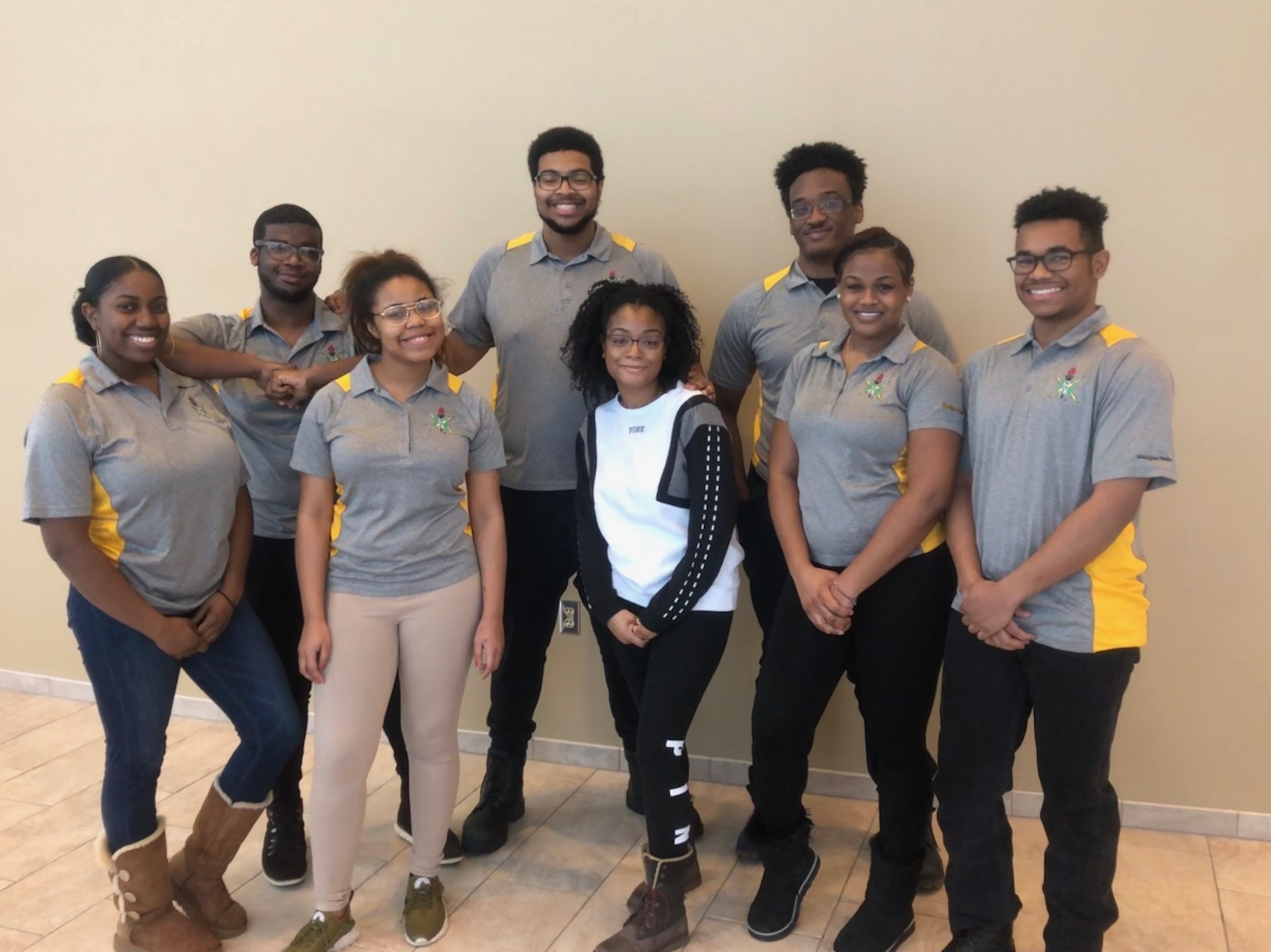
Portrait of the Michigan Tech NSBE students who traveled to Detroit
University students from the Michigan Tech NSBE chapter devoted their spring break to inspire, encourage and teach high school and middle school students in Detroit. From L to R: Christiana Strong, Jalen Vaughn, Andrea Smith, Bryce Stallworth, Kylynn Hodges, Stuart Liburd, Rebecca Spencer, Jemel Thompson. Not pictured: Logan Millen

In March, students from the Michigan Tech Chapter of the National Society of Black Engineers (NSBE) traveled to the Motor City, visiting middle and high school classrooms as part of the chapter’s 8th Annual NSBE Alternative Spring Break trip in Detroit. Their goal—to engage, inspire, and encourage diverse students to consider careers in STEM—science, technology engineering and math.

Nine Michigan Tech engineering students participated: Christiana Strong (biomedical engineering); Jalen Vaughn (computer engineering); Andrea Smith (chemical engineering and pharmaceutical chemistry); Bryce Stallworth (mechanical engineering); Kylynn Hodges (computer science); Stuart Liburd (mechanical engineering and materials science and engineering); Rebecca Spencer (mechanical engineering); Jemel Thompson (environmental engineering); and Logan Millen (chemical engineering).

During the day, the NSBE students gave classroom presentations at middle and high schools. After school, they conducted Family Engineering events for K-8 students and their families with fun, hands-on activities.

“Having the NSBE Alternative Spring Break program at our school has sparked new conversations in classes and hallways about the reality of attending a university after graduation,” said Matthew Guyton, a robotics, coding, and math teacher at Communication and Media Arts High School, and a graduate of Michigan Tech’s Teacher Education Program (‘07).

“The high school students have a lot of questions specifically about applying to college,” said Stuart Liburd, president of Michigan Tech’s NSBE chapter. “We also share our own experiences as college students. For instance, while living in the Virgin Islands, I realized that I wanted to develop technology that would help people in their everyday life,” he said. “I applied to a lot of schools but settled on Michigan Tech because I wanted to get out of my comfort zone. It was located in a place I’d never been, and I heard they got a lot of snow. I had never seen snow before coming to Michigan Tech!”

This was Liburd’s third alternative spring break in Detroit. “I want to make a positive impact,” he adds. “To put it simply, I want to live up to the NSBE motto—’to increase the number of responsible Black engineers who excel academically, succeed professionally, and positively impact the community.’”

“It was so great to have the NSBE members share their experience with our students. They opened up my students’ vision of possibilities for the future. Particularly in Detroit, engineering is typically discussed in the context of automotive so it was helpful that the broad scope of engineering was presented,” said Nicole Conaway, a science teacher at the Communication and Media Arts High School. “The students’ personal stories were especially important for our students to hear in order for them to see themselves as future engineers. A few weeks after the visit, one of my seniors proudly brought me his letter of acceptance from Michigan Tech—it was so exciting!”

“Each year, the NSBE Alternative Spring Break provides an opportunity for community-building between the Michigan Tech NSBE student chapter, and our school and parents,” said Tracy Ortiz, a middle school science teacher at Clippert Academy. “We appreciate their time and dedication. Families gain an appreciation of the STEM concepts required for engineering careers, and both parents and children engage in collaboration and teamwork to solve engineering challenges. It was awesome to have the NBSE students share their college experiences and have my students come away with the idea that engineering can be a career path for them,” added Ortiz.

“They helped me to see that you can do anything you want with your life,” said Tiara Carey, a student at Communication and Media Arts High School. “When Michigan Tech came to visit CMA, it opened my eyes to just how many different branches of engineering exist,” said fellow student Caleb Bailey.

“The students from Michigan Tech helped me understand more about myself by playing a game with all of us,” adds CMA high school student, Kayleon Anderson-Jordan. “They showed us how important it is to listen and to be very specific. They had us follow directions and understand how one small thing can mess up a larger goal, so be careful with planning.”

“NSBE Alternative Spring Break provides an opportunity for our students to see people who look like them, studying for careers that they, too, can attain,” said Kwesi Matthews, a science teacher at Ben Carson High School. “Even if they don’t go into engineering or a STEM field, we have introduced them to a group of college students who are accessible to them, and like themselves.”

“I’d like to personally thank our Michigan Tech NSBE members for taking time in their spring break and investing it to help inspire, and encourage diverse students to consider STEM-intensive careers,” remarked Dr. Janet Callahan, Dean of Engineering at Michigan Tech. “When our middle and high school students hear directly from college students about the different majors in STEM, and about how they chose those majors, it’s inspirational.”

Additional comments from the students at Communication and Media Arts High School include:

“I learned about many kinds of engineering that I didn’t know existed until the Michigan Tech visit.”
Jada Williams

“They helped me understand how important and critical proper teamwork is—without good communication, errors can potentially result.”
Angel McLaurin

“I learned that there are more kinds of technology than I thought, such as the technology in the fashion industry associated with making jeans.”
Alexandria Johnson

“They expanded my knowledge of career choices in engineering and even in the field of engineering education. Engineering is one of my potential career choices, so it’s reassuring to know that colleges welcome all future engineers in every aspect.”
Davion Stinson

General Motors funded their effort, along with the Office of Admissions and College of Engineering at Michigan Tech, in partnership with Detroit Public Schools Community District. The effort was coordinated by the Michigan Tech Center for Science & Environmental Outreach.

Sheryl Sorby: Visualizing Success

portrait of Sheryl Sorby
Michigan Tech Professor Emerita Sheryl Sorby

Michigan Tech Professor Emerita Sheryl Sorby, now a professor of engineering education at the University of Cincinnati, was recently elected President-Elect of the American Society for Engineering Education (ASEE), a term she will hold one year before assuming the presidency in 2020.

Sheryl Sorby graduated from Hastings High School in downstate Michigan. “My dad was a teacher and my mom was the school nurse, so we spent every summer in the Upper Peninsula, in Iron River where we have a family cottage on a lake.” Just a few hours away was Michigan Tech, where Sorby earned a BS in Civil Engineering, an MS in Engineering Mechanics, and a PhD in Mechanical Engineering-Engineering Mechanics.
Dr. Sorby became a longtime faculty member at Michigan Tech, where she was first a professor of civil and environmental engineering and then of mechanical engineering-engineering mechanics, associate dean of engineering for academic programs, and founding chair of the Department of Engineering Fundamentals, responsible for the development and delivery of Michigan Tech’s First-Year Engineering Program.

For nearly three years, Sorby served as a program director in the National Science Foundation’s Division of Undergraduate Education. From 2013-2014 she was a Fulbright Scholar conducting engineering education research at the Dublin Institute of Technology.

Sorby has been a member of ASEE since 1991 and has served the Society in various capacities. In 2009 she was inducted as a Fellow of ASEE, and in 2011 she received the Society’s Sharon Keillor award as outstanding female engineering educator.

“All information ever conceived is available instantaneously on the Web. There’s no sitting around wondering what the answer to a question is—just Google it. And we can Google it on our phones, any time, any place. Rote learning can be done at home or on the beach. To survive, we have to provide students with a reason to come to campus and to provide funders with a reason to support transformational educational research that will move us ever forward. ASEE is the professional society that is poised to help faculty as they rethink engineering and engineering technology education to provide experiences that prepare our students for a lifetime of learning and intellectual engagement.” – Dr. Sheryl Sorby, in her candidate statement for ASEE president

Sorby received her first grant in 1993 to develop a course for helping engineering students develop their 3-D spatial skills and has received numerous follow-up grants from NSF and the Department of Education to further the work. Examples of spatial skills include the ability to translate 2-D patterns to 3-D objects or to mentally rotate 3-D objects.  “Although these skills are used across many disciplines including engineering, architecture, geology, medicine and computer science, not everyone has good spatial skills,” says Sorby. “Many people who have poor spatial skills believe it is something ‘they are just not good at’.  Even good students can have poor spatial skills that can be barriers to learning,” she adds.

“Engineering has many ‘gateway’ courses. Typically, these are thought to be calculus, chemistry, and physics. But it seems that for women and for some men, engineering graphics may be a more significant gateway,” Sorby explains. “By helping students improve their ability to visualize in three dimensions, we are able to improve retention rates in engineering, particularly for female students.”

Her research shows that with training, women and men achieve consistent and large gains in tests of spatial skills. “First year engineering students, undergraduate students outside engineering, high school students and middle school students have all shown improvement,” she says. “Spatial skills can indeed be developed through practice.”

Sorby created a small business, Higher Education Services (HES), an educational consulting firm that works to advance spatial research and training worldwide, empowering students to be successful in their studies and ultimately their careers. HES provides training, speaking, coaching and consulting services to academics and non-profits on topics such as spatial training, cognitive learning, self-efficacy, career coaching, research opportunities for students and concept inventories. In addition, she has founded a small business in Ireland to distribute her curriculum throughout Europe and is working with colleagues in the Irish Ministry of Education to implement spatial skills training in secondary schools on a large scale.

Sorby has been the principal investigator or co-PI on more than $14 million in grant funding, mostly for educational projects. The author of seven textbooks and more than 150 papers, she received the Betty Vetter award for Research on Women in Engineering through the Women in Engineering Pro-Active Network (WEPAN) for her work in improving the 3-D spatial skills of engineering students.

“We are very proud of Dr. Sorby’s election as the future president of the American Society for Engineering Education,” remarked Janet Callahan, Dean of Engineering at Michigan Tech. “Her long-standing leadership and contributions in the area of teaching spatial visualization have changed how we ‘visualize’ success.”

Learn more: Recruiting women for science, technology, engineering and math: Sheryl Sorby at TEDxFulbrightDublin


Williams Seed Grant Funds Underwater Acoustic Communications Research

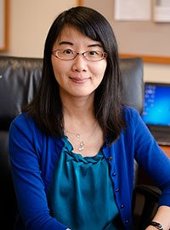
Zhaohui Wang
Zhaohui Wang

Underwater acoustic communication has been in use for decades, but primarily for military applications. In recent years, private sectors such as environmental monitoring, off-shore oil and gas exploration, and aquaculture have become interested in its possibilities.

But existing research about underwater acoustic communication networks often relies on human-operated surface ships or cost-prohibitive autonomous underwater vehicles (AUVs). And these cost barriers can limit academic research evaluation to computer simulations, constraining research innovation towards practical applications.

Recognizing the above gap, Michigan Tech Institute of Computing and Cybersystems (ICC) researchers Zhaohui Wang, assistant professor, Electrical and Computer Engineering, and Nina Mahmoudian, adjunct professor, Mechanical Engineering-Engineering Mechanics, saw an opportunity to combine their areas of expertise: for Wang, underwater acoustic communications, for Mahmoudian, low-cost marine robotics and AUVs.

Also part of the research team were PhD student Li Wei, Electrical and Computer Engineering, and post-doc research engineer Barzin Moridian, Mechanical Engineering-Engineering Mechanics. The team also collaborated with scientists at Michigan Tech’s Great Lakes Research Center.
With a $50K seed grant from Electrical and Computer Engineering alumnus Paul Williams ’61, the team took the research beneath the surface to develop a low-cost marine mobile infrastructure and investigate the challenges and possible solutions in engineering a leading-edge AUV communication network.

Download a summary of the research from the ICC website at icc.mtu.edu/downloads.

Read more at ICC News, by Karen Johnson, ICC Communications Director.

Related:

Zhaohui Wang Wins CAREER Award

Michigan Tech Design Expo Award Winners for 2019

More than 1,000 students in Enterprise and Senior Design showcased their work last Thursday, April 18 at Design Expo and competed for awards. A panel of judges, made up of distinguished corporate representatives, community members and Michigan Tech staff and faculty, critiqued the projects. The College of Engineering and the Pavlis Honors College are pleased to announce the following winners:

Gypsum Water Extraction team members
Gypsum Water Extraction from the ME-EM department took first place for Senior Design in the 2019 Expo.

Senior Design Awards (based on poster/video)

1st place: ME-EM – Gypsum Water Extraction

2nd place: ME-EM – Assembly Cell Changeover

3rd place: MSE – Gerdau Inclusion Solidification Prevention

Senior Design Honorable Mention

ME-EM – FCA Advanced Hood Architecture – Structural and Attachment Team

MSE – Cobalt Reduction in Tribaloy T-400

BME – Transcatheter Single Ventricle Device

Aerospace Enterprise team members
Aerospace placed first for Enterprise based on their poster and presentation scores.

Enterprise Awards (based on poster and presentation)

1st place: Aerospace Enterprise

2nd place: Alternative Energy Enterprise

3rd place: General and Expedition Adventure Research (GEAR)

Enterprise Honorable Mention

Innovative Global Solutions

Consumer Product Manufacturing

Blue Marble Security

Innovation Center for Entrepreneurship Innovation Award

1st place: Alternative Energy Enterprise for Renewable Energy Mission Module (REMM)

2nd place: Universal Driver Gear Train (BME)

3rd place: Transcatheter Single Ventricle Device (BME)

Design Expo Image Contest Winners

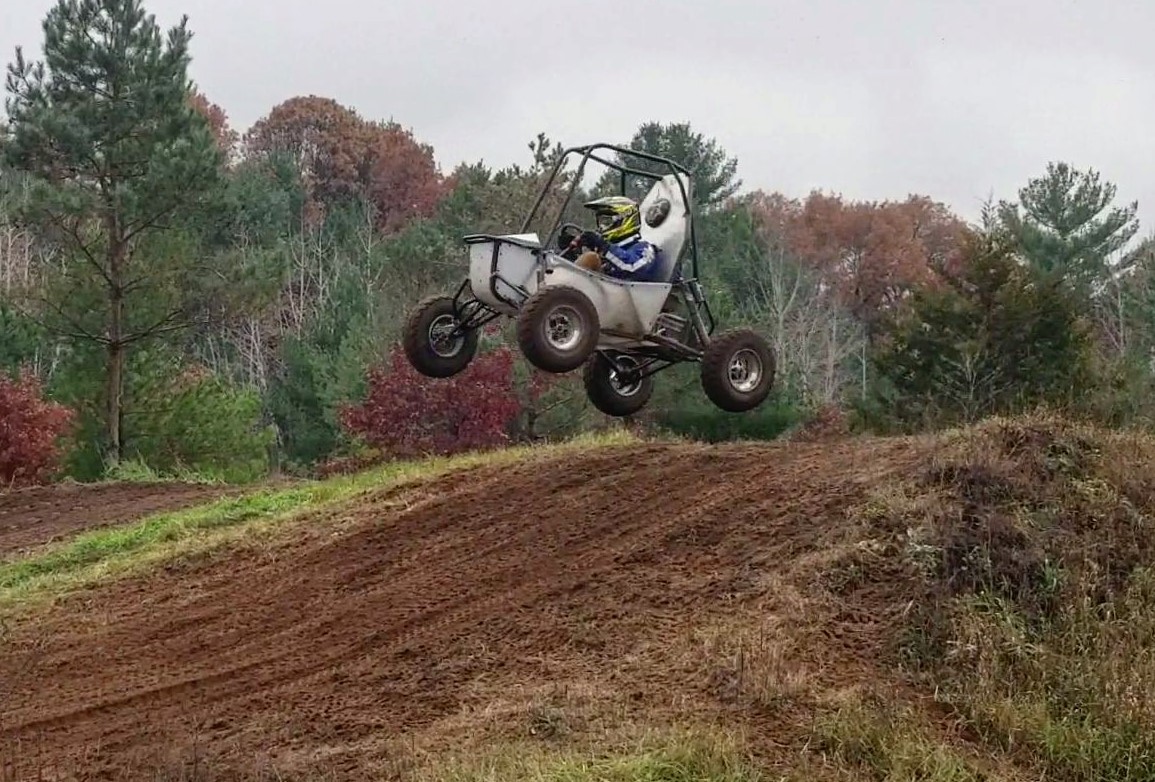
1st place: Blizzard Baja

Blizzard Baja's Comp Car, "Hornet" jumps over dirt track on the Tech Trails
Meet our 2019 Comp Car “Hornet”


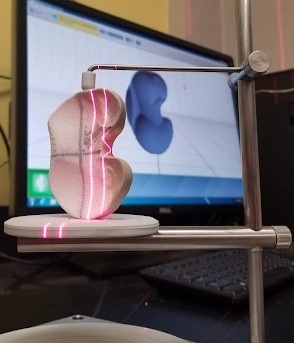
2nd place: Full Flexion Knee

3D scan of tibial insert on a computer screen, with the actual tibial insert set in front of the screen in a vise, while being scanned
3D Scanning of Tibial Insert

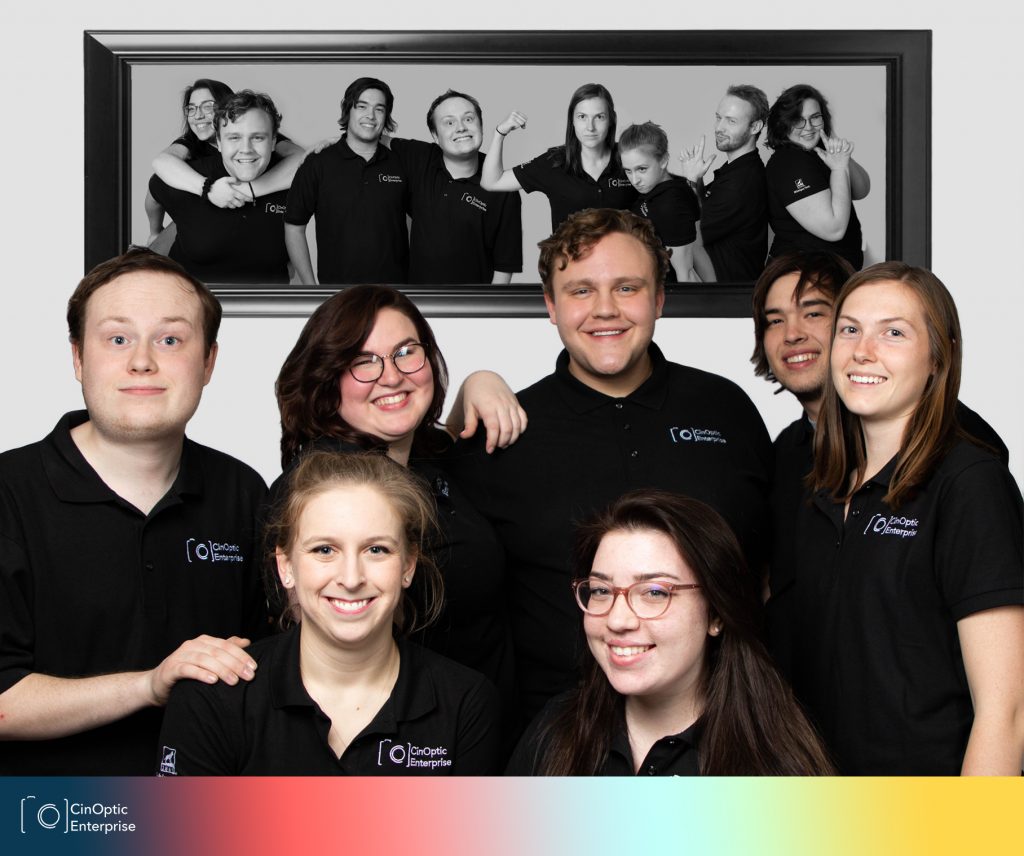
Honorable Mention: Cin/Optic Communication and Media

Team photo

Enterprise Award Winners

Student Awards:

Outstanding Leadership: Oliver Schihl, Advanced Metalworks Enterprise

Rookie Award: Troy Maust, Aerospace Enterprise

Innovative Solutions: Paul Kamps, Alternative Energy Enterprise

Industry/Sponsor Relations: Romana Carden, Aerospace Enterprise

Faculty/Staff/Sponsor Awards:

Outstanding Enterprise Advisor: Jay Meldrum, Alternative Energy Enterprise

Behind the Scenes: Dr. Jennifer Becker, Civil and Environmental Engineering


Congratulations and thanks to ALL teams for a very successful Design Expo 2019!

Tau Beta Pi Honor Society initiates 20 new members

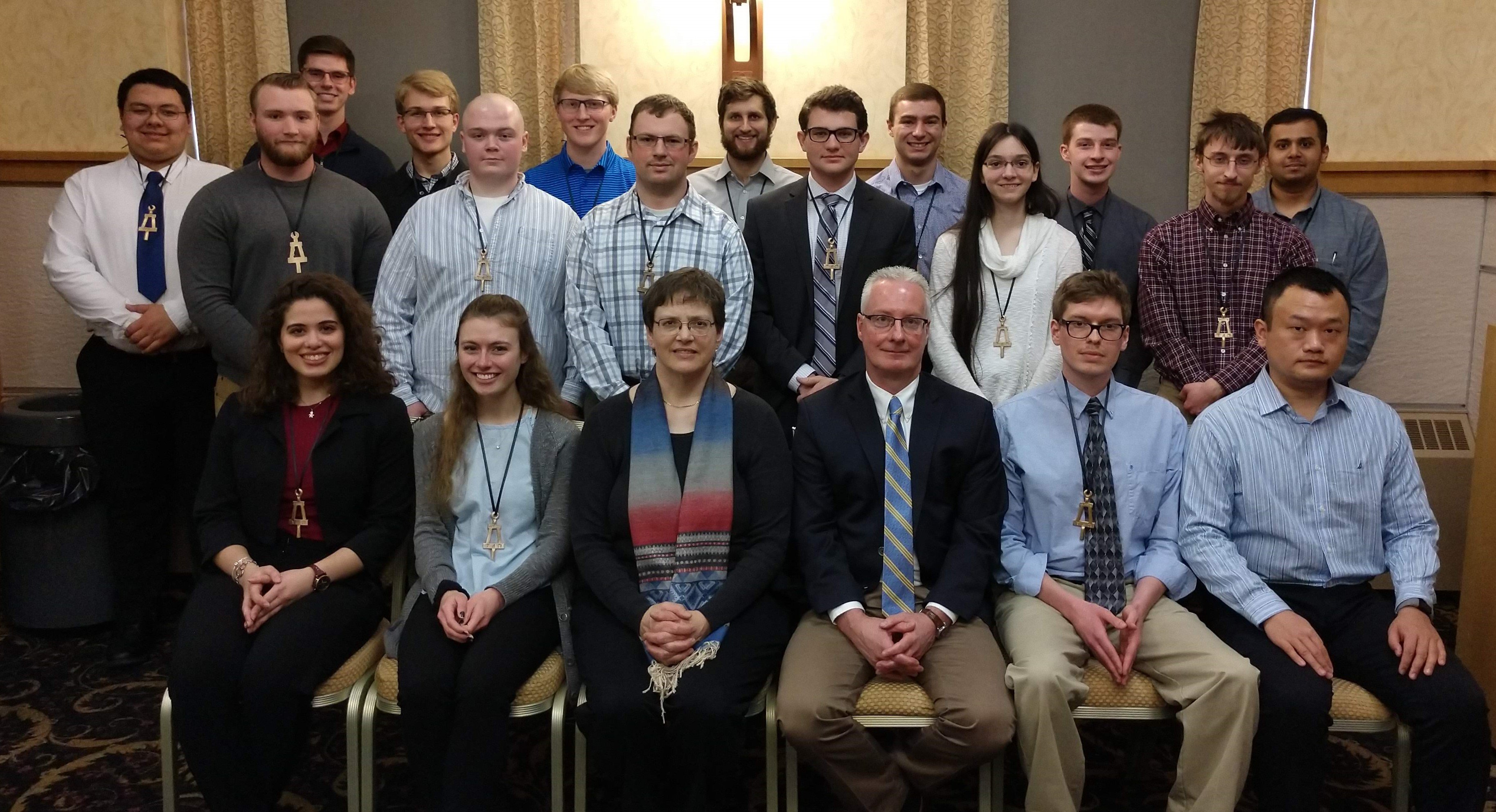
Michigan Tech Tau Beta Pi Spring 2019 Initiates

Tau Beta Pi initiated eighteen students and two eminent engineers into the Michigan Tech Michigan Beta chapter this semester.

A nationally-recognized engineering honor society, Tau Beta Pi is the only one that recognizes all engineering professions. Members are selected from the top eighth of their junior class, top fifth of their senior class, or the top fifth of graduate students who have completed 50 percent of their coursework.

Tau Beta Pi celebrates those who have distinguished scholarship and exemplary character and members strive to maintain integrity and excellence in engineering. The honor is nationally recognized in both academic and professional settings. Alumni embody the principle of TBP: “Integrity and Excellence in Engineering.”

Spring 2019 Initiates:

Undergraduate Students

David Castelvetere: Mechanical Engineering

Laura De Marchi: Biomedical Engineering

Lucas Determan: Computer Engineering

Brooke Forseth: Civil Engineering

Dakota Frohriep: Electrical Engineering

Zachrey Gogulski: Environmental Engineering

Ben Johnson: Mechanical Engineering

Sean Luke: Mechanical Engineering

Nate Marus: Biomedical Engineering

Josh Poquette: Electrical Engineering

Cameron Reid: Chemical Engineering

Erican Santiago: Biomedical Engineering

Christian Walters: Mechanical Engineering

Jason Whitler: Mechanical Engineering

Derek Willis: Mechanical Engineering

Bronson Wood: Chemical Engineering


Graduate Students

Chaitanya Bhat: Civil and Environmental Engineering

Li Wei: Electrical Engineering


Eminent Engineers

Sean Kirkpatrick: Biomedical Engineering

Faith Morrison: Chemical Engineering


ASTM Award for Glass Strength Researcher Stephen Morse

Stephen Morse ASTM Award 2019
Stephen Morse (left) accepts the ASTM Award.

Stephen Morse was awarded an American Society for Testing and Materials (ASTM) International Committee Award of Appreciation for his outstanding contributions to the Standard Practice for Determining Load Resistance of Glass in Buildings (E1300) and the Subcommittee (E06.52) on Glass Use in Buildings.

He was recognized for his work on greatly improved design methodologies for architectural window glass.

Morse holds a joint appointment as an assistant professor in the Departments of Mechanical Engineering-Engineering Mechanics and Civil and Environmental Engineering.

Engineering Students Take Top Prizes at 2019 Graduate Research Colloquium

The Graduate Student Government (GSG) hosted the 11th Annual Graduate Research Colloquium March 27 and 28, to celebrate the hard work and outstanding achievements of our graduate students. The event has grown from a one-session event with a handful of participants into a two-day event with a record 85 participants, representing 17 academic schools and departments. The event ended with an awards banquet honoring presenters, award nominees and three new awards recognizing departments for supporting graduate education. Congratulations to the 2019 graduate student recipients for their outstanding accomplishments.

Janna Brown
Janna Brown

Top three GRC poster presentations:

  1. Janna Brown, Department of Civil and Environmental Engineering
  2. Laura Schaerer, Department of Biological Sciences
  3. Avik Ghosh, Department of Chemistry

Top three GRC oral presentations:

  1. Nabhajit Goswami, Department of Civil and Environmental Engineering
  2. Nicholas Gerstner, Department of Humanities
  3. Jeremy Bigalke, Department of Kinesiology and Integrative Physiology
Nabhajit Goswami
Nabhajit Goswami

The Graduate School sponsors three awards to honor students that have committed an extraordinary amount of time to their studies, instructing others or serving the graduate community. These awards include: Outstanding Graduate Student Teaching Award, Dean’s Award for Outstanding Scholarship and Graduate Student Service Award.

Outstanding Graduate Student Teaching Award:

Chemical Engineering

  • Aaron Krieg
  • Daniel Kulas

Chemistry

  • Vagarshak Begoyan
  • Charles Schaerer

Civil and Environmental Engineering

  • Dongdong Ge
  • Christa Meingast
  • Mohammadhossein Sadeghiamirshahidi
  • Darud E Sheefa
  • Sarah Washko

Cognitive and Learning Sciences

  • CatherineTislar

Electrical and Computer Engineering

  • Mehdi Malekrah

Geological and Mining Engineering and Sciences

  • Brandi Petryk

Humanities

  • Elizabeth Renshaw

Mathematical Sciences

  • Jacob Blazejewski
  • Nattaporn Chuenjarem

Mechanical Engineering–Engineering Mechanics

  • Ahammad Basha Dudekula
  • Siddharth Bharat Gopujkar
  • Cameron Hansel
  • Erica  Jacobson
  • Luke Jurmu
  • Mingyang Li
  • Si Liu
  • Niranjan Miganakallu
  • William Pisani
  • Samantha Swartzmiller
  • Upendra Yadav
  • Zhuyong Yang

Physics

  • Lisa Eggart
  • Nicholas Videtich

Social Sciences

  • Sun Nguyen
  • Daniel Trepal

Dean’s Award for Outstanding Scholarship:

Atmospheric Sciences

  • Janarjan Bhandari
  • Kamal Kant Chandrakar

Biochemistry and Molecular Biology

  • Jeffrey Kiiskila

Biomedical Engineering

  • Anindya Majumdar

Chemistry

  • Mingxi Fang
  • Shahien Shahsavari

Civil and Environmental Engineering

  • Mohammadhossein Sadeghiamirshahidi
  • Xinyu Ye
  • Shuaidong Zhao

Electrical and Computer Engineering

  • Wyatt Adams

Geological and Mining Engineering and Sciences

  • Priscilla Addison

Humanities

  • Nancy Henaku

Kinesiology and Integrative Physiology

  • Jeremy Bigalke

Mathematical Sciences

  • Matthew Roberts

Mechanical Engineering–Engineering Mechanics

  • Sampath Kumar Reddy Boyapally
  • Oladeji Fadayomi
  • Hui Huang
  • Xian Li
  • Miles Penhale
  • Nikhil Appasaheb Shinde
  • Rahul Jitendra Thakkar
  • Mitchel Timm
  • Xiucheng Zhu

Physics

  • Chad Brisbois
  • Dolendra Karki

School of Business and Economics

  • Garrett  Mitchell
  • David Renaldi
  • Gina  Roose
  • Dylan Steman

Social Sciences

  • John Barnett
  • Erin Burkett
  • Robert Zupko

The Graduate Student Service Award is given to graduate students nominated by the Graduate Student Government Executive Board for their outstanding contributions to the graduate community at Michigan Tech.

Graduate Student Service Award:

  • Daniel Byrne, Department of Computer Science
  • Nabhajit Goswami, Department of Civil and Environmental Engineering
  • Ami Kling, Department of Biomedical Engineering

Michigan Tech is a member of the Midwestern Association of Graduate Schools (MAGS), which solicits nominations for its Excellence in Teaching Award and Distinguished Master’s Thesis Competition.

The MAGS Excellence in Teaching Award participating schools are able to nominate one master’s and one doctoral level graduate students who exemplify excellence in the teaching/learning mission of our university.

Excellence in Teaching Award Nominee:

  • Jacob J. Blazejewski , Mathematical Sciences

The MAGS Distinguished Master’s Thesis Competition recognizes and rewards distinguished scholarship and research at the master’s level.

Distinguished Master’s Thesis Competition Nominee:

  • Sagda Osman, School of Technology

Michigan Tech is also a member of the Council for Graduate Schools/ProQuest and recognizes nominees for having completed dissertations representing original work that makes an unusually significant contribution to the discipline.

Council for Graduate Schools/ProQuest Nominee:

  • Erin C. Pischke, Social Sciences Department
  • Lauren N. Schaefer, Geological and Mining Engineering and Sciences Department

New Graduate School Awards to Graduate Programs Innovations to Enhance Graduate Student Recruitment and Enrollment Award:

  • Significant Enhancement in Recruitment and Enrollment Award – For creative strategies to enhance growth in graduate programs. Awarded to Mechanical Engineering-Engineering Mechanics
  • Graduate Research Colloquium (GRC) Participation – For highest participation at the GRC. Awarded to Kinesiology and Integrative Physiology, Biomedical Engineering and Chemistry
  • Three Minute Thesis (3MT) Participation – For highest participation at the 3MT competition. Awarded to Biological Sciences

The GSG sponsors an Annual Merit Awards Program consisting of four awards that honor the exceptional work of one staff member, one graduate mentor and two graduate students. The recipients of these awards were nominated by their fellow graduate students and selected by the Graduate Student Government Executive Board.

Exceptional Staff Member Recipient:

  • Brittany Buschell, Geological and Mining Engineering and Sciences

Exceptional Graduate Mentor Recipient:

  •  Melissa F. Baird, Social Sciences

Exceptional Student Leader Recipient:

  • Karina Eyre, Civil and Environmental Engineering

Exceptional Student Scholar:

  • Miles Penhale , ME-EM

Congratulations to award recipients and nominees and a huge thank you to all the presenters, judges, volunteers and GSG supporters for helping make this one of the largest colloquiums in GSG’s history.

By Graduate School and Graduate Student Government.

2019 Portage Health Foundation Making a Difference Scholarship Recipients

Portage Health FoundationFourteen students have been awarded the Portage Health Foundation Making a Difference Scholarship. The scholarships are part of a Michigan Tech-Portage Health Foundation partnership established in 2015 to support health education. This year’s recipients have an average GPA of 3.8 and represent the breadth of health-related research happening on Michigan Tech’s campus.

 $8,000 Scholarship Recipients:

$4,000 Scholarship Recipients:

 $1,000 Scholarship Recipients:

  • Cassidy Becia, Houghton, exercise science
  • Andrew Eskola, Calumet, exercise science
  • Kellen Klein, Lake Linden, biological sciences
  • Rory LaBine, Ontonagon, computer engineering
  • Kaisa Nagel, Calumet, humanities
  • Madison Palosaari, Lake Linden, medical laboratory sciences
  • Elisabeth Svoke, Houghton, biological sciences
  • Kyle Usimaki, L’Anse, biological sciences

Bernadette Yeoman-Ouellette, chairperson of the Portage Health Foundation Board said, “I am so impressed by the caliber of our Make a Difference Scholar candidates. With the investment from the Portage Health Foundation in the form of scholarships, the seed is planted. With nurturing from Michigan Tech University, these students have every opportunity for their education to blossom into their dream careers in health care.”

“It is the synergy between the Portage Health Foundation and Michigan Tech University that allows this fruition to occur,” she added.

At the recent awards dinner, scholarship recipients and faculty members had the opportunity to hear from current students, Allie Waara and Elisha Earley, both PHF undergraduate research interns; and Alexa Destrampe, a Portage Health Foundation and Randy Owsley Memorial Athletic Trainer Scholar.

“We are especially grateful to the Portage Health Foundation for their support of our students through the Making a Difference scholarship program,” said Michigan Tech President Richard Koubek.

“Each recipient is truly deserving of the award and we are eager to see the impact these students will have on our community in the years to come.”

Western UP Science Fair this Tuesday at Tech: Free, fun, hands-on activities for K-8 students

Prepare to be amazed! Here, a member of Michigan Tech Mind Trekkers hand out samples of “shattered” graham crackers frozen with liquid nitrogen. Not pictured: the exciting result. Eat a small bite, exhale, and poof! You’ve got ‘dragon breath’!

The Western UP Science Fair and Science & Engineering Festival will be on campus at Michigan Tech, on Tuesday, March 19, from 4:30-7:30 pm.

All students in the Western Upper Peninsula of Michigan— kindergarten through the 8th grade, and their families—are invited to attend the Science & Engineering Festival from 4:30-7:30 pm, Tuesday, March 19 in the Memorial Union Building Commons (ground floor) at Michigan Tech. 

More than 60 Michigan Tech students from 15 Michigan Tech student organizations will engage participants in fun, hands-on engineering, physics, and chemistry activities, including Remotely Operated Vehicles, Fish Tank Fiber Optics, a K’NEX Wind-powered Water Lift, and Tracks & Trains. Design an egg package with toothpicks and marshmallows. Design and shoot a straw rocket! Make some Gel-o that mimics human tissue! Make art with glow in the dark paints! How about glitter slime and popsicle stick flashlights? More than 30 different fun things to try!

Schedule & Event Flyer

4:30-7:30 pm   Activity Stations open to the public (K-8 students and families)

5:00-6:00 pm    Public viewing of science fair projects in the Ballroom (2nd floor)

2019 STEM Festival-FLYER 031919

Don’t miss this super-fun event! The stellar list of Michigan Tech student organizations include:

  • FIRST Robotics Houghton Middle School
  • Society of Physics Student Chapter
  • Engineering Ambassadors                                         
  • Railroad Engineering Activities Club
  • Materials United – Materials Science Engineering
  • Women in Natural Resources
  • Society of Women Engineers
  • MTU Sustainability House
  • Dollar Bay SOAR
  • Mind Trekkers
  • Society of Environmental Engineering
  • Optics & Phototonics Society
  • Biomedical Engineering
  • Keweenaw Rocket Range
  • Tau Beta Pi

For more information: Joan Chadde, 906-487-3341 or jchadde@mtu.edu

Michigan Tech Hosts STEM Festival & Science Fair

Hundreds of Keweenaw area students visited the campus of Michigan Tech Tuesday as they took part in all sorts of fun and games, and all in the name of “Science.”

“We have some new organizations: the Keweenaw Rocketry Club, Biomedical Engineering is here, the Society of Physics students always come out and they have a lot of fun,” said Chadde.

Read more at the Keweenaw Report.

Michigan Technological University hosts 21st Annual Western Upper Peninsula Science Fair and STEM Festival

“What we want the students to see is how much fun science, technology, engineering, and math are,” said MTU Center for Science and Environmental Outreach director Joan Chadde. “They’re also interacting with some great role models.”

Projects from the fair that earn enough points will receive gold, silver, or bronze ribbons. All ribbon winners will be able to present their project at the Carnegie Museum in Houghton this April.

Read more and watch the video at Upper Michigan’s Source, by Tyler J. Markle.

Science Fair: Michigan Tech hosts 21st annual festival

“At this event we want to get kids interested in rocketry. That’s actually one of our mission statements for the organization,” said Dan Faber, vice president of the Keweenaw Rocket Range.

Younger students who want to join an organization before college were welcome to talk to the FIRST Robotics team, a robotics group for K-12 students.

Read more at the Mining Gazette.

Acoustics—Michigan Tech is Listening!

I’ve been thinking about acoustics lately, after learning about some of the sound-focused interdisciplinary research and learning that engage Michigan Tech faculty.

Cool Sound, Hot Speakers
For example, mechanical engineering Prof. Andrew Barnard (Sound Man) has students working on developing flexible and stretchable nanotube speakers—no moving parts, weighing next to nothing. His popular technical elective: Acoustics and Noise Control is a hands-on course where mechanical engineering seniors solve technical problems, such as designing noise suppression devices and systems.

“I was a musician, so I was into acoustics without even knowing it,” says Andrew Barnard.

Wireless Underwater Acoustic Communication
In electrical and computer engineering, Prof. Zhaohui Wang has her students investigating underwater (and under-ice) acoustic communication. They use machine learning principles to model, understand, and predict underwater dynamics in real time, node by node.

Zhaohui Wang lowers a node into Lake Superior to test acoustic signals under ice, working with Jamey Anderson of the Great Lakes Research Center.

Volcano Sounds
Seismic and acoustic signals are ways to monitor volcanic activity, and Prof. Greg Waite has his students taking the ‘pulse’ of shallow volcanic eruptions using a combination of sensing instruments and field observation. We have four BS majors focused on the Earth beneath us: Geological Engineering, Geology, Applied Geophysics, and Mining Engineering; all of these fields rely on remote sensing for real-time information.

Greg Waite and his team monitor Volcán de Fuego in Guatemala. It’s very active, with small explosions each day. It can also erupt violently, threatening thousands. With better monitoring, they hope to determine more accurate, and timely, evacuation plans.

Make Sound Amazing
Yet another major focused on sound at Michigan Tech is the BS in Audio Production and Technology degree, which has students producing a radio drama and mixing a new multi-track recording weekly, all in their first year. Prof. Christopher Plummer’s loudspeaker design class is another tech favorite—and students keep the speakers they designed and built.

Student built loudspeakers at Michigan Tech!

There’s no doubt about it—acoustics is a field where a person’s genuine interest in sound can lead to breakthrough ideas and accomplishments that inform the world around us.

Now, if acoustics sounds interesting, and you want to hear more, please let me know—Callahan@mtu.edu.

Janet Callahan, Dean
College of Engineering
Michigan Tech