Tag: research forum

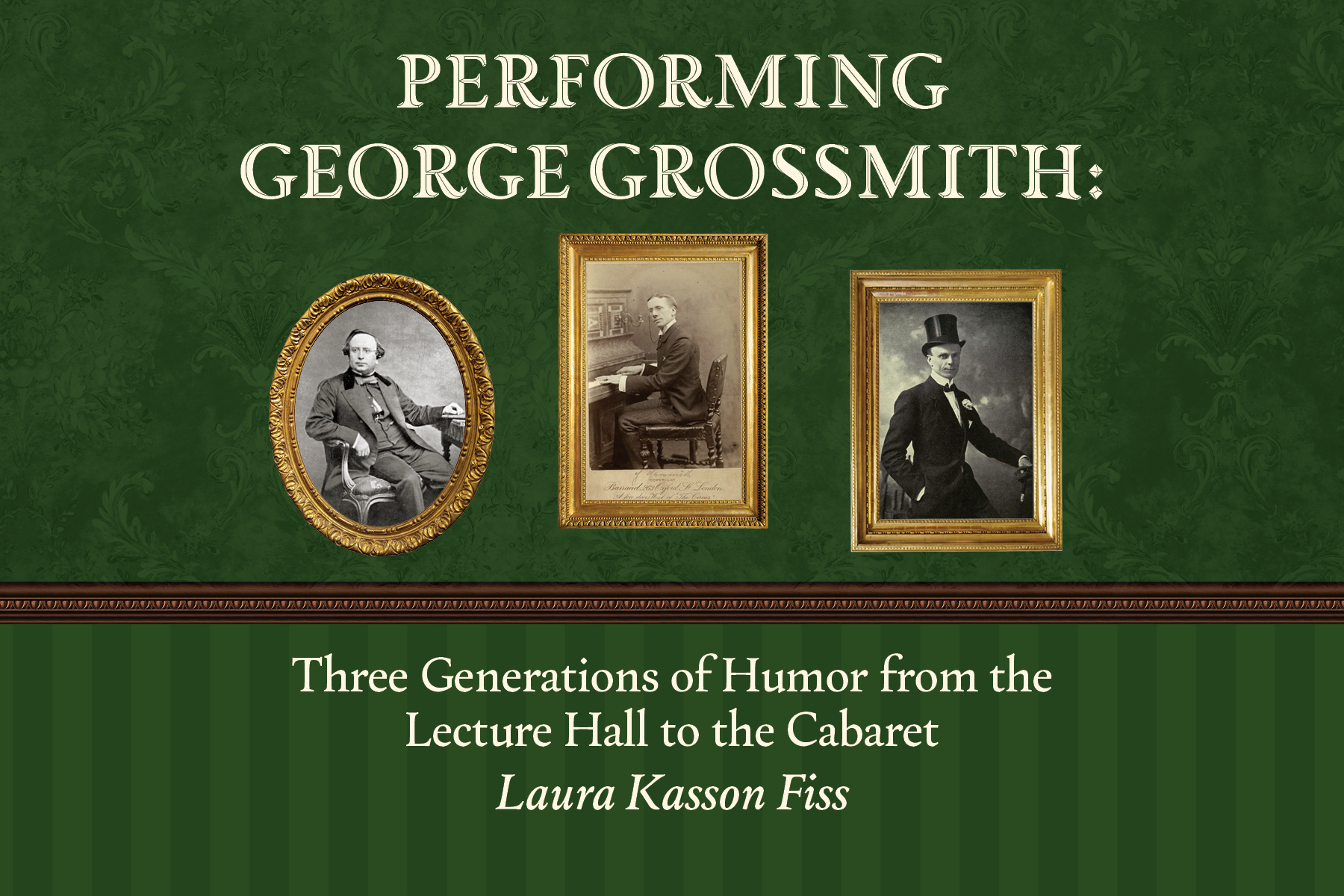
RTC Research Forum: “Performing George Grossmight: Three Generations of Humor from the Lecture Hall to the Cabaret” Laura Kasson Fiss

What:

The RTC Research Forum, formerly known as the RTC Brown Bag, is a colloquium series sponsored by the Rhetoric, Theory, and Culture graduate program in the Michigan Tech Department of Humanities. Each month, faculty and students in the program present research on a wide range of topics. The forum offers an opportunity for colleagues and peers to discuss current research, prepare for formal conference presentations, and for students to receive feedback on presentation practices.

Abstract:
The best-known George Grossmith (1847-1912) sang Gilbert and Sullivan’s patter songs and wrote The Diary of a Nobody. His contributions to Victorian performance went far beyond these well-known roles in the performance and print circulation of his comic songs and sketches. Furthermore, his father (1821-1880) and son (1874-1935), also named George Grossmith, each found fame as professional comic performers. Taken together, these three Georges provide a window into the social world of humorous performance from the stage—which the first George rejected—to the lecture hall and back. As they navigated antitheatrical prejudice and maintained a class standing in the upper middle classes, the Grossmiths projected sociable personas. The drawing room and the dressing room blurred as GGIII invited royalty to his dressing room and GGI and II performed “drawing-room entertainments” for the paying public. From Sunday-school rooms to the stage of the Gaiety Theatre to private drawing-rooms, the Grossmiths provided sociable humor.
Who:

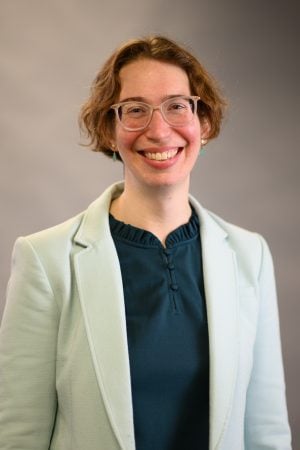
Presented by Laura Kasson Fiss, Associate Teaching Professor in Humanities

Dr. Laura Kasson Fiss has an interdisciplinary background in music, literary studies and history of the book. She currently pursues research in both nineteenth-century media and current higher education. One question ties together these strands of research: How can we make exclusive spaces more inclusive? 

Victorian Humor

Asking not only “why is this funny” but also “what do you need to know to get this joke,” Fiss provides a window into Victorian media consumption – she even studies the window as a metaphor for the page. Her articles address Victorian humor from Charles Dickens to Lewis Carroll and beyond.  Her first book, The Idler’s Club: Humour and Mass Readership from Jerome K. Jerome to P.G. Wodehouse (Edinburgh University Press, 2023), explores the club as a metaphor for literary sociability in late-nineteenth- and early-twentieth-century British humor.

Victorian comic song is the focus of Fiss’s second book project, which picks up on her undergraduate research and first publication on Gilbert and Sullivan. This project looks at three generations of comic performers named George Grossmith and through them the role of the comic man on stage, in the drawing room, and in print.

When:

Friday, October 16, 2026

12pm-1pm

Where:

Petersen Library (318), Walker Arts & Humanities Center

All are welcome to attend!
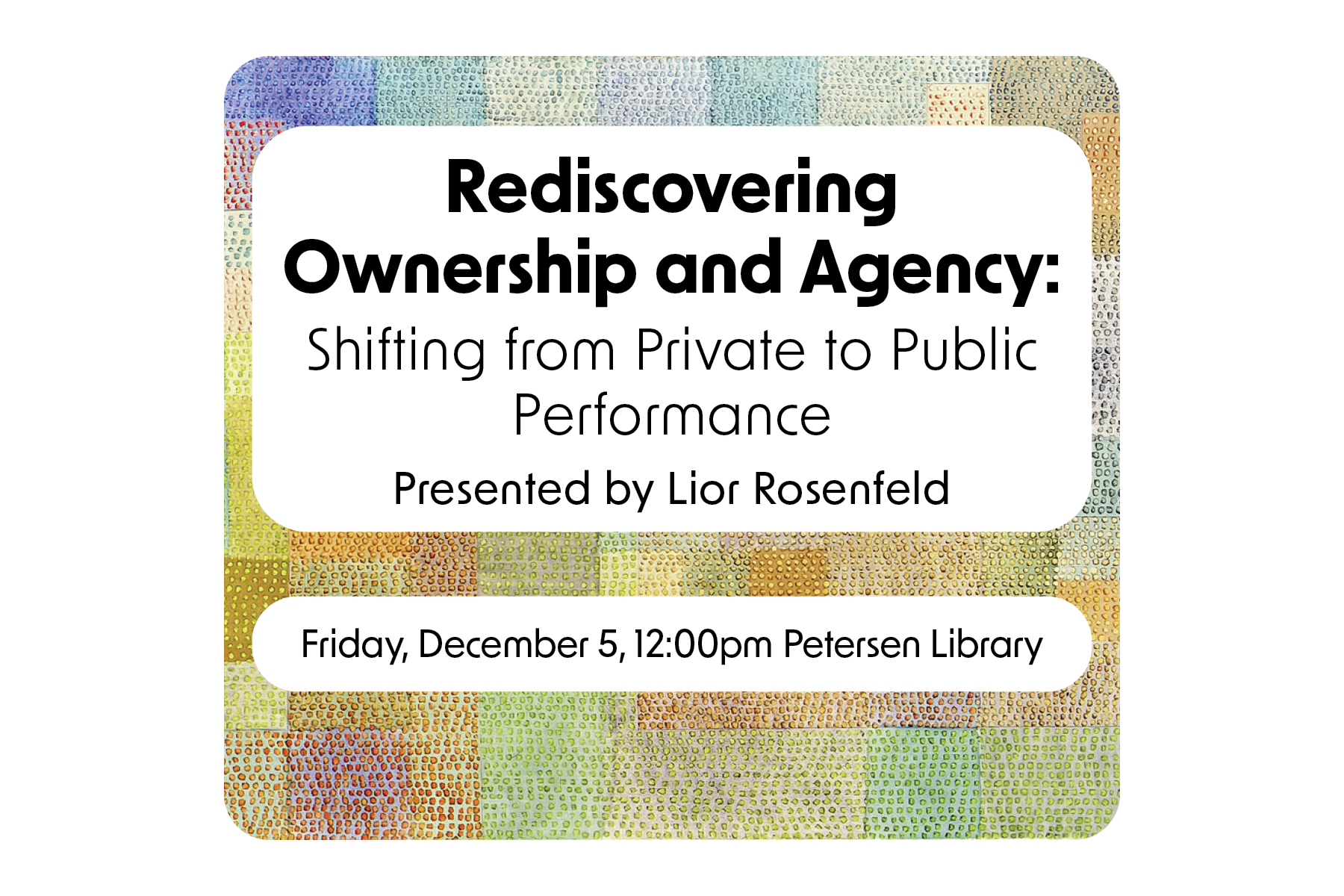
RTC Research Forum: “Rediscovering Ownership and Agency: Shifting from Private to Public Performance” Lior Rosenfeld

What:

The RTC Research Forum, formerly known as the RTC Brown Bag, is a colloquium series sponsored by the Rhetoric, Theory, and Culture graduate program in the Michigan Tech Department of Humanities. Each month, faculty and students in the program present research on a wide range of topics. The forum offers an opportunity for colleagues and peers to discuss current research, prepare for formal conference presentations, and for students to receive feedback on presentation practices.

Abstract:

The claims made by technology companies regarding the advancement of autonomous machines raise significant concerns about their implications for democratic governance. A machine that is capable of independent thought and action poses a potential threat to democratic judicial and political systems, as it undermines the autonomy of the people. Drawing on phenomenological insights, I will first clarify why some of these concerns may be misplaced by emphasizing that autonomy must be achieved rather than presupposed. I will then argue that the recent deployment of Artificial Intelligence (AI) systems highlights that ownership and agency are constituted through public speaking rather than being intrinsically tied to autonomy or self-rule. While the former gives the power to begin anew, the latter is marked by territoriality, exploitation, and coercion.

An autonomous entity supposedly possesses an identity, always returns to itself since it thinks—calculates the world independently of social-political engagements. As such, it remains unaffected by contingency, allowing it to justify its beliefs and actions through established rules. Additionally, autonomy presupposes agency, as a self-ruling entity is necessarily the cause of its own actions. And as Jacques Derrida explains, since the people in a democracy are autonomous or self-rulers, they have the force to determine the law (Derrida, 2025, p.13). In contrast, in our liberal tradition, which dates back to John Locke, democratic citizens are seen as individuals or natural entities, and therefore free from legal constraints. This freedom grants them the right to own property and other natural rights, empowering them to resist any claims of ownership made by authorities. However, with the rise of AI systems, individuals in democratic nations are increasingly losing their natural rights. The reduction of experience to thinking—calculating across all sectors by AI systems violates individual rights, for instance, by scraping texts without the authors’ consent. Moreover, due to the widespread use of AI systems, nation-states can no longer effectively protect copyrights. As Derrida argues in the context of cloning, techno- scientific reason undermines today its foundation—the nation-state, which is responsible for distributing rights and protecting the dignity of its citizens (Derrida, 2005, p. 146).

The deployment of AI systems increasingly blurs the distinctions between nation-states and private technology companies. This phenomenon indicates a potential erosion of the nation-state’s power in contemporary governance and social organization. Nevertheless, the support that nation-states extend to technology companies developing artificial intelligence systems that exploit and oppress their citizens is not merely a historical phenomenon; rather, it reflects an intrinsic characteristic of any entity that claims autonomy. As the political writings of Derrida and Hannah Arendt illustrate, autonomy is constituted by private performances within the household, which can therefore be authoritative, ethnic, and exploitative. However, Derrida’s deconstruction of democracy illustrates that citizens can achieve democratic autonomy by responding to the imperative of justice and, thereby, superseding familial, natural, and irrational laws.

According to Derrida, the conflict between the rule of law and freedom within modern democracy is irreconcilable. The question of what a democratic citizen is — whether a subject of the law or a free individual — remains undecided. This undecidability allows citizens to face one another, constituting an ultra-political experience. Within this pluralistic and uncertain realm of meaning, complete autonomy—independence from contingency is unattainable. As a result, the concept of equality under the law, the meaning of justice in a democracy, turns unfounded, uncovering justice as fundamental. Since justice cannot be ruled, justice calls democratic citizens to rule, thereby achieving autonomy.

However, claims for justice lack the necessary political power to effectively resist an AI regime. According to Arendt, public speaking or public performances enact intersubjective political experiences which are fundamental to selfhood and agency, and therefore the meaning of the power of the demos. Public speaking is non-territorial, allowing citizens to appear before others unconditionally and to act uniquely. Moreover, since public performances are contextual, the self always appears anew, simultaneously generating the past and the future. The temporality of shared existence, which Arendt refers to as natality, constitutes the process of narration, calling to keep a record. Thus, public performance is agonistic—pluralistic, giving rise to new senses of self and agency, in contrast to private performance, which constitutes self-mastery and, therefore, is antagonistic—divisive.

Who:

Presented by RTC PhD canditate Lior Rosenfeld.

Lior Rosenfeld obtained an M.A. in Philosophy from the New School in 2020. Currently, Lior is a fourth-year Ph.D. Candidate at Michigan Technological University. In his research, Lior investigates how the phenomenological description of the life-world alleviates the tension between democracy and science as illustrated by contemporary examples such as climate change denial and vaccine skepticism.

All are welcome to attend!

When:

Friday, December 5, 2025

Where:

Petersen Library, Walker Arts & Humanities Center

RTC Research Forum: “Language and Artificial Understanding: Stress Tests for the Uniqueness of Human Intelligence” Ronald Klingler

What:

The RTC Research Forum, formerly known as the RTC Brown Bag, is a colloquium series sponsored by the Rhetoric, Theory, and Culture graduate program in the Michigan Tech Department of Humanities. Each month, faculty and students in the program present research on a wide range of topics. The forum offers an opportunity for colleagues and peers to discuss current research, prepare for formal conference presentations, and for students to receive feedback on presentation practices.

Abstract:

This essay concerns contributions made by David Braine  in Language and Human Understanding (2014) and their bearing on contemporary discussions of artificial intelligence. The first is his proposal that human linguistic capacity has the shape of sense as understood by James J Gibson, where senses must be understood in their relation to the organism as a whole, and that organism must be understood in relation to its environment. The second is his understanding of Wilhelm von Humboldt’s famous line that “language makes infinite use of finite means,” where he takes the infinity to mean indefinite, contrary to the more common recursive interpretation. These contribute to a third regarding malleability and the brain, where its plasticity reaches such an extent that pragmatics and semantics begin to determine, rather than be determined by, neurological structures. Braine takes this malleability to be distinctively human. From the view of 2014, he argued “it will still never be possible for the statements of linguistic science to enable one to calculate or compute the linguistically public significance or sense of the utterances we make” (149). Here I assume Braine’s three contributions, but put pressure on his proposition of computational-impossibility in light of the advances in artificial intelligence in the years since. From the view of today, Braine’s account of malleability reads as anticipatory of LLMs. I argue that the primary intuition-pump he uses to explain malleability cannot differentiate what’s distinctly human from contemporary machine learning attempts. I question whether it matters whether the significance is computable, or if probabilistic attempts can approximate said significance to an arbitrary degree; I argue Braine’s view can defend against this. I also consider advancements in embodied and multimodal reasoning, and whether they can imitate the environmentally oriented nature of speech in Braine’s proposal; I consider this the strongest possibility for defending the uniqueness of language.

Who:

Presented by RTC PhD student Ronald Klingler.

Ronald Klingler is a PhD student in the Rhetoric, Theory, & Culture program. He considers the positions around the uniqueness of human language use, and evaluates them in light of recent advances in artificial intelligence. 

All are welcome to attend!

When:

Friday, October 24, 2025

Where:

Petersen Library, Walker Arts & Humanities Center