
What:
The RTC Research Forum, formerly known as the RTC Brown Bag, is a colloquium series sponsored by the Rhetoric, Theory, and Culture graduate program in the Michigan Tech Department of Humanities. Each month, faculty and students in the program present research on a wide range of topics. The forum offers an opportunity for colleagues and peers to discuss current research, prepare for formal conference presentations, and for students to receive feedback on presentation practices.
Abstract:
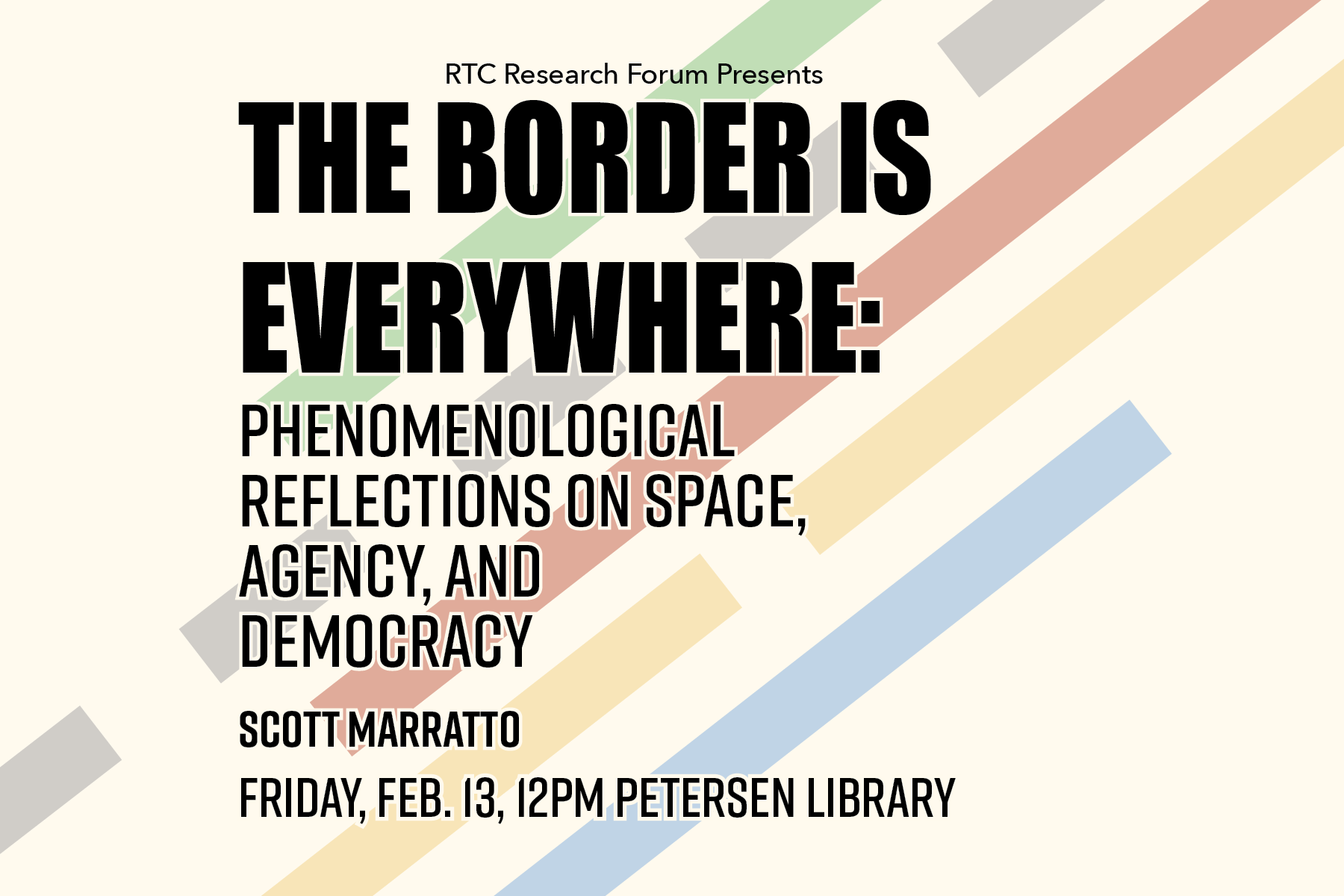
The fall of the Berlin Wall in 1989 led to predictions of an increasingly borderless world, or at least to one with fewer border fortifications. In fact, the opposite has happened. Where there were fifteen border walls along international boundaries in 1989, there are over seventy today, with many more planned or under construction. Border fortifications are many nations’ largest infrastructure investments in the twenty-first century. And whereas borders were once understood to mark edges between sovereign nation states, borders today are better understood as diffuse sets of functions, including securitization, interdiction, and surveillance. As philosopher Étienne Balibar has noted, borders have moved from the edges to the very centers of political spaces, including cities far from any international border. Henri Lefebvre famously observed that “there is a politics of space because space is political.” Drawing on phenomenologies of embodied and political agency, I argue that the new global border regime signals a new politics of space, new logics of sovereignty and citizenship, and an unprecedented threat to democratic agency.
Who:
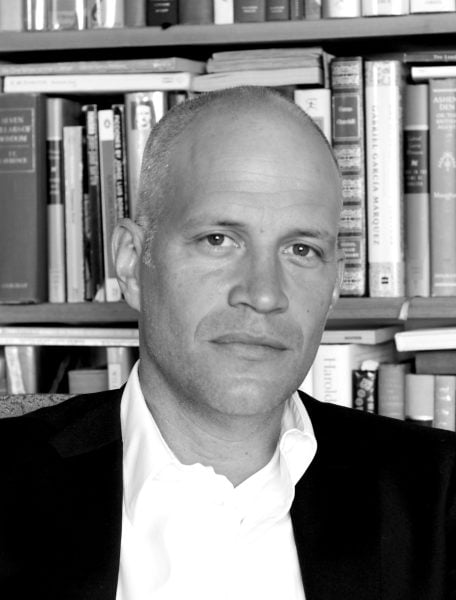
Presented by Scott Marratto, Associate Professor of Philosophy in the Department of Humanities
Scott Marratto is Associate Professor of Philosophy at Michigan Technological University. He is President of the Canadian Society for Continental Philosophy and author of The Intercorporeal Self: Merleau-Ponty on Subjectivity (State University of New York Press, 2012). He is also co-author (with Lawrence E. Schmidt) of The End of Ethics in a Technological Society (McGill-Queen’s University Press, 2008). Challenging a prevalent modern idea of the self as, essentially, a discrete, interior consciousness, Marratto has argued that self-consciousness emerges on the basis of the living, expressive movement by which our bodies are situated in a world with others. Beginning from this insight into the nature of self-consciousness and cognition, he critically evaluates neoliberal thinking about selfhood, agency, and choice, and proposes new ways of thinking about the spatial and material conditions of political community and human development.
All are welcome to attend!
When:
Friday, February 13, 2026
Where:
Petersen Library (Walker 318), Walker Arts & Humanities Center