
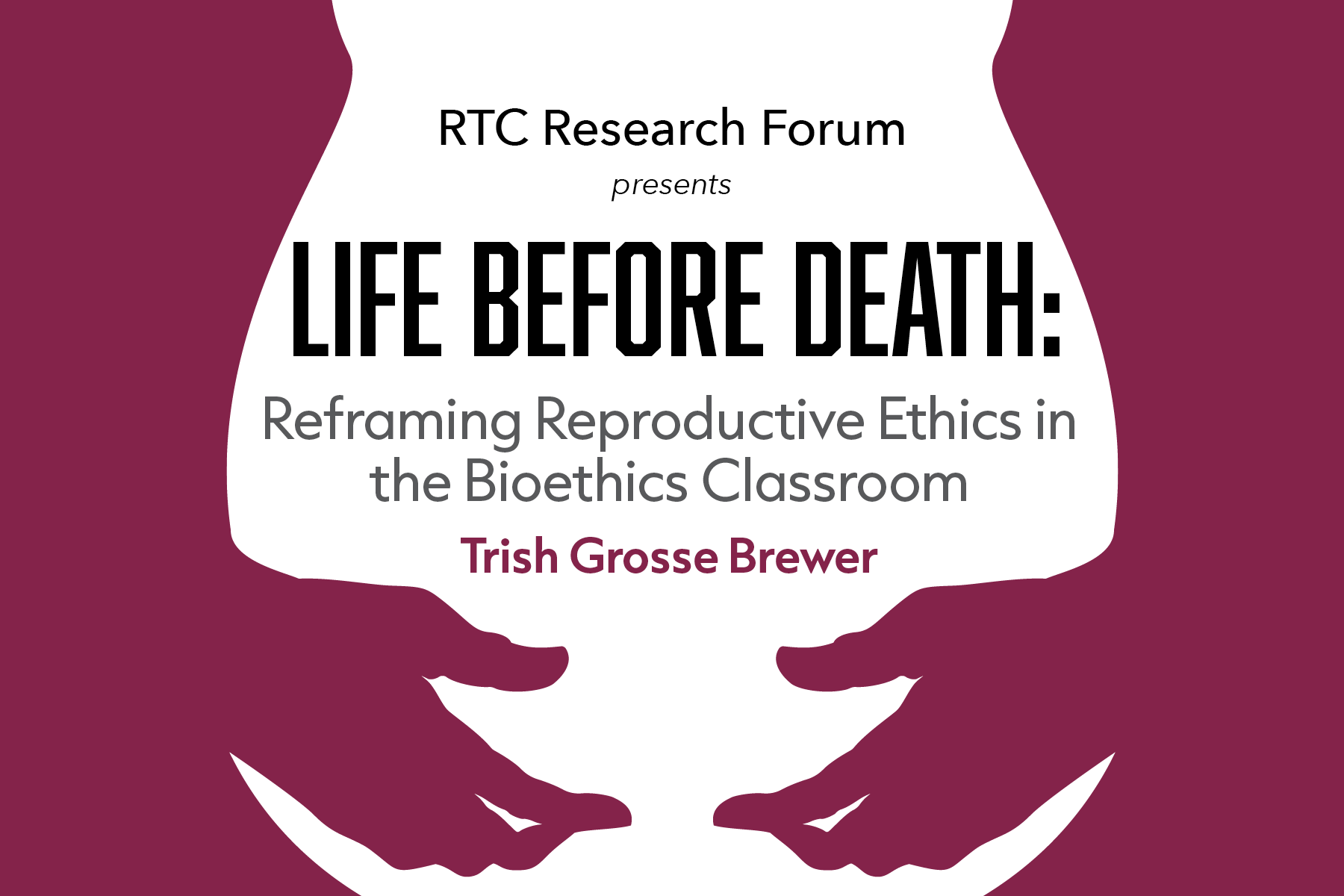
What:
The RTC Research Forum, formerly known as the RTC Brown Bag, is a colloquium series sponsored by the Rhetoric, Theory, and Culture graduate program in the Michigan Tech Department of Humanities. Each month, faculty and students in the program present research on a wide range of topics. The forum offers an opportunity for colleagues and peers to discuss current research, prepare for formal conference presentations, and for students to receive feedback on presentation practices.
Abstract:
Although pregnancy provides the context for many of biomedical ethics’ most enduring controversies, it is often treated primarily as the backdrop for debates about abortion, assisted reproduction, and genetic testing rather than as a morally significant experience in its own right. While most courses devote substantial attention to abortion, assisted reproductive technologies, and genetics, pregnancy is often treated merely as the setting for these debates rather than as a morally significant experience deserving sustained ethical inquiry. Miscarriage and stillbirth, if discussed at all, are usually only discussed through the lens of abortion debates. The order in which we teach reproductive ethics shapes students’ ethical imagination.
This paper offers a transferable curricular model for instructors seeking to broaden how reproductive ethics is taught in their biomedical ethics and medical humanities classrooms through a four-week instructional unit. This unit, “Pregnancy, Life, and Death,” has been developed for undergraduate biomedical ethics courses and begins not with abortion or reproductive technology, but with pregnancy and miscarriage. The opening week introduces pregnancy as a unique bioethical state by examining maternal morbidity and mortality, the ethical significance of the maternal-fetal relationship, informed consent during pregnancy, and the challenges of caring for what clinicians often describe as the maternal-fetal dyad. Students then explore miscarriage and stillbirth through patient narratives and clinical case studies, considering questions of grief, uncertainty, personhood, compassionate care, and justice. In the next three weeks, students move on to the more traditional topics of reproductive technologies, euthanasia, and abortion.
Rather than advancing a new theory of reproductive ethics, this presentation argues that how we sequence topics in the biomedical ethics classroom shapes how students understand them. Beginning with pregnancy rather than with contested moral questions invites students to encounter reproductive ethics first through the lived realities of embodiment, vulnerability, dependence, and care. Only then do they engage the more familiar legal and political debates that dominate public discourse. By centering the lived experience of pregnant people before engaging the more familiar legal and political debates surrounding reproduction, educators can cultivate greater empathy, intellectual humility, and ethical nuance in their students.

Who:
Presented by Trish Grosse Brewer, Assistant Teaching Professor of Philosophy, Department of Humanities
Trish Grosse Brewer is an Assistant Teaching Professor at Michigan Technological University, where she teaches courses in ethics, biomedical ethics, logic, and introductory philosophy. She earned her PhD in Philosophy from Villanova University in 2017 with a dissertation titled Embodied Love and Extended Desire. Her research interests include biomedical ethics, Early Christian moral philosophy (especially that of Augustine of Hippo), and the philosophy of love and sex. Her most recent publication is a chapter in Augustine and the Frontiers of Pluralism: “Dominating Grief: An Ambiguously Augustinian Approach to Pregnancy Loss.” She has five cats.
All are welcome to attend!
When:
Friday, September 25, 2026
12pm-1pm
Where:
Petersen Library (318), Walker Arts & Humanities Center