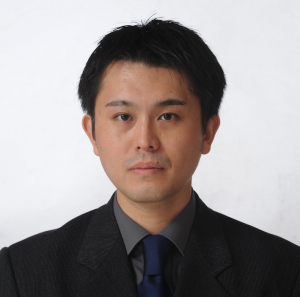

Lucas Simonson has been awarded a scholarship by the German Academic Exchange Service (DAAD). He will study at the Max Planck Institute for the Physics of Complex Systems in Dresden.
The German DAAD is a joint organization of the universities and other institutions of higher education in the Federal Republic of Germany, and the world’s largest funding organization of its kind. Supported by public funds, the DAAD promotes international academic cooperation, especially through the exchange of students and academics. DAAD scholarships are awarded by selection committees comprising a panel of independent academics.
He looks forward to studying under Professor Kurt Busch starting October 2022 to the end of April 2023. “The rationale for this trip is that joining my advisor in Germany will allow me to proceed with my research activities at a fast pace without any delay due to his absence. It will also allow me to interact with world-class optics research groups at the Humboldt-Universität Berlin,” he says. “It’s a significant milestone in my academic career and will allow me to experience other cultures outside of those in the US to broaden my worldview,” says Lucas.
Studying in Germany adds another frame of reference in his study of physics. “Lucas is bringing a unique perspective to our group by combining an interdisciplinary education in both electrical engineering and physics,” says Ramy El-Ganainy, associate professor of physics.
Lucas obtained an MS in Applied Physics (back in the spring of 2021). He entered the PhD candidacy at the end of this past spring semester. Upon getting his PhD, Lucas plans to pursue R&D-related work at Ft. Belvoir in Virginia for The Command, Control, Communications, Computers, Cyber, Intelligence, Surveillance and Reconnaissance (C5ISR) Center, the U.S. Army’s information technologies and integrated systems center.
Michigan Tech physics and applied and computational mathematics double major Anthony Palmer, along with computer science PhD candidate Elijah Cobb, won the best poster recently in the Computing [MTU] Showcase for “Universal Sensor Description Schema: An extensible metalanguage to support heterogenous, evolving sensor data.”
Collecting and processing underwater sensor data is a critical need for U.S. Navy operations. Differences in sensor data types and forms presents a challenge for complete and accurate use of these data. The Universal Sensor Description Schema (USDS) project seeks to design, evaluate, and deploy a unified, extensible metalanguage for supporting legacy and future sensor data across multiple programming languages and environments. Michigan Tech is collaborating with Applied Research in Acoustics LLC to develop a robust programming environment for development of data-intensive applications.
Anthony came up with the idea for the project while interning at ARiA (a small research-and-development firm serving the Navy, government and industry). It’s been the basis for his senior thesis in physics. Anthony says “This project in particular has helped me learn alot about how programming languages work and are made. It also helped me learn a new functional programming language called “Racket”. Finally, it introduced me to some awesome people in the MTU computer science department including my partner Elijah Cobb and my advisor, Dr. Charles Wallace.”
Eye-opening describes the experience for Anthony. He says, “I would say that I was surprised by the intricacy of how programming languages are built and function. I would also say that it was unexpected how useful recursion can be for solving problems in computing.” Recursion reduces time complexity, adds clarity and reduces the time needed to write and debug code.
Anthony graduates in a few short weeks. HIs attention will turn to the Navy, where he will be a submarine officer. Eventually he hopes to go into graduate school.
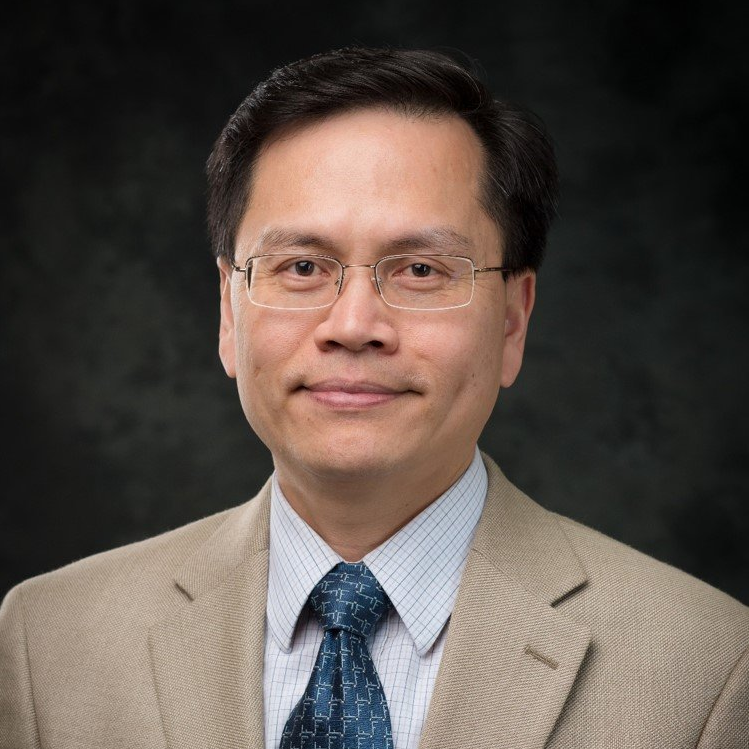
College of Sciences and Arts Dean David Hemmer has selected Yoke Khin Yap, a Michigan Tech distinguished professor of physics, as the fifth Deans’ Teaching Showcase member.
Yap will be recognized at an end-of-term event with other showcase members, and is also a candidate for the CTL Instructional Award Series.
Yap is enthusiastic about teaching and research and treats the two as inseparable. His performance is exceptional in both: He is a recipient of Michigan Tech’s Research Award and has made research contributions of widely recognized significance in the field of nanotechnology.
Simultaneously, he has been an excellent instructor in the classroom and led the Department of Physics in making research opportunities available for a wide cross-section of students. For example, he has reached out to high school students via annual workshops in nanotechnology, which started with an introductory seminar (with animated videos), followed by hands-on sessions in which students constructed carbon nanostructures using the ball-and-stick models.
Yap has been a major driving force in improving the undergraduate and graduate physics curriculum. He initiated a redesign of the undergraduate optics laboratory encouraging cooperative learning between students. Later, he led efforts in designing and teaching undergraduate and graduate courses in nanotechnology, which combine lectures, invited seminars and laboratory demonstrations/tours.
Physics chair Ravi Pandey provided special commendation for Yap’s supplemental instructions to his students. “Dr. Yap took the time to plan and carry out his classes in a way that led students to an understanding of state-of-the-art laboratory techniques to characterize materials at the nanoscale,” says Pandey. “Recently, he has integrated the course into the online mode, using his recorded video lectures.”
Currently, Yap teaches Introductory Physics (PH2200) with 380-plus students. He uses a combination of traditional and contemporary pedagogies to provide a learning opportunity to first-year students. His tools include clickers, online homework and tutorials, extensive online student resources and, most popularly, pedagogically effective demonstrations.
Faculty must be extremely organized, personable, highly motivated and energetic to carry students through introductory physics courses. “Clearly,” Pandey emphasizes, “Dr. Yap brings these attributes through his initiative and commitment, making him a scholar-teacher faculty at Michigan Tech who believes in the unity of teaching and research, mentoring of undergraduate and graduate students, and critical thought.”
Dean Hemmer concurs. “Our large introductory science courses are critical for retention and student success,“ he says. “It is wonderful to see one of Michigan Tech’s top scholars play such a critical role in ensuring the quality of our introductory physics course, and it is great for students to be exposed early in their studies to one of our very best researchers!”
We’re proud of the excellent work our graduate students do, both in the lab and in the classroom. Congratulations to our students recognized by the graduate school for their outstanding work at Michigan Tech.
Oindabi Mukherjee earned the Outstanding Teaching Award for her phenomenal performance during Fall 2021. Oindabi is a PhD candidate studying gravitational lensing with advisor Dr. Robert Nemiroff.
Andrew Puyleart earned the Dean’s Award for Outstanding Scholarship for his work with advisor Dr. Brian Fick. Andrew is studying cosmic ray physics, working with the Pierre Auger Observatory to classify anomalous interactions between cosmic rays and the atmosphere.
Congratulations, Oindabi and Andrew!
Congratulations to Department Coordinator Claire Wiitanen, who was one of the nominees for the Michigan Tech Staff Council’s ‘Making a Difference Staff Awards’ in the category “Above and Beyond”.
We know Claire as someone who consistently goes above and beyond, exceeding expectations and taking the initiative. Congratulations Claire, and thank you for all you do!
Assistant Professor Issei Nakamura receives a National Science Foundation Faculty Early Career Program award for his research on computational methods to simulate how polymeric liquids interact with electric charges. Read more in Michigan Tech news.
Congratulations to our graduate students for their honors from the Graduate School. Cameron Shock won the Outstanding Teaching award and Qing Guo won the Outstanding Scholarship award.
Yoke Khin Yap, a professor in the Department of Physics, was selected to become Michigan Tech’s newest University Professor during the 2019-2020 academic year, through a highly selective process. Yap joined the Department of Physics in 2002 and was promoted to full professor in 2011. Ravi Pandey, chair of physics, said “Dr. Yap is enthusiastic about both teaching and research and treats the two as inseparable.”
Read more in Tech Today.
Congratulations to Binita Hona and Jinlin Zhang, who were awarded Graduate School Finishing Fellowships for Spring 2019. Best of luck to you!
Michigan Tech alumna Heather J. Lewandowski, associate professor, University of Colorado Boulder, is the recipient of the prestigious American Physics Society – Wolff-Reichert Award for Excellence in Advanced Laboratory Instruction.
Lewandowski received a bachelor’s of science degree in physics from Michigan Tech in 1997 and was inducted in the Presidential Council of Alumnae (PCA) in 2016.
The American Physics Society has acknowledged contributions of Lewandowski “For systematic and scholarly transformation of advanced laboratories in physics, for building leading assessment tools of laboratories, and for national service advancing our advanced laboratory educational community.”