
Category: Research

Engineering Students Participate in URS 2017

URS

Winners Announced!

Brian Flanagan
Computer Engineering
The Effects of Uncertain Labels on Damage Assessment in Remotely Sensed Images
SECOND PLACE WINNER

Drew Hanover
Mechanical Engineering
Building-to-Grid Predictive Power Flow Control for Demand Response and Demand Flexibility Programs
THIRD PLACE WINNER

Trevyn Payne
Chemical Engineering
Separation of Individual Components from Lithium-Ion Batteries
HONORABLE MENTION

Hannah Marti
Biomedical Engineering
Psychophysiological Effects of Acute Mindfulness Meditation
HONORABLE MENTION

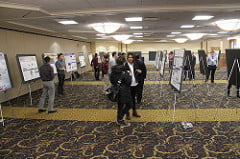
Several undergraduate students in engineering disciplines participated in Michigan Tech’s Undergraduate Research Symposium (URS) on March 17, 2017, in the Rozsa Lobby. Hosted by the Pavlis Honors College, the URS highlights the amazing cutting-edge research being conducted on Michigan Tech’s campus by some of our best and brightest undergraduate students.

READ THE ABSTRACTS

Participating engineering students included:

Dakota Anderson
Biomedical Engineering, Electrical Engineering
Improving Upper-Body Muscle Conditioning While Training at Low Intensities

Alicia Ball
Chemical Engineering
Effect of pH & Mineral Chemistry on Settling of Mineral Particles

Erica Coscarelli
Environmental Engineering
Impact of Dissolved Organic Matter & Its Transformation to Ultraviolet Photolysis Process in Engineered Water & Wastewater Treatment Systems

Aaron Dean
Mechanical Engineering
Effectiveness of Using SHRP2 Naturalistic Driving Study Data to Analyze Driver Behavior at Highway-Rail Grade Crossings

Mary Elizabeth Galbraith
Chemical Engineering
Unconventional Rare Earth Element Resources

Rebekka Guyon
Geological Engineering
Production of Biocementation from the Stimulation of Iron-Oxidizing Bacteria to Mitigate Dust Susceptibility

William Hughes
Mechanical Engineering
Investigation of Fuel Injection Systems- Fundamental Nozzle Cavitation Studies

Emily Hunt
Materials Science and Engineering
3D Printed Super-Bainitic Steel

Michelle Kelly
Environmental Engineering
Within-Reach Variation in Nitrification and Denitrification Rates in Lake Superior Tributaries

Ami Kling
Biomedical Engineering
Determination of the Effects of Hyperthermic Ablation on the Microstructure of Type I Collagen

Allysa Meinburg
Biomedical Engineering
Sensorized Suture Anchor for Real Time Monitoring of Tensile Loads

Alex Miltenberger
Applied Geophysics
Multiple-Point Geostatistical Simulation of Fracture Networks Using Secondary Ground Penetrating Radar Information

Zachary Oldenburg
Chemical Engineering
A Preliminary Economic Feasibility Study for the Recycling of Lithium-Ion Batteries

Emily Petersen
Materials Science and Engineering
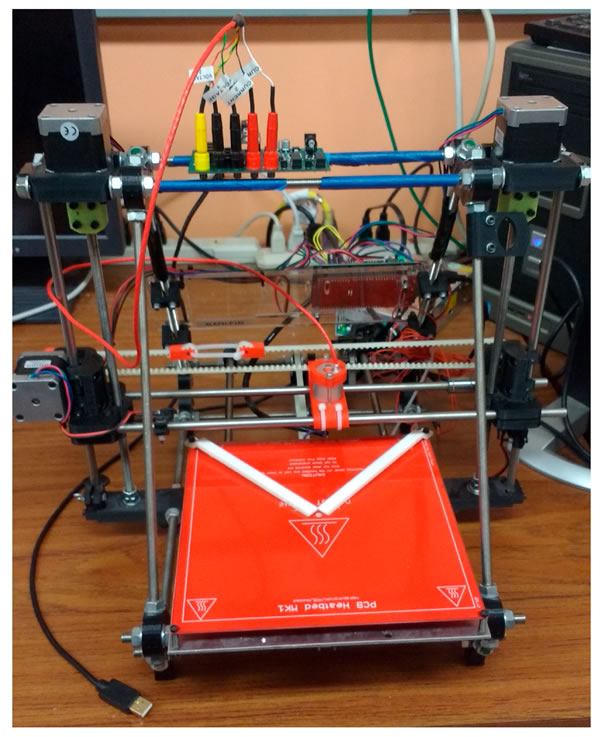
Emergence of Home Manufacturing in the Developed World: Return on Investment for Open-Source 3-D Printers

Denada Planaj
Geological Engineering
Modeling Shallow and Deep Seated Landslides in Wayanad District, Kerala, India

Violet Thole
Materials Science and Engineering
Structure Property Relationships in Next Generation Ballistic Fibers

Ben Updike
Chemical Engineering
Preliminary Quantum Chemical Investigations on the Designing of Effective Catalysts for the Haber Process

Travis Wigstrom
Chemical Engineering
A Better Approach to Tritylation of Alcohols

Erica Anderson
Geological Engineering
Modeling the Potential Travel Paths of Post-Wildfire Debris Flows

Yani Beeker
Materials Science and Engineering
Open-Source Parametric 3-D Printed Slot Die System for Thin Film Semiconductor Processing

Katie Bristol
Applied Geophysics
Rock Magnetic Investigation of Carbonaceous Chondrules from the Allende Meteorite

Jeffrey Brookins
Materials Science and Engineering
Prototyping & Characterization of Zinc-Based Bioabsorbable Vascular Ligating Clips

Andrew Bruning
Mechanical Engineering
Generating Monodisperse Oxidized Methacrylated Alginate Microbeads with Specific Encapsulation Factors

Derek Burrell
Electrical Engineering
Performance Analysis of Stationary Hadamard Matrix Diffusers in Free-Space Optical Communication Links

Elisha Earley
Biomedical Engineering
Evaluating Novel Biodegradable Stent Materials

Simon Eddy
Materials Science and Engineering
Tungsten Disulfide as a Counter Electrode in Dye-Sensitized Solar Cells

Meghan Friske
Biomedical and Electrical Engineering
Characterization of Electrospun Nanofiber Scaffold for Wound Healing Applications

Samuel Gaines
Civil Engineering
Structural Health Monitoring Using UAV’s & Kinect Sensors

Jackie Harris
Chemical Engineering
Investigation into the Free Radical Scavenging Activity of Novel Nitroxide Derivatives

Carly Joseph
Biomedical Engineering
Development of a Novel Injectable Nitric Oxide Releasing Fibrin Microgel Composite Hydrogel for Tendon Repair

Ryan Kibler
Environmental Engineering
Understanding Lake Superior Warming Through Observational Data & Model Results

Jeremy Luebke
Environmental Engineering
Changes in Tropospheric Ozone Formation With a Reduction in PM Over China

Mary Kate Mitchell
Chemical Engineering
Predicting the Rejection Efficiencies of Toxicologically Relevant Organics in Reverse Osmosis of Wastewater Reclamation Processes

Charles Newlin
Materials Science and Engineering
The Effects of Nano-Sized Particles in Ultrahigh Carbon Steels

Thomas Page
Mechanical Engineering
Linear Traverse Design Project for Research Applications in the Cloud Chamber

Emily Praznik
Environmental Engineering
Macroinvertebrates in Hammel Creek

Hao Qin
Materials Science and Engineering
Synergistic Effect of Graphene-Oxide-Doping and Microwave-Curing on Mechanical Strength of Cement

David Ross
Biomedical Engineering
Covalently Bonded Collagen Coating on PDMS Improved Human Mesenchymal Stem Cell Sheet

Philip Staublin
Materials Science and Engineering
Modeling Biocorrosion of Zinc Alloys in Endovascular Environment

Valeria Suarez
Geological Engineering
Risk Assessment and Slope Stability Modelling of a Transportation Corridor in Hindu Kush Range

Brendan Treanore
Materials Science and Engineering
Substrate Active Cooling for Weld Based 3D Printing
Michigan Space Grants for Guadagno and Oppliger

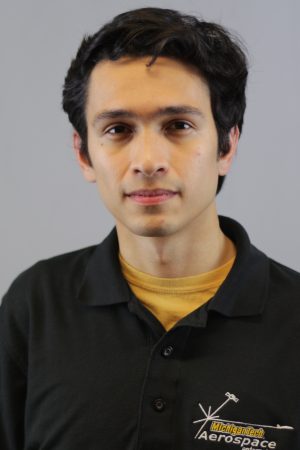
Marcello Guadagno
Marcello Guadagno

Michigan Tech faculty, staff members and students received awards tallying $30,000 in funding through the Michigan Space Grant Consortium (MSGC), sponsored by the National Aeronautics and Space Administration (NASA) for the 2017-18 funding cycle. Award recipients within the College of Engineering include:

Undergraduate Marcello Guadagno (ME-EM) received a $2,500 research fellowship for “Stratus Meteorological CubeSat: Payload Integration and Mission Level Design” with Lyon Brad King (ME-EM).

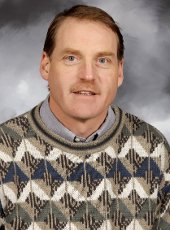
Douglas Oppliger
Douglas Oppliger

Douglas Oppliger (EF) received $5,000 or more for “Underwater Remotely Operated Vehicles for Teaching STEM Concepts” (includes augmentation).

NASA implemented the National Space Grant College and Fellowship Program in 1989 to provide funding for research, education and public outreach in space-related science and technology. The program has 52 university-based consortia in the United States and Puerto Rico.

As an affiliate of the Michigan Consortium, Michigan Tech has been an active participant in MSGC for approximately 20 years. MSGC funding is administered through Michigan Tech’s Pavlis Honors College.

For more information, contact Paige Hackney in the Pavlis Honors College at 7-4371 or visit the MSGC website.

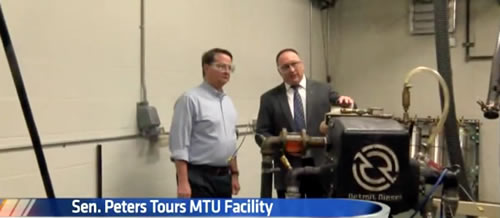
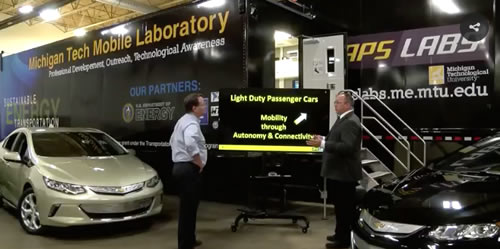
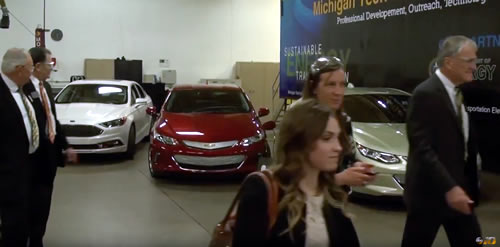
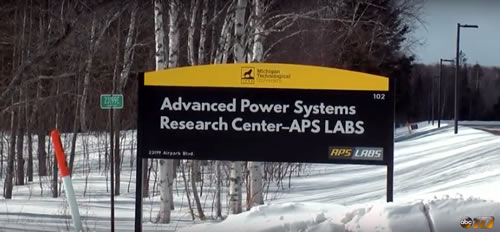
Senator Gary Peters Tours Advanced Power Systems Research Center

Gary Peters and Jeff Naber

HANCOCK, Mich. (WLUC) – Senator Gary Peters was in Houghton County on Friday. He’s getting an up close look at Michigan Tech’s vehicle technology research and development efforts.

Peters toured the university’s Advanced Power Systems Research Center this afternoon. The center is providing ways to reduce 20 percent of energy and fuel consumption in all vehicles, including further studies on self-driving vehicles.

Read more and watch the video at WLUC TV6, by Aleah Hordges.

Gary Peters and Jeff Naber

Senator Gary Peters tours Michigan Tech’s Advanced Power Systems Research Center

“Having him be able to come to campus, understand our situation, understand what we’re working with and the kind of work that we’re doing, that our scientists and engineers are doing, makes all the difference in the world when he gets back to Washington,” said David Reed, Vice President of Research at the MTU APS Research Center.

Read more and watch the video at UP Matters.com.

Gary Peters Tour

Peters visits MTU for a look at autonomous vehicle technology

Senator Gary Peters said, “This is the future for the auto industry—self–driving, autonomous vehicles—and we’re seeing very stiff competition from Asian companies, from European companies that are developing this technology and one thing we know—whoever is first, is going to be at a competitive advantage and I want to make sure it’s the United States.”

Read more and watch the video at ABC 10 News, by Rick Allen.

Gary Peters Tours APSRC

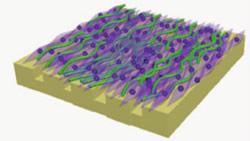
Aligned Nanofibrous Cell-Derived Extracellular Matrix for Anisotropic Vascular Graft Construction

Fibroblast Cell Sheet

Authors: Qi Xing (former postdoc researcher), Zichen Qian (PhD candidate), Mitchell Tahtinen (former undergraduate researcher), Ai Hui Yap (Houghton High School student), Keegan Yates (former undergraduate researcher), and Feng Zhao (associate professor, biomedical engineering).
Journal: Advanced Healthcare Materials

10.1002/adhm.201601333

This article describes vascular grafts, which are in great demand due to the high occurrence of cardiovascular diseases. A tissue engineered vascular graft was developed for the application of bypassing coronary arteries. It is a completely biological vascular graft, which can avoid immune rejection after transplantation. The graft is mechanically strong, which is fabricated by combining naturally derived nanofibrous biomaterials, stem cell engineering, and bioreactor technologies.

Vascular Graft Fabrication Process

Engineering Students Perform Well at 2017 Graduate Research Colloquium

GRC 2017The 2017 Graduate Research Colloquium (GRC) was held on February 15-16 in the Memorial Union Ballroom. There were oral and poster presentation. The banquet was held on the evening of February 16.

VIEW THE PHOTO GALLERY

Following is a complete list of winners:

Oral Presentation Competition

  1. 1st Place: Kevin Sunderland, Department of Biomedical Engineering
  2. 2nd Place: Teresa Wilson, Department of Physics
  3. 3rd Place: Andrew Chapp, Department of Kinesiology and Integrative Physiology
  4. Most Attended: Muraleekrishnan Menon, Department of Mechanical Engineering – Engineering Mechanics
  5. Most Attended: Niranjan Miganakallu, Department of Mechanical Engineering – Engineering Mechanics

Poster Presentation Competition

  1. 1st Place: Matthew Kilgas, Department of Kinesiology and Integrative Physiology
  2. 2nd Place: Brian Page, Department of Mechanical Engineering – Engineering Mechanics
  3. 3rd Place: Zichen Qian, Department of Biomedical Engineering
  4. People’s Choice: Mugdha Priyadarshini, Department of Civil and Environmental Engineering

Graduate Student Service Awards

  1. Gorkem Asilioglu, Department of Computer Science
  2. Hossein Tavakoli, Department of Civil and Environmental Engineering
  3. Kate Glodowski, Department of Kinesiology and Integrative Physiology
  4. Erin Pischke, Department of Social Sciences

The GRC is held each year by the Graduate Student Government at Michigan Tech.

New ideas, cutting edge research and innovative solutions coming from U.P.

HOUGHTON — New ideas, cutting edge research, innovative solutions. ABC 10’s Keweenaw Bureau Reporter Rick Allen has more on the latest research projects by Michigan Tech graduate students.

Underwater researchers will be interested in a less costly, more maneuverable glider that can be used in Lake Superior.

MTU Mechanical Engineering PhD Student Donna Fard said,

They are shallow–water gliders, meaning that we can use them in the lake. What we have so far, they’re all ocean–going gliders.

Read more and watch the video at ABC10 UP, by Rick Allen.

Zhao Group Provides Chapter on Tissue Engineered Skeletal Muscles

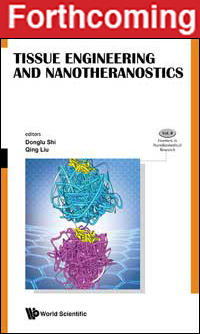
Tissue Engineering and Nano TheranosticsCaleb Vogt, Mitchell Tahtinen, and Feng Zhao have provided the first chapter to a book entitled “Tissue Engineering and Nano Theranostics” (ISBN: 978-981-3149-18-2). World Scientific Publisher. 2017. The book provides a comprehensive overview of current achievements in biomedical applications of nanotechnology, including stem cell based regenerative medicine, medical imaging, cell targeting, drug delivery, and photothermal/photodynamic cancer therapy.

The chapter is “Engineering Approaches for Creating Skeletal Muscle,” and it highlights the significant impact of stem cells in skeletal muscle engineering and regeneration.

About the authors:

  • Feng Zhao is an Associate Professor in the Department of Biomedical Engineering.
  • Caleb Vogt and Mitchell Tahtinen were undergraduate researchers in the Zhao lab.
  • Caleb is currently in the graduate program of the University of Minnesota.
  • Mitchell is currently a master’s student in the Department of Mathematical Sciences at Michigan Tech. He still conducts research in the Zhao lab.

Budget News on H-STEM Engineering and Health Technologies Complex

H-STEMGovernor Snyder mentioned the project during his Budget Proposal Speech on February 8, 2017.

The $39.6M complex would contribute to Human-centered research, development and education for its students by developing therapeutic devices, sensors, instruments, preventive strategies and a health technologies-related workforce.

Read more at WLUC TV6, by Alyssa Barker.

Michigan Tech Board of Trustees Approves 5-year Capital Outlay Plan

The complex will support Michigan Tech’s integrated educational programs that apply engineering and science to problems related to the human condition. The University’s unique technological niche places Tech in an ideal position to contribute to human-centered research, development and education for its students by developing therapeutic devices, sensors, instruments, preventive strategies and a health technologies-related workforce. The complex will permit teams of researchers and students from Biomedical Engineering, Chemical Engineering, Mechanical Engineering, Electrical and Computer Engineering, Materials Science and Engineering, Biology, Chemistry, Cognitive and Learning Sciences, Computer Science, and Kinesiology and Integrative Physiology to work together in flexible lab spaces with shared equipment.

Read more at Michigan Tech News, by Jennifer Donovan.

Consumer Products Day 2017 Awards

Consumer Products Day

The second annual Consumer Products Day Finals at Michigan Tech were held Saturday. Nineteen teams of Tech students were given 20 hours and a box of materials provided by Kimberly-Clark, Amway, DOW or 3M to create, design and pitch a new consumer product. Two teams representing each company advanced to the finals, resulting in eight final products being pitched to the company reps, judges, technical review panel and audience.

A total of $7,000 was awarded to the top three teams.

1st Place: $3,300. Jade Scientific — Kimberly-Clark
Team Members: Abbey Senczyszyn, Emil Johnson, Sarah Lorenz, Josh Leon, Dominic Oldani

2nd Place: $2,400. Student Athlete Engineers — The DOW Chemical Company
Team Members: Josh Rzeppa, Keith Lemely, Quinn Kaspriak, Corey Zetizus, Sophia Farquhar

3rd Place: $1,300. Engineering World Health — 3M
Team Members: Paul Shelcusky, Anna Isaacson, Michael Gazdecki, Brett Opel

The Crowd Pleaser Award — Amway
Team Members: Nick Minarich, Ayla Vaughn, Vincent Padget

Company reps included Tech Alumni Aaron Schroeder ’12, Katie Rohlfs ’16 and Joe Gallo ’12 from The DOW Chemical Company; Kevin Madson and Ryan McInnis ’15 from 3M; Chris Heiting ’14 and Nicole Barna ’09 from Kimberly-Clark; and Sam Soyka ’12 and Andy Davies ’03 from Amway. Tony Rogers, Glen Archer, Joe Thompson, David Shonnard and Tim Eisele made up the technical review panel with Mike Morley, Brian Lagalo and Komar Kawatra serving as judges.

The event was hosted by Career Services. Student teams received additional support from the Consumer Products Manufacturing Enterprise, Makerspace, Brad Turner, Magann Dykema, Mary Raber, Ethan Beavers and Michael Norman.

By Career Services.

Michigan Tech Selected as One of Seventeen Beyond Traffic Innovation Centers in the Nation

Beyond Traffic 2045Michigan Tech was selected by the US Department of Transportation as one of the seventeen Beyond Traffic Innovation Centers (BTIC) in the nation.  According to the DOT, “These Centers will be recognized by the DOT as forward-thinking and influential institutions that are capable of driving solutions to the challenges and trends identified in Beyond Traffic 2045, the US DOT’s report on current and future issues in transportation. The centers will contribute by “convening decision-makers in their megaregion and coordinating related research, curriculum, outreach, and other activities.” The Michigan Tech Center was selected as one of the three universities to serve the rural areas of the United States.

The proposal, led by the Michigan Tech Transportation Institute (MTTI), collaborated with multiple centers and institutes on campus, including: Advanced Power Systems Research Center (APSRC), Center for Technology & Training (CTT), Keweenaw Research Center (KRC), Michigan Tech Research Institute (MTRI), Rail Transportation Program (RTP), Sustainable Futures Institute (SFI) and the Tribal Technical Assistance Program (TTAP).  Additionally, numerous individual campus researchers provided information for the submission.

MTTI Director Pasi Lautala (CEE) will serve as the Beyond Traffic Coordinator, participating in future events related to regional development with the USDOT. MTTI is also planning to use the Center as encouragement for faculty, staff and students interested in transportation issues to get involved in working toward solving our nation’s transportation issues.

Further information on Beyond Traffic, including a map of the selected centers, is located here.  https://www.transportation.gov/beyondtraffic. For faculty, staff and students interested in getting involved with the center, please contact Pam Hannon (prhannon@mtu.edu), or 906-487-3065.  For more information on MTTI, please visit our website.

By MTTI.