Category: Chemical Engineering

Students, Faculty and Staff: Sign Up for LEED Green Associate Training at Michigan Tech

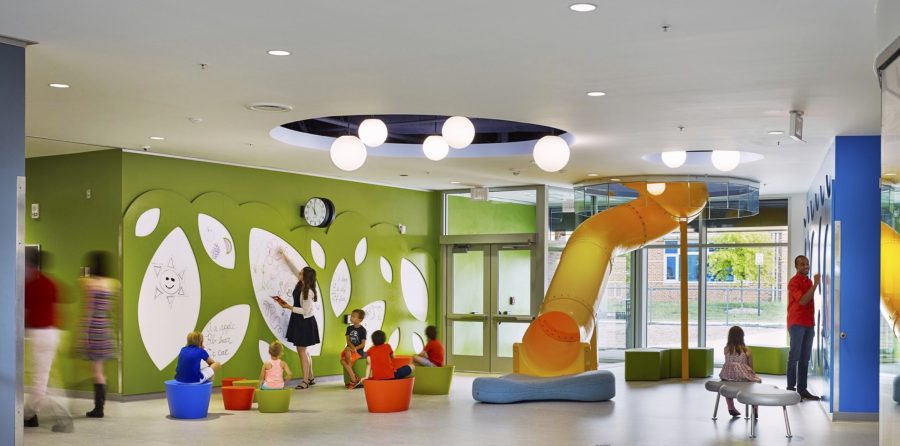
Better buildings equal better lives. This is Discover Elementary in Arlington, Virginia. LEED Zero Energy. Photo by Alan Karchmer

LEED (Leadership in Energy and Environmental Design) is the most widely used green building rating system in the world. Available for virtually all building types, LEED provides a framework to design, construct and operate healthy, highly efficient, cost-saving, green buildings.

Michigan Tech’s Joe Azzarello is one of the founders of the US Green Building Council and has led LEED training workshops throughout the United States, Mexico, South America, China, Thailand, Hong Kong, Singapore and Vietnam. Photo courtesy of Kohler Co.

Are you a student, faculty member or staff at Michigan Tech? If so, you are invited to prepare for, and when ready, take the LEED Green Associate exam. The prep will take place during two sessions, at a low cost, right here at Michigan Tech, with expert training from an original founding member of the US Green Building Council—Michigan Tech alumnus Joe Azzarello.

The LEED exam prep training at MTU will take place over two days. Azzarello will teach on campus in two 5-hour sessions, from 12-5 pm on both Sunday, March 20 and Sunday, March 27. The room is ChemSci 211. Those who cannot attend in person can attend via Zoom. LEED exam training costs $80.00, which includes notes and printed materials. Attendees are expected to purchase their text book, which varies in cost from $73.00 to $115.00, depending on e-book or vendor.

“Attendees will be well trained in what to study for the exam to become accredited as a LEED Green Associate,” notes Azzarello. “Then they must register, take, and pass the LEED GA exam from the USGBC at a later date in order to receive accreditation. The complete costs for LEED Green Associate accreditation varies. The USGBC website provides information on the Steps to Become a LEED Green Associate.

There is no need for a college degree. “Literally anyone can take the course if they can read, memorize some information, and add and subtract,” says Azzarello.

The USGBC LEED Green Associate exam measures general knowledge of green building practices and how to support others working on LEED projects. “The exam is ideal for those new to green building. It’s an accreditation that can enhance your current endeavors, and also open doors to new career opportunities,” Azzarello explains. “LEED accreditation is a globally recognized symbol of sustainability achievement and leadership.”

Depending on interest, Azzarello may offer more LEED training to Michigan Tech students, faculty and staff. Next up would be the LEED Accredited Professional Exam for individuals who actively work on green building and LEED projects.

Azzarello is a LEED AP® and a registered and active USGBC® Faculty™. He is licensed to instruct multiple USGBC workshops and has led workshops throughout the United States, Mexico, South America, China, Thailand, Hong Kong, Singapore and Vietnam. He truly enjoys instructing and sharing his 20-plus years of USGBC and LEED experience while bringing new professionals into the green building movement.

Azzarello earned his BS in Mechanical Engineering from Michigan Tech 1978 and an MS in Environmental Engineering in 1996 from Wayne State University. He is an adjunct instructor in the Department of Chemical Engineering, and also serves as advisor to Michigan Tech’s Alternative Energy Enterprise team. 

“I am at the stage of my life now where it is time to give back to Michigan Tech and the community and am in the position to do so,” says Azzarello. “Without a degree from MTU I am not sure how my life would have turned out. I feel very fortunate to be able to give back.”

Prior to joining Michigan Tech, Azarello retired from Kohler Co. as a senior staff engineer focused on sustainability, directing the company’s green building efforts and serving as a global consultant to customers developing green building projects. With decades spent in the environmental field, Azzarello’s resume touts myriad experiences with recycling, energy efficiency, sustainability, co-generation, marketing, sustainable product design and green building design, and construction programs for several Fortune 500 companies, along with multiple smaller organizations as a sustainability consultant. He also served as Yellowstone National Park’s green building consultant. 

Azzarello has been a part of the green building movement since its beginning. He served on the USGBC’s first Board of Directors as Vice Chairman, actively involved as a Board member during its formative years. He helped pave the way for LEED by participating in the Beta testing of the newly developed green building guidelines that became known as LEED v1.0. Read Joe Azzarello’s full bio.

Read more:

Feathered Friend Helps Launch Green Career: Kohler’s Resident Green Building Guru Started on a Very Different Career Path

Dean’s Teaching Showcase: Timothy Eisele

Tim Eisele
Tim Eisele

Dean Janet Callahan has selected Timothy Eisele, associate professor in the Department of Chemical Engineering, as our seventh 2022 Deans’ Teaching Showcase member.

Eisele will be recognized at an end-of-term event with other showcase members and is also a candidate for the CTL Instructional Award Series.

Eisele was selected for his record of engaging students in the classroom through hands-on experiential learning and relating material to real-world examples and his own research.

Among the variety of classes taught by Eisele are courses focused on the extraction of metal ions from fluids. While these align with his research expertise, available textbooks often don’t include the latest research in the field. Eisele fills that gap by working continuously to improve his class notes and handouts each year. He also develops unique in-class demonstrations and laboratories that elucidate these current topics. His priority is to make these accessible and connected to his students’ world. For example, in Hydrometallurgy/Pyrometallurgy, there is a copper electrowinning experiment students are able to conduct entirely at home. Eisele’s philosophy focuses on helping students develop a deep understanding of the subject material, so they can internalize what they are learning and remain engaged.

Callahan especially appreciates this ability to find and do science outside of the lab. “Dr. Eisele finds experiments to do — even in his own backyard,” she notes. “I recently had him as a guest for Michigan Tech’s Zoom webinar series, Husky Bites, where he relayed how he has developed a way to extract manganese and iron by using naturally occurring anaerobic iron-dissolving organisms.”

Chemical Engineering chair Pradeep Agrawal highlighted two other distinguishing features of Eisele’s teaching: his passion and genuine concern for engaging students. “The students readily sense his enthusiasm for the subject matter and his desire to engage them with the material,” writes Agrawal, who emphasizes that Eisele’s willingness to take time to relate class topics to the real world — while also respecting the parameters of being a student in today’s pandemic context — helps students as they master difficult topics.

“Active learning, enthusiasm for the subject, clear explanations and a strongly organized course are descriptors that align with Eisele’s approach to teaching,” summarized Callahan. “It is a pleasure to nominate Dr. Eisele for the Dean’s Teaching Showcase.”

William S. Hammack Elected to the National Academy of Engineering

Prof. William S. Hammack

Michigan Tech chemical engineering alumnus William S. Hammack ’84 has been elected to the National Academy of Engineering, among the highest professional distinctions accorded to an engineer. Hammack is honored for innovations in multidisciplinary engineering education, outreach, and service to the profession through development and communication of internet-delivered content.

Hammack earned a BS in Chemical Engineering at Michigan Tech, and an MS and PhD in Chemical Engineering from the University of Illinois — Urbana-Champaign. He taught at Carnegie Mellon for a decade before returning, in 1999, to the University of Illinois, where he now teaches in the Department of Chemical and Biomolecular Engineering. 

As an engineer, Hammack’s mission over the last 25 years has been to explain engineering to the public. His media work — from his work in public radio to his books to his pioneering use over the last decade of internet-delivered video— has been listened, read, or viewed over seventy million times. He also recorded more than 200 public radio segments that describe what, why and how engineers do what they do. 

Hammack’s videos (The Engineer Guy), with more than 1.2 million followers on YouTube) are licensed under creative commons so they can be fully used to serve the public. They have been used by both industrial giants and small firms to train their workforce, in college classrooms to hone budding engineers, in K-12 classrooms, and by home schools to excite the next generation of engineers.

Among his many other honors, Hammack in 2020 was awarded the Hoover Medal, given by a consortium of five engineering societies. The award is named for its first recipient, US President Herbert Hoover, who was an engineer by profession. Established in 1929 to honor “great, unselfish, nontechnical services by engineers to humanity,” the award is administered by a board representing five engineering organizations. Previous winners include presidents Dwight D. Eisenhower and Jimmy Carter; industrialist David Packard, the founder of Hewlett-Packard; and inventor Dean Kamen.

In 2018 Hammack was presented with the Carl Sagan Award for the Public Appreciation of Science, given by the Council of Scientific Society Presidents to recognize outstanding achievement in improving the public understanding and appreciation of science. 

Professor Bill Hammack’s upcoming book, The Things We Make: The Unknown History of Invention from Cathedrals to Soda Cans, is due out this Fall 2022.

Hammar is the author of seven books. His newest, a book on the engineering method, “The Things We Make: The Unknown History of Invention from Cathedrals to Soda Cans,” will be published later this year. In it Hammack shares human stories, perception-changing histories of invention, and accessible explanations of technology–revealing a panorama of human creativity across millennia and continents.

Hammack has also received the Public Service Award from the National Science Board, the Ralph Coats Roe Medal from the American Society of Mechanical Engineers, the Distinguished Literary Contribution Furthering the Public Understanding of the Profession (IEEE), and the President’s Award, American Society for Engineering Education (ASEE). Read more on his website, billhammack.org.

Read more:

NAE Bridge: An Interview with . . . Bill Hammack, Engineer Guy

“Engineering Guy” Bill Hammack

Samson A. Jenekhe, Michigan Tech Alumnus, Elected to the National Academy of Engineering

Professor Sam Jenekhe’s pioneering polymer research paved the way for commercial OLEDs

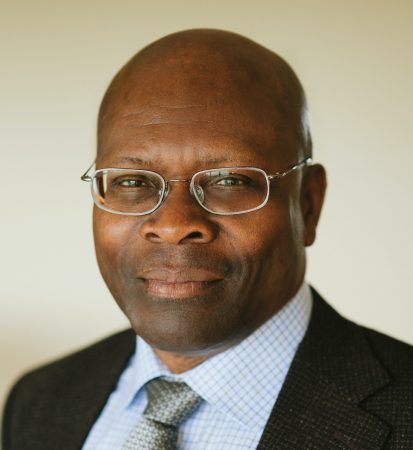
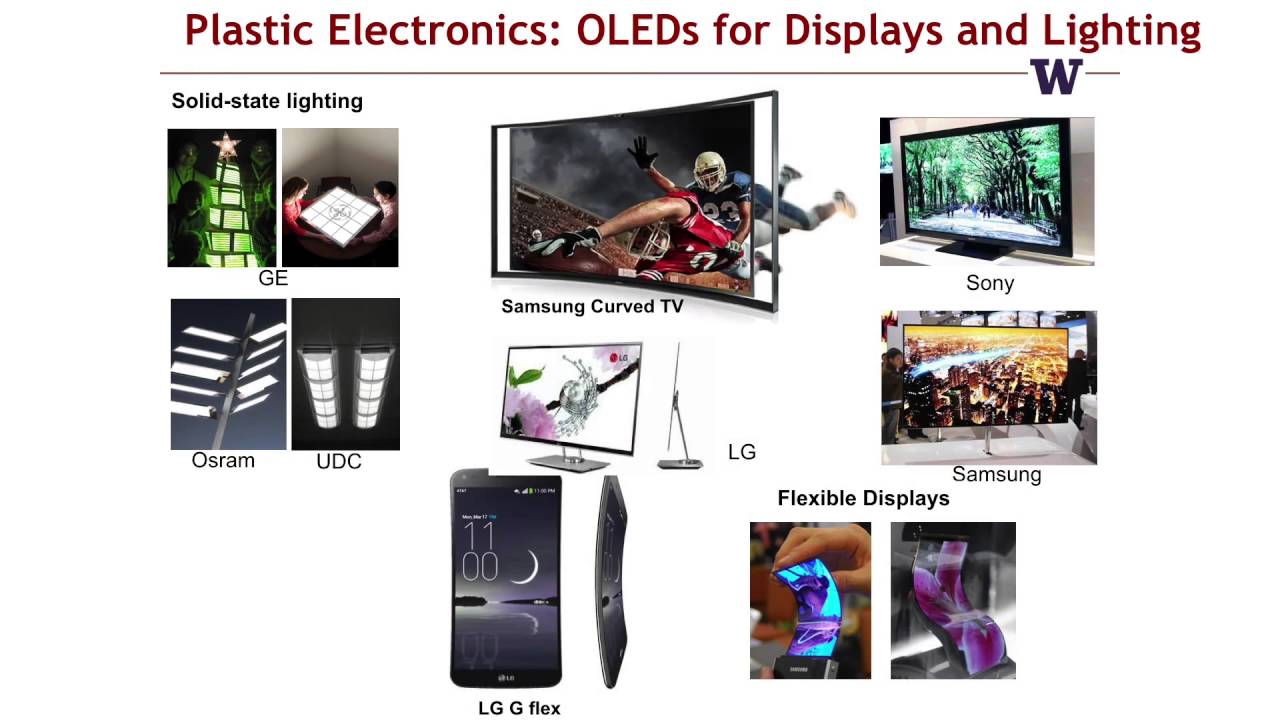
Michigan Tech alumnus Samson A Jenekhe ’77 has been elected to the National Academy of Engineering, among the highest professional distinctions accorded to an engineer. Dr. Jenekhe is honored for discovery and understanding of conjugated materials for organic light-emitting diodes (OLEDs) widely used in the commercial sector.

A professor of chemistry and the Boeing-Martin Professor of Chemical Engineering at the University of Washington, Jenekhe studies the fundamental physical and chemical properties of semiconductor materials, as well as their practical applications. Research topics have included organic and flexible electronics, the use of organic light-emitting diodes for lighting and displays, energy storage and conversion systems, semiconducting polymers and polymer-based photovoltaic systems.

Jenekhe is a Chemical Engineer who earned his BS at Michigan Tech and his MS, MA, and PhD at the University of Minnesota. Jenekhe worked as a research scientist for Honeywell, Inc. and later joined the faculty at the University of Rochester, before joining the faculty at the University of Washington in 2000.

He is a fellow of the American Association for the Advancement of Science, the Royal Society of Chemistry and the American Physical Society, which in 2021 also awarded him the Polymer Physics Prize. He also received the Charles M.A. Stine Award for Excellence in Materials Science from the American Institute for Chemical Engineers in 2014.

Read More

Samson A. Jenekhe’s Pioneering Polymer Work Paved the Way for Commercial OLEDs
US Department of Energy: OLED Basics

Watch

Distinguished Chemical Engineering Seminar given by Professor Samson Jenekhe, University of Washington. Held on 2 March 2016 at the Department of Chemical Engineering, Imperial College London.

Play Plastic electronics and photovoltaics video
Preview image for Plastic electronics and photovoltaics video

Plastic electronics and photovoltaics

SWE Celebrates Graduating Seniors and Scholarship Recipients

Michigan Tech’s section of the Society of Women Engineers (SWE) celebrated the end of the semester with a banquet sponsored by Oshkosh.

Graduating seniors recognized at the event are:

The section also awarded two $1,000 scholarships to our upper-division students. The scholarships were sponsored by Ruby & Associates Inc. and Deployed Technologies to recognize students for their contributions to the SWE section and the University community.

Scholarship recipients are:

By Gretchen Hein, Society of Women Engineers Advisor.

Tau Beta Pi Inducts 15 New Members at Michigan Tech

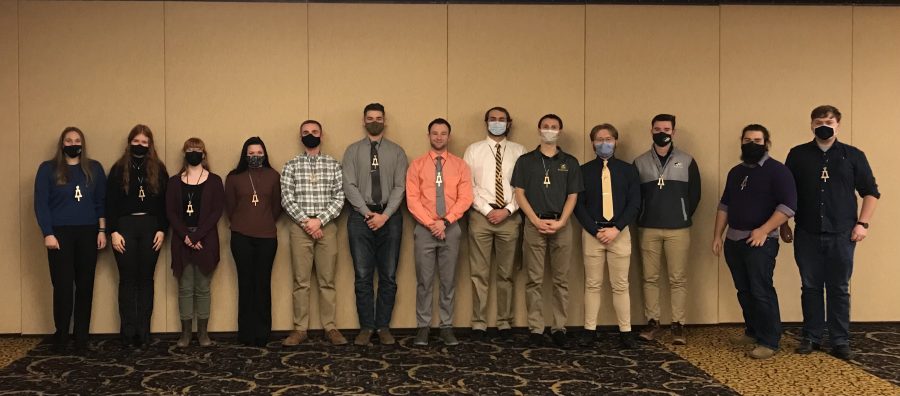
Congratulations to our Fall 2021 Tau Beta Pi Initiates! (Not pictured here: Andrew Scott and Dr. Mary Raber)

The College of Engineering recently inducted 14 students and one eminent engineer into the Michigan Tech chapter of Tau Beta Pi.

Tau Beta Pi is a nationally recognized engineering honor society and is the only one that recognizes all engineering professions. Students who join are the top 1/8th of their junior class, top 1/5th of their senior class, or the top 1/5th of graduate students who have completed 50% of their coursework. The society celebrates those who have distinguished scholarship and exemplary character, and members strive to maintain integrity and excellence in engineering.

Fall 2021 Initiates

Undergraduate Students: Dom Bianchi, Mechanical Engineering; Sean Bonner, Civil Engineering; Sam Breuer, Computer & Electrical Engineering; Sophia Brylinski, Materials Science & Engineering; Spencer Crawford, Computer Engineering; Jacqui Foreman, Chemical Engineering; Stephen Gillman, Computer Engineering; Michael Kilmer, Materials Science & Engineering; Emerald Mehler, Chemical Engineering; Ben Stier, Computer Engineering; Alex Stockman, Computer Engineering; and Jordan Zais, Biomedical Engineering

Graduate Students: Tonie Johnson, MS, Biomedical Engineering; and Andrew Scott, MS Electrical & Computer Engineering

Eminent Engineer

Mary Raber is Chair of Michigan Tech’s Department of Engineering Fundamentals

Dr. Mary Raber

Tinu Folayan Welcomed as Write-D Facilitator

Write-D Space

Writing in the Discipline (Write-D) and the Department of Chemical Engineering are pleased to welcome Tinu Folayan as the department’s Write-D facilitator beginning in the spring 2022 semester.

Write-D provides a dedicated time and space for graduate students to get work done and receive support on writing projects within their discipline, such as manuscripts, research proposals, etc. Guest speakers from the department and industry visit to briefly present research, writing and publishing tips.

Current departments and facilitators include:

Write-D is a free program open to all graduate students. If your department is not listed but you would like to participate, contact Write-D coordinator Sarah Isaacson at sisaacso@mtu.edu.

By Sarah Isaacson, Write-D Coordinator.

External Research Awards More Than Triple for MTU Chemical Engineering

Negative-stained (false-colored) transmission electron micrograph (TEM) depicts the ultrastructural details of an influenza virus particle, or “virion”. Credit: Wikimedia Commons

Using a three-year, $1.5 million R01 grant from the U.S. Food and Drug Administration, Michigan Technological University and Johns Hopkins University will create an “Integrated and Continuous Manufacturing of an Influenza Vaccine.” Michigan Tech Chemical Engineering Professor Caryn Heldt is PI on the project.

Professor Caryn Heldt

Current influenza vaccines are matched to strains circulating in the Southern hemisphere about 8 months prior to the North American flu season. “The approach we plan to take will allow the vaccine to better match the circulating strains in the US and be adaptable to change quickly, as needed,” Heldt explains. “The vaccine will also be safer, as it will not be made in eggs and could be taken by people with egg allergies.”

Professor David Shonnard

Heldt is a co-PI on another $ 1.4 million collaborative project with the University of Massachusetts and Clemson University, funded by NSF:DMREF, the National Science Foundation: Designing Materials to Revolutionize and Engineer our Future. The project, “A Computationally-driven Predictive Framework for Stabilizing Viral Therapies,” will provide insight into how to stabilize vaccines and reduce the need to store and transport vaccines at cold temperatures. Heldt is the James and Lorna Mack Endowed Chair of Cellular and Molecular Bioengineering at Michigan Tech.

Chemical Engineering Professor David Shonnard was recently awarded funding in the amount of $917,000 by the US Department of Energy’s Reducing EMbodied-Energy and Decreasing Emissions (REMADE) Manufacturing Institute. Shonnard is the Robbins Chair in Sustainable Use of Materials at Michigan Tech. The project, “Dynamic Systems Analysis of PET and Olefin Polymers in a Circular Economy” provides funding through the Sustainable Manufacturing Innovation Alliance.

“The total funding amount is cost-shared between REMADE and Michigan Tech, along with partners Idaho National Laboratory, Yale University, Chemstations Inc., and Resource Recycling Systems,” Shonnard explains. The project is expected to result in multiple positive impacts, including:

  • New process models and datasets for systems analysis of a circular economy for plastics
  • Optimized plastics circular economy designs to minimize emissions and costs
  • Case study applications to plastics circular economy designs for the state of Michigan
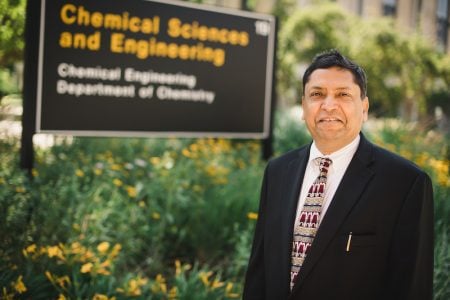
Dr. Pradeep Agrawal

“Along with my Michigan Tech colleagues, Robert Handler, Utkarsh Chaudhari, and David Watkins, and our external partners, we are excited to receive this award from REMADE,” adds Shonnard.

Janet Callahan, Dean, College of Engineering at Michigan Tech

“Michigan Tech’s Chemical engineering program has external funding through a number of federal agencies, including DARPA, ARPA-E, DOE, NSF, NIH/FDA, EPA, and NASA,” says Pradeep Agrawal, chair of the Department of Chemical Engineering. “Our research facilities, including equipment and support staff, are on par with top-tier research universities across the country. Michigan Tech provides the flexibility needed to engage in collaborative research both internally as well as externally,” notes Agrawal. “A combination of individual PI grants and multi-PI grants has put the chemical engineering program on a strong research trajectory.”

“The Chemical Engineering department has more than tripled their external research awards over the past four years, and is actively hiring faculty at all levels,” says Janet Callahan, Dean of the College of Engineering at Michigan Tech. “We are building a culturally-diverse faculty committed to teaching and scholarship in a multicultural and inclusive environment, and we seek faculty members and academic leadership who share these values.”

Michigan Technological University is a public research university founded in 1885 in Houghton, Michigan, and is home to more than 7,000 students from 55 countries around the world. Consistently ranked among the best universities in the country for return on investment, the campus is situated just miles from Lake Superior in Michigan’s Upper Peninsula, offering year-round opportunities for outdoor adventure.

Graduate School Announces Fall 2021 Finishing Fellowship Award Recipients

Campus vista in hazy light showing the canal bending.

The Graduate School proudly announces the recipients of its Fall 2021 Finishing Fellowships. Congratulations to all nominees and recipients.

Finishing fellowship recipients in engineering graduate programs are:

Summer Youth Program and Women in Engineering

Madelyn Hachenski in front of UO Lab.
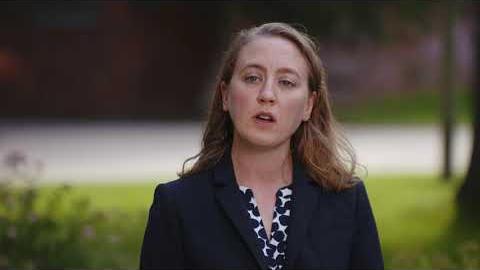
Madelyn Hachenski is interviewed in front of the Unit Operations Lab, an educational facility managed by the Department of Chemical Engineering.

HOUGHTON, Mich. (WLUC) – Since 1972, Michigan Tech University has held its Summer Youth Program, giving kids finishing sixth to eleventh grade an opportunity to take courses, ranging from Engineering to Computer Science.

“We have classes on everything,” said Jannah Tumey, the Assistant Director of MTU’s Center for Educational Outreach, “from Aviation to Forensic Science to Michigan Species of Concern and other ecology-type classes and Chemistry.”

Read more and watch the video at WLUC TV6, by Matt Price.