Month: April 2026

Enterprise Distinguished Service Awards: Scott Kuhl

The Enterprise Program awards the Enterprise Distinguished Service Awards to recognize the dedication and exceptional contributions of advisors and champions who have played pivotal roles in shaping the program’s success. Each of the award winners has more than 15 years of service within Enterprise, dedicating their time and expertise to guiding teams, ensuring student success, and advancing the program’s discovery-based learning mission.

The recipients of the Enterprise Distinguished Service Award are Jim DeClerck, Scott Kuhl, Erin Smith, and Ruth Archer. This four-part series highlights the contributions of each award recipient.


Dr. Scott Kuhl – Associate Professor, Computer Science and Affiliated Associate Professor, Psychology and Human Factors

Scott Kuhl, associate professor of Computer Science and affiliated associate professor of Psychology and Human Factors, has been shaping the Husky Game Development Enterprise for more than a decade. When he arrived at Michigan Tech in 2009, the Enterprise was advised by Robert Pastel. Kuhl stepped into the advisor role in 2010 and has guided the team ever since, helping it grow into a vibrant, multidisciplinary community where students learn the full lifecycle of video game development.

“For students who want direct experience making video games, Husky Games is the main way to get it at Michigan Tech,” Kuhl says. “The University’s computer science program now includes a game development concentration, and that’s helped strengthen the pipeline.”

A Space Where Students Create What They Love

For Kuhl, the best part of advising Husky Games is watching students bring their ideas to life.

“The final products are fun. Seeing the team be successful — that’s what I enjoy. The goal is to build a game that gets a lot of plays and looks polished.”

Scott Kuhl

Students are drawn to the Enterprise because it gives them a chance to create something meaningful, even if breaking into the gaming industry is notoriously difficult. “One student told me, ‘Husky Games is why I came to Tech,’” Kuhl says. “They do it because they love it.”

Projects That Stand Out

Over the years, Husky Game Development has taken on a wide range of projects, some purely creative and others developed for real clients.

One memorable collaboration came from Matthew Spencer, a Michigan Tech alumnus who runs Yooper Games Studio in Chassell. He provided the team with an existing game, Super Battle Polycars, and asked them to create a mod. The students built Polycar Blitz, which is now available to play on Steam. “We are currently working with Yooper Games again on a new project,” Kuhl says. “It’s a great opportunity for students to get real experience.”

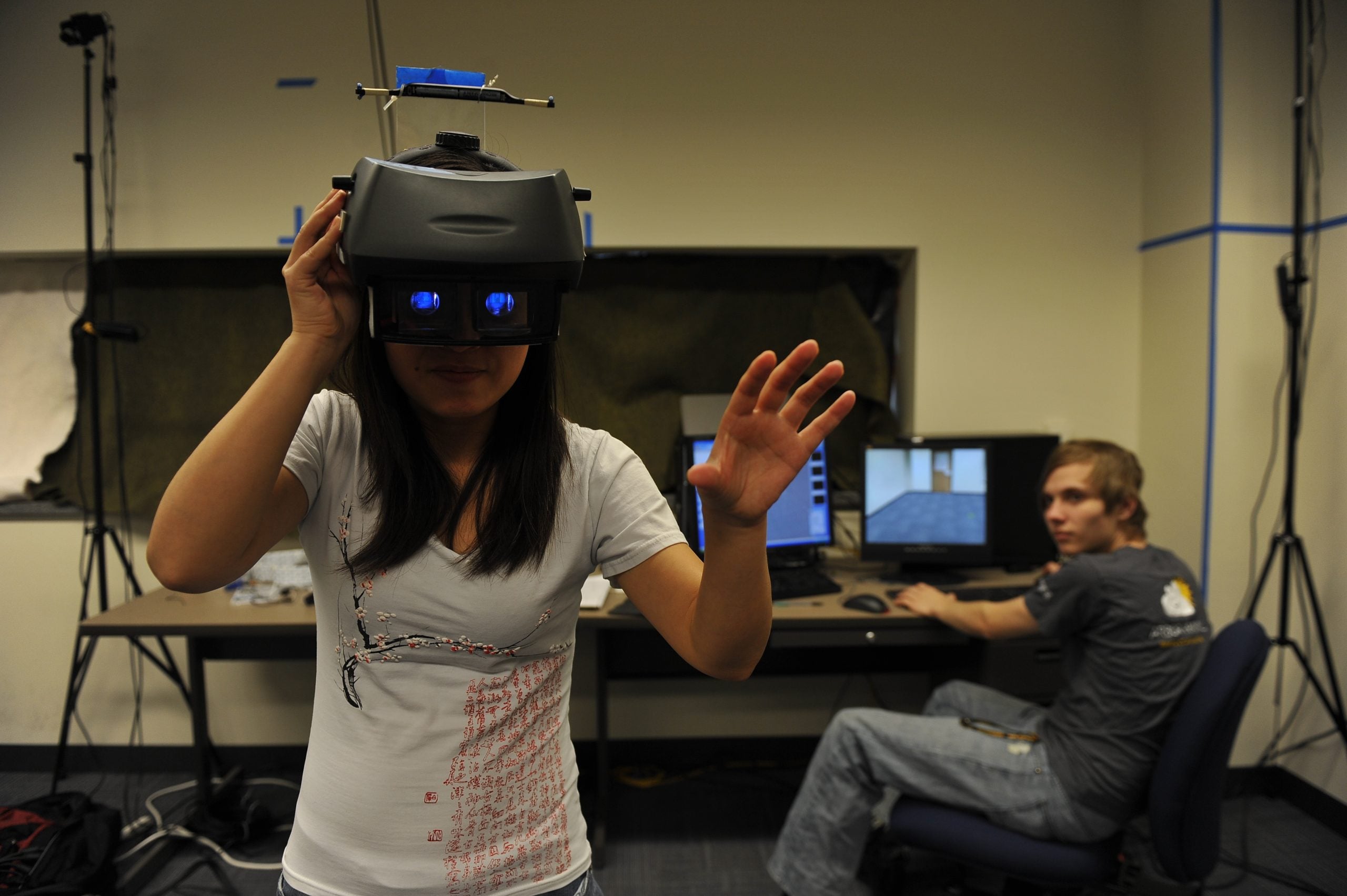
Husky Game Development students exploring the virtual world during a working session in 2016.

The team has also partnered with the Michigan State Police to create a game for community outreach. “Kids like video games, so it made sense,” Kuhl explains. “The initial goal of the game was to showcase things the department did that people were less familiar with, but the game ultimately became a vehicle chase game that runs in a web browser so that it’s easy to use with community outreach. We enjoyed working with the Michigan State Police, making improvements on their feedback, and building a game for them to use.”

Husky Games is one of the few Enterprise teams with limited corporate sponsorship, which gives students creative freedom but also means they must generate their own project ideas. With ten internal teams and good participation from Sound Design majors, the Enterprise has become a collaborative hub for students across disciplines.

Kuhl notes that several alumni have gone on to impressive careers, including Steven Green, who came through Husky Games, works internationally as a technical sound designer in the gaming industry, and teaches courses for Michigan Tech.

Leadership, Iteration, and Community

Kuhl describes his role as “managing managers.” The Enterprise is run by committee, and student leadership is central to its success. With students graduating every year, the Enterprise experiences constant turnover, and new participants must quickly adjust to the demands of effective leadership. “We ask a lot of them,” he says. “But they do a great job.”

“It can be a struggle to manage it all,” he continues, “but every year I make one to three tweaks to help things go better. I look at it like any other university course — you’re always improving.”

He also values the Enterprise’s diversity across majors and years in school. “That mix makes the team stronger.”

Reflecting on the Honor

Receiving the Enterprise Distinguished Service Award gave Kuhl a moment to reflect on the program’s impact. “This is the only way to get experience making games,” he says. “Students learn so much by doing. I’m proud of what they’ve accomplished and grateful to be part of their journey.”


About the Enterprise Program

Michigan Tech’s Enterprise Program offers students a unique, hands-on learning experience that goes beyond the classroom. With more than 25+ Enterprise teams spanning disciplines such as engineering, business, computing, and science, students collaborate on real-world projects sponsored by industry and government partners. Enterprise students develop technical expertise, leadership skills, and teamwork experience—preparing them for success in their careers. Many teams work on cutting-edge innovations, from automotive and aerospace to sustainability and emerging technologies.

Explore the Enterprise Program experience and see how you can get involved! Follow Michigan Tech Enterprise on Facebook, Instagram, and LinkedIn for the latest updates.

Enterprise Distinguished Service Awards: Erin Smith

The Enterprise Program awards the Enterprise Distinguished Service Awards to recognize the dedication and exceptional contributions of advisors and champions who have played pivotal roles in shaping the program’s success. Each of the award winners has more than 15 years of service within Enterprise, dedicating their time and expertise to guiding teams, ensuring student success, and advancing the program’s discovery-based learning mission.

The recipients of the Enterprise Distinguished Service Award are Jim DeClerck, Scott Kuhl, Erin Smith, and Ruth Archer. This four-part series highlights the contributions of each award recipient.


headshot of Erin Smith
Dr. Erin Smith – Teaching Professor in Digital Media and Cinema, Humanities,
Director, Humanities Digital Media Zone, Director, 41 North Film Festival

Students at Michigan Tech have long explored filmmaking through individual courses, but the CinOptic Enterprise gave them something rare — a sustained, real‑world creative environment. Erin Smith, a teaching professor in digital media and cinema, advised CinOptic from its inception, guiding students through ambitious long-arc media projects and collaborative partnerships.

Creating a Space for Creative Work

The idea for CinOptic started as a hybrid engineering‑and‑arts project, but quickly evolved into a fully creative team, drawing students from both the Department of Humanities and the Department of Visual and Performing Arts. It offered students the chance to work on media projects that unfolded over one to three years, mirroring the timelines of real production work.

“Pre‑production, production, post‑production — these things take time,” Smith says, who also serves as director of the Humanities Digital Media Zone and director of the 41 North Film Festival. “CinOptic gave students the space to develop those skills deeply and collaboratively.”

Although CinOptic did not have a corporate sponsor, the team’s model was client‑based work. Students partnered primarily with faculty on grant projects and occasionally with outside clients, such as the National Park Service (NPS). They learned to navigate expectations, deadlines, and accuracy, lessons Smith reinforced with a line they all remember: “‘If you’re not worrying, I am.’ Part of the job was getting them to worry about it, to remember that someone is waiting for this project and they gave money and resources to ensure it gets done.”

Fieldwork and Global Experiences

CinOptic’s projects often took students far beyond campus. A project with Adjunct Professor Thomas Oommen took students to Alaska and New Mexico, documenting field research in challenging environments.

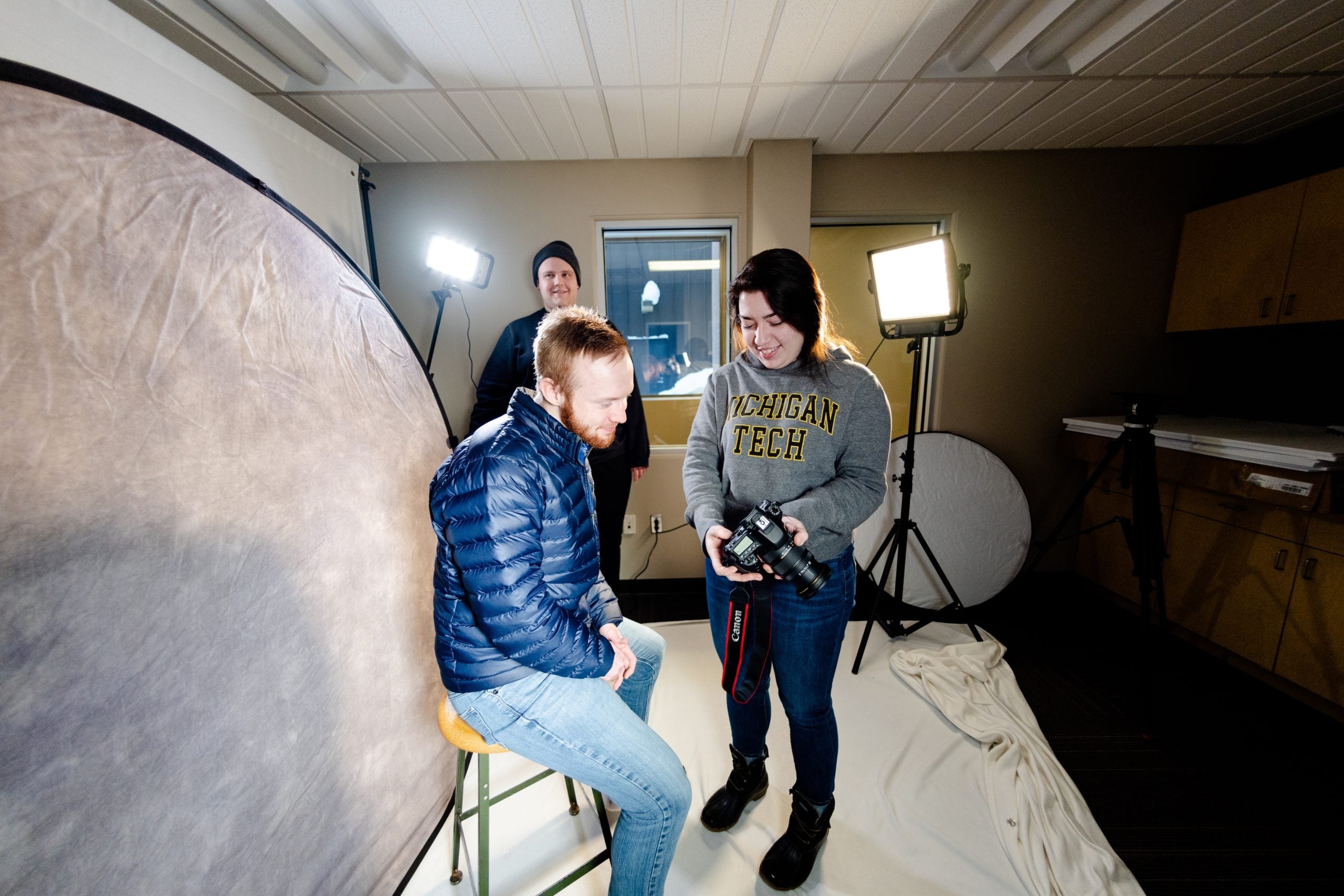
CinOptic students working behind the scenes on a project in 2019.

One of the most meaningful collaborations came through Professor Caryn Heldt, who wrote a CinOptic student directly into an NSF grant. That intentional partnership led the team to Denmark (a trip Smith joined) and Singapore, where they documented research and learned firsthand how communication shapes scientific impact.

CinOptic also completed a three‑year project with the NPS to produce videos for Isle Royale. After the pandemic shutdown, Smith and three students traveled to the island to finish filming, an experience she describes as unforgettable. 

Working with researchers required students to learn quickly and communicate precisely. They developed scripts in close collaboration with faculty, including Associate Professor Erika Hersch-Green, ensuring that complex ideas were conveyed accurately and clearly.

A Lasting Community

Across nearly two decades, CinOptic became a community defined by leadership, creativity, and shared purpose, and Smith remains grateful for the students who shaped the team.

“I had so many excellent students who gave their time and commitment. I’m still in touch with many of them. The relationships we built in Enterprise are different from what happens in a classroom, and I’m very thankful for them.”

Erin Smith

CinOptic shaped many students during its long run, leaving a lasting imprint on Michigan Tech’s creative landscape. Under Smith’s guidance, it became a place where storytelling, collaboration, and curiosity could thrive.


About the Enterprise Program

Michigan Tech’s Enterprise Program offers students a unique, hands-on learning experience that goes beyond the classroom. With more than 25+ Enterprise teams spanning disciplines such as engineering, business, computing, and science, students collaborate on real-world projects sponsored by industry and government partners. Enterprise students develop technical expertise, leadership skills, and teamwork experience—preparing them for success in their careers. Many teams work on cutting-edge innovations, from automotive and aerospace to sustainability and emerging technologies.

Explore the Enterprise Program experience and see how you can get involved! Follow Michigan Tech Enterprise on Facebook, Instagram, and LinkedIn for the latest updates.

Enterprise Distinguished Service Awards: Ruth Archer

The Enterprise Program awards the Enterprise Distinguished Service Awards to recognize the dedication and exceptional contributions of advisors and champions who have played pivotal roles in shaping the program’s success. Each of the award winners has more than 15 years of service within Enterprise, dedicating their time and expertise to guiding teams, ensuring student success, and advancing the program’s discovery-based learning mission.

The recipients of the Enterprise Distinguished Service Award are Jim DeClerck, Scott Kuhl, Erin Smith, and Ruth Archer. This four-part series highlights the contributions of each award recipient.


headshot of Ruth Archer
Dr. Ruth Archer – Director of Continuous Improvement

Ruth Archer, director of Continuous Improvement at Michigan Tech, has spent more than a decade helping Enterprise students develop the mindsets and methods that shape effective engineers, scientists, and professionals. She began teaching her first Enterprise course in 2011 and gradually expanded her involvement, eventually developing and teaching two classes focused on lean principles and the culture of continuous improvement.

Her work with Enterprise has influenced not only her students but also her own approach to teaching. “The program has shaped my thinking about instruction,” Archer says. “I’ve learned how to better support students — how to interact with them, how to design assignments, what works and what doesn’t. It’s really helped me learn how to teach.” That learning, she notes, has carried over into her broader continuous improvement work across campus.

Today, Archer teaches ENT 3982: Continuous Improvement Using Lean Principles and ENT 3983: Culture of Continuous Improvement, courses that give students tools they can apply immediately to their Enterprise projects.

Helping Students Become Who They’re Meant to Be

For Archer, the most rewarding part of working with Enterprise students is witnessing their growth. “I’m grateful to have the opportunity to work with students,” she says. “Many of my colleagues don’t get that chance, and they don’t get to know students very well.”

Enterprise students, she notes, arrive already oriented toward action. “They’re not passively waiting to be handed information. They’re wrestling with real problems. What we talk about in class, they can apply immediately.”

Archer sees her role as guiding students in “the process of becoming” — becoming engineers, scientists, professionals, and thoughtful contributors to their fields.

“It’s amazing to influence, even slightly, how they think about the world they’re moving into and how they interact with it. To help them be better, do better, and be more successful.”

Ruth Archer

Making Problems Visible — and Solvable

One of Archer’s most memorable experiences came from helping a student team that had fallen significantly behind on a high‑stakes project with an external sponsor. “They were seven weeks behind schedule and really worried about their milestones,” she recalls.

She introduced them to a core continuous improvement tool: a visual kanban board that made the project’s status visible at a glance. “It wasn’t about blame,” she says. “It was about seeing where resources needed to be redirected.”

The impact was immediate. By the end of the semester, the team had reduced their delay from seven weeks to three. “They weren’t mired in an unsolvable situation anymore,” Archer says. “They were moving forward.”

Creativity, Communication, and Confidence

Another standout memory comes from a communications course Archer previously taught. The course included a simulated conference experience that she brought to life, collaborating with co-instructors teaching other sections of the same course. Students formed teams, selected topics, submitted proposals, wrote papers, completed reviews, and delivered polished presentations.

students talking to other students about the Enterprise Program
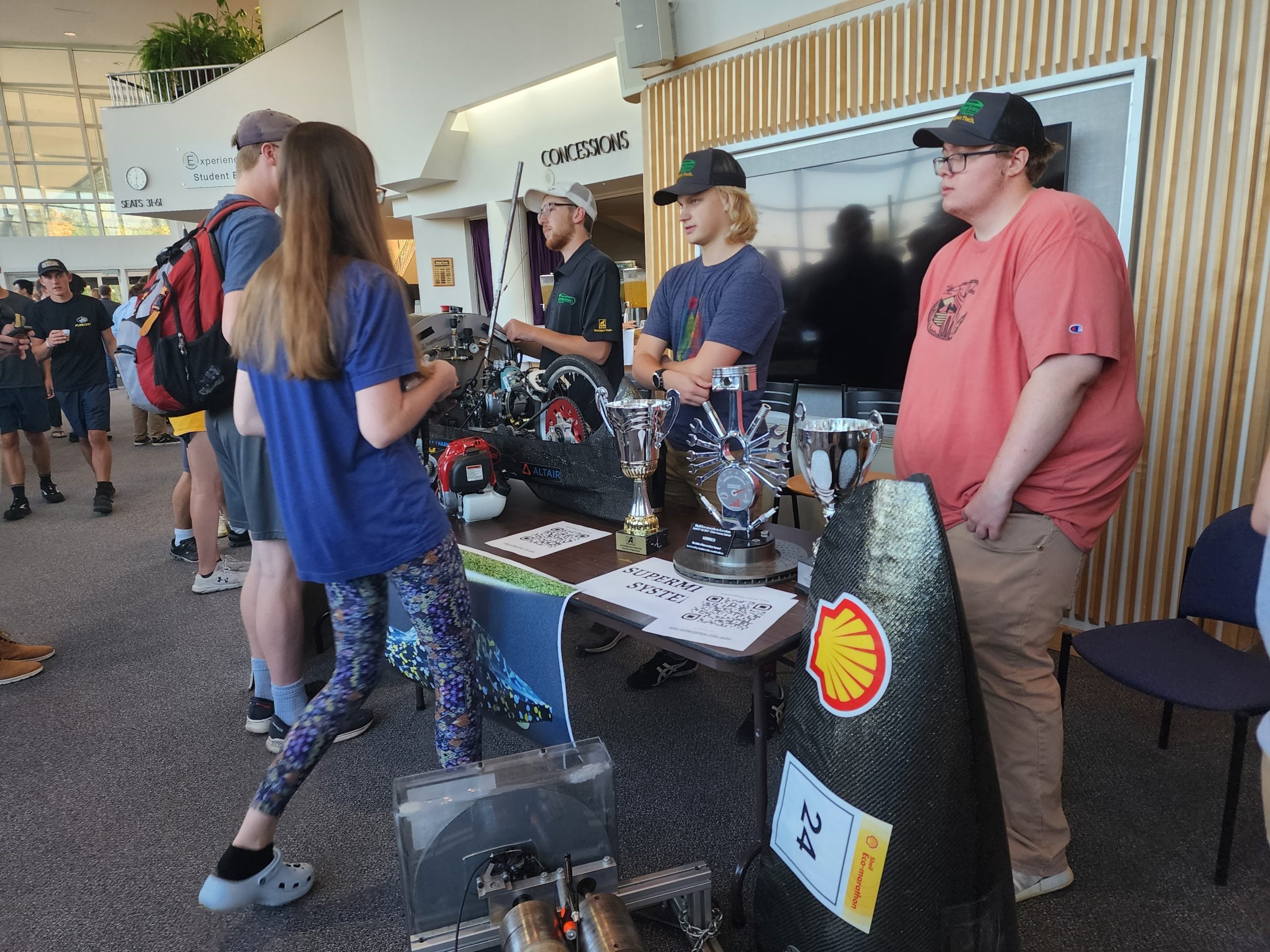
Student exploring the Enterprise Program at Enterprise Day in Fall of 2023 – just a few of Ruth’s future students.

The topics ranged from practical to wildly imaginative: speed‑reading techniques, musical storytelling, American Sign Language, how accents shape communication, communicating with dogs and their handlers — even communicating with extraterrestrials. One student developed that extraterrestrial communication talk into a presentation for NASA and ultimately landed a job.

“It brought out all of their skills,” Archer says. “And it showed them what it really takes to prepare something professional.”

A Community of Practice

Archer also values the relationships she has built through Enterprise. “I’ve had the opportunity to create and share materials with other instructors, and many of them have become friends,” she says. “We’ve built a community of practice, pushing the curriculum forward together. It’s the same model we use in continuous improvement. No one person is the sole source of knowledge.”

Reflecting on the Honor

Receiving the Enterprise Distinguished Service Award gave Archer a moment to reflect on the program’s impact. “Enterprise gives students a chance to apply what they’re learning in meaningful ways,” she says. “Being part of their journey — and part of a community that supports them — has been incredibly rewarding.”


About the Enterprise Program

Michigan Tech’s Enterprise Program offers students a unique, hands-on learning experience that goes beyond the classroom. With more than 25+ Enterprise teams spanning disciplines such as engineering, business, computing, and science, students collaborate on real-world projects sponsored by industry and government partners. Enterprise students develop technical expertise, leadership skills, and teamwork experience—preparing them for success in their careers. Many teams work on cutting-edge innovations, from automotive and aerospace to sustainability and emerging technologies.

Explore the Enterprise Program experience and see how you can get involved! Follow Michigan Tech Enterprise on Facebook, Instagram, and LinkedIn for the latest updates.

Enterprise Distinguished Service Awards: Jim DeClerck

The Enterprise Program awards the Enterprise Distinguished Service Awards to recognize the dedication and exceptional contributions of advisors and champions who have played pivotal roles in shaping the program’s success. Each of the award winners has more than 15 years of service within Enterprise, dedicating their time and expertise to guiding teams, ensuring student success, and advancing the program’s discovery-based learning mission.

The recipients of the Enterprise Distinguished Service Award are Jim DeClerck, Scott Kuhl, Erin Smith, and Ruth Archer. This four-part series highlights the contributions of each award recipient.


Dr. James DeClerck – Professor of Practice, Mechanical and Aerospace Engineering

Jim DeClerck, a Professor of Practice in the Department of Mechanical and Aerospace Engineering, has shaped Michigan Tech’s Formula SAE Enterprise for more than a decade. After earning his PhD from Michigan Tech in 1991, he spent 18 years at General Motors working in vehicle development. When he returned to campus in 2009, he brought with him a deep understanding of applying engineering fundamentals.

DeClerck began advising Formula SAE in 2010. “When I took over Formula, my goal was to help the students organize themselves like a real car company,” he says. “Documenting decisions, understanding tradeoffs, and thinking about process. That’s what makes better cars, and competition judges ask about their development process.”

Growth Opportunity

For DeClerck, the students’ energy is the best part of the work. “My favorite part is seeing their passion,” he says. “Every year, there are three or four members who are just so excited to develop and build a car. They get to build a race car with other people’s money. It’s a rare opportunity, as well as an obligation and a privilege. They use that money to learn.”

Formula SAE, he notes, gives students the chance to apply classroom knowledge, run a project like a small company would, and experience the full engineering lifecycle, from concept to competition.

Care and Feeding

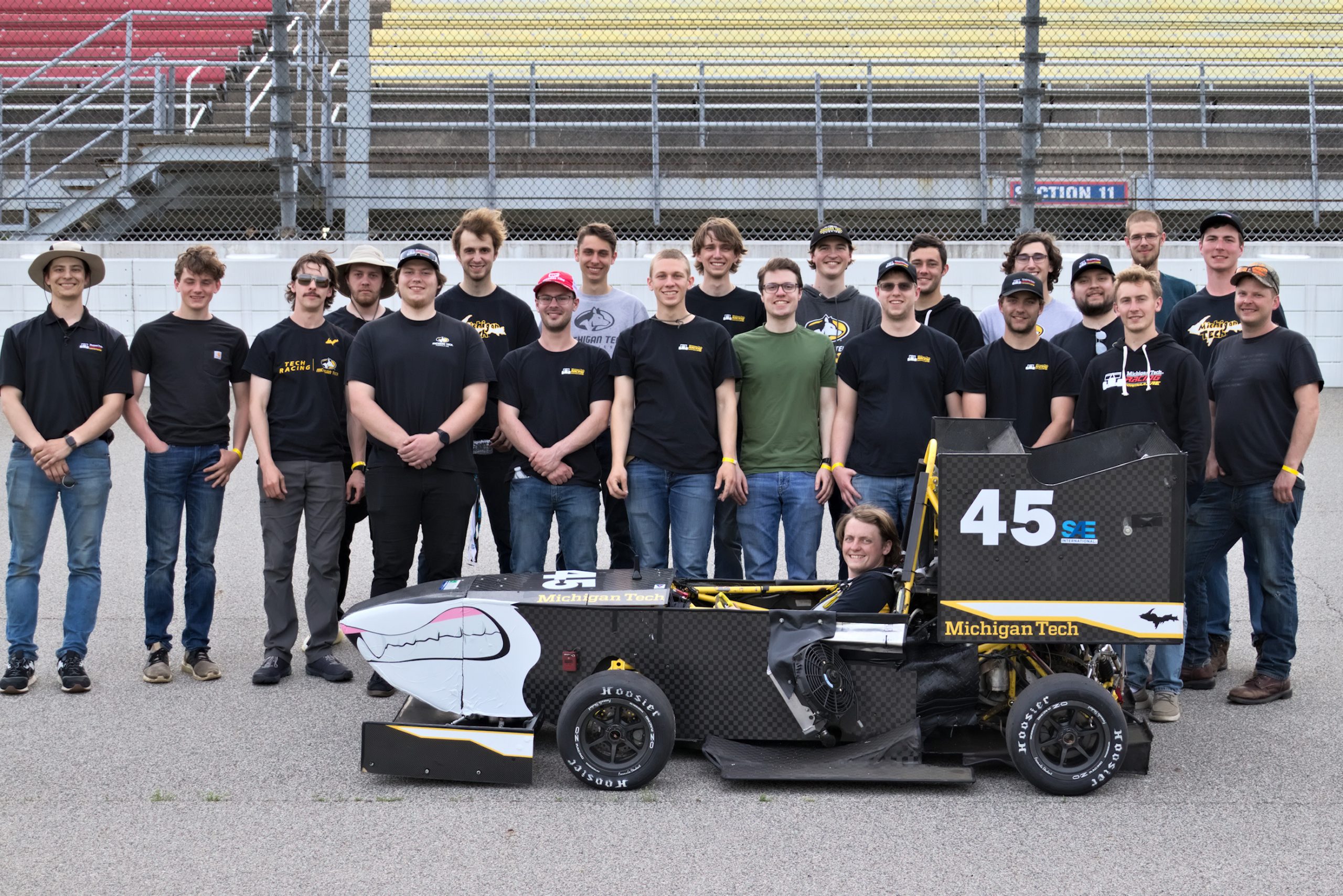
Each year, the team competes at Michigan International Speedway. DeClerck has seen the full range of outcomes: the years when everything clicks, and the car performs beautifully, and the years when unexpected problems force the team to regroup.

Even when it doesn’t work out, it’s great to see them come together and solve problems. I’m most proud of the way they rally around each other.

Jim DeClerck

One early memory remains vivid. “When I first took over, there was a lot of stress and a culture where the chief engineer called all the shots,” he recalls. “I remember being at the competition in the middle of May. It was warm, and the students had been outside all day. They hadn’t planned for food or water. They were hungry, thirsty, and grumpy.”

With nothing else to do in that moment, DeClerck stepped into an unexpected role: making sure the team was fed and hydrated. “It was a matter of ‘first things first.’ It’s amazing how much better things go when people have food and water, and the coffee drinkers had plenty of coffee,” he says with a laugh. “It changed the whole attitude.”

Formula SAE students at their international competition in 2022.

Space and Support

DeClerck believes the environment provided at Michigan Tech is what sets the University’s Formula SAE team apart. “Hundreds of schools have SAE teams,” he says. “But what’s unique here is the structure and support of the Enterprise program.”

He credits the University’s facilities and resources for enabling the team to design and build competitive cars year after year. “We’re extremely fortunate,” he says. “We have more space than most teams and a lot of support to create parts and build a car.” He adds with a laugh, “But like every team, we could always use more money. The running joke in the racing world is, if you want to generate a small fortune in racing, you have to start with a big one.”

When he learned he would receive the Enterprise Distinguished Service Award, DeClerck felt grateful. “It made me think about all the students I’ve worked with, all the competitions, all the late nights,” he says. “I’m proud of what the team has accomplished and grateful to be part of their journey.”


About the Enterprise Program

Michigan Tech’s Enterprise Program offers students a unique, hands-on learning experience that goes beyond the classroom. With more than 25+ Enterprise teams spanning disciplines such as engineering, business, computing, and science, students collaborate on real-world projects sponsored by industry and government partners. Enterprise students develop technical expertise, leadership skills, and teamwork experience—preparing them for success in their careers. Many teams work on cutting-edge innovations, from automotive and aerospace to sustainability and emerging technologies.

Explore the Enterprise Program experience and see how you can get involved! Follow Michigan Tech Enterprise on Facebook, Instagram, and LinkedIn for the latest updates.