Author: Jessie Neece

Enterprise Distinguished Service Awards: Scott Kuhl

The Enterprise Program awards the Enterprise Distinguished Service Awards to recognize the dedication and exceptional contributions of advisors and champions who have played pivotal roles in shaping the program’s success. Each of the award winners has more than 15 years of service within Enterprise, dedicating their time and expertise to guiding teams, ensuring student success, and advancing the program’s discovery-based learning mission.

The recipients of the Enterprise Distinguished Service Award are Jim DeClerck, Scott Kuhl, Erin Smith, and Ruth Archer. This four-part series highlights the contributions of each award recipient.


Dr. Scott Kuhl – Associate Professor, Computer Science and Affiliated Associate Professor, Psychology and Human Factors

Scott Kuhl, associate professor of Computer Science and affiliated associate professor of Psychology and Human Factors, has been shaping the Husky Game Development Enterprise for more than a decade. When he arrived at Michigan Tech in 2009, the Enterprise was advised by Robert Pastel. Kuhl stepped into the advisor role in 2010 and has guided the team ever since, helping it grow into a vibrant, multidisciplinary community where students learn the full lifecycle of video game development.

“For students who want direct experience making video games, Husky Games is the main way to get it at Michigan Tech,” Kuhl says. “The University’s computer science program now includes a game development concentration, and that’s helped strengthen the pipeline.”

A Space Where Students Create What They Love

For Kuhl, the best part of advising Husky Games is watching students bring their ideas to life.

“The final products are fun. Seeing the team be successful — that’s what I enjoy. The goal is to build a game that gets a lot of plays and looks polished.”

Scott Kuhl

Students are drawn to the Enterprise because it gives them a chance to create something meaningful, even if breaking into the gaming industry is notoriously difficult. “One student told me, ‘Husky Games is why I came to Tech,’” Kuhl says. “They do it because they love it.”

Projects That Stand Out

Over the years, Husky Game Development has taken on a wide range of projects, some purely creative and others developed for real clients.

One memorable collaboration came from Matthew Spencer, a Michigan Tech alumnus who runs Yooper Games Studio in Chassell. He provided the team with an existing game, Super Battle Polycars, and asked them to create a mod. The students built Polycar Blitz, which is now available to play on Steam. “We are currently working with Yooper Games again on a new project,” Kuhl says. “It’s a great opportunity for students to get real experience.”

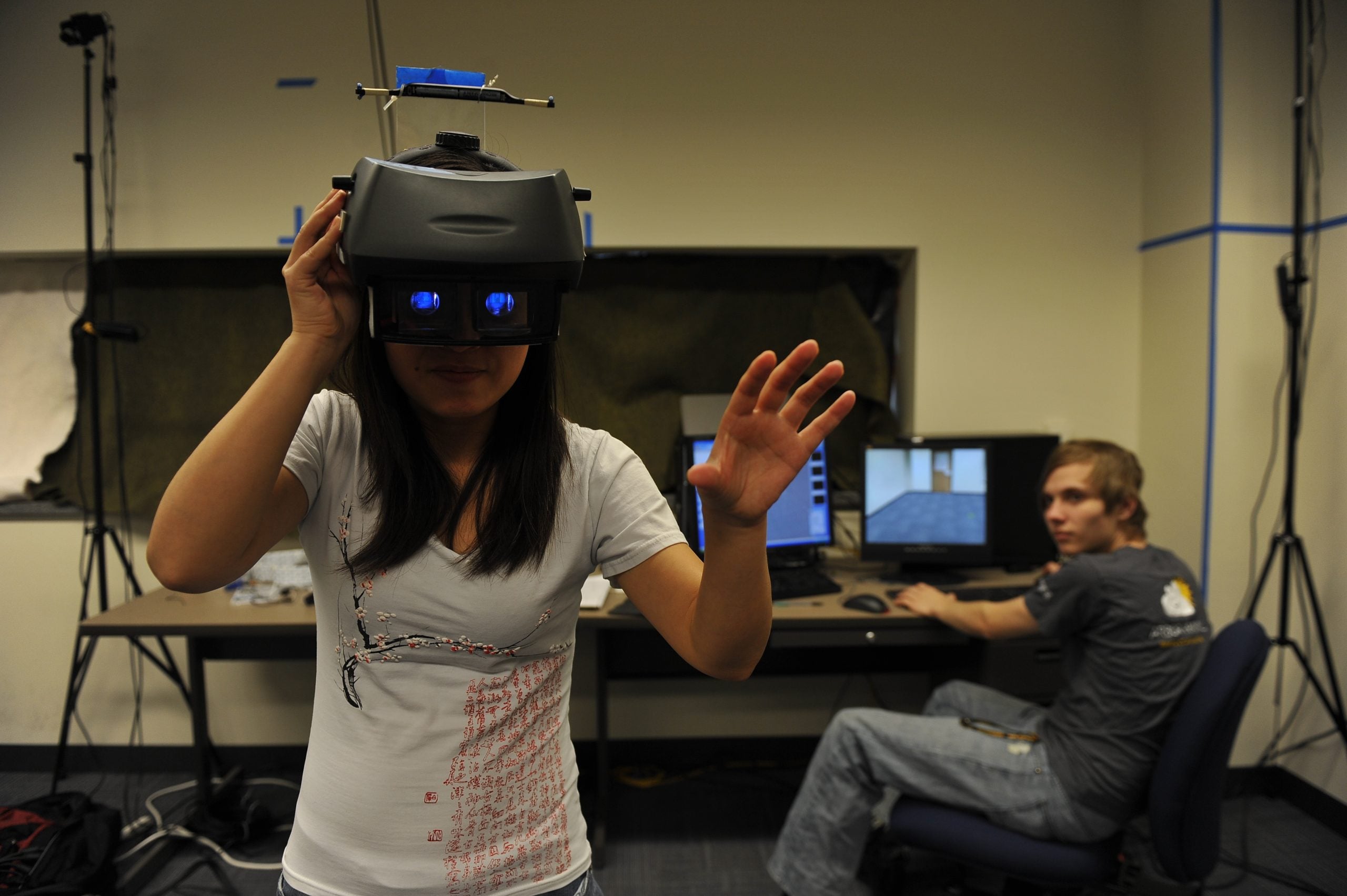
Husky Game Development students exploring the virtual world during a working session in 2016.

The team has also partnered with the Michigan State Police to create a game for community outreach. “Kids like video games, so it made sense,” Kuhl explains. “The initial goal of the game was to showcase things the department did that people were less familiar with, but the game ultimately became a vehicle chase game that runs in a web browser so that it’s easy to use with community outreach. We enjoyed working with the Michigan State Police, making improvements on their feedback, and building a game for them to use.”

Husky Games is one of the few Enterprise teams with limited corporate sponsorship, which gives students creative freedom but also means they must generate their own project ideas. With ten internal teams and good participation from Sound Design majors, the Enterprise has become a collaborative hub for students across disciplines.

Kuhl notes that several alumni have gone on to impressive careers, including Steven Green, who came through Husky Games, works internationally as a technical sound designer in the gaming industry, and teaches courses for Michigan Tech.

Leadership, Iteration, and Community

Kuhl describes his role as “managing managers.” The Enterprise is run by committee, and student leadership is central to its success. With students graduating every year, the Enterprise experiences constant turnover, and new participants must quickly adjust to the demands of effective leadership. “We ask a lot of them,” he says. “But they do a great job.”

“It can be a struggle to manage it all,” he continues, “but every year I make one to three tweaks to help things go better. I look at it like any other university course — you’re always improving.”

He also values the Enterprise’s diversity across majors and years in school. “That mix makes the team stronger.”

Reflecting on the Honor

Receiving the Enterprise Distinguished Service Award gave Kuhl a moment to reflect on the program’s impact. “This is the only way to get experience making games,” he says. “Students learn so much by doing. I’m proud of what they’ve accomplished and grateful to be part of their journey.”


About the Enterprise Program

Michigan Tech’s Enterprise Program offers students a unique, hands-on learning experience that goes beyond the classroom. With more than 25+ Enterprise teams spanning disciplines such as engineering, business, computing, and science, students collaborate on real-world projects sponsored by industry and government partners. Enterprise students develop technical expertise, leadership skills, and teamwork experience—preparing them for success in their careers. Many teams work on cutting-edge innovations, from automotive and aerospace to sustainability and emerging technologies.

Explore the Enterprise Program experience and see how you can get involved! Follow Michigan Tech Enterprise on Facebook, Instagram, and LinkedIn for the latest updates.

Enterprise Distinguished Service Awards: Erin Smith

The Enterprise Program awards the Enterprise Distinguished Service Awards to recognize the dedication and exceptional contributions of advisors and champions who have played pivotal roles in shaping the program’s success. Each of the award winners has more than 15 years of service within Enterprise, dedicating their time and expertise to guiding teams, ensuring student success, and advancing the program’s discovery-based learning mission.

The recipients of the Enterprise Distinguished Service Award are Jim DeClerck, Scott Kuhl, Erin Smith, and Ruth Archer. This four-part series highlights the contributions of each award recipient.


headshot of Erin Smith
Dr. Erin Smith – Teaching Professor in Digital Media and Cinema, Humanities,
Director, Humanities Digital Media Zone, Director, 41 North Film Festival

Students at Michigan Tech have long explored filmmaking through individual courses, but the CinOptic Enterprise gave them something rare — a sustained, real‑world creative environment. Erin Smith, a teaching professor in digital media and cinema, advised CinOptic from its inception, guiding students through ambitious long-arc media projects and collaborative partnerships.

Creating a Space for Creative Work

The idea for CinOptic started as a hybrid engineering‑and‑arts project, but quickly evolved into a fully creative team, drawing students from both the Department of Humanities and the Department of Visual and Performing Arts. It offered students the chance to work on media projects that unfolded over one to three years, mirroring the timelines of real production work.

“Pre‑production, production, post‑production — these things take time,” Smith says, who also serves as director of the Humanities Digital Media Zone and director of the 41 North Film Festival. “CinOptic gave students the space to develop those skills deeply and collaboratively.”

Although CinOptic did not have a corporate sponsor, the team’s model was client‑based work. Students partnered primarily with faculty on grant projects and occasionally with outside clients, such as the National Park Service (NPS). They learned to navigate expectations, deadlines, and accuracy, lessons Smith reinforced with a line they all remember: “‘If you’re not worrying, I am.’ Part of the job was getting them to worry about it, to remember that someone is waiting for this project and they gave money and resources to ensure it gets done.”

Fieldwork and Global Experiences

CinOptic’s projects often took students far beyond campus. A project with Adjunct Professor Thomas Oommen took students to Alaska and New Mexico, documenting field research in challenging environments.

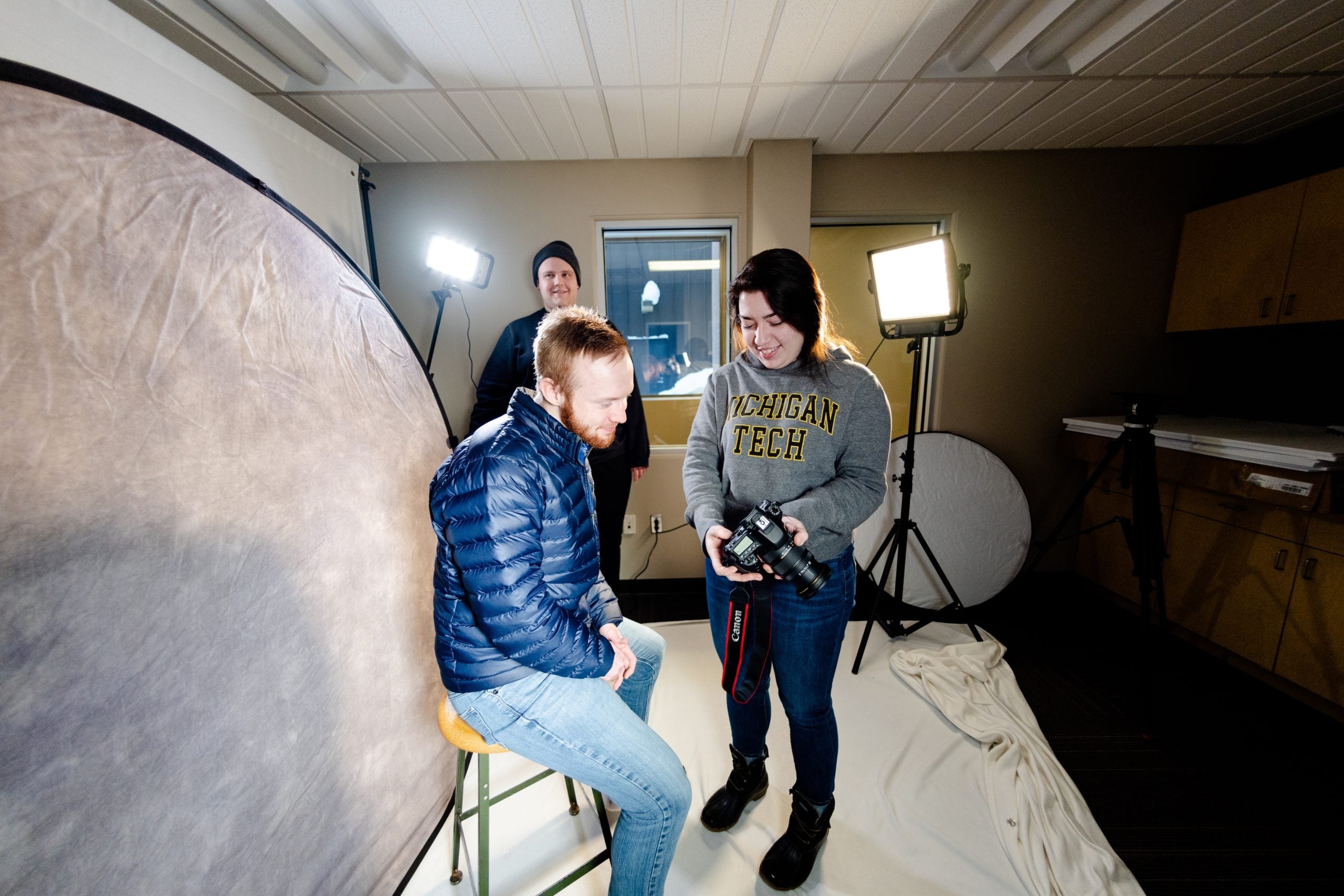
CinOptic students working behind the scenes on a project in 2019.

One of the most meaningful collaborations came through Professor Caryn Heldt, who wrote a CinOptic student directly into an NSF grant. That intentional partnership led the team to Denmark (a trip Smith joined) and Singapore, where they documented research and learned firsthand how communication shapes scientific impact.

CinOptic also completed a three‑year project with the NPS to produce videos for Isle Royale. After the pandemic shutdown, Smith and three students traveled to the island to finish filming, an experience she describes as unforgettable. 

Working with researchers required students to learn quickly and communicate precisely. They developed scripts in close collaboration with faculty, including Associate Professor Erika Hersch-Green, ensuring that complex ideas were conveyed accurately and clearly.

A Lasting Community

Across nearly two decades, CinOptic became a community defined by leadership, creativity, and shared purpose, and Smith remains grateful for the students who shaped the team.

“I had so many excellent students who gave their time and commitment. I’m still in touch with many of them. The relationships we built in Enterprise are different from what happens in a classroom, and I’m very thankful for them.”

Erin Smith

CinOptic shaped many students during its long run, leaving a lasting imprint on Michigan Tech’s creative landscape. Under Smith’s guidance, it became a place where storytelling, collaboration, and curiosity could thrive.


About the Enterprise Program

Michigan Tech’s Enterprise Program offers students a unique, hands-on learning experience that goes beyond the classroom. With more than 25+ Enterprise teams spanning disciplines such as engineering, business, computing, and science, students collaborate on real-world projects sponsored by industry and government partners. Enterprise students develop technical expertise, leadership skills, and teamwork experience—preparing them for success in their careers. Many teams work on cutting-edge innovations, from automotive and aerospace to sustainability and emerging technologies.

Explore the Enterprise Program experience and see how you can get involved! Follow Michigan Tech Enterprise on Facebook, Instagram, and LinkedIn for the latest updates.

Enterprise Distinguished Service Awards: Ruth Archer

The Enterprise Program awards the Enterprise Distinguished Service Awards to recognize the dedication and exceptional contributions of advisors and champions who have played pivotal roles in shaping the program’s success. Each of the award winners has more than 15 years of service within Enterprise, dedicating their time and expertise to guiding teams, ensuring student success, and advancing the program’s discovery-based learning mission.

The recipients of the Enterprise Distinguished Service Award are Jim DeClerck, Scott Kuhl, Erin Smith, and Ruth Archer. This four-part series highlights the contributions of each award recipient.


headshot of Ruth Archer
Dr. Ruth Archer – Director of Continuous Improvement

Ruth Archer, director of Continuous Improvement at Michigan Tech, has spent more than a decade helping Enterprise students develop the mindsets and methods that shape effective engineers, scientists, and professionals. She began teaching her first Enterprise course in 2011 and gradually expanded her involvement, eventually developing and teaching two classes focused on lean principles and the culture of continuous improvement.

Her work with Enterprise has influenced not only her students but also her own approach to teaching. “The program has shaped my thinking about instruction,” Archer says. “I’ve learned how to better support students — how to interact with them, how to design assignments, what works and what doesn’t. It’s really helped me learn how to teach.” That learning, she notes, has carried over into her broader continuous improvement work across campus.

Today, Archer teaches ENT 3982: Continuous Improvement Using Lean Principles and ENT 3983: Culture of Continuous Improvement, courses that give students tools they can apply immediately to their Enterprise projects.

Helping Students Become Who They’re Meant to Be

For Archer, the most rewarding part of working with Enterprise students is witnessing their growth. “I’m grateful to have the opportunity to work with students,” she says. “Many of my colleagues don’t get that chance, and they don’t get to know students very well.”

Enterprise students, she notes, arrive already oriented toward action. “They’re not passively waiting to be handed information. They’re wrestling with real problems. What we talk about in class, they can apply immediately.”

Archer sees her role as guiding students in “the process of becoming” — becoming engineers, scientists, professionals, and thoughtful contributors to their fields.

“It’s amazing to influence, even slightly, how they think about the world they’re moving into and how they interact with it. To help them be better, do better, and be more successful.”

Ruth Archer

Making Problems Visible — and Solvable

One of Archer’s most memorable experiences came from helping a student team that had fallen significantly behind on a high‑stakes project with an external sponsor. “They were seven weeks behind schedule and really worried about their milestones,” she recalls.

She introduced them to a core continuous improvement tool: a visual kanban board that made the project’s status visible at a glance. “It wasn’t about blame,” she says. “It was about seeing where resources needed to be redirected.”

The impact was immediate. By the end of the semester, the team had reduced their delay from seven weeks to three. “They weren’t mired in an unsolvable situation anymore,” Archer says. “They were moving forward.”

Creativity, Communication, and Confidence

Another standout memory comes from a communications course Archer previously taught. The course included a simulated conference experience that she brought to life, collaborating with co-instructors teaching other sections of the same course. Students formed teams, selected topics, submitted proposals, wrote papers, completed reviews, and delivered polished presentations.

students talking to other students about the Enterprise Program
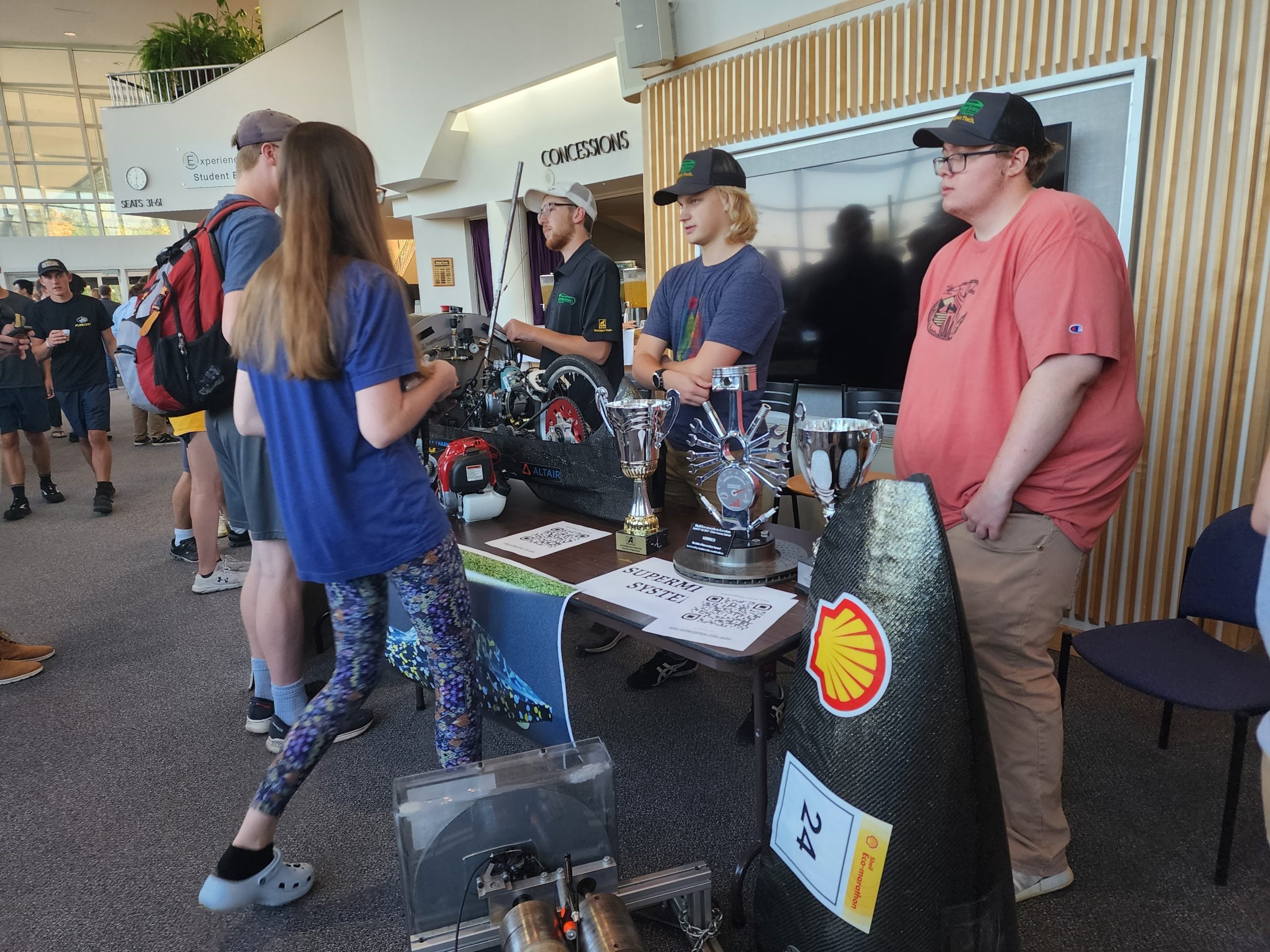
Student exploring the Enterprise Program at Enterprise Day in Fall of 2023 – just a few of Ruth’s future students.

The topics ranged from practical to wildly imaginative: speed‑reading techniques, musical storytelling, American Sign Language, how accents shape communication, communicating with dogs and their handlers — even communicating with extraterrestrials. One student developed that extraterrestrial communication talk into a presentation for NASA and ultimately landed a job.

“It brought out all of their skills,” Archer says. “And it showed them what it really takes to prepare something professional.”

A Community of Practice

Archer also values the relationships she has built through Enterprise. “I’ve had the opportunity to create and share materials with other instructors, and many of them have become friends,” she says. “We’ve built a community of practice, pushing the curriculum forward together. It’s the same model we use in continuous improvement. No one person is the sole source of knowledge.”

Reflecting on the Honor

Receiving the Enterprise Distinguished Service Award gave Archer a moment to reflect on the program’s impact. “Enterprise gives students a chance to apply what they’re learning in meaningful ways,” she says. “Being part of their journey — and part of a community that supports them — has been incredibly rewarding.”


About the Enterprise Program

Michigan Tech’s Enterprise Program offers students a unique, hands-on learning experience that goes beyond the classroom. With more than 25+ Enterprise teams spanning disciplines such as engineering, business, computing, and science, students collaborate on real-world projects sponsored by industry and government partners. Enterprise students develop technical expertise, leadership skills, and teamwork experience—preparing them for success in their careers. Many teams work on cutting-edge innovations, from automotive and aerospace to sustainability and emerging technologies.

Explore the Enterprise Program experience and see how you can get involved! Follow Michigan Tech Enterprise on Facebook, Instagram, and LinkedIn for the latest updates.

Enterprise Distinguished Service Awards: Jim DeClerck

The Enterprise Program awards the Enterprise Distinguished Service Awards to recognize the dedication and exceptional contributions of advisors and champions who have played pivotal roles in shaping the program’s success. Each of the award winners has more than 15 years of service within Enterprise, dedicating their time and expertise to guiding teams, ensuring student success, and advancing the program’s discovery-based learning mission.

The recipients of the Enterprise Distinguished Service Award are Jim DeClerck, Scott Kuhl, Erin Smith, and Ruth Archer. This four-part series highlights the contributions of each award recipient.


Dr. James DeClerck – Professor of Practice, Mechanical and Aerospace Engineering

Jim DeClerck, a Professor of Practice in the Department of Mechanical and Aerospace Engineering, has shaped Michigan Tech’s Formula SAE Enterprise for more than a decade. After earning his PhD from Michigan Tech in 1991, he spent 18 years at General Motors working in vehicle development. When he returned to campus in 2009, he brought with him a deep understanding of applying engineering fundamentals.

DeClerck began advising Formula SAE in 2010. “When I took over Formula, my goal was to help the students organize themselves like a real car company,” he says. “Documenting decisions, understanding tradeoffs, and thinking about process. That’s what makes better cars, and competition judges ask about their development process.”

Growth Opportunity

For DeClerck, the students’ energy is the best part of the work. “My favorite part is seeing their passion,” he says. “Every year, there are three or four members who are just so excited to develop and build a car. They get to build a race car with other people’s money. It’s a rare opportunity, as well as an obligation and a privilege. They use that money to learn.”

Formula SAE, he notes, gives students the chance to apply classroom knowledge, run a project like a small company would, and experience the full engineering lifecycle, from concept to competition.

Care and Feeding

Each year, the team competes at Michigan International Speedway. DeClerck has seen the full range of outcomes: the years when everything clicks, and the car performs beautifully, and the years when unexpected problems force the team to regroup.

Even when it doesn’t work out, it’s great to see them come together and solve problems. I’m most proud of the way they rally around each other.

Jim DeClerck

One early memory remains vivid. “When I first took over, there was a lot of stress and a culture where the chief engineer called all the shots,” he recalls. “I remember being at the competition in the middle of May. It was warm, and the students had been outside all day. They hadn’t planned for food or water. They were hungry, thirsty, and grumpy.”

With nothing else to do in that moment, DeClerck stepped into an unexpected role: making sure the team was fed and hydrated. “It was a matter of ‘first things first.’ It’s amazing how much better things go when people have food and water, and the coffee drinkers had plenty of coffee,” he says with a laugh. “It changed the whole attitude.”

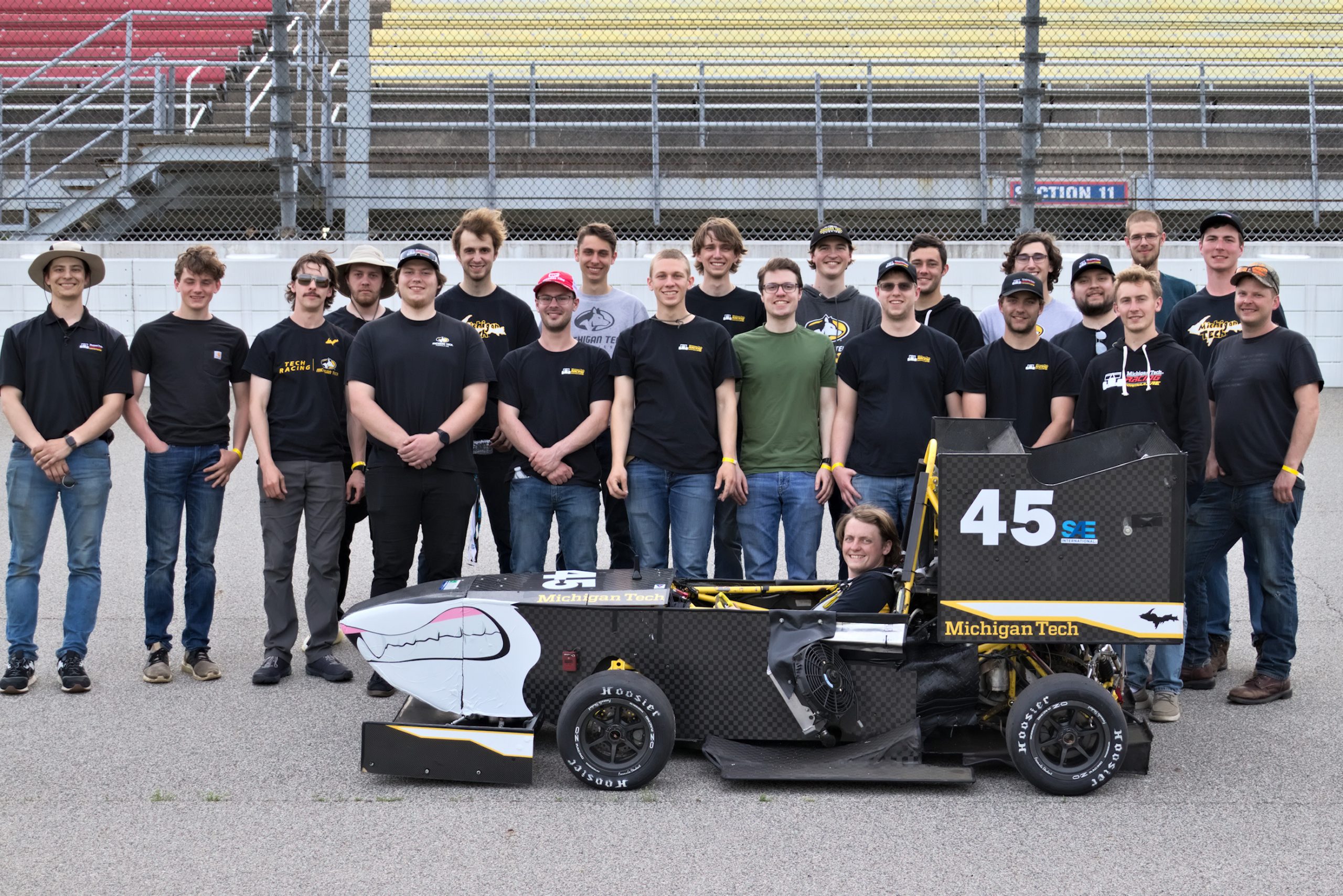
Formula SAE students at their international competition in 2022.

Space and Support

DeClerck believes the environment provided at Michigan Tech is what sets the University’s Formula SAE team apart. “Hundreds of schools have SAE teams,” he says. “But what’s unique here is the structure and support of the Enterprise program.”

He credits the University’s facilities and resources for enabling the team to design and build competitive cars year after year. “We’re extremely fortunate,” he says. “We have more space than most teams and a lot of support to create parts and build a car.” He adds with a laugh, “But like every team, we could always use more money. The running joke in the racing world is, if you want to generate a small fortune in racing, you have to start with a big one.”

When he learned he would receive the Enterprise Distinguished Service Award, DeClerck felt grateful. “It made me think about all the students I’ve worked with, all the competitions, all the late nights,” he says. “I’m proud of what the team has accomplished and grateful to be part of their journey.”


About the Enterprise Program

Michigan Tech’s Enterprise Program offers students a unique, hands-on learning experience that goes beyond the classroom. With more than 25+ Enterprise teams spanning disciplines such as engineering, business, computing, and science, students collaborate on real-world projects sponsored by industry and government partners. Enterprise students develop technical expertise, leadership skills, and teamwork experience—preparing them for success in their careers. Many teams work on cutting-edge innovations, from automotive and aerospace to sustainability and emerging technologies.

Explore the Enterprise Program experience and see how you can get involved! Follow Michigan Tech Enterprise on Facebook, Instagram, and LinkedIn for the latest updates.

Michigan Tech’s Advanced Snowmobile Enterprise Team Wins First Overall in International Competition

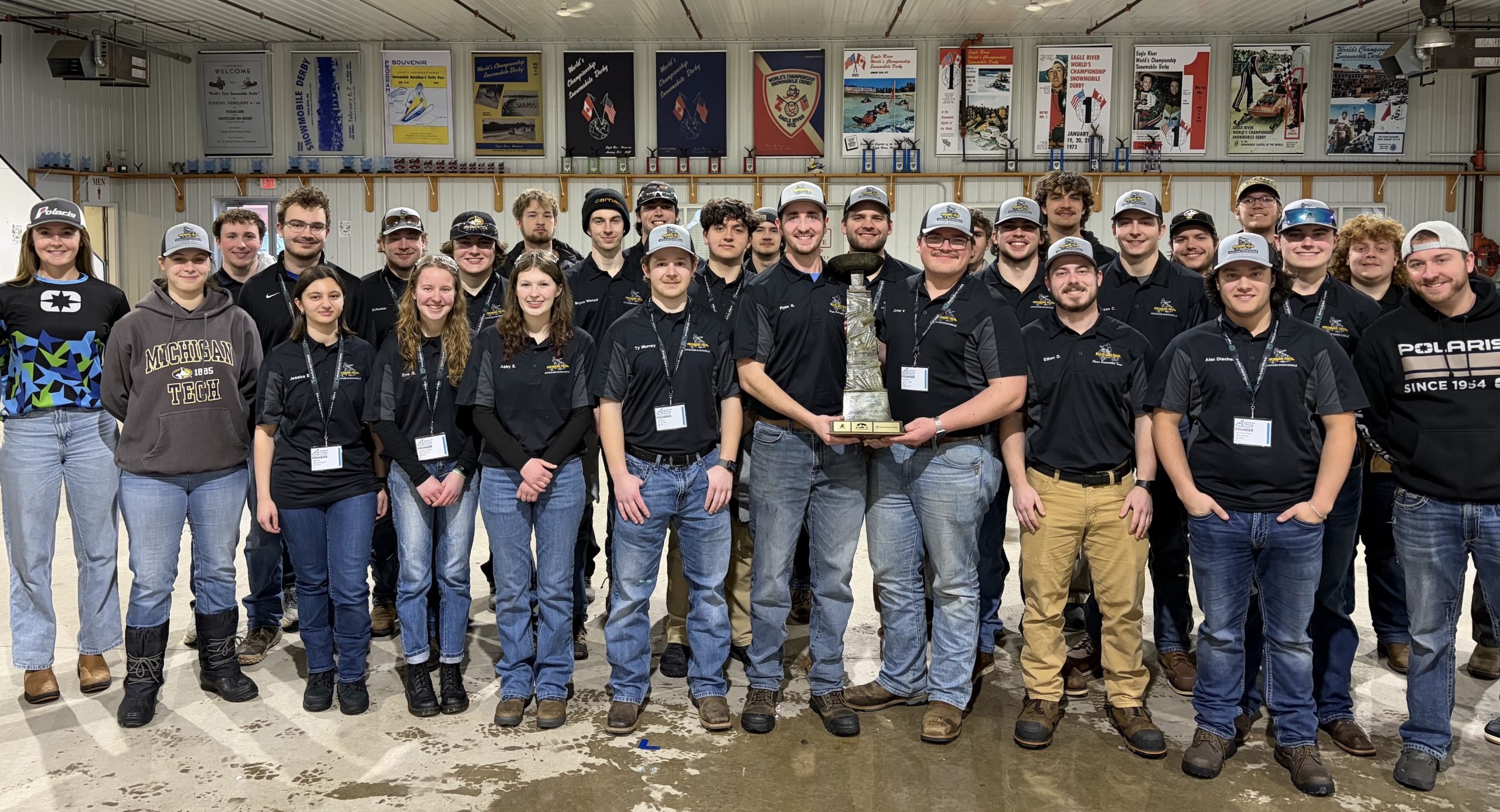
The Michigan Tech Advanced Snowmobile Enterprise team returned to Eagle River, Wisconsin, with a new machine, a growing roster, and a compressed timeline. They left with a first-place overall finish.

Competing at the Advanced Snowmobile Competition, held at the World Championship Derby Complex in Eagle River, the team faced eight collegiate programs from across the United States and Canada. The annual event challenges students to redesign and refine production snowmobiles to reduce emissions and noise—without sacrificing performance or rider experience.

This year marked a turning point for the competition itself. After SAE International stepped away from organizing the event following last year’s competition, a newly formed Advanced Snowmobile organization assumed leadership to continue the long-standing collegiate tradition.

Michigan Tech rose to the occasion.

A New Platform. A Shorter Timeline.

One of the team’s biggest challenges this year wasn’t just engineering—it was time.

With the competition moved nearly a month earlier than in previous years, the team had roughly five months to redesign, modify, and test an entirely new platform: a 2025 Polaris Switchback XC 850.

The transition was significant. Their previous chassis—a Yamaha Viper—had aged out of eligibility. Shifting from a four-stroke to a two-stroke snowmobile introduced new calibration strategies, new integration challenges, and a steep learning curve.

At the same time, facility closures limited shop access during critical build phases. Then, just five weeks before the competition, the team added 12 new members—bringing the total to 31 students.

That meant finishing the build while onboarding nearly half the team.

Long nights followed. Stressful weeks. Accelerated learning.

But the team pressed forward.

Engineering a 60% Emissions Reduction

The results speak for themselves.

Through a custom-designed, in-house-built muffler featuring an embedded catalytic converter and custom engine calibration performed on the team’s dyno in the Advanced Technology Development Complex (ATDC), the team achieved a 60% reduction in measurable emissions compared to a stock comparable snowmobile.

That performance earned the Advanced Snowmobile Enterprise first place in Emissions, awarded to the team with the largest relative decrease from baseline production levels.

The team also captured first place in Technical Design Paper, a professional engineering report submitted prior to the competition outlining design decisions, testing data, and validation methods.

Winning in the Business Arena

In a breakthrough moment, the team also earned first place in the Business/Sales Presentation category.

Historically known for being highly technical, the team elevated its communication strategy this year—successfully articulating target market, pricing structure, consumer value, and how their innovations translate beyond the test bench.

The win reflects growth not only as engineers, but as professionals prepared to communicate ideas to industry.

First Overall

When final scores were tallied, Michigan Tech’s Advanced Snowmobile Enterprise placed first overall, successfully defending last year’s title.

For team president Carter Vake, the victory represents more than a trophy.

“This win means a lot to the team and I, along with alumni of the enterprise,” said Vake. “We had a lot working against us this year, with a lot of unforeseen challenges. This win shows the members—especially the new members—that with enough time and dedication, the sky is the limit and anything can be achieved. It’s not going to be easy, and it’s not supposed to be easy.”

The competition tested more than mechanical systems. It tested resilience, leadership, and trust.

Vake sees this season as a launching point.

“I am very excited to see where the team goes from here and what they come up with next. I am especially excited to see our hybrid snowmobile operational. The hybrid team is passionate, and I can’t wait to see what they do.”

Beyond the technical achievements, the experience reflects something uniquely Michigan Tech.

Enterprise has been an amazing experience and something that is uniquely Tech. Not only would I not have the hands-on, leadership, and engineering experience that I have gained if Enterprise didn’t exist, but I wouldn’t have some of my closest friends. If I were talking with someone new to Michigan Tech, I would tell them to get involved as soon as possible—whether that be in a club or an Enterprise; it opens up a world of possibilities.”

Carter Vake ‘26, Mechanical Engineering

Cleaner. Quieter. More efficient.

And built by students who proved that even under pressure, innovation doesn’t stall.

It accelerates.

Celebrate Student Innovation at Michigan Tech’s 2026 Design Expo

Each spring, Michigan Tech students take what they have learned in classrooms, labs, and team spaces and bring it fully to life. On Tuesday, April 14, the campus community and the public are invited to see that work firsthand at Michigan Tech’s Design Expo, a signature event that highlights the creativity, technical skill, and persistence of our undergraduate students.

Design Expo showcases more than 70 Enterprise, Senior Design, and capstone projects representing every college at Michigan Tech. Together, these projects tell a powerful story about what our students are capable of when they are given meaningful problems to solve, real-world constraints to work within, and the freedom to innovate.

Share Your Work, Tell Your Story: Participate as a Student

a student explains his research poster to a person judging
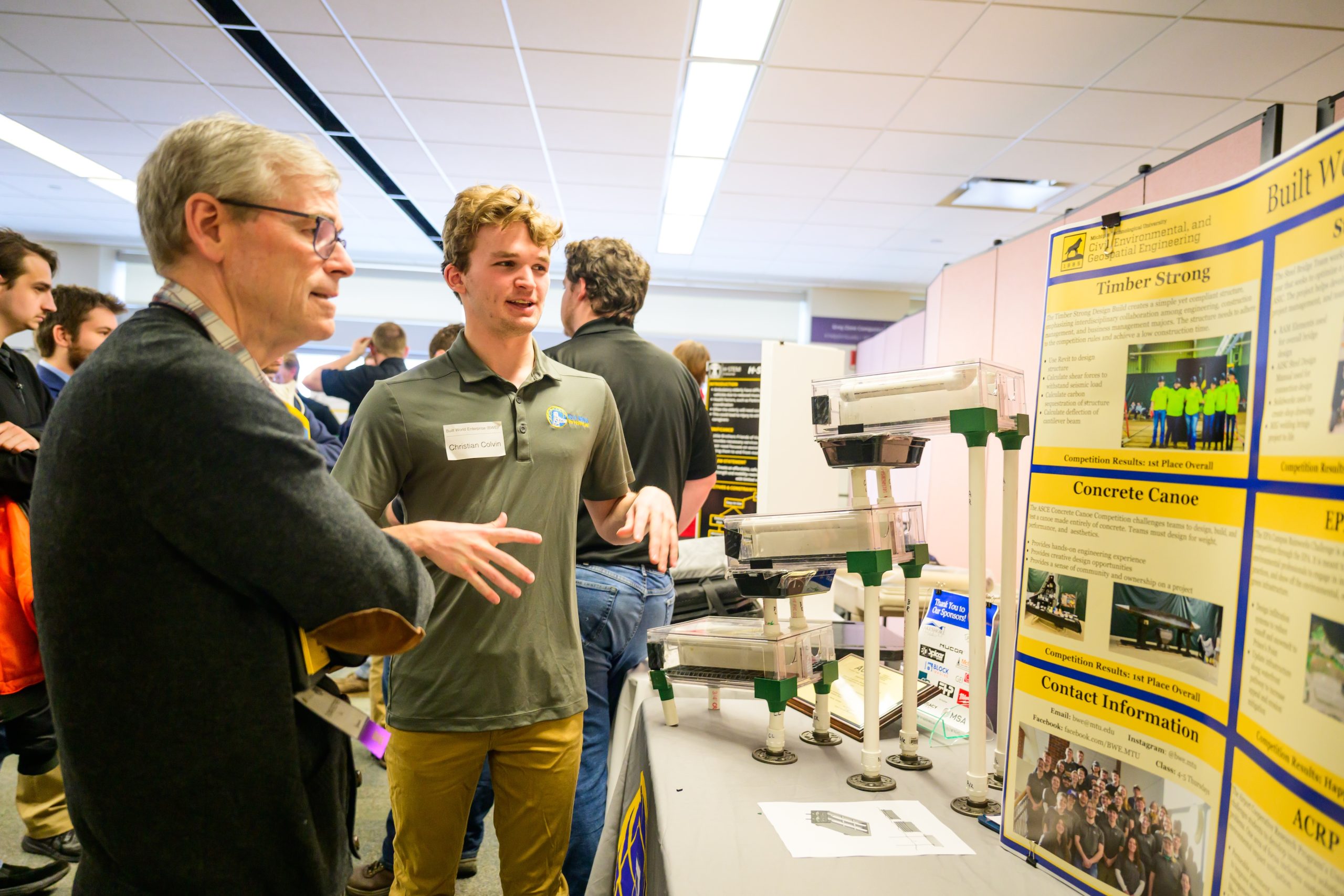
A Built World Enterprise student explains their project to one of our Design Expo judges

For students, Design Expo is more than a showcase—it is a milestone. It is an opportunity to step back and see the full scope of their work, often after months or years of design, testing, iteration, and teamwork. Presenting at Design Expo allows students to practice clearly communicating complex ideas, defend design decisions, and demonstrate professionalism to audiences that include industry leaders, alumni, and community members.

Students also receive valuable feedback from judges who bring industry and professional perspectives into the conversation. These interactions help students refine their thinking, gain confidence, and better understand how their work translates beyond the classroom. For many, Design Expo is their first experience presenting at a professional-level exhibition—and a moment that affirms their growth as emerging engineers, designers, and problem-solvers.

Students interested in participating can register their project through March 16. This is a chance to highlight hard work, celebrate collaboration, and share accomplishments with a broad and engaged audience.

Help Shape the Next Generation of Professionals: Serve as a Design Expo Judge

Design Expo would not be possible without the time, expertise, and generosity of its judges. Industry professionals, alumni, and community members who serve as judges play a vital role in shaping the student experience.

Judging offers a meaningful way to give back—to support hands-on, discovery-based learning and to help guide the next generation of professionals. Judges bring real-world insight to student projects, offer constructive feedback, and share knowledge that students will carry forward into their careers. At the same time, judges have the opportunity to reconnect with Michigan Tech, build new professional relationships, and witness the remarkable talent emerging from today’s classrooms and project teams.

Those interested in judging are encouraged to learn more and sign up to participate.

Experience Innovation in Action: Attend Design Expo

For attendees, Design Expo offers a rare glimpse into the day-to-day work happening behind the scenes at Michigan Tech. The projects on display are ambitious, thoughtful, and often surprising—addressing real challenges through creativity, technical excellence, and collaboration.

Whether you are an alumnus, industry partner, community member, or prospective student, Design Expo is a chance to see what Michigan Tech students are building, testing, and imagining. It is a celebration of learning made visible—and a reminder of the impact that student-driven innovation can have far beyond campus.

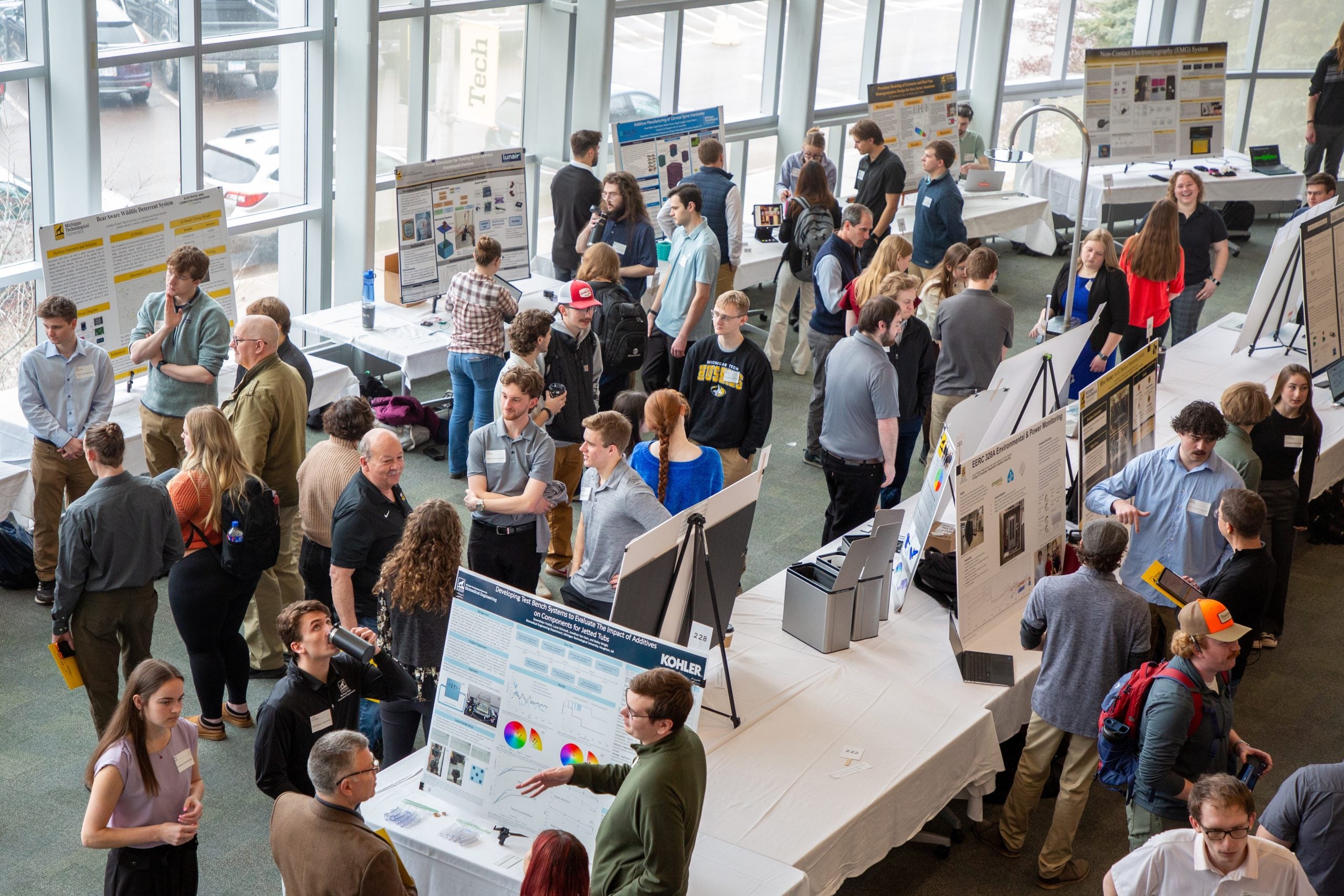
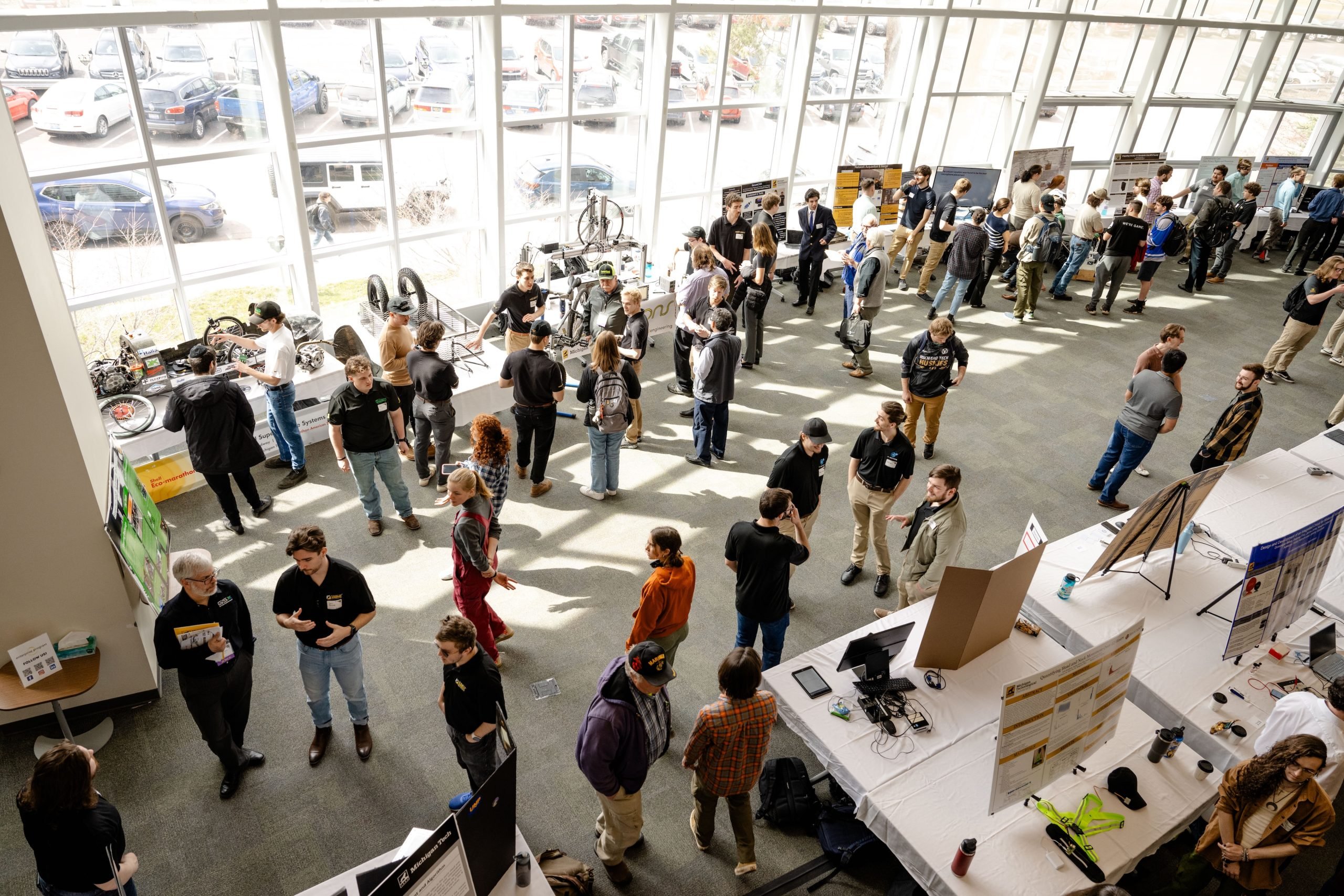
overhead view of the design expo with students standing near their presentation tables
Design Expo celebrated its 25th anniversary in 2025

Event Details

Design Expo

Tuesday, April 14, 2026 | 10 a.m.–2 p.m.
Van Pelt and Opie Library (First Floor)
Memorial Union Building Ballroom

A reception and awards ceremony will follow from 2:30–4:30 p.m. at the Rozsa Center for the Performing Arts.

All events are free and open to the public.

We invite you to join us in celebrating the dedication, ingenuity, and hard work of Michigan Tech students at Design Expo. Come be inspired by what they are creating—and by what the future holds.

Michigan Tech Enterprise Program Receives Equipment Upgrades, Expands Capabilities with Support from Energy Company, Aramco

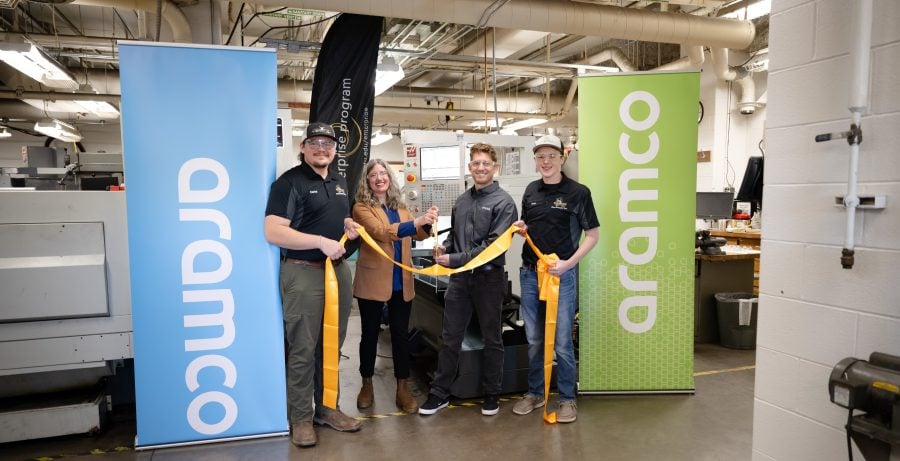
Dr. Marika Seigel and Aramco’s Andrew Baur cut a yellow ribbon with Michigan Tech students in the MMET Machine Shop
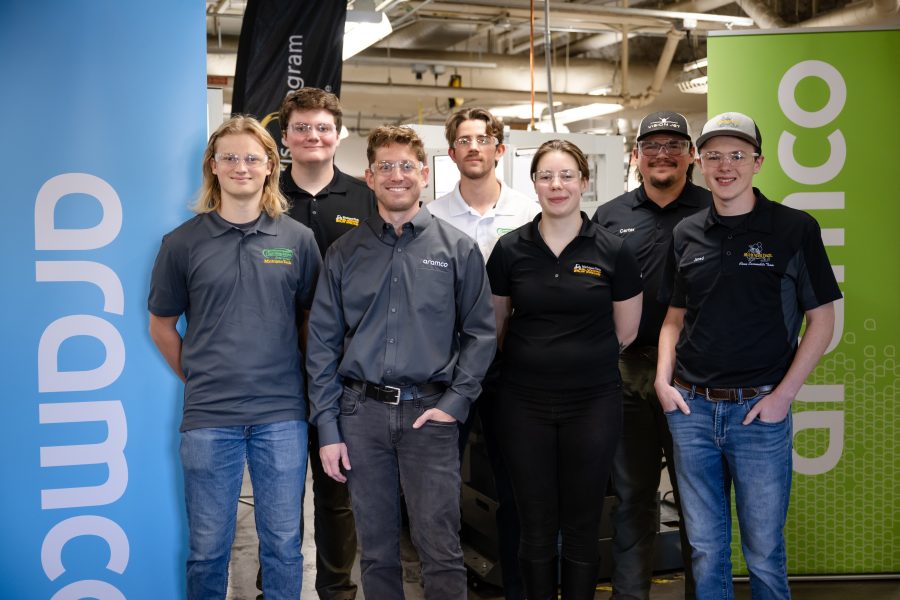
Dr. Marika Seigel and Aramco’s Andrew Baur join Michigan Tech students to celebrate new lab equipment that expands hands-on learning for the university’s Enterprise Program in the MMET Machine Shop and ATDC lab.

On Thursday, October 9, Aramco Americas (Aramco) leaders, University faculty, staff, and students gathered in the MMET Machine Shop at Michigan Technological University for a ribbon-cutting ceremony, marking a new chapter in hands-on, experiential learning for the Enterprise Program

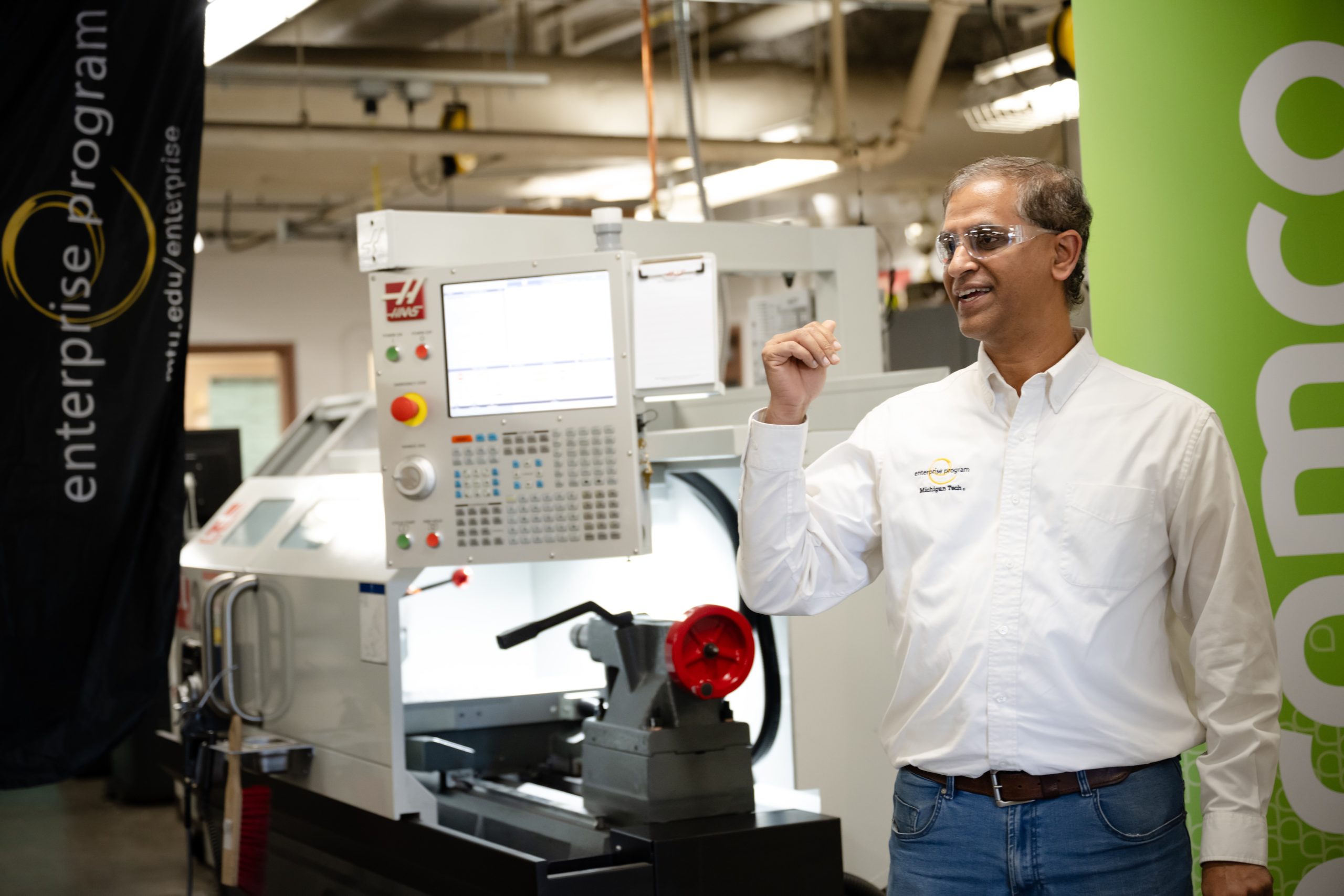
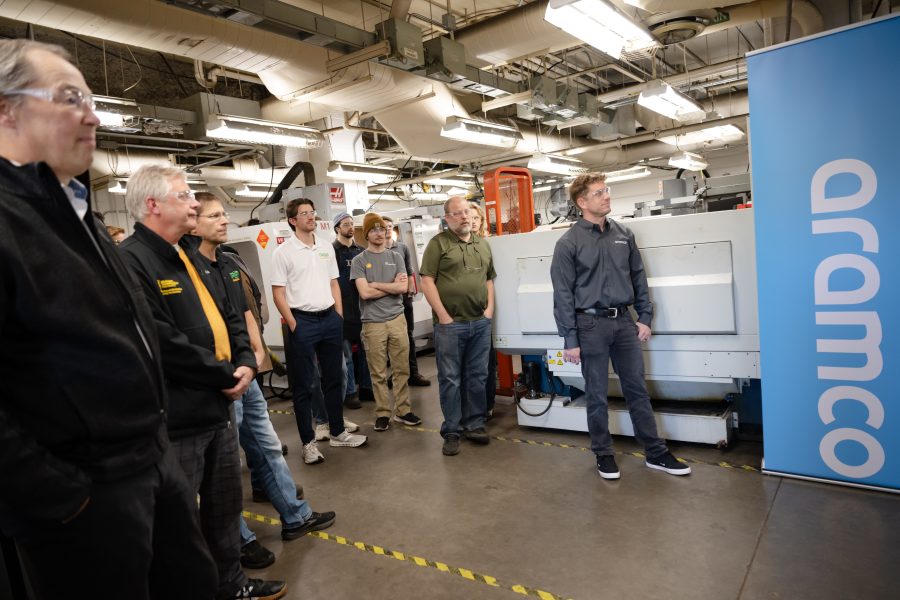
Nagesh Hatti standing in front of the new CNC lathe welcomes everyone
Enterprise Program Director Nagesh Hatti kicks off the ribbon-cutting event in front of the new CNC lathe, marking expanded experiential learning opportunities for Michigan Tech students.

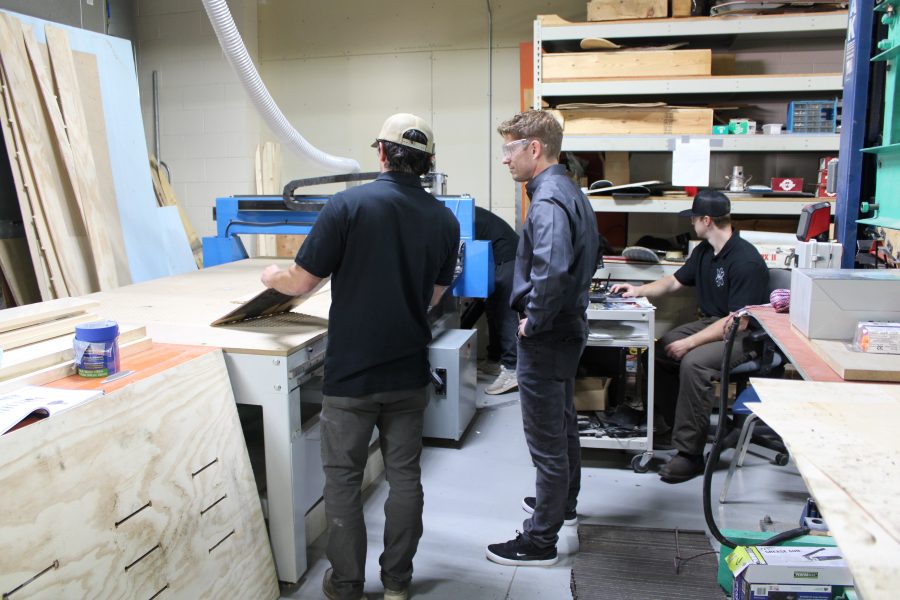
Michigan Tech was able to add two significant pieces of equipment to its Enterprise lab spaces thanks to Aramco’s support: a ShopSabre RC8 CNC router and a HAAS TL-2 CNC Toolroom lathe. The CNC router uses computer-controlled cutting to produce highly accurate parts from wood, plastics, or metal, and was co-funded with a contribution from the Mechanical and Aerospace Engineering (MAE) department. The CNC lathe enables users to turn parts up to 16 inches in diameter and 4 feet in length, and was co-funded with support from the Manufacturing and Mechanical Engineering Technology (MMET) department. Together, these machines give students access to industry-grade tools for designing and fabricating parts, molds, and prototypes with greater precision and efficiency. 

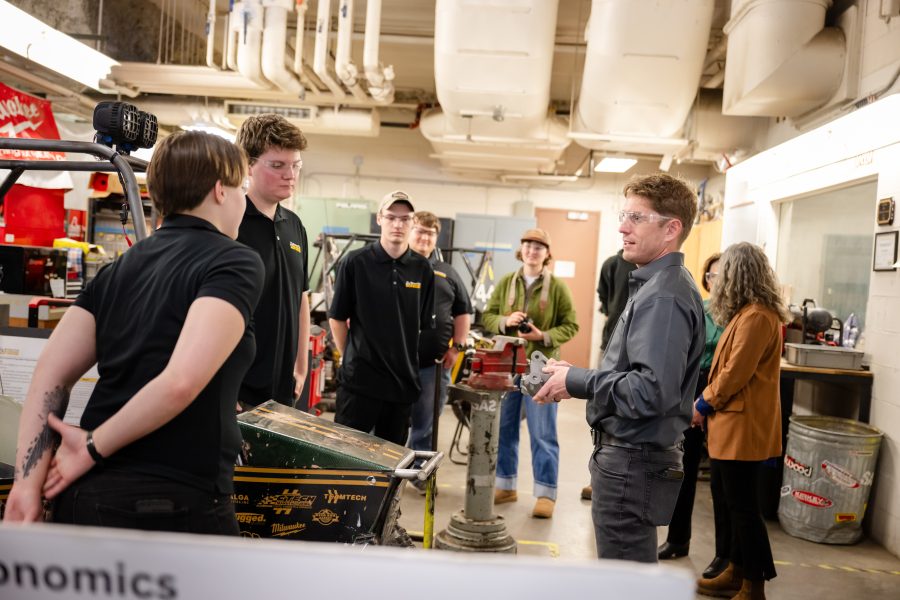
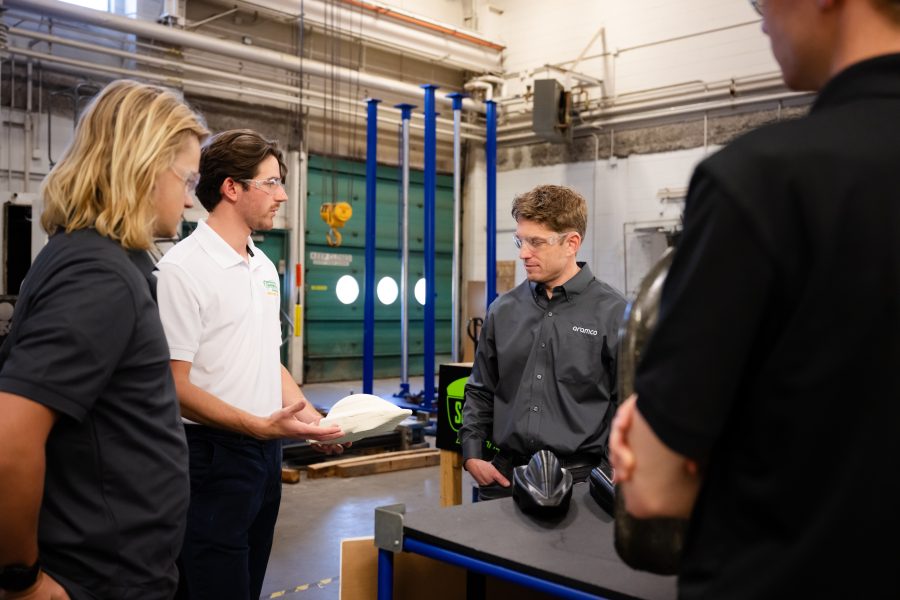
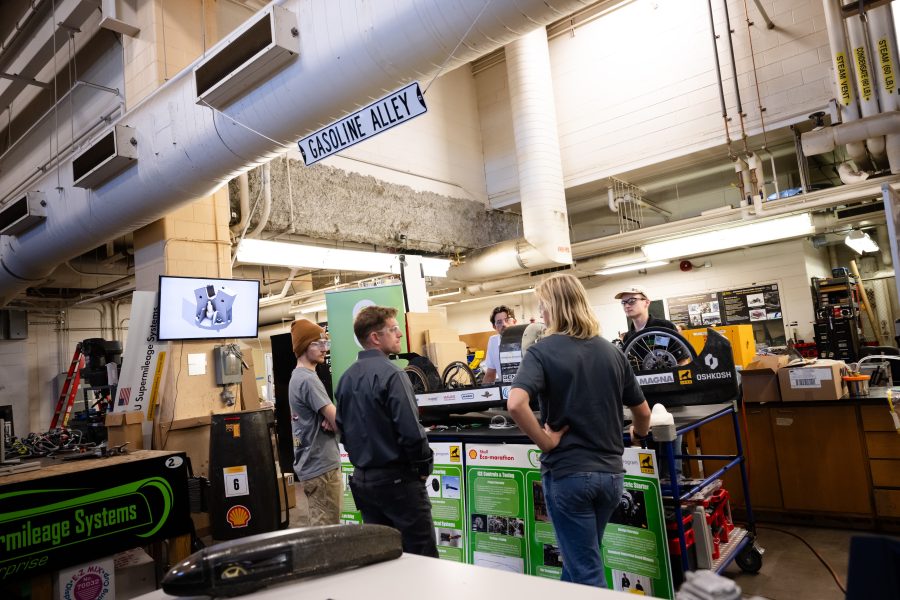
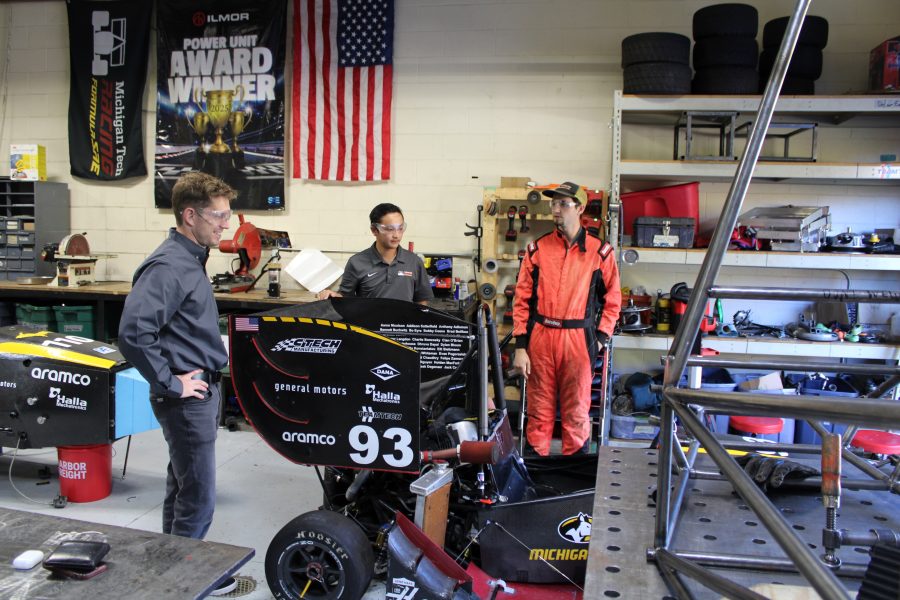
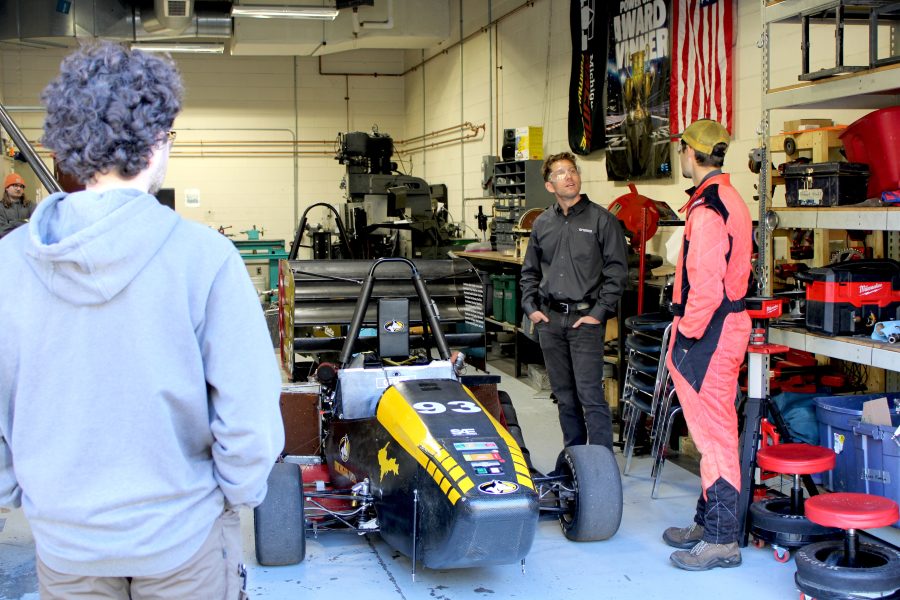
Students led faculty, staff, and guests on a tour of the MMET Machine Shop and the Formula SAE Enterprise lab in the Advanced Technologies Development Center (ATDC), highlighting how they are using the new equipment made possible by Aramco’s support.

For the nearly 1,500 students who participate in Enterprise each year, these tools mean more than just state-of-the-art equipment. They represent greater confidence in design, higher-quality prototypes, and expanded opportunities to turn ideas into reality.

The Impact at Michigan Tech

Enterprise, Michigan Tech’s signature experiential program, brings together students from across disciplines to work on industry-sponsored projects, from advanced vehicles to consumer products. The program depends on collaborative lab spaces where ideas are tested, refined, and built.

“Experiential learning is at the heart of what the Enterprise Program does best, and these lab upgrades give our students new opportunities to take their ideas from concept to reality. We’re grateful for Aramco’s support, which helps us prepare students with the technical and leadership skills needed in today’s workforce.”

Nagesh Hatti, director of the Enterprise Program

Already, Enterprise teams are seeing results. For BoardSport Technologies Enterprise, the new equipment is transforming the way students design and manufacture skis, snowboards, and wakeboards.

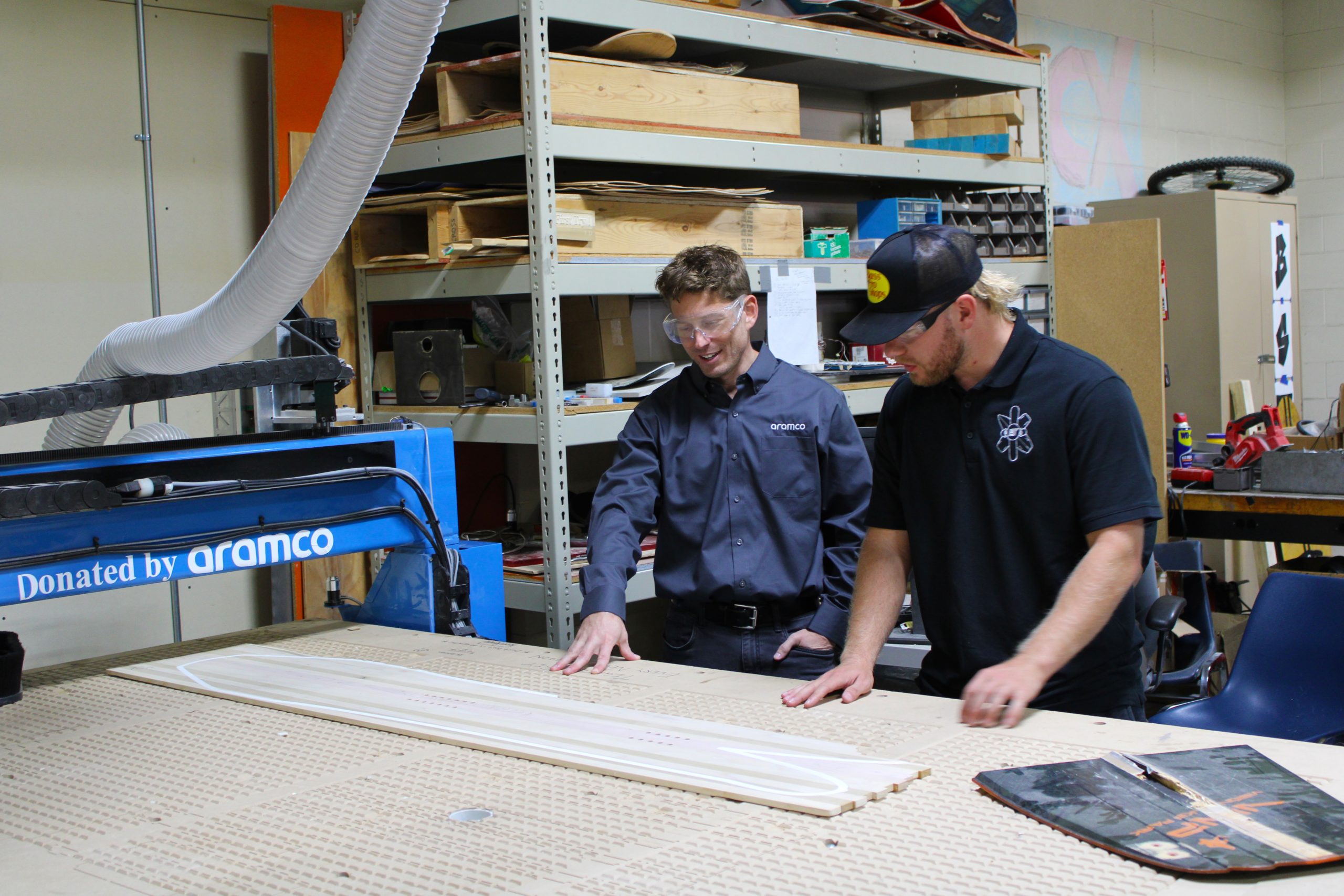
A Michigan Tech student demonstrates the new CNC lathe to Aramco's Andrew Baur
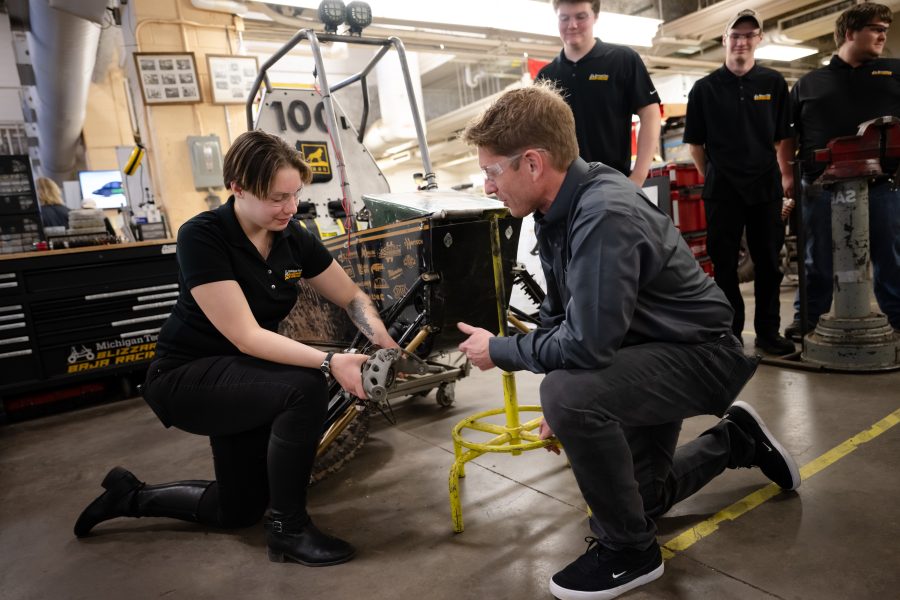
Michigan Tech student Connor Morrison, member of the BoardSport Technologies Enterprise team demonstrates the ATDC lab’s new CNC router for Aramco’s Andrew Baur. The equipment, made possible by Aramco’s donation, produce highly accurate parts from wood, plastics, and metal and expands hands-on learning opportunities.

The students are using the new ShopSabre RC8 CNC router to turn precise computer designs into high-quality boards. The machine allows them to confidently match design dimensions, fine-tune performance features like flex profiles and rocker patterns, and even experiment with advanced construction methods such as custom molds and durable sidewalls. Beyond board design, the CNC router also supports other Enterprise teams across campus in creating large molds, carbon-fiber parts, and complex body panels.

“The addition of the ShopSabre CNC has been a game-changer for our students,” said Cameron Hadden, associate teaching professor in Mechanical and Aerospace Engineering and advisor for the BoardSport Technologies Enterprise. “It gives them confidence that their designs will be reflected precisely in the finished product, while also opening up new opportunities to experiment with performance features like flex profiles and rocker patterns. This machine has raised the quality of our boards—and many other Enterprise projects across campus—to an entirely new level.”

Other teams, including the Advanced Motorsports Enterprise teams, are beginning to leverage the HAAS TL-2 CNC Toolroom lathe for low-volume, highly specialized projects. The CNC lathe is a versatile piece of equipment that significantly enhances hands-on learning for students, as it allows them to complete a variety of lathe turning work while keeping the machine easy to use and understand.

Aramco's Andrew Baur talks to two Michigan Tech students standing next to a snowmobile in the Machine Shop
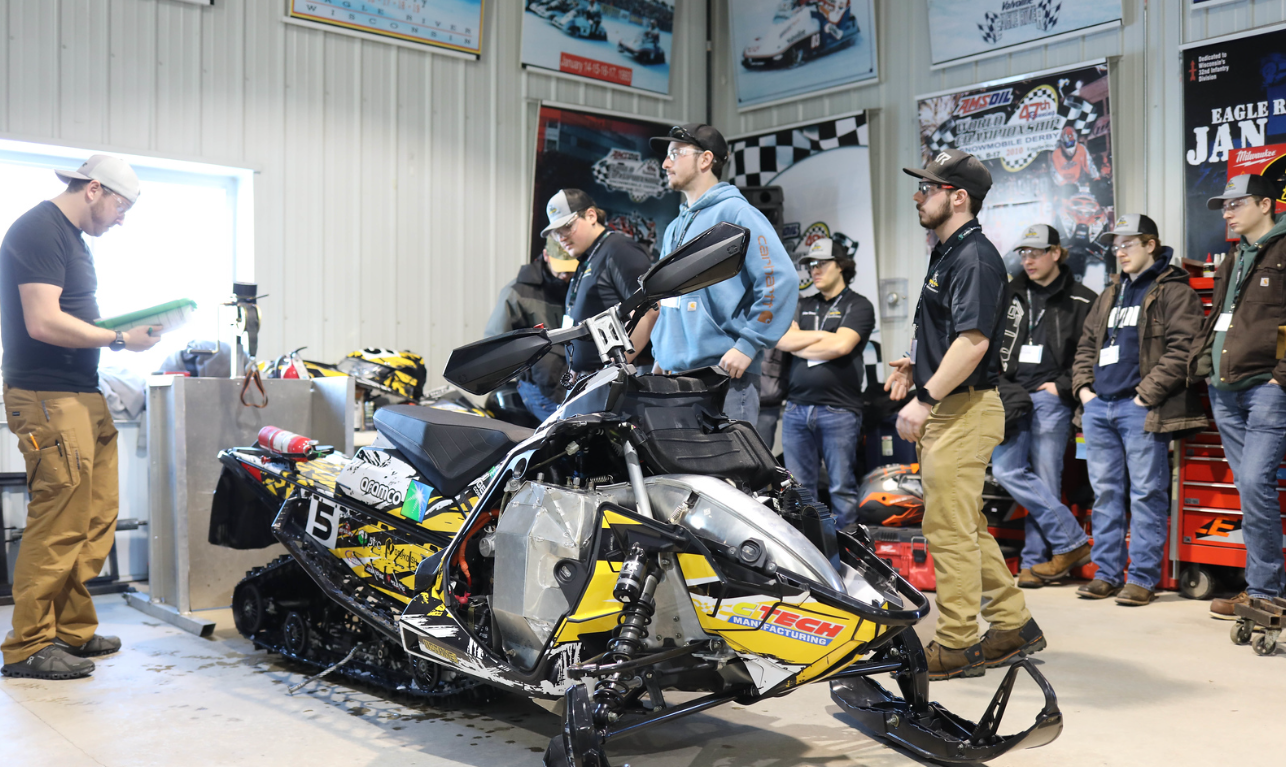
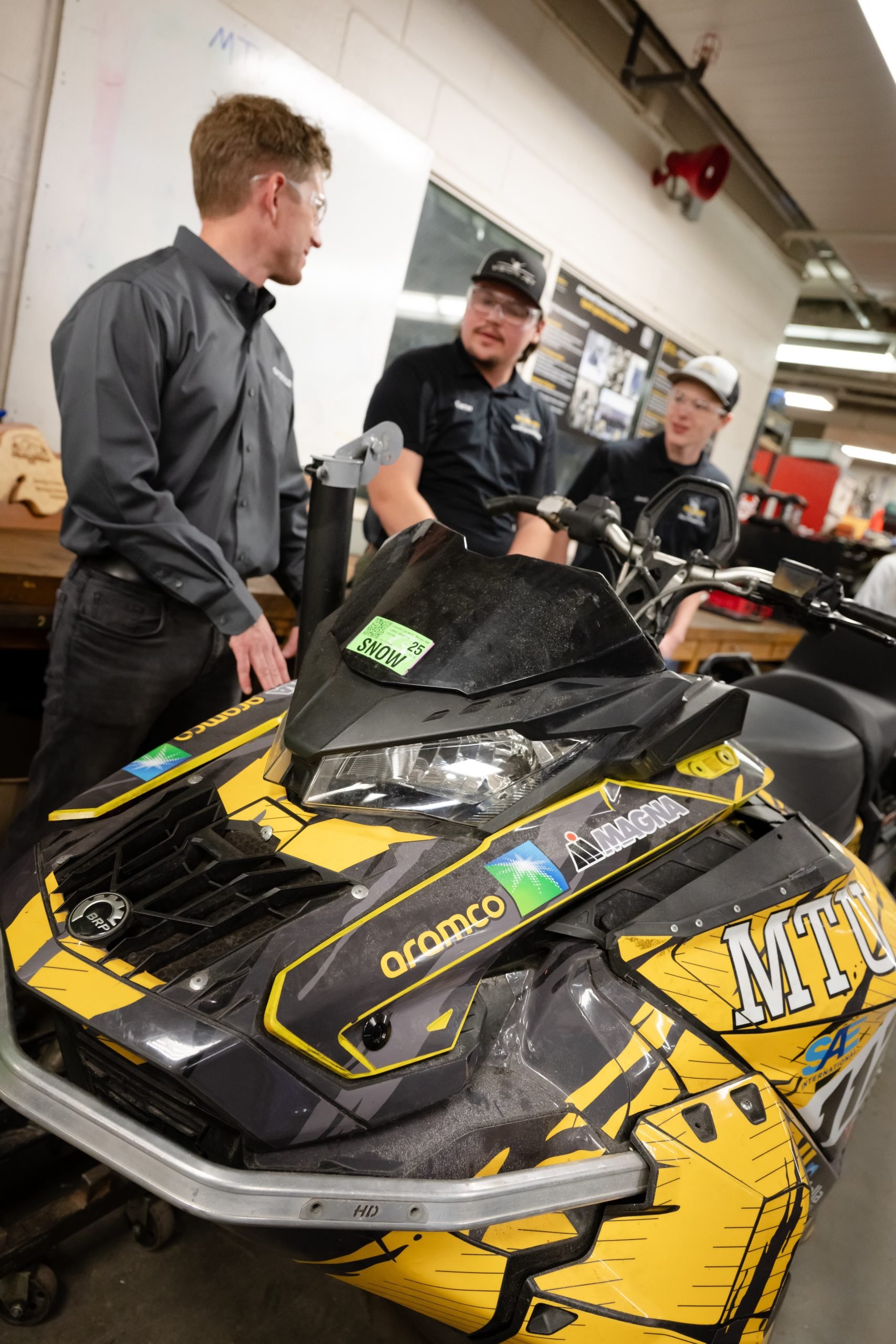
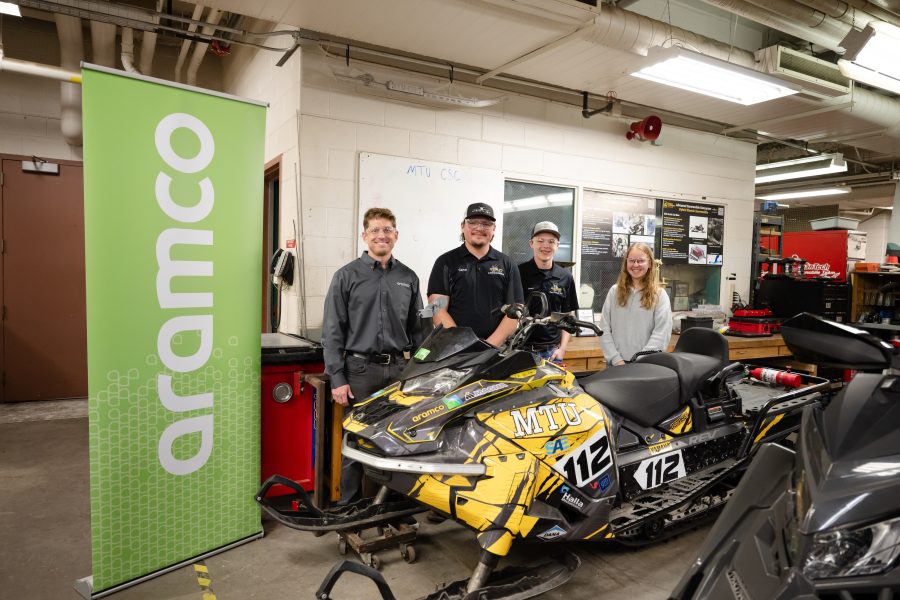
Michigan Tech students Carter Vake and Jared Ott, members of the Clean Snowmobile Enterprise team, show Aramco’s Andrew Baur how Aramco’s contribution supporting new equipment upgrades in the MMET Machine Shop has improved their learning experience on the Clean Snowmobile Enterprise team.

“The addition of this CNC lathe opens up new possibilities for fabricating the advanced parts our research requires, particularly in sound and exhaust emissions reduction — parts we previously did not have the capability to produce,” said Jared Ott, mechanical engineering student and co-president of the Clean Snowmobile Enterprise. “With this upgrade, our undergraduate students can push their research further, compete at a higher level, and gain a deeper understanding of how to turn their designs into reality.”

“Aramco’s long-standing support of the MTU Motorsports teams has been critical to our teams being competitive in their respective competitions. The addition of the new CNC lathe from Aramco funds will allow our students to more rapidly complete complicated machine processes — tasks that were either too time-consuming or simply not possible on our old systems. This upgrade will make our teams even more competitive, as students will now be more willing to incorporate advanced, complex parts into their designs.”

Jason Blough, chair and distinguished professor in the Mechanical and Aerospace Engineering Department, and faculty advisor of the Clean Snowmobile Enterprise 

The ripple effect across 27 Enterprise teams and multiple Senior Design teams will be significant, impacting student projects in mechanical, electrical, materials, and computer engineering, as well as business, design, and countless other areas.

Aramco’s Broader Commitment

Aramco’s gift represents more than an investment in one program—it’s part of a broader commitment to STEM education in Michigan.

For more than a decade, Aramco has supported the Michigan Science Center’s Traveling Science Program, bringing interactive science experiences to schools, libraries, and community centers across Michigan, Ohio, and Indiana. Since 2012, thousands of young people and their families have discovered science in engaging, hands-on ways.

Aramco also employs Michigan Tech graduates and interns at its Research Center in Detroit, where teams are tackling advanced fuels research, focusing on how fuels can be designed and matched with engines for higher performance and lower emissions.

“We highly value MTU’s specialized laboratory capabilities, especially their advanced diagnostic tools. Our collaboration advances engine combustion and emissions improvements as we drive innovation in lower carbon transportation.”

Andrew Baur, team lead, Transport Technology Integration, Aramco Research Center–Detroit

Together, these efforts demonstrate Aramco’s ongoing role in strengthening Michigan’s education-to-industry pipeline.

Looking Ahead

The ShopSabre RC8 CNC router and HAAS TL-2 CNC Toolroom lathe are already in use, but their full potential is just beginning to be realized. As more Enterprise and Senior Design teams utilize these tools, the quality, safety, and speed of student-built projects will continue to grow and improve.

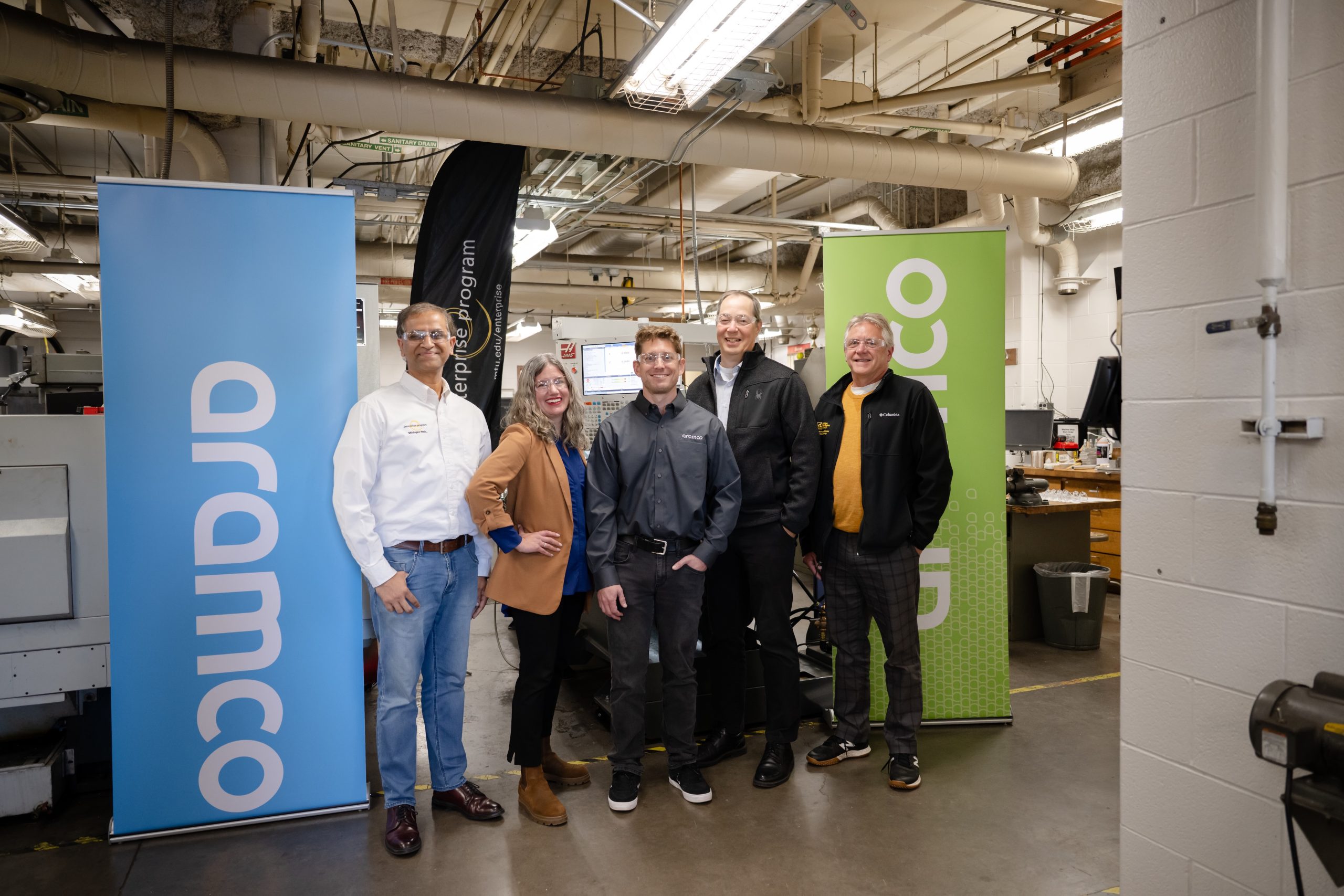
Michigan Tech leadership joins Aramco's Andrew Baur standing in front of the new CNC lathe
Michigan Tech leadership and Aramco’s Andrew Baur commemorate the addition of new, industry-grade equipment that enhances experiential learning and strengthens opportunities for Enterprise and Senior Design teams across campus.

Michigan Tech and Aramco’s shared commitment to experiential education and industry partnerships ensures that tomorrow’s graduates will leave campus with not only strong technical skills but also the confidence and ingenuity to make a lasting impact.

“Hands-on, project-based education is a cornerstone of Michigan Tech’s mission. This partnership with Aramco enhances the experiences that prepare our students to be innovators, problem-solvers, and leaders.”

Marika Seigel, associate provost for undergraduate education and dean of the Pavlis Honors College

The ribbon-cutting was more than a celebration of new machines—it was a celebration of what students can achieve when industry and education come together.


Explore more photos from the event, as Enterprise students tour Aramco’s Andrew Baur through their lab spaces.


Play Michigan Tech SAE Supermileage Systems Enterprise Team | Sponsored by Aramco video
Preview image for Michigan Tech SAE Supermileage Systems Enterprise Team | Sponsored by Aramco video

Michigan Tech SAE Supermileage Systems Enterprise Team | Sponsored by Aramco


About the Enterprise Program at Michigan Technological University

Michigan Tech’s Enterprise Program provides students with a unique, hands-on learning experience that extends beyond the classroom. With more than 25+ Enterprise teams spanning disciplines such as engineering, business, computing, and science, students collaborate on real-world projects sponsored by industry and government partners. Enterprise students develop technical expertise, leadership skills, and teamwork experience—preparing them for success in their careers. Many teams work on cutting-edge innovations, from automotive and aerospace to sustainability and emerging technologies.Explore the Enterprise Program experience and see how you can get involved! Follow Michigan Tech Enterprise on Facebook, Instagram, and LinkedIn for the latest updates.

Elevating Student Voices: Introducing the Ink & Ore Enterprise

The Enterprise Program at Michigan Tech, with its twenty-five year history of empowering students to bring their ideas to life through hands-on, team-based projects, has now expanded into the world of publishing, communication, and storytelling with the creation of Ink & Ore. This new Enterprise team, advised by Holly Hassel, professor of composition and director of the Composition Program and M. Bartley Seigel, associate professor of humanities and director of the Michigan Tech Writing Center is a unique opportunity for students. It is designed not only to enhance their communication skills but also to nurture their creativity and leadership, allowing them to play a significant role in shaping campus culture.

The inspiration for Ink & Ore grew from Michigan Tech’s launch of the new Essential Education program, which emphasizes skills such as reflection, contextual communication, and evaluation of information.

“Ink & Ore is grounded in the principle that students learn best by doing. As writers, editors, and collaborators, they play a central role in shaping publications that contribute meaningfully to Michigan Tech’s intellectual and cultural life. This team provides students with a chance to excel as innovative storytellers, editors, communicators, and project managers in a rapidly evolving media landscape.”

M. Bartley Seigel, Ink & Ore Advisor

While Michigan Tech is widely recognized for its strength in the STEM fields, the creation of Ink & Ore offers students a unique opportunity to pair their technical expertise with communication skills that are increasingly vital in today’s workplace. “There is no reason that MTU cannot also be the place where our engineers, scientists, and computing professionals don’t also read, analyze, write, and think in creative and critical ways as communicators,” the advisors noted. By developing experiences in writing, editing, design, and publishing, the team addresses a gap in the Enterprise Program and creates a space for students across disciplines to practice essential skills that technology alone cannot replace.

Students who join Ink & Ore will be at the heart of producing and shaping major campus publications. The team will contribute to Paw Prints: The Michigan Tech Journal of First-Year Writing, the long-standing student newspaper The Lode, and a new literary magazine currently in development. Seigel, who has a particular passion for student publishing, expressed his excitement about advising the team: “This Enterprise offers students the rare opportunity to develop their voices as writers, editors, and communicators while also gaining practical, real-world experience in project management, design, and teamwork. The Lode, in particular, is Michigan Tech’s oldest registered student organization, founded in 1921, and it’s kind of thrilling to be a part of that tradition, to carry that forward, and to think about how to better support students as they create similar publications to enrich their experience of Michigan Tech’s unique intellectual and cultural life.”

For Hassel, advising Ink & Ore connects directly to her professional background in editing scholarly journals and collaborative writing projects. “The process of creating knowledge and working together with researchers and writers is, I think, the most energizing part of teaching writing. More than being a corrector or grader, I think that writing teachers are co-creators of knowledge—and that mentoring students to see themselves as authors who have voices, ideas, and knowledge is a path to the future in the era of Generative AI.” She sees Ink & Ore as a space where students can come to view themselves as active participants in knowledge-making, while also helping others across campus to recognize their own potential as writers.

The benefits of joining Ink & Ore extend beyond the publications themselves. By taking on responsibilities such as editing, design, project management, and outreach, students will gain hands-on experience that directly translates into career readiness. As the advisors emphasized, the professional world is increasingly automating routine tasks, but ‘this leaves those dimensions of the employment landscape that only human thinkers and writers can do—assess a communication situation, anticipate readers and listeners’ needs, respond thoughtfully and empathetically to problems.’ Through Ink & Ore, students learn how to take ideas from draft to finished piece, work side by side with teammates, and share their voices with the community. Along the way, they gain the confidence and skills that make a difference in any career path.

This new Enterprise also holds significance for Michigan Tech as a whole. By strengthening student voices and fostering a publishing culture, Ink & Ore makes campus life richer and reminds everyone that Michigan Tech is a place where technical know-how and creative expression belong together. Hassel believes this is an opportunity to make Tech “a destination for developing students with superior technical skills as well as superior communication and rhetorical skills.” In doing so, the team not only prepares graduates for success in a rapidly changing workplace but also enriches campus culture by creating spaces for dialogue, creativity, and reflection.

Looking ahead, the advisors are eager to see how the team will evolve under student leadership. Seigel put it simply: “Almost all of our initial ideas, from the name on down, we came up with those. But once we put this into the hands of students, oh, the places it might go!” Hassel echoed this excitement, noting that the foundation for this team is already in place through existing publications and student leaders ready to take charge. Together, they see Ink & Ore growing into a fully established, student-led publishing enterprise with a reputation for excellence, innovation, and impact across campus and beyond.

Ink & Ore is more than just a new team—it’s a statement that communication, creativity, and human-centered expertise are essential complements to technical skill. For Michigan Tech students, it is an invitation to step into the role of writer, editor, and communicator, to contribute to the university’s cultural life, and to graduate with experiences that set them apart in any career path.

“This collaborative effort will, we hope, create a culture of intellectual and creative exchange on campus.”

Holly Hassel, Ink & Ore Advisor

For more information about how to get involved with Ink & Ore, please contact the Enterprise Program by emailing enterprise@mtu.edu.


About the Enterprise Program

Michigan Tech’s Enterprise Program offers students a unique, hands-on learning experience that goes beyond the classroom. With more than 25+ Enterprise teams spanning disciplines such as engineering, business, computing, and science, students collaborate on real-world projects sponsored by industry and government partners. Enterprise students develop technical expertise, leadership skills, and teamwork experience—preparing them for success in their careers. Many teams work on cutting-edge innovations, from automotive and aerospace to sustainability and emerging technologies.

Explore the Enterprise Program experience and see how you can get involved! Follow Michigan Tech Enterprise on FacebookInstagram, and LinkedIn for the latest updates.

Building Smarter Communities: Introducing the Urban Intelligence Lab Enterprise

The Enterprise Program is proud to announce the launch of an exciting new Enterprise Team: the Urban Intelligence Lab (UI Lab). This innovative team brings together students from multiple disciplines to tackle the challenges of smart and connected cities by leveraging artificial intelligence, deep learning, and sensing technologies to make communities more livable, sustainable, and resilient.

The Urban Intelligence Lab grew out of a vision to connect people, data, and infrastructure in ways that have a tangible impact on daily life. “We saw an opportunity to bring together students from multiple disciplines to design solutions that connect people, data, and infrastructure in new ways while leveraging cutting-edge technologies,” says Gabriel Draughon, assistant teaching professor of Engineering Fundamentals and advisor to the team. The team addresses a critical need in today’s cities: while communities are collecting more data than ever, much of it remains untapped. “Our team develops AI-driven sensing systems and decision-support tools that help planners, governments, and stakeholders better understand, manage, and design the spaces where people live, move, and interact,” Draughon explains.

At Michigan Tech, the UI Lab is poised to make an immediate impact by using the campus as a livingsmart city testbed – a place to experiment with connected technologies in real environments. Students are building prototype computer vision systems, developing interactive dashboards, and working directly with campus administrators and student groups to test their solutions. By tackling real challenges, students gain hands-on experience in a variety of areas that include AI, computer vision, data visualization, and human-centered design—skills at the core of smart cities innovation. And even more importantly, they learn to turn that knowledge and experience into solutions that truly benefit communities. “If you want to combine cutting-edge technology with real-world impact—and work across disciplines like engineering, computer science, urban planning, and social sciences—this Enterprise team offers a unique opportunity to do just that,” Draughon emphasizes.

The Urban Intelligence Lab is aiming to benefit from its student-led, interdisciplinary approach. Students involved with the UI Lab aren’t just going to be learning the technology—they will be seeing how their work connects to policy, urban design, and real community needs. This interdisciplinary approach encourages collaboration, sparks innovation, and positions Michigan Tech as a leader in smart cities research and applied problem-solving. Draughon is particularly excited about the opportunities this creates for students: “I’m most excited to see students take ownership of projects and watch their ideas transform into real-world prototypes that people can interact with.”

Looking to the future, the UI Lab team hopes to expand its reach beyond the Michigan Tech campus.  They aim to partner with a variety of communities, non-profits, and technology companies that are interested in mobility, sustainability, and community-centered innovation. In five years, Draughon envisions the team as a recognized undergraduate hub for smart cities innovation, with projects deployed in multiple communities and strong industry and government connections.

“The Urban Intelligence Lab is more than just technology—we’re building connections between people, data, and communities.”

Gabriel Draughon, Urban Intelligence Lab Advisor

Students who join will not only gain hands-on experience but will also have the chance to see their work improve the spaces and places where people live, work, and interact, leaving a lasting impact on both Michigan Tech and the wider community.

For more information about how to get involved with UI Lab, please contact the Enterprise Program by emailing enterprise@mtu.edu.


About the Enterprise Program

Michigan Tech’s Enterprise Program offers students a unique, hands-on learning experience that goes beyond the classroom. With more than 25+ Enterprise teams spanning disciplines such as engineering, business, computing, and science, students collaborate on real-world projects sponsored by industry and government partners. Enterprise students develop technical expertise, leadership skills, and teamwork experience—preparing them for success in their careers. Many teams work on cutting-edge innovations, from automotive and aerospace to sustainability and emerging technologies.

Explore the Enterprise Program experience and see how you can get involved! Follow Michigan Tech Enterprise on FacebookInstagram, and LinkedIn for the latest updates.

Designing the Future: Top Honors from Michigan Tech’s 2025 Design Expo

On April 15, 2025, Michigan Technological University marked a significant milestone with the 25th annual Design Expo—a celebration of innovation, creativity, and collaboration. Over 1,000 students took over campus spaces to present their work, showcasing a wide range of groundbreaking projects developed through Senior Design and Enterprise teams. From sustainable energy solutions and medical technologies to aerospace simulations and infrastructure designs, students demonstrated not only technical excellence, but also a deep understanding of the societal and environmental impact of their work.

Now in its 25th year, the Design Expo continues to be a signature event that brings together students, faculty, industry partners, and the broader community to celebrate the culmination of months—sometimes years—of hard work. The projects on display reflect Michigan Tech’s hands-on, problem-solving approach to education and its commitment to preparing students for real-world challenges.

As part of this landmark year, several teams were recognized for their outstanding achievements. Read on to meet the 2025 Design Expo award winners and honorable mentions who stood out among an exceptional field of competitors. Visit the Design Expo Awards website for the complete project descriptions and videos.

Enterprise Awards

six students in black polos standing in front of a black curtain holding a first place certificate
The Supermileage Systems Enterprise displaying their Design Expo award

First Place: Team 124 – Supermileage Systems
Led by David VanBuren and Jonathan Watson, this team engineered a high-efficiency vehicle, pushing the boundaries of fuel economy. Their project was guided by advisor Nicholas V. Hendrickson and supported by industry leaders, including General Motors, Aramco Americas, Oshkosh, Halla Mechatronics, and many others.​

Second Place: Team 119 – H-STEM Enterprise
Under the leadership of Miles Heskett and Amelia Fadoir, the H-STEM team developed innovative healthcare solutions. Advisor Dr. Smitha Rao and the Visser Foundation provided essential support for their endeavors.​

Third Place: Team 123 – Blizzard Baja Enterprise
Lauren Carroll and Liam LaFave spearheaded the design of an off-road vehicle tailored for rugged terrains. Their project benefited from the mentorship of Kevin Johnson and sponsorship from companies that include General Motors, Aramco Americas, CTech Manufacturing, and Milwaukee Tools.​

Honorable Mention: Team 113 – Green Campus Enterprise
Caroline Brown and Ray Buenzli led their team, which focused on sustainable campus initiatives aimed at reducing environmental impact. Their work was overseen by advisor Robert Handler and supported by MTU Facilities.​

Senior Design Awards

two student standing in front of a black curtain holding a first place certificate
The Crimmins Renewable Energy Distribution Senior Design team displaying their Design Expo award

First Place: Team 212 – Crimmins Renewable Energy Distribution
This team, comprising Brett Najmowicz, Emily Moyer, Luke Leslie, Zach Tauriainen, Nicholas Pierce, and Marcus Wu, developed a system for efficient renewable energy distribution. Advisors Trever Hassell and Tony Pinar, along with sponsor Roger Crimmins, played pivotal roles in their success.​

Second Place: Team 220 – Dynamic Monitoring for Tennis Injury Prevention and Awareness
Olivia Luke, Dominic Hall, Gabe Dunn, Isabella Hasaj, Adithya Laasko, and Arianna Crossman collaborated to create a device aimed at preventing tennis-related injuries. Their project was guided by Dr. Smitha Rao and supported by Michigan Tech.​

Third Place: Team 210 – Vision System for Parts Assembly Process
Ethan Plummer, Madelyn Jackson, MacKenzie Stevens, and Janae Koetje designed and developed a verification system utilizing AI-equipped vision technology. Their innovative system was advised by Dr. Jingfeng Jiang and Dr. Sean Kirkpatrick, with sponsorship from NASA.​

Honorable Mentions:

  • Team 228Simulation-Based Human Body Impedance Modeling for Realistic IEC Defibrillation Safety Standards
    Cate Roelant, Emily Dowdy, and Simon Rhode worked to develop a human body impedance simulation model that would enable more accurate and cost-effective testing limits for medical devices. Advised by Orhan Soykan and Jeremy Goldman and sponsored by the U.S. FDA.​
  • Team 216LIDAR-based Ice Detection (LID)
    Brennan Vrba, Michael Rozzano, Connor Prodin, Austin Champine, Logan Gehring, and Connor Morey worked to develop a system for more accurately detecting ice buildup on aircrafts using LIDAR. Their project was advised by Dr. Tony Pinar, and sponsorship was given by SICK and the ECE departments.​
  • Team 231Developing Infrared/Visible Light Therapies for the Bathroom
    Hope Gibbons, Miles Cornils, Daniel Bowes, and Ryan Moreau researched the options for a light therapy system that can be effectively used in wet environments. Their team was advised by Sean Kirkpatrick and Chunxiu (Traci) Yu and sponsored by Kohler.​
  • Team 235 – Moonstep: Hypo-Gravity Simulator for Lunar Locomotion Modeling
    Parker Courte-Rathwell, Danny Ezzo, and Ingrid Halverson designed a simulator to study movement in lunar gravity conditions. Their innovative project was advised by Dr. Tan Chen and Dr. Steven Elmer, with sponsorship from NASA.​

Image Contest Winners

The SENSE Enterprise Image Contest submission

The Design Expo also featured an Image Contest, celebrating the visual storytelling of student projects. Winning images captured the essence of innovation, teamwork, and the vibrant spirit of the expo.​

  • First Place: TIE – SENSE Enterprise
    This stunning overhead image showcases the SENSE Marine Energy Collegiate Competition team on the GLRC waterfront.
  • First Place: TIE – Formula SAE Enterprise
    This captivating image showcases the team at the Toronto shootout.
  • Second Place: Multiplanetary INnovations Enterprise (MINE)
    A dynamic portrayal ATLAS’ first simulated lunar sandbox test with zero-point turn tracks.

The 2025 Design Expo not only celebrated a quarter-century of innovation but also set the stage for future breakthroughs. It’s clear that Michigan Tech’s students continue to push the boundaries of innovation, tackling some of the most pressing challenges facing our world today. The talent, creativity, and dedication showcased at this year’s event are a testament to the exceptional education and hands-on learning that the university fosters.

Congratulations to all participants, advisors, and sponsors who made this event a resounding success! Your hard work and ingenuity have set a new benchmark for future design and engineering projects. As we look to the future, it’s exciting to imagine how these projects will evolve and contribute to a better tomorrow. The success of Design Expo 2025 is just the beginning—Michigan Tech’s commitment to developing the next generation of leaders in technology and innovation is stronger than ever.

We can’t wait to see what the next 25 years will bring.