Category: Awards/Recognition

Enterprise Distinguished Service Awards: Erin Smith

The Enterprise Program awards the Enterprise Distinguished Service Awards to recognize the dedication and exceptional contributions of advisors and champions who have played pivotal roles in shaping the program’s success. Each of the award winners has more than 15 years of service within Enterprise, dedicating their time and expertise to guiding teams, ensuring student success, and advancing the program’s discovery-based learning mission.

The recipients of the Enterprise Distinguished Service Award are Jim DeClerck, Scott Kuhl, Erin Smith, and Ruth Archer. This four-part series highlights the contributions of each award recipient.


headshot of Erin Smith
Dr. Erin Smith – Teaching Professor in Digital Media and Cinema, Humanities,
Director, Humanities Digital Media Zone, Director, 41 North Film Festival

Students at Michigan Tech have long explored filmmaking through individual courses, but the CinOptic Enterprise gave them something rare — a sustained, real‑world creative environment. Erin Smith, a teaching professor in digital media and cinema, advised CinOptic from its inception, guiding students through ambitious long-arc media projects and collaborative partnerships.

Creating a Space for Creative Work

The idea for CinOptic started as a hybrid engineering‑and‑arts project, but quickly evolved into a fully creative team, drawing students from both the Department of Humanities and the Department of Visual and Performing Arts. It offered students the chance to work on media projects that unfolded over one to three years, mirroring the timelines of real production work.

“Pre‑production, production, post‑production — these things take time,” Smith says, who also serves as director of the Humanities Digital Media Zone and director of the 41 North Film Festival. “CinOptic gave students the space to develop those skills deeply and collaboratively.”

Although CinOptic did not have a corporate sponsor, the team’s model was client‑based work. Students partnered primarily with faculty on grant projects and occasionally with outside clients, such as the National Park Service (NPS). They learned to navigate expectations, deadlines, and accuracy, lessons Smith reinforced with a line they all remember: “‘If you’re not worrying, I am.’ Part of the job was getting them to worry about it, to remember that someone is waiting for this project and they gave money and resources to ensure it gets done.”

Fieldwork and Global Experiences

CinOptic’s projects often took students far beyond campus. A project with Adjunct Professor Thomas Oommen took students to Alaska and New Mexico, documenting field research in challenging environments.

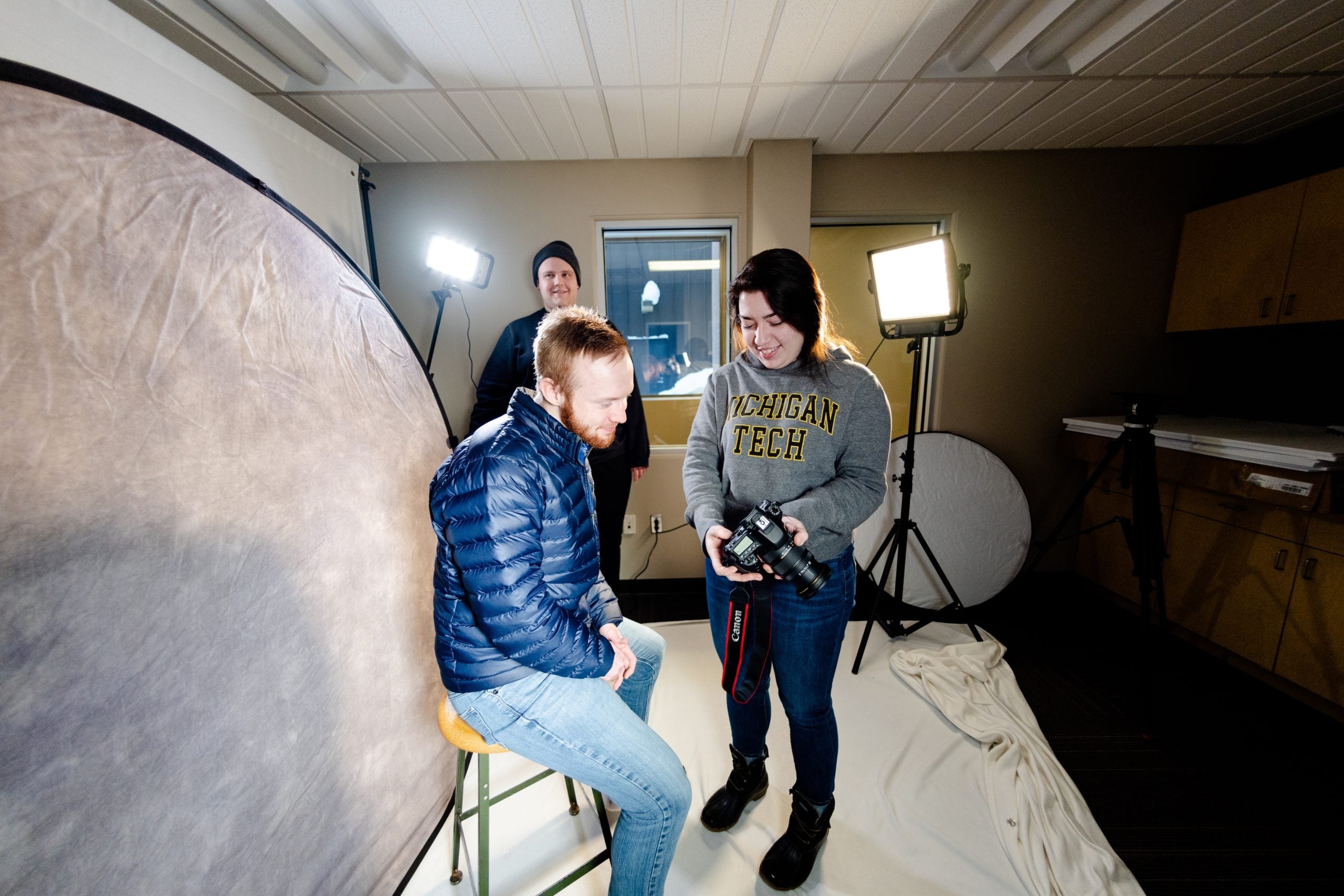
CinOptic students working behind the scenes on a project in 2019.

One of the most meaningful collaborations came through Professor Caryn Heldt, who wrote a CinOptic student directly into an NSF grant. That intentional partnership led the team to Denmark (a trip Smith joined) and Singapore, where they documented research and learned firsthand how communication shapes scientific impact.

CinOptic also completed a three‑year project with the NPS to produce videos for Isle Royale. After the pandemic shutdown, Smith and three students traveled to the island to finish filming, an experience she describes as unforgettable. 

Working with researchers required students to learn quickly and communicate precisely. They developed scripts in close collaboration with faculty, including Associate Professor Erika Hersch-Green, ensuring that complex ideas were conveyed accurately and clearly.

A Lasting Community

Across nearly two decades, CinOptic became a community defined by leadership, creativity, and shared purpose, and Smith remains grateful for the students who shaped the team.

“I had so many excellent students who gave their time and commitment. I’m still in touch with many of them. The relationships we built in Enterprise are different from what happens in a classroom, and I’m very thankful for them.”

Erin Smith

CinOptic shaped many students during its long run, leaving a lasting imprint on Michigan Tech’s creative landscape. Under Smith’s guidance, it became a place where storytelling, collaboration, and curiosity could thrive.


About the Enterprise Program

Michigan Tech’s Enterprise Program offers students a unique, hands-on learning experience that goes beyond the classroom. With more than 25+ Enterprise teams spanning disciplines such as engineering, business, computing, and science, students collaborate on real-world projects sponsored by industry and government partners. Enterprise students develop technical expertise, leadership skills, and teamwork experience—preparing them for success in their careers. Many teams work on cutting-edge innovations, from automotive and aerospace to sustainability and emerging technologies.

Explore the Enterprise Program experience and see how you can get involved! Follow Michigan Tech Enterprise on Facebook, Instagram, and LinkedIn for the latest updates.

Enterprise Distinguished Service Awards: Ruth Archer

The Enterprise Program awards the Enterprise Distinguished Service Awards to recognize the dedication and exceptional contributions of advisors and champions who have played pivotal roles in shaping the program’s success. Each of the award winners has more than 15 years of service within Enterprise, dedicating their time and expertise to guiding teams, ensuring student success, and advancing the program’s discovery-based learning mission.

The recipients of the Enterprise Distinguished Service Award are Jim DeClerck, Scott Kuhl, Erin Smith, and Ruth Archer. This four-part series highlights the contributions of each award recipient.


headshot of Ruth Archer
Dr. Ruth Archer – Director of Continuous Improvement

Ruth Archer, director of Continuous Improvement at Michigan Tech, has spent more than a decade helping Enterprise students develop the mindsets and methods that shape effective engineers, scientists, and professionals. She began teaching her first Enterprise course in 2011 and gradually expanded her involvement, eventually developing and teaching two classes focused on lean principles and the culture of continuous improvement.

Her work with Enterprise has influenced not only her students but also her own approach to teaching. “The program has shaped my thinking about instruction,” Archer says. “I’ve learned how to better support students — how to interact with them, how to design assignments, what works and what doesn’t. It’s really helped me learn how to teach.” That learning, she notes, has carried over into her broader continuous improvement work across campus.

Today, Archer teaches ENT 3982: Continuous Improvement Using Lean Principles and ENT 3983: Culture of Continuous Improvement, courses that give students tools they can apply immediately to their Enterprise projects.

Helping Students Become Who They’re Meant to Be

For Archer, the most rewarding part of working with Enterprise students is witnessing their growth. “I’m grateful to have the opportunity to work with students,” she says. “Many of my colleagues don’t get that chance, and they don’t get to know students very well.”

Enterprise students, she notes, arrive already oriented toward action. “They’re not passively waiting to be handed information. They’re wrestling with real problems. What we talk about in class, they can apply immediately.”

Archer sees her role as guiding students in “the process of becoming” — becoming engineers, scientists, professionals, and thoughtful contributors to their fields.

“It’s amazing to influence, even slightly, how they think about the world they’re moving into and how they interact with it. To help them be better, do better, and be more successful.”

Ruth Archer

Making Problems Visible — and Solvable

One of Archer’s most memorable experiences came from helping a student team that had fallen significantly behind on a high‑stakes project with an external sponsor. “They were seven weeks behind schedule and really worried about their milestones,” she recalls.

She introduced them to a core continuous improvement tool: a visual kanban board that made the project’s status visible at a glance. “It wasn’t about blame,” she says. “It was about seeing where resources needed to be redirected.”

The impact was immediate. By the end of the semester, the team had reduced their delay from seven weeks to three. “They weren’t mired in an unsolvable situation anymore,” Archer says. “They were moving forward.”

Creativity, Communication, and Confidence

Another standout memory comes from a communications course Archer previously taught. The course included a simulated conference experience that she brought to life, collaborating with co-instructors teaching other sections of the same course. Students formed teams, selected topics, submitted proposals, wrote papers, completed reviews, and delivered polished presentations.

students talking to other students about the Enterprise Program
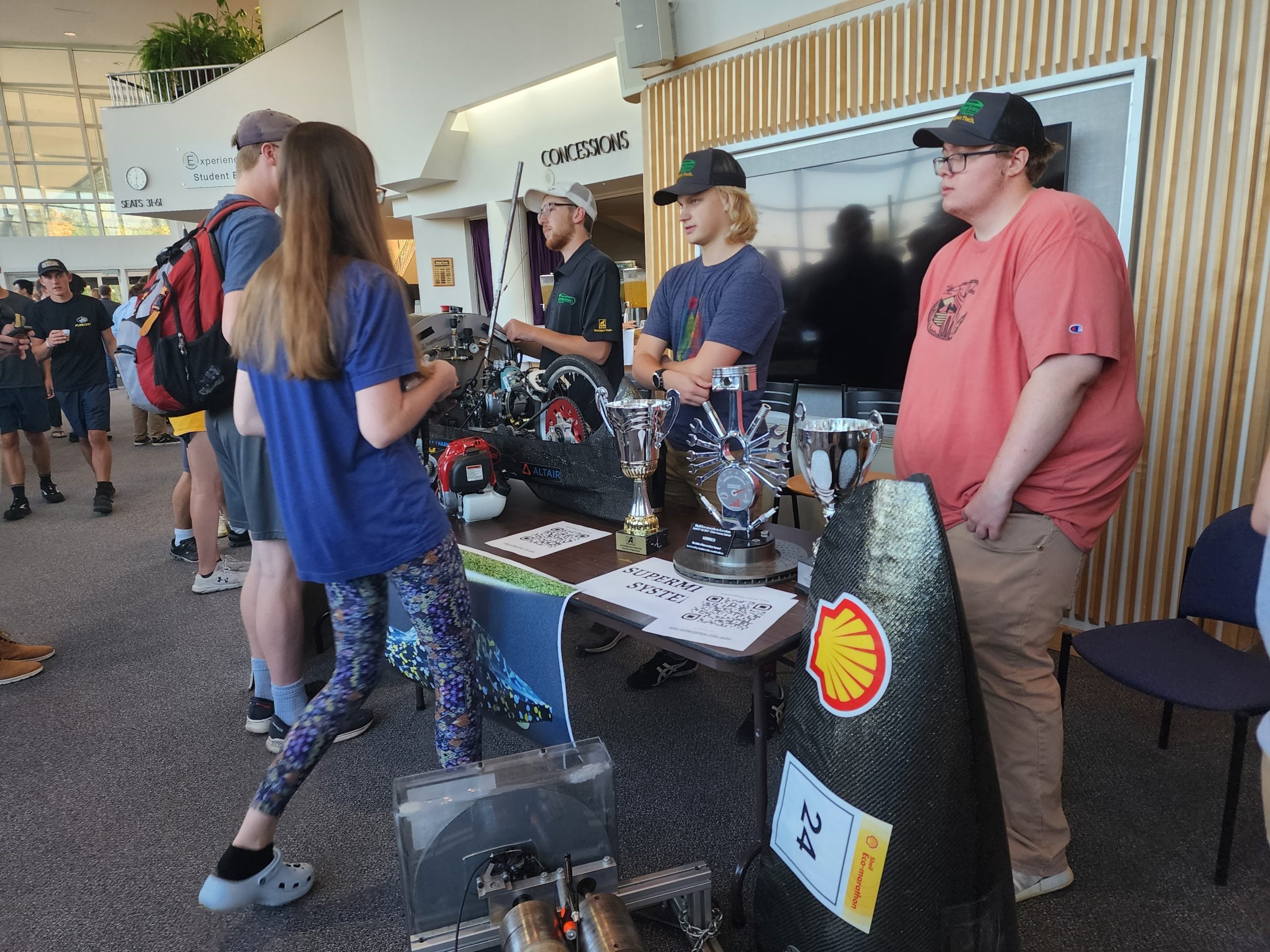
Student exploring the Enterprise Program at Enterprise Day in Fall of 2023 – just a few of Ruth’s future students.

The topics ranged from practical to wildly imaginative: speed‑reading techniques, musical storytelling, American Sign Language, how accents shape communication, communicating with dogs and their handlers — even communicating with extraterrestrials. One student developed that extraterrestrial communication talk into a presentation for NASA and ultimately landed a job.

“It brought out all of their skills,” Archer says. “And it showed them what it really takes to prepare something professional.”

A Community of Practice

Archer also values the relationships she has built through Enterprise. “I’ve had the opportunity to create and share materials with other instructors, and many of them have become friends,” she says. “We’ve built a community of practice, pushing the curriculum forward together. It’s the same model we use in continuous improvement. No one person is the sole source of knowledge.”

Reflecting on the Honor

Receiving the Enterprise Distinguished Service Award gave Archer a moment to reflect on the program’s impact. “Enterprise gives students a chance to apply what they’re learning in meaningful ways,” she says. “Being part of their journey — and part of a community that supports them — has been incredibly rewarding.”


About the Enterprise Program

Michigan Tech’s Enterprise Program offers students a unique, hands-on learning experience that goes beyond the classroom. With more than 25+ Enterprise teams spanning disciplines such as engineering, business, computing, and science, students collaborate on real-world projects sponsored by industry and government partners. Enterprise students develop technical expertise, leadership skills, and teamwork experience—preparing them for success in their careers. Many teams work on cutting-edge innovations, from automotive and aerospace to sustainability and emerging technologies.

Explore the Enterprise Program experience and see how you can get involved! Follow Michigan Tech Enterprise on Facebook, Instagram, and LinkedIn for the latest updates.

Enterprise Distinguished Service Awards: Jim DeClerck

The Enterprise Program awards the Enterprise Distinguished Service Awards to recognize the dedication and exceptional contributions of advisors and champions who have played pivotal roles in shaping the program’s success. Each of the award winners has more than 15 years of service within Enterprise, dedicating their time and expertise to guiding teams, ensuring student success, and advancing the program’s discovery-based learning mission.

The recipients of the Enterprise Distinguished Service Award are Jim DeClerck, Scott Kuhl, Erin Smith, and Ruth Archer. This four-part series highlights the contributions of each award recipient.


Dr. James DeClerck – Professor of Practice, Mechanical and Aerospace Engineering

Jim DeClerck, a Professor of Practice in the Department of Mechanical and Aerospace Engineering, has shaped Michigan Tech’s Formula SAE Enterprise for more than a decade. After earning his PhD from Michigan Tech in 1991, he spent 18 years at General Motors working in vehicle development. When he returned to campus in 2009, he brought with him a deep understanding of applying engineering fundamentals.

DeClerck began advising Formula SAE in 2010. “When I took over Formula, my goal was to help the students organize themselves like a real car company,” he says. “Documenting decisions, understanding tradeoffs, and thinking about process. That’s what makes better cars, and competition judges ask about their development process.”

Growth Opportunity

For DeClerck, the students’ energy is the best part of the work. “My favorite part is seeing their passion,” he says. “Every year, there are three or four members who are just so excited to develop and build a car. They get to build a race car with other people’s money. It’s a rare opportunity, as well as an obligation and a privilege. They use that money to learn.”

Formula SAE, he notes, gives students the chance to apply classroom knowledge, run a project like a small company would, and experience the full engineering lifecycle, from concept to competition.

Care and Feeding

Each year, the team competes at Michigan International Speedway. DeClerck has seen the full range of outcomes: the years when everything clicks, and the car performs beautifully, and the years when unexpected problems force the team to regroup.

Even when it doesn’t work out, it’s great to see them come together and solve problems. I’m most proud of the way they rally around each other.

Jim DeClerck

One early memory remains vivid. “When I first took over, there was a lot of stress and a culture where the chief engineer called all the shots,” he recalls. “I remember being at the competition in the middle of May. It was warm, and the students had been outside all day. They hadn’t planned for food or water. They were hungry, thirsty, and grumpy.”

With nothing else to do in that moment, DeClerck stepped into an unexpected role: making sure the team was fed and hydrated. “It was a matter of ‘first things first.’ It’s amazing how much better things go when people have food and water, and the coffee drinkers had plenty of coffee,” he says with a laugh. “It changed the whole attitude.”

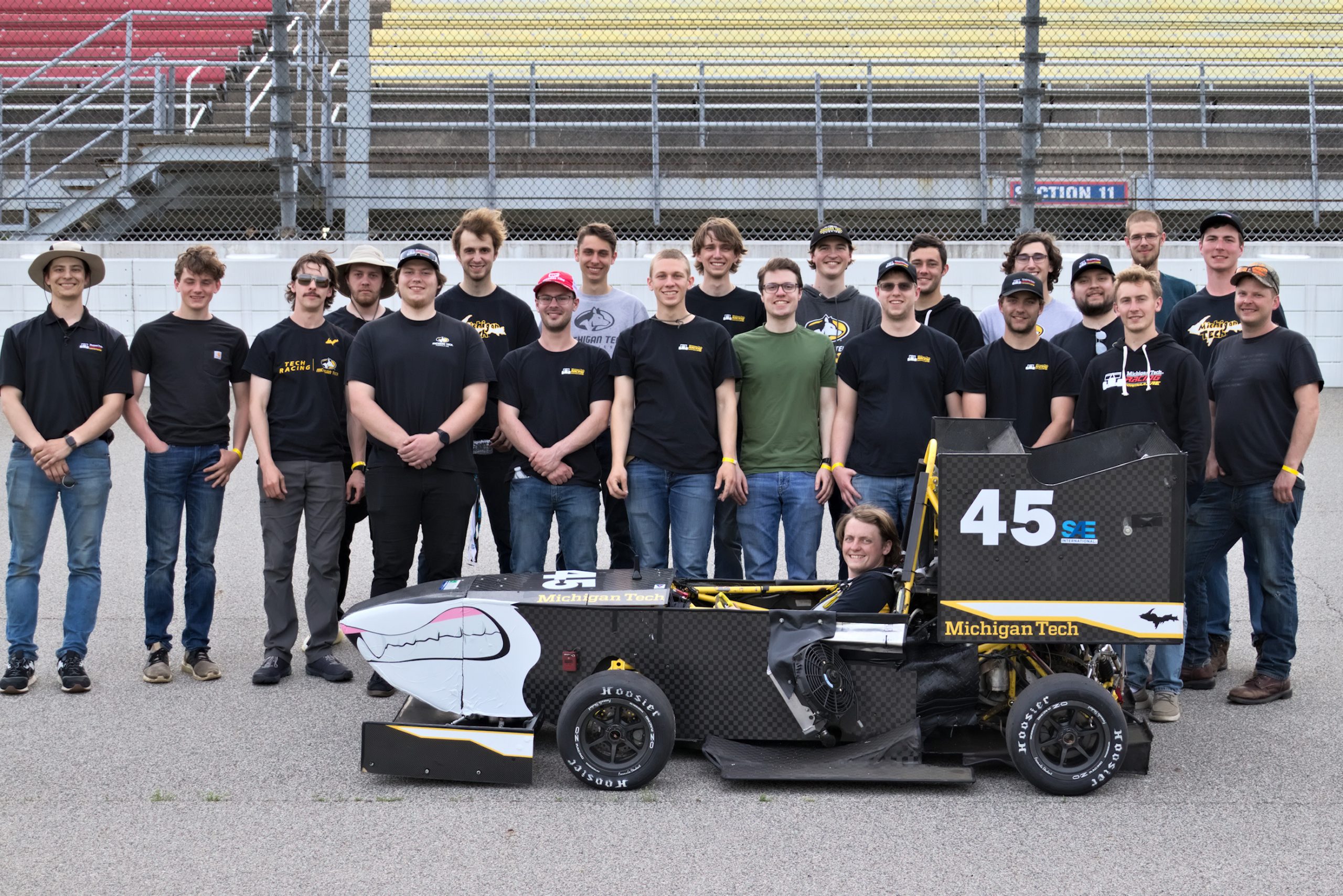
Formula SAE students at their international competition in 2022.

Space and Support

DeClerck believes the environment provided at Michigan Tech is what sets the University’s Formula SAE team apart. “Hundreds of schools have SAE teams,” he says. “But what’s unique here is the structure and support of the Enterprise program.”

He credits the University’s facilities and resources for enabling the team to design and build competitive cars year after year. “We’re extremely fortunate,” he says. “We have more space than most teams and a lot of support to create parts and build a car.” He adds with a laugh, “But like every team, we could always use more money. The running joke in the racing world is, if you want to generate a small fortune in racing, you have to start with a big one.”

When he learned he would receive the Enterprise Distinguished Service Award, DeClerck felt grateful. “It made me think about all the students I’ve worked with, all the competitions, all the late nights,” he says. “I’m proud of what the team has accomplished and grateful to be part of their journey.”


About the Enterprise Program

Michigan Tech’s Enterprise Program offers students a unique, hands-on learning experience that goes beyond the classroom. With more than 25+ Enterprise teams spanning disciplines such as engineering, business, computing, and science, students collaborate on real-world projects sponsored by industry and government partners. Enterprise students develop technical expertise, leadership skills, and teamwork experience—preparing them for success in their careers. Many teams work on cutting-edge innovations, from automotive and aerospace to sustainability and emerging technologies.

Explore the Enterprise Program experience and see how you can get involved! Follow Michigan Tech Enterprise on Facebook, Instagram, and LinkedIn for the latest updates.

Michigan Tech’s Advanced Snowmobile Enterprise Team Wins First Overall in International Competition

The Michigan Tech Advanced Snowmobile Enterprise team returned to Eagle River, Wisconsin, with a new machine, a growing roster, and a compressed timeline. They left with a first-place overall finish.

Competing at the Advanced Snowmobile Competition, held at the World Championship Derby Complex in Eagle River, the team faced eight collegiate programs from across the United States and Canada. The annual event challenges students to redesign and refine production snowmobiles to reduce emissions and noise—without sacrificing performance or rider experience.

This year marked a turning point for the competition itself. After SAE International stepped away from organizing the event following last year’s competition, a newly formed Advanced Snowmobile organization assumed leadership to continue the long-standing collegiate tradition.

Michigan Tech rose to the occasion.

A New Platform. A Shorter Timeline.

One of the team’s biggest challenges this year wasn’t just engineering—it was time.

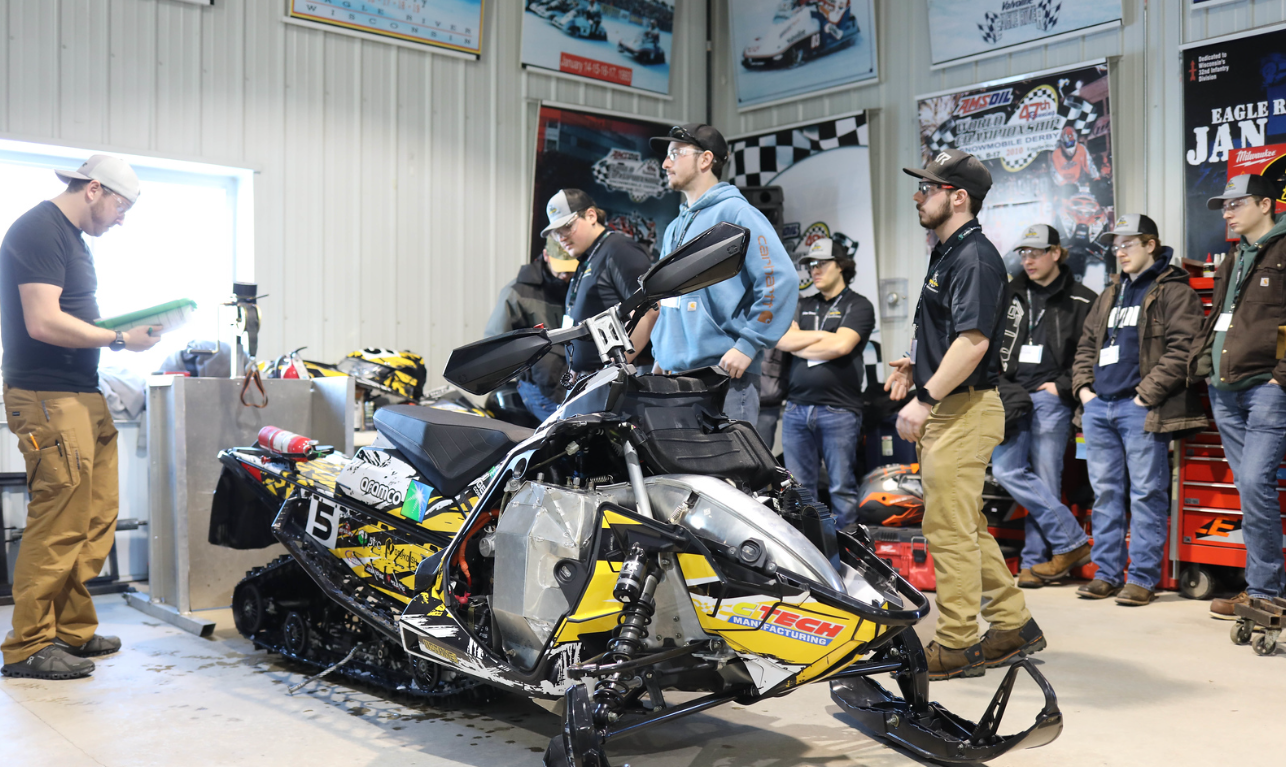
With the competition moved nearly a month earlier than in previous years, the team had roughly five months to redesign, modify, and test an entirely new platform: a 2025 Polaris Switchback XC 850.

The transition was significant. Their previous chassis—a Yamaha Viper—had aged out of eligibility. Shifting from a four-stroke to a two-stroke snowmobile introduced new calibration strategies, new integration challenges, and a steep learning curve.

At the same time, facility closures limited shop access during critical build phases. Then, just five weeks before the competition, the team added 12 new members—bringing the total to 31 students.

That meant finishing the build while onboarding nearly half the team.

Long nights followed. Stressful weeks. Accelerated learning.

But the team pressed forward.

Engineering a 60% Emissions Reduction

The results speak for themselves.

Through a custom-designed, in-house-built muffler featuring an embedded catalytic converter and custom engine calibration performed on the team’s dyno in the Advanced Technology Development Complex (ATDC), the team achieved a 60% reduction in measurable emissions compared to a stock comparable snowmobile.

That performance earned the Advanced Snowmobile Enterprise first place in Emissions, awarded to the team with the largest relative decrease from baseline production levels.

The team also captured first place in Technical Design Paper, a professional engineering report submitted prior to the competition outlining design decisions, testing data, and validation methods.

Winning in the Business Arena

In a breakthrough moment, the team also earned first place in the Business/Sales Presentation category.

Historically known for being highly technical, the team elevated its communication strategy this year—successfully articulating target market, pricing structure, consumer value, and how their innovations translate beyond the test bench.

The win reflects growth not only as engineers, but as professionals prepared to communicate ideas to industry.

First Overall

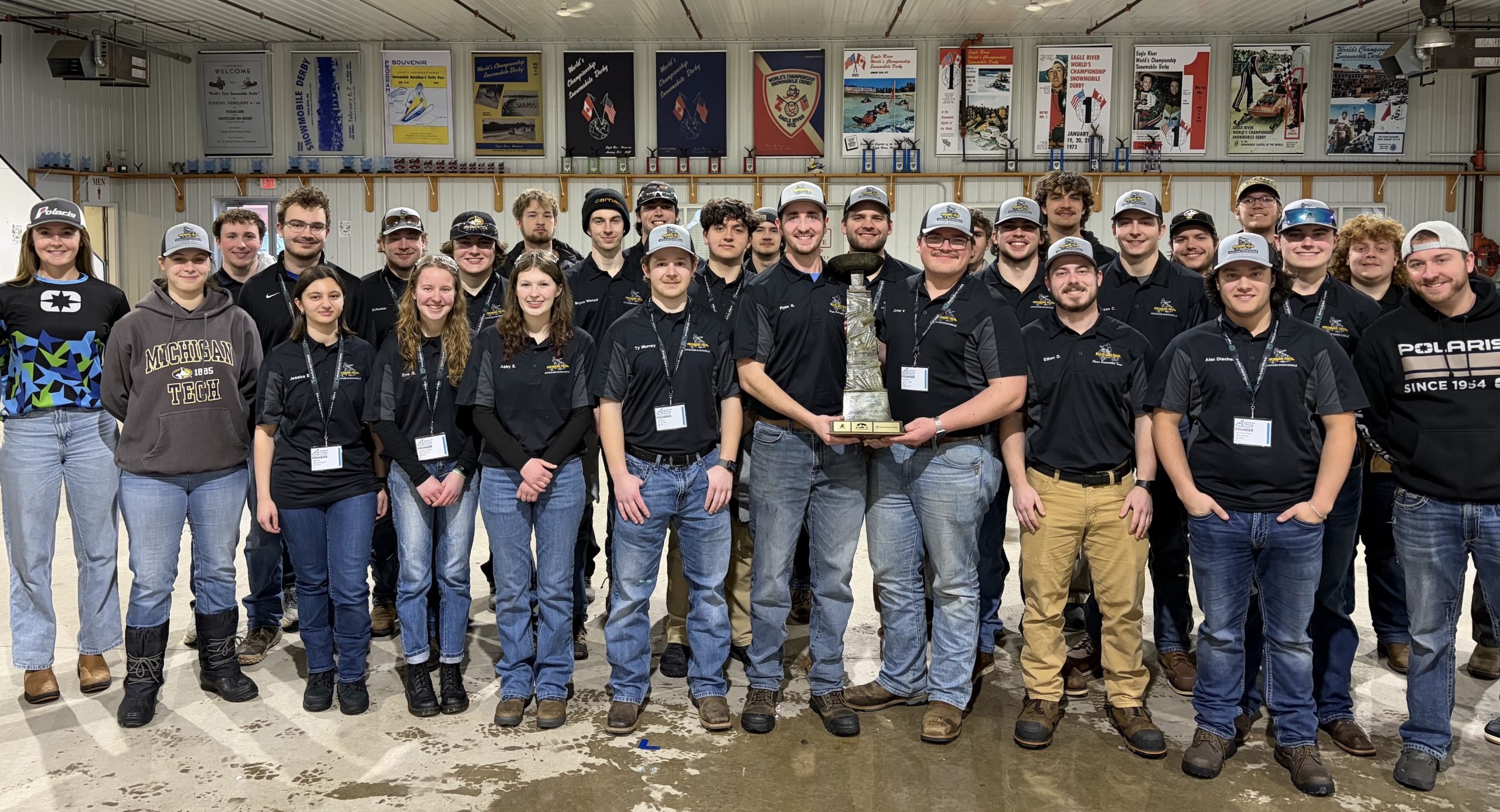
When final scores were tallied, Michigan Tech’s Advanced Snowmobile Enterprise placed first overall, successfully defending last year’s title.

For team president Carter Vake, the victory represents more than a trophy.

“This win means a lot to the team and I, along with alumni of the enterprise,” said Vake. “We had a lot working against us this year, with a lot of unforeseen challenges. This win shows the members—especially the new members—that with enough time and dedication, the sky is the limit and anything can be achieved. It’s not going to be easy, and it’s not supposed to be easy.”

The competition tested more than mechanical systems. It tested resilience, leadership, and trust.

Vake sees this season as a launching point.

“I am very excited to see where the team goes from here and what they come up with next. I am especially excited to see our hybrid snowmobile operational. The hybrid team is passionate, and I can’t wait to see what they do.”

Beyond the technical achievements, the experience reflects something uniquely Michigan Tech.

Enterprise has been an amazing experience and something that is uniquely Tech. Not only would I not have the hands-on, leadership, and engineering experience that I have gained if Enterprise didn’t exist, but I wouldn’t have some of my closest friends. If I were talking with someone new to Michigan Tech, I would tell them to get involved as soon as possible—whether that be in a club or an Enterprise; it opens up a world of possibilities.”

Carter Vake ‘26, Mechanical Engineering

Cleaner. Quieter. More efficient.

And built by students who proved that even under pressure, innovation doesn’t stall.

It accelerates.

Designing the Future: Top Honors from Michigan Tech’s 2025 Design Expo

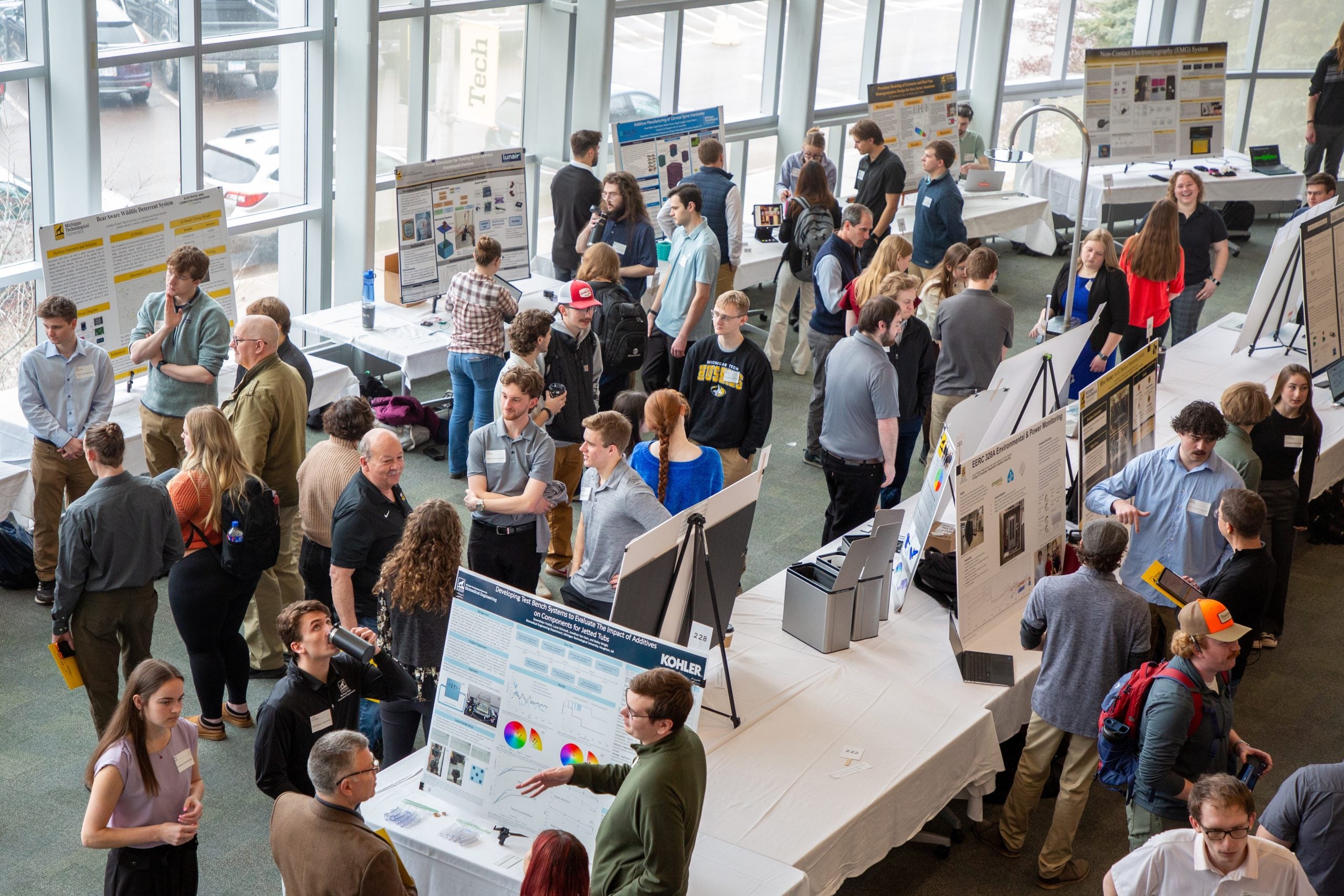
On April 15, 2025, Michigan Technological University marked a significant milestone with the 25th annual Design Expo—a celebration of innovation, creativity, and collaboration. Over 1,000 students took over campus spaces to present their work, showcasing a wide range of groundbreaking projects developed through Senior Design and Enterprise teams. From sustainable energy solutions and medical technologies to aerospace simulations and infrastructure designs, students demonstrated not only technical excellence, but also a deep understanding of the societal and environmental impact of their work.

Now in its 25th year, the Design Expo continues to be a signature event that brings together students, faculty, industry partners, and the broader community to celebrate the culmination of months—sometimes years—of hard work. The projects on display reflect Michigan Tech’s hands-on, problem-solving approach to education and its commitment to preparing students for real-world challenges.

As part of this landmark year, several teams were recognized for their outstanding achievements. Read on to meet the 2025 Design Expo award winners and honorable mentions who stood out among an exceptional field of competitors. Visit the Design Expo Awards website for the complete project descriptions and videos.

Enterprise Awards

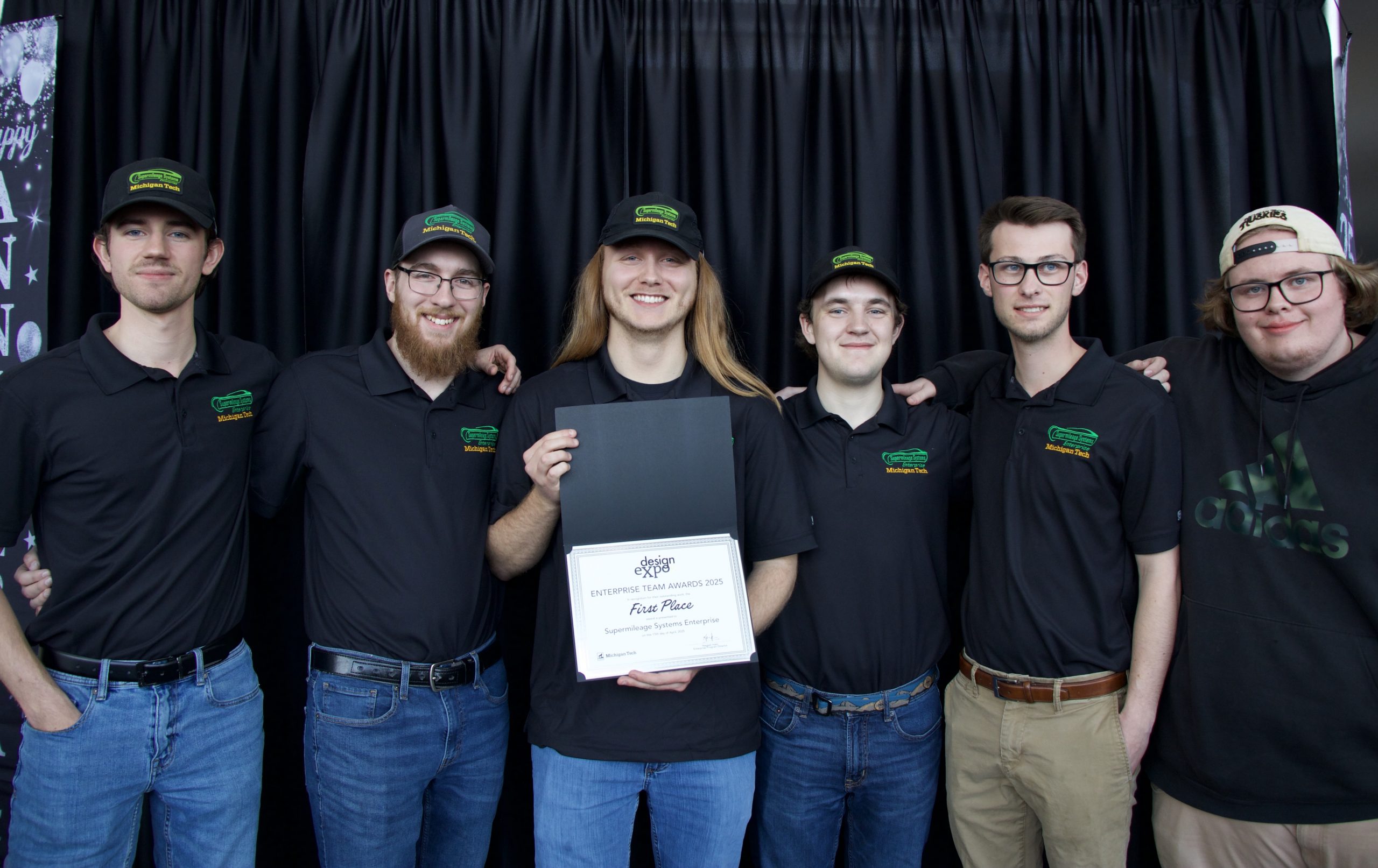
six students in black polos standing in front of a black curtain holding a first place certificate
The Supermileage Systems Enterprise displaying their Design Expo award

First Place: Team 124 – Supermileage Systems
Led by David VanBuren and Jonathan Watson, this team engineered a high-efficiency vehicle, pushing the boundaries of fuel economy. Their project was guided by advisor Nicholas V. Hendrickson and supported by industry leaders, including General Motors, Aramco Americas, Oshkosh, Halla Mechatronics, and many others.​

Second Place: Team 119 – H-STEM Enterprise
Under the leadership of Miles Heskett and Amelia Fadoir, the H-STEM team developed innovative healthcare solutions. Advisor Dr. Smitha Rao and the Visser Foundation provided essential support for their endeavors.​

Third Place: Team 123 – Blizzard Baja Enterprise
Lauren Carroll and Liam LaFave spearheaded the design of an off-road vehicle tailored for rugged terrains. Their project benefited from the mentorship of Kevin Johnson and sponsorship from companies that include General Motors, Aramco Americas, CTech Manufacturing, and Milwaukee Tools.​

Honorable Mention: Team 113 – Green Campus Enterprise
Caroline Brown and Ray Buenzli led their team, which focused on sustainable campus initiatives aimed at reducing environmental impact. Their work was overseen by advisor Robert Handler and supported by MTU Facilities.​

Senior Design Awards

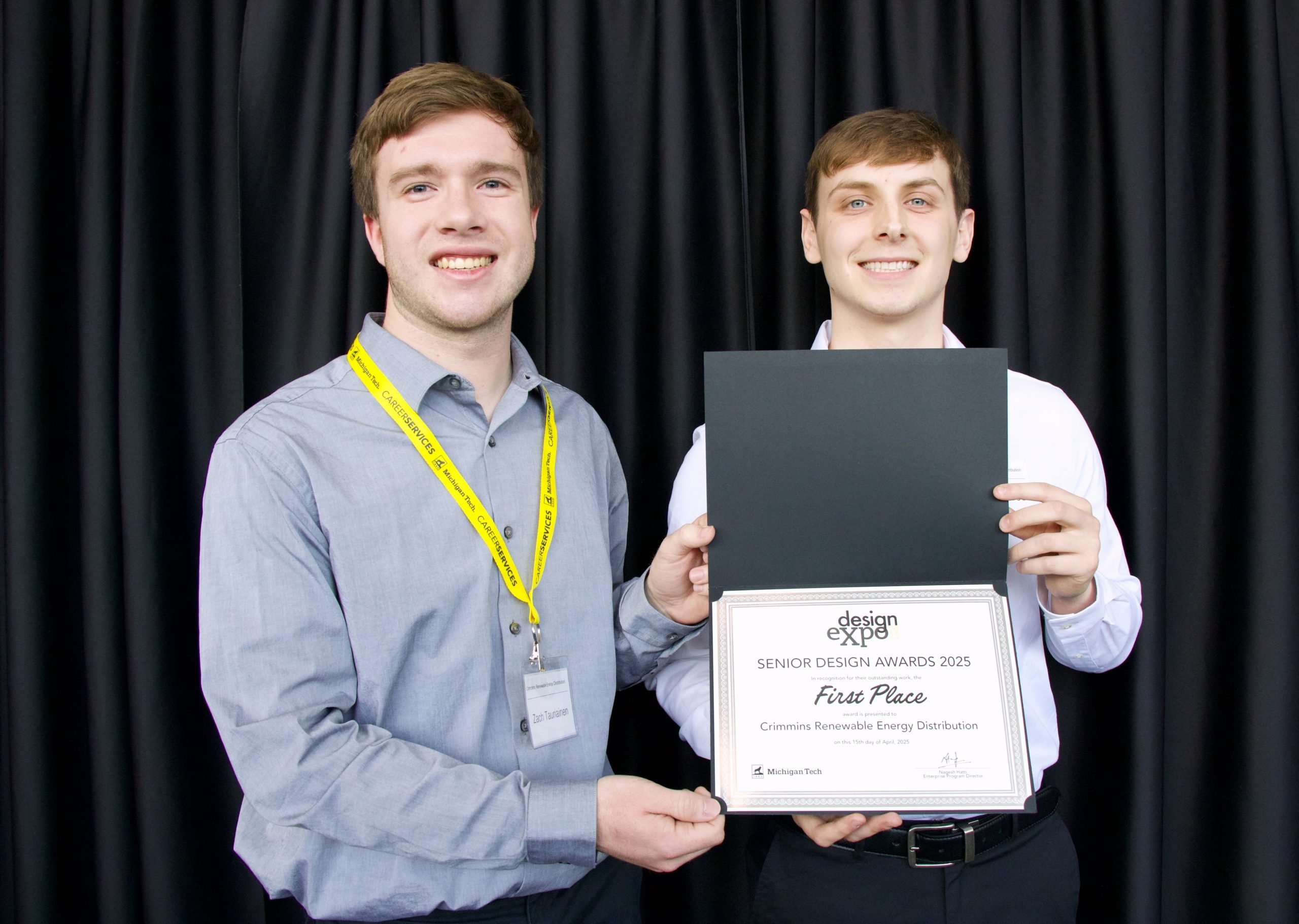
two student standing in front of a black curtain holding a first place certificate
The Crimmins Renewable Energy Distribution Senior Design team displaying their Design Expo award

First Place: Team 212 – Crimmins Renewable Energy Distribution
This team, comprising Brett Najmowicz, Emily Moyer, Luke Leslie, Zach Tauriainen, Nicholas Pierce, and Marcus Wu, developed a system for efficient renewable energy distribution. Advisors Trever Hassell and Tony Pinar, along with sponsor Roger Crimmins, played pivotal roles in their success.​

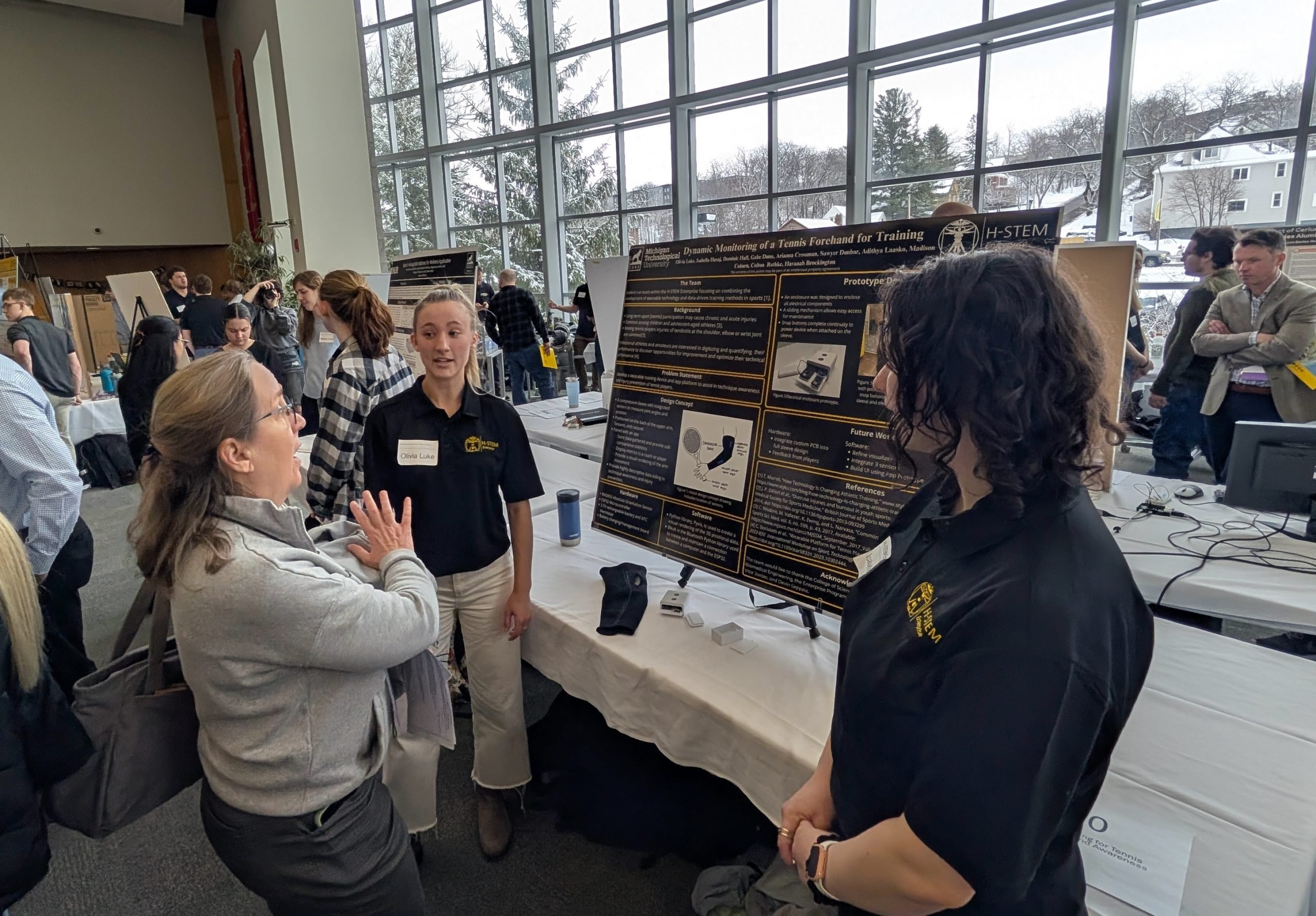
Second Place: Team 220 – Dynamic Monitoring for Tennis Injury Prevention and Awareness
Olivia Luke, Dominic Hall, Gabe Dunn, Isabella Hasaj, Adithya Laasko, and Arianna Crossman collaborated to create a device aimed at preventing tennis-related injuries. Their project was guided by Dr. Smitha Rao and supported by Michigan Tech.​

Third Place: Team 210 – Vision System for Parts Assembly Process
Ethan Plummer, Madelyn Jackson, MacKenzie Stevens, and Janae Koetje designed and developed a verification system utilizing AI-equipped vision technology. Their innovative system was advised by Dr. Jingfeng Jiang and Dr. Sean Kirkpatrick, with sponsorship from NASA.​

Honorable Mentions:

  • Team 228Simulation-Based Human Body Impedance Modeling for Realistic IEC Defibrillation Safety Standards
    Cate Roelant, Emily Dowdy, and Simon Rhode worked to develop a human body impedance simulation model that would enable more accurate and cost-effective testing limits for medical devices. Advised by Orhan Soykan and Jeremy Goldman and sponsored by the U.S. FDA.​
  • Team 216LIDAR-based Ice Detection (LID)
    Brennan Vrba, Michael Rozzano, Connor Prodin, Austin Champine, Logan Gehring, and Connor Morey worked to develop a system for more accurately detecting ice buildup on aircrafts using LIDAR. Their project was advised by Dr. Tony Pinar, and sponsorship was given by SICK and the ECE departments.​
  • Team 231Developing Infrared/Visible Light Therapies for the Bathroom
    Hope Gibbons, Miles Cornils, Daniel Bowes, and Ryan Moreau researched the options for a light therapy system that can be effectively used in wet environments. Their team was advised by Sean Kirkpatrick and Chunxiu (Traci) Yu and sponsored by Kohler.​
  • Team 235 – Moonstep: Hypo-Gravity Simulator for Lunar Locomotion Modeling
    Parker Courte-Rathwell, Danny Ezzo, and Ingrid Halverson designed a simulator to study movement in lunar gravity conditions. Their innovative project was advised by Dr. Tan Chen and Dr. Steven Elmer, with sponsorship from NASA.​

Image Contest Winners

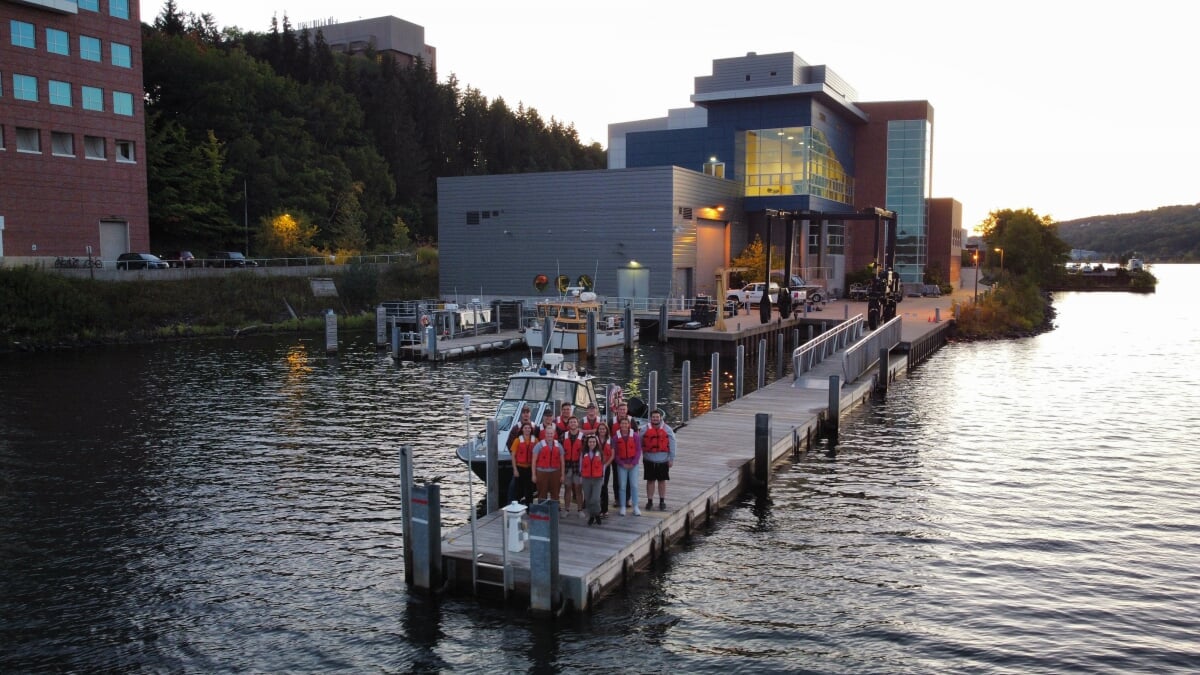
The SENSE Enterprise Image Contest submission

The Design Expo also featured an Image Contest, celebrating the visual storytelling of student projects. Winning images captured the essence of innovation, teamwork, and the vibrant spirit of the expo.​

  • First Place: TIE – SENSE Enterprise
    This stunning overhead image showcases the SENSE Marine Energy Collegiate Competition team on the GLRC waterfront.
  • First Place: TIE – Formula SAE Enterprise
    This captivating image showcases the team at the Toronto shootout.
  • Second Place: Multiplanetary INnovations Enterprise (MINE)
    A dynamic portrayal ATLAS’ first simulated lunar sandbox test with zero-point turn tracks.

The 2025 Design Expo not only celebrated a quarter-century of innovation but also set the stage for future breakthroughs. It’s clear that Michigan Tech’s students continue to push the boundaries of innovation, tackling some of the most pressing challenges facing our world today. The talent, creativity, and dedication showcased at this year’s event are a testament to the exceptional education and hands-on learning that the university fosters.

Congratulations to all participants, advisors, and sponsors who made this event a resounding success! Your hard work and ingenuity have set a new benchmark for future design and engineering projects. As we look to the future, it’s exciting to imagine how these projects will evolve and contribute to a better tomorrow. The success of Design Expo 2025 is just the beginning—Michigan Tech’s commitment to developing the next generation of leaders in technology and innovation is stronger than ever.

We can’t wait to see what the next 25 years will bring.

Enterprise Distinguished Service Awards: Kit Cischke

In celebration of its 25 years at Michigan Technological University, the Enterprise Program has awarded eight inaugural Enterprise Distinguished Service Awards to recognize the dedication and exceptional contributions of advisors and champions who have played pivotal roles in shaping the program’s success. The recipients of the Enterprise Distinguished Service Award are Brett Hamlin, Glen Archer, Rick Berkey, Jason Blough, Brad King, Robert Pastel, Tony Rogers, and Christopher “Kit” Cischke. 

Each of the award winners has more than 15 years of service within Enterprise, dedicating their time and expertise to guide teams, ensure student success, and advance the program’s discovery-based learning mission. The eight advisors have also fostered industry collaborations and strengthened the bridge between academia and industry. 

This eight-part series highlights the contributions of each award recipient.


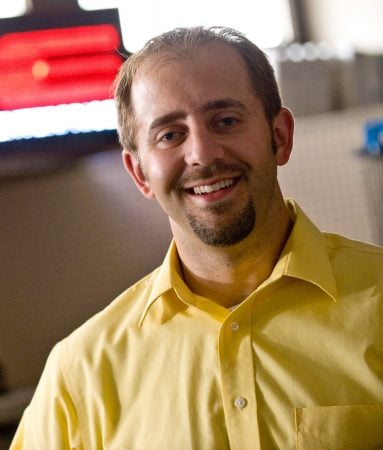
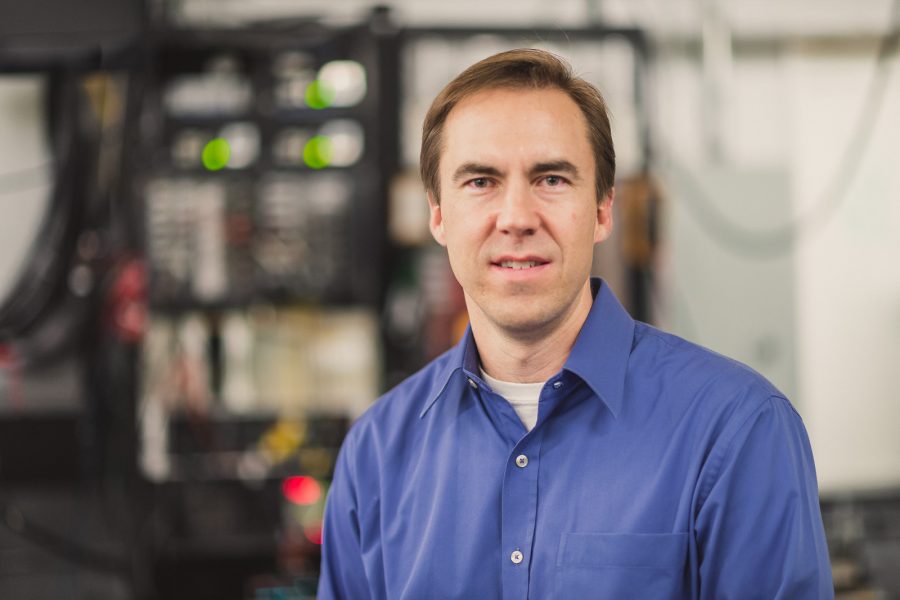
smiling man with a goatee and mustache wearing a yellow collared shirt and
Kit Cischke – Teaching Professor, Electrical and Computer Engineering

Christopher “Kit” Cischke, a teaching professor in the Department of Electrical and Computer Engineering, first came to Michigan Tech as a student in 1997. During his studies, Cischke helped found one of the original Enterprise teams, the Wireless Communications Enterprise (WCE). After graduating in 2001 with a bachelor’s in electrical engineering, Cischke spent several years in industry before completing his master’s in computer engineering at the University of Minnesota–Twin Cities. He then returned to Houghton to teach computer engineering classes and serve as advisor to the (now much bigger) WCE he helped found as an undergraduate. 

After nearly 20 years of working with WCE, Cischke says his favorite part of working with Enterprise students is watching them take ownership of their projects.

“When students do projects in class, they work hard out of obligation,” Cischke says, “Their grade depends on it. But with Enterprise, students take real ownership. They want to succeed, and they put in the time to make it happen and they do cool things on their own volition.”

Cischke notes there have been many standout memories over his years as WCE advisor. One particular example that comes to mind is receiving a set of projects students worked on for Ford from roughly 2016 to 2018.

“A WCE student who interned at Ford talked to his boss and asked if there were any projects that WCE could take on,” Cischke remembers. “The folks at Ford gave us three projects and were super happy with what the students were able to accomplish. What brings the projects to mind, though, is the enthusiasm of the student who approached the company. No one asked the student to see whether Ford had any projects we could work on. Because of the student’s enthusiasm for Enterprise and for engineering and for Ford, they took ownership and the initiative to secure what were some really great projects. And this is very representative of what you see from students every year in Enterprise.”

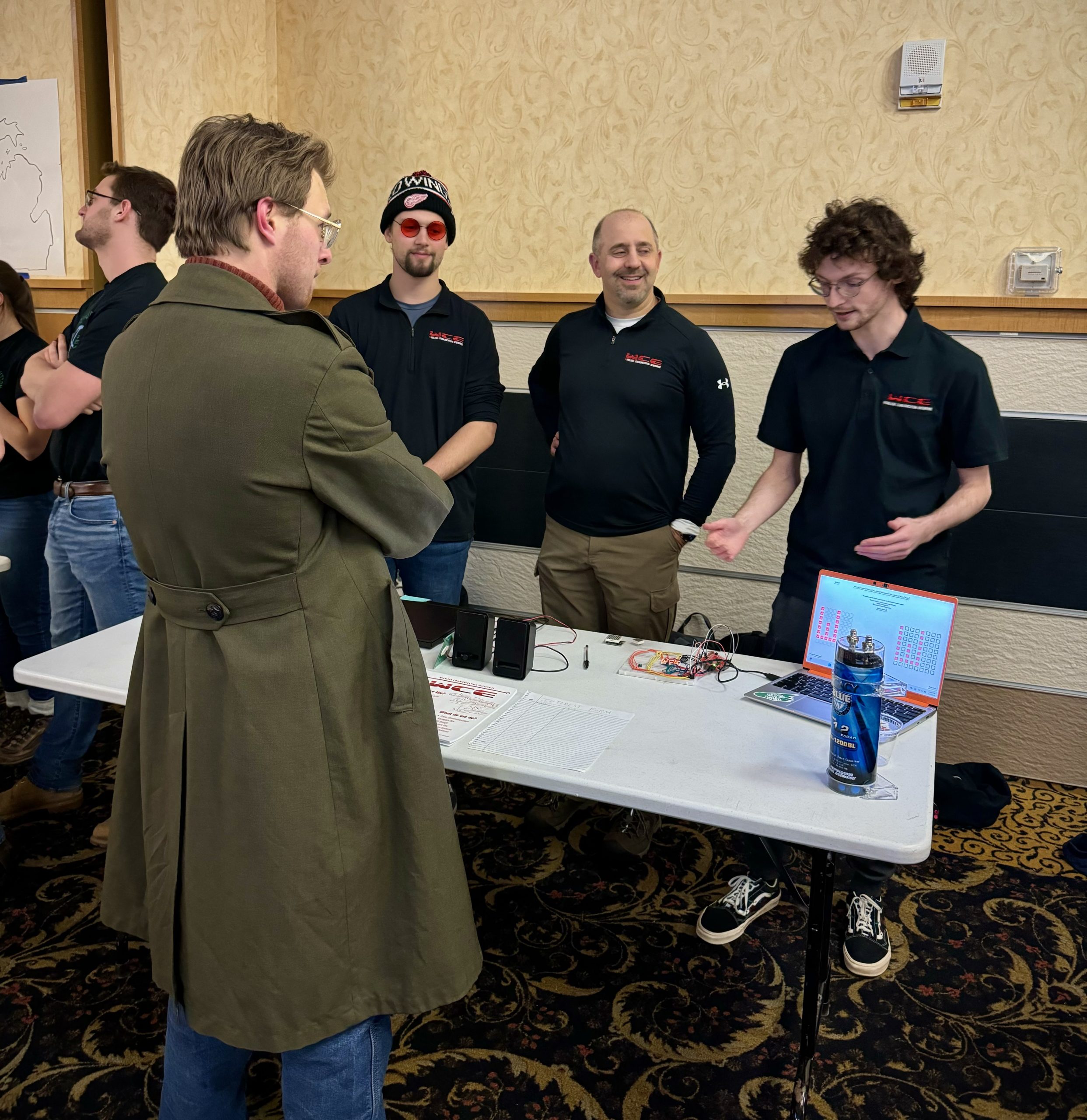
Wireless Communication Enterprise team members, and their Advisor Kit Cischke (center), speak to interested students at Enterprise Day in spring 2025.

Another project that stands out in Cischke’s mind is one where WCE students built street lights for campus that were powered entirely by renewable energy. “They got hold of an old street light housing and put in LED bulbs, a special kind of wind turbine, batteries, and a small solar panel. They pulled all these different technologies together, harnessed both wind and solar, and stored the energy in a battery to power a highly efficient bulb for a street lamp.”

Cischke notes that the nature of the Enterprise program is to bring in individual student projects funded by external companies. For WCE, this is often companies like Ford, ITC, Stellantis, and Samsung. 

“External companies ask Enterprise to work on projects, but what many people don’t realize is that we also have a number of internal projects,” Cischke says. “As far back as the start of Enterprise, one of the ideas was to create royalty-generating intellectual property. Only a couple of projects have gotten that far, but it’s always one of our goals. In the recent past, WCE created a smart circuit breaker that, when tripped, would send a notification to your phone, and you could reset the breaker from your phone. The students who built it were able to demo it for the power industry and came very close to commercialization.”

It’s experiences like that, Cischke says, that demonstrate the program’s value.

“The experience gained from Enterprise is so useful in the real world, because it’s so much like working in a professional setting. The practical experience is so powerful. I would imagine that most stories Enterprise students tell during job interviews come from Enterprise experiences – teamwork, entrepreneurship, budgeting, etc.”

Kit Cischke

When asked about receiving one of the inaugural Distinguished Service Awards, Cischke says, “It has been an honor to be a part of what I think is one of the most distinguishing aspects of engineering education at Michigan Tech. Watching the students do what they do has been a reward in and of itself. There are a lot of former Enterprise students who have gone on to do amazing and, in some cases, very big things, and to be a part of that as an advisor – and to receive recognition for what goes into advising – is icing on the cake.”

He continues, “One thing that continues to amaze me about Enterprise is how much student leadership there is. The fact that anything has happened at all is due to the fact that students take ownership of the entire organization. It is so fulfilling to see students rise up to take on the administrative aspects of their projects. They take the initiative to make sure things happen. The fact that they self-organize, self-regulate, and self-administer is part of what makes it joyful as an advisor. It is just so cool to watch them step up and grow and mature over time. They walk in the door as students, not quite sure what to do, and they walk out the door engineers ready to hit the ground running.”


About the Enterprise Program

Michigan Tech’s Enterprise Program offers students a unique, hands-on learning experience that goes beyond the classroom. With more than 25+ Enterprise teams spanning disciplines such as engineering, business, computing, and science, students collaborate on real-world projects sponsored by industry and government partners. Enterprise students develop technical expertise, leadership skills, and teamwork experience—preparing them for success in their careers. Many teams work on cutting-edge innovations, from automotive and aerospace to sustainability and emerging technologies.

Explore the Enterprise Program experience and see how you can get involved! Follow Michigan Tech Enterprise on Facebook, Instagram, and LinkedIn for the latest updates.

Enterprise Distinguished Service Awards: L. Brad King

In celebration of its 25 years at Michigan Technological University, the Enterprise Program has awarded eight inaugural Enterprise Distinguished Service Awards to recognize the dedication and exceptional contributions of advisors and champions who have played pivotal roles in shaping the program’s success. The recipients of the Enterprise Distinguished Service Award are Brett Hamlin, Glen Archer, Rick Berkey, Jason Blough, Brad King, Robert Pastel, Tony Rogers, and Christopher “Kit” Cischke. 

Each of the award winners has more than 15 years of service within Enterprise, dedicating their time and expertise to guide teams, ensure student success, and advance the program’s discovery-based learning mission. The eight advisors have also fostered industry collaborations and strengthened the bridge between academia and industry. 

This eight-part series highlights the contributions of each award recipient.


Dr. L. Brad King – Richard and Elizabeth Henes Endowed Professor (Space Systems), Mechanical and Aerospace Engineering
Director, Space Systems Research Group

Brad King, the Richard and Elizabeth Henes Endowed Professor of Space Systems in the Department of Mechanical and Aerospace Engineering, joined the Michigan Tech faculty in 2000, when the Enterprise program was in its infancy. Not long after King’s arrival on campus, a group of students familiar with his space-related research approached him with an idea.

“They said there are a bunch of students at Michigan Tech who want to learn how to build satellites,” King remembers. “Not only did they want to build satellites, they had the idea to turn their projects into an Enterprise, and they asked me if I would advise them. I’ve been with the group since its founding, but the original idea was theirs. Aerospace Enterprise was truly started by students.” 

King says his favorite part of working with the Enterprise team stems from the multiyear format of the program. “By far, the best part of advising is the prolonged three-year contact I have with the members of the team. We get to tackle much more ambitious projects than we would in a typical classroom environment. I get to know the students, they get to know me, and I can mentor them and see how they progress. When they start with Enterprise, they’re usually sophomores who can handle some of the team’s more entry-level functions, and that’s it. By the time they’re seniors, they’re basically running the program. They manage projects, handle budgets, and interact with sponsors. It’s fun to watch, and very rewarding.”

King says his years in Enterprise have gone by fast, but he has “quite a few” standout memories. “Just a couple years after the Aerospace Enterprise was formed, we were searching for projects and funding, and we won an award from the Air Force Research Lab for what became HuskySat (a spacecraft designed to perform passive L‐band radiometry to document soil moisture). We were competing with schools like MIT and the University of Michigan, which are known for their space programs. That’s when we really felt like we were on the map.”

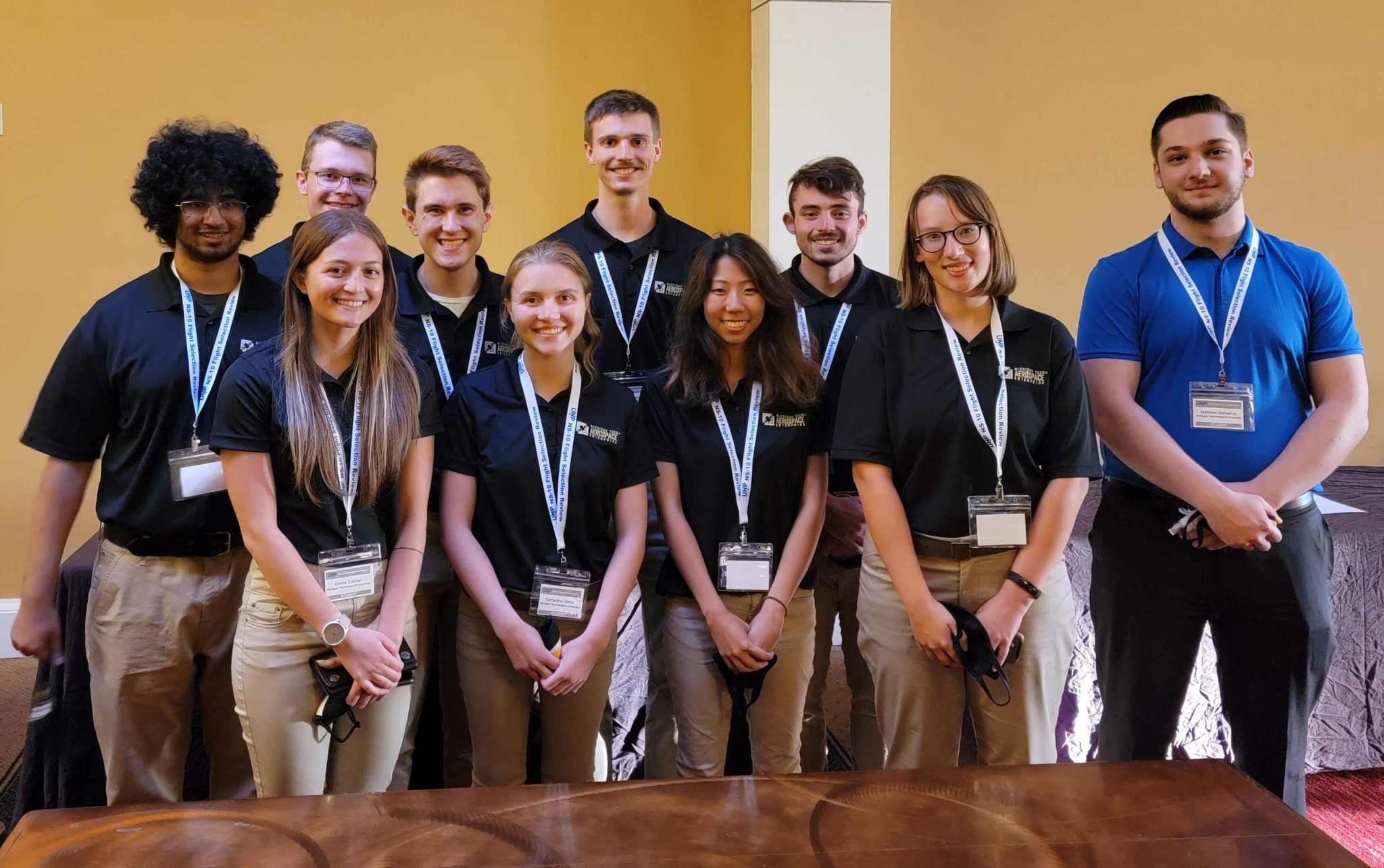
In 2021, members of King’s Aerospace Enterprise team traveled to New Mexico for the AFRL University Nanosatellite Program Flight Selection Review.

Another prized memory for King came in January 2011 when the Aerospace Enterprise team took first place in the University Nanosat 6 competition, earning the rare privilege of having the Department of Defense launch the team’s custom-made satellite into orbit. The team received a two-year contract from the Air Force Office of Scientific Research to prepare the satellite for launch and construct a ground control station on campus. Repeated delays postponed the launch, but on June 25, 2019, the student-built Oculus-ASR nanosatellite rode the SpaceX Falcon Heavy from Cape Canaveral Pad 39A into orbit

“Because the project had taken longer than the initial two-year contract, there were students involved who had since graduated,” King says. “But when everything culminated in the launch, alumni came out in full force for the event. We met at the Cape and watched the launch together. It was really the pinnacle of all the hard work the Aerospace Enterprise had done up to that point.”

“There are now more than 100 students in the Aerospace Enterprise. And because of the Enterprise, Michigan Tech has a long history of winning Air Force Research Lab and NASA competitions, and those same research labs are now populated by Michigan Tech alumni. These government agencies hire our students, and our students are now running the programs. It’s really come full circle, and it’s a large part of the reason why Michigan Tech’s aerospace program is nationally recognized.”

Brad King

When King learned he had been recognized with the Enterprise Distinguished Service Award, he took a moment to reflect. “I’d actually lost track of how many years we’ve been running it,” he says with a laugh. “An award like this means you’ve been at it for a long time. It’s so rewarding — when the Aerospace Enterprise started, we didn’t know what we’d do or whether it would be successful. Now, there are University buses around the city with a big graphic on the side, and that graphic is a satellite. The University is now known for this — known for our space research — and we did that. The Aerospace Enterprise did that. And it all started two decades ago with an idea that came from the students.”


About the Enterprise Program

Michigan Tech’s Enterprise Program offers students a unique, hands-on learning experience that goes beyond the classroom. With more than 25+ Enterprise teams spanning disciplines such as engineering, business, computing, and science, students collaborate on real-world projects sponsored by industry and government partners. Enterprise students develop technical expertise, leadership skills, and teamwork experience—preparing them for success in their careers. Many teams work on cutting-edge innovations, from automotive and aerospace to sustainability and emerging technologies.

Explore the Enterprise Program experience and see how you can get involved! Follow Michigan Tech Enterprise on Facebook, Instagram, and LinkedIn for the latest updates.

Enterprise Distinguished Service Awards: Robert Pastel

In celebration of its 25 years at Michigan Technological University, the Enterprise Program has awarded eight inaugural Enterprise Distinguished Service Awards to recognize the dedication and exceptional contributions of advisors and champions who have played pivotal roles in shaping the program’s success. The recipients of the Enterprise Distinguished Service Award are Brett Hamlin, Glen Archer, Rick Berkey, Jason Blough, Brad King, Robert Pastel, Tony Rogers, and Christopher “Kit” Cischke. 

Each of the award winners has more than 15 years of service within Enterprise, dedicating their time and expertise to guide teams, ensure student success, and advance the program’s discovery-based learning mission. The eight advisors have also fostered industry collaborations and strengthened the bridge between academia and industry. 

This eight-part series highlights the contributions of each award recipient.


Dr. Robert Pastel – Associate Professor, Computer Science
Affiliated Associate Professor, Psychology and Human Factors

Robert Pastel, an associate professor of computer science and an affiliated professor in psychology and human factors, has served as an Enterprise advisor since 2006, when Pastel helped initiate the founding of the Husky Game Development Enterprise with a small group of Enterprise students who wanted to develop video games. He then shifted gears in 2011 to advise the Humane Interface Design Enterprise (HIDE), which focuses on the design, development, and evaluation of mobile apps.

HIDE typically includes students from computer science, humanities, psychology, engineering, and business, and those students have made mobile apps for the automotive and health industries, as well as for scientists.

Pastel remembers HIDE’s early days: Chrysler approached the University and wanted to support us in training people in interface designs – touch screens on cars had just come on the market, and some apps for cars were coming out, too. Chrysler wanted Michigan Tech students to do testing and evaluation, and maybe some design work. [Professor of Computer Science] Linda Ott thought it was perfect for Enterprise, and I knew six students that would probably want to get involved. Those students recruited friends from humanities. I was already involved in the human factors program, so I brought some graduate students on board as well. We had a three-year contract with Chrysler, and about a dozen students making mobile apps and testing touch screens.”

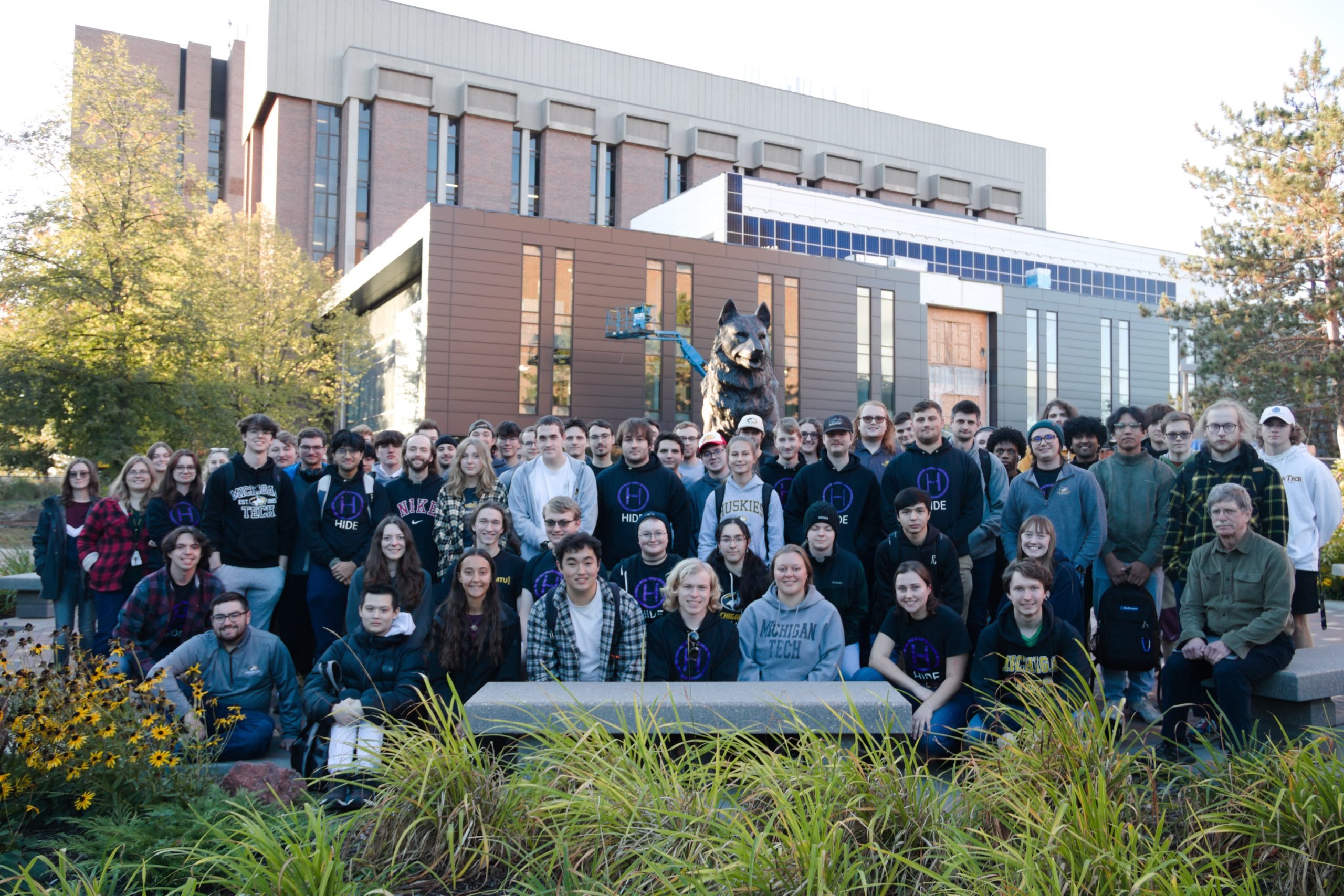
The 2024 HIDE team photo with their advisor, Robert Pastel (right, front).

Pastel says he’s most proud of HIDE projects that serve the community. One example is CoCoTemp, a citizen science project focused on finding the links that buildings, watersheds and other parts of the environment have on the microclimate temperature.

“The students worked on CoCoTemp from Fall 2017 to Spring 2021,” he recalls. “The basic premise of the project is that citizen scientists would have temperature sensors in different microclimates, perhaps around their yard, and they would periodically upload the data from the sensors to a website that would graph the temperatures. Implementation took a long time because the project had many components, including prototyping the hardware for the temperature sensors and interfacing the hardware with the web app.”

Pastel also notes two ongoing projects that have a community focus. “Students are working on a project for the Houghton County Historical Society to make a museum kiosk for visitors to preview and search for historical photos. Another project, Mi Herb Atlas, is an existing citizen science project for recording observation of frogs. The director of Mi Herb Atlas is sponsoring a project for HIDE students to make a mobile app for recording observations.”

“I like that the advisor role is not the same as an instructor. I’m not their boss, so to speak. I can make suggestions, but they need to organize themselves. Watching them learn how to navigate that is very interesting.” 

Robert Pastel

Pastel’s favorite part of serving as an Enterprise advisor is seeing the students grow.

He adds, “I get to observe students overcoming challenges, and when appropriate, I try to help. Currently, though, HIDE is so big – more than 70 students – that I can’t interact with every student. I’m only interacting with management. But still, I’m observing leadership skills and it’s great when I get to see strong leadership skills from the students. And you see those more often than not.”

Pastel good-naturedly jokes that receiving the Distinguished Service Award “feels like a longevity award. I’ve been with Enterprise for a long time, and largely because I see the purpose of it. Most of my teaching is project-based, and that’s why I’ve been able to stay in Enterprise so long. I believe project-based learning is the best way to learn. You can learn some things by reading books, but a lot of people, myself included, often don’t remember what they read. You need to actually practice it, and sometimes, maybe even forget what you read. Hands-on experience is the best classroom.”

About the Enterprise Program

Michigan Tech’s Enterprise Program offers students a unique, hands-on learning experience that goes beyond the classroom. With more than 25+ Enterprise teams spanning disciplines such as engineering, business, computing, and science, students collaborate on real-world projects sponsored by industry and government partners. Enterprise students develop technical expertise, leadership skills, and teamwork experience—preparing them for success in their careers. Many teams work on cutting-edge innovations, from automotive and aerospace to sustainability and emerging technologies.

Explore the Enterprise Program experience and see how you can get involved! Follow Michigan Tech Enterprise on Facebook, Instagram, and LinkedIn for the latest updates.

Enterprise Distinguished Service Awards: Glen Archer

In celebration of its 25 years at Michigan Technological University, the Enterprise Program has awarded eight inaugural Enterprise Distinguished Service Awards to recognize the dedication and exceptional contributions of advisors and champions who have played pivotal roles in shaping the program’s success. The recipients of the Enterprise Distinguished Service Award are Brett Hamlin, Glen Archer, Rick Berkey, Jason Blough, Brad King, Robert Pastel, Tony Rogers, and Christopher “Kit” Cischke. 

Each of the award winners has more than 15 years of service within Enterprise, dedicating their time and expertise to guide teams, ensure student success, and advance the program’s discovery-based learning mission. The eight advisors have also fostered industry collaborations and strengthened the bridge between academia and industry. 

This eight-part series highlights the contributions of each award recipient.


Dr. Glen Archer – Teaching Professor, Electrical and Computer Engineering

Glen Archer, a teaching professor in the Department of Electrical and Computer Engineering, first came to Michigan Tech as a major in the United States Air Force to work with the University’s AFROTC program. After retiring from military service, Archer stayed on at the University to earn his PhD and eventually joined the faculty. He has served as faculty advisor for the Blue Marble Security Enterprise (BMSE) since 2006. 

“The original advisor for BMSE was [former Michigan Tech professor] David Stone,” says Archer. “After 9/11, he thought there would be interest in creating an Enterprise with a homeland security focus, so he basically spun BMSE off of the Wireless Communications Enterprise, which he had helped found and was advising.”

A few years later, when Stone retired from teaching, he asked Archer to step in as BMSE advisor. “He knew I was interested in it,” Archer says. “I have homeland security in my DNA.”

Not only has Archer served as BMSE advisor for nearly 20 years, he’s also stepped up to guide and mentor two other Enterprise groups when they did not have advisors.

“I was the Robotic Systems Enterprise (RSE) advisor from roughly 2015 to 2017 while they looked for a permanent advisor. After a permanent RSE advisor was found, another Enterprise — IT Oxygen — found itself without a faculty advisor. I came in as a joint advisor and advised the group for probably two years.”

Archer has taught circuits and instrumentation for years at Michigan Tech, “but the thing I really enjoy,” he says, “the thing that keeps me coming back, is Enterprise in general and BMSE in particular. I love working with the students, and I enjoy being able to guide their growth and watch them mature from sophomore to junior to senior, and then watch them graduate out into the world. It’s tremendously gratifying.”

The 2016 Blue Marble Security Enterprise team photo with their advisor, Glen Archer (far left, front).

During his years advising BMSE, Archer has had some unique experiences.

“There was a project that was a joint undertaking between BMSE and Consumer Products Manufacturing, which is led by Tony Rogers. The project sponsor was Caterpillar, and they wanted us to put together a design for a system that would tell the driver of a wheeled tractor scraper what was going inside the bowl that collected the scraped-off soil. We put together a team, came up with a design, competed in a national competition, and won.

For Archer, the best part of the experience was watching the students organize. “The crew on that project were some of the finest students I’ve seen,” he says. “One that really stands out is Derek Chopp – he was one of the best hardware guys I’ve ever run across, and he was the financial manager on the project. Ester Buehl, the project manager, was a super organizer. Sandra Cvetanovic and Alexis Dani did a lot of the design work, marshaled resources and got people where they needed to be. It was a tremendous experience, watching them bring home the gold. We were competing against some really, really big schools and we came out on top.”

When he found out he would receive the Enterprise Distinguished Service Award, Archer says he felt grateful for the recognition. “I’m proud of the work that I’ve done with BMSE. This is humbling in a sense because it’s given me an opportunity to reflect back on all the things the students have done over the years — all the work, all the projects — and I’m grateful for all of it. I feel proud to receive the recognition.”

Archer offers up a tip of his hat to the program’s founders: “People like Dave Stone and [Professor Emerita] Sheryl Sorby, they were truly visionaries, and the thing that they created, this Enterprise program, is unique. I’ve seen a lot of programs at a lot of other schools and I’ve never seen anything like our Enterprise program.”

“The Enterprise program is an expression of Michigan Tech’s hands-on focus, and it is one of the very best reasons to come here. You know, every person who comes to Michigan Tech has to drive past a half dozen perfectly fine engineering schools to get here. The Enterprise program and the hands-on focus that is central to a Michigan Tech education are two of the best reasons to drive past those other universities and come up here.”

Glen Archer

About the Enterprise Program

Michigan Tech’s Enterprise Program offers students a unique, hands-on learning experience that goes beyond the classroom. With more than 25+ Enterprise teams spanning disciplines such as engineering, business, computing, and science, students collaborate on real-world projects sponsored by industry and government partners. Enterprise students develop technical expertise, leadership skills, and teamwork experience—preparing them for success in their careers. Many teams work on cutting-edge innovations, from automotive and aerospace to sustainability and emerging technologies.

Explore the Enterprise Program experience and see how you can get involved! Follow Michigan Tech Enterprise on Facebook, Instagram, and LinkedIn for the latest updates.

Enterprise Distinguished Service Awards: Jason Blough

In celebration of its 25 years at Michigan Technological University, the Enterprise Program has awarded eight inaugural Enterprise Distinguished Service Awards to recognize the dedication and exceptional contributions of advisors and champions who have played pivotal roles in shaping the program’s success. The recipients of the Enterprise Distinguished Service Award are Brett Hamlin, Glen Archer, Rick Berkey, Jason Blough, Brad King, Robert Pastel, Tony Rogers, and Christopher “Kit” Cischke. 

Each of the award winners has more than 15 years of service within Enterprise, dedicating their time and expertise to guide teams, ensure student success, and advance the program’s discovery-based learning mission. The eight advisors have also fostered industry collaborations and strengthened the bridge between academia and industry. 

This eight-part series highlights the contributions of each award recipient.


Dr. Jason Blough – Chair and Distinguished Professor, Mechanical and Aerospace Engineering
Clean Snowmobile Team Faculty Advisor

Jason Blough, chair and distinguished professor in the Department of Mechanical and Aerospace Engineering, has advised the SAE Clean Snowmobile Enterprise since 2006.

“Prior to joining the mechanical engineering department, I worked at the Keweenaw Research Center for about five years,” Blough recalls. “I ran a noise and vibrations group, and one of the projects I worked on while I was there was helping to redevelop and understand the noise testing procedures for snowmobiles.”

Blough became a member of the SAE snowmobile committee, which establishes the testing standards snowmobiles must meet in order to be sold in North America. Many of the standards the committee established were adopted by Europe as well.

“I got involved with the snowmobile industry to help them make quieter snowmobiles and do a better job testing them,” Blough says. “When I joined the faculty at Michigan Tech, the Clean Snowmobile Enterprise already existed, but the faculty advisor left shortly after I joined, so I took over. There were a lot of reasons for me to take it over, and it just made sense — I had contacts in the snowmobile industry and had already been working on snowmobiles. Plus, I’m a noise and vibrations person, and one of the goals of Clean Snowmobile is to make them quieter.”

For Blough, one of the best aspects of the Enterprise Program is the continuity – students are members for at least two years, and most stay on for three years or longer.

“You get to actually build a relationship with students. In a classroom setting, you see them for a semester and then they move on. But with Enterprise, I get to know them well enough that they open up about their lives, and we joke around together. I get to build a different kind of relationship with them, and it’s much more enjoyable.”

Jason Blough

Blough has had students join Clean Snowmobile during the second semester of their first year and continue on through their fifth year. “They grow and mature throughout the experience, and you get to see it. When you’re working with students every week, you get to see them change and mature, and take on leadership roles. It’s very rewarding. The relationship you build is strong enough that you still talk with them years after they’ve graduated.”

When asked about standout experiences and memories, Blough recalls the SAE International Clean Snowmobile Challenge (CSC) of 2021. CSC is a competition where student teams from participating universities reengineer existing snowmobiles to reduce emissions and noise. The teams then compete in a variety of events that test, among other things, emissions, noise, fuel economy/endurance, and acceleration. In 2020, CSC was canceled halfway through the competition due to the COVID-19 pandemic; in 2021, the event was 100 percent virtual and simulation-based. In other words, competitors needed to simulate riding and test conditions.

Sae Clean Snowmobile Enterprise team members and advisor, Jason Blough (right), look on during the Clean Snowmobile competition in 2007.

“We had created a practice curriculum around 2016 for mechanical and aerospace engineering and had included a lot of simulation into the engineering practice courses. When the students found out that the 2021 CSC would be an entirely simulation-based competition, the mechanical engineering students grabbed the bull by horns and said, ‘We know how to do this stuff.’ And in 2021, Michigan Tech won every aspect of the entire competition. We won for both diesel and spark-ignited engines, and we won all of the sub-competitions — best performance, best design, etc. We won every category.”

The team has also seen its share of disappointment. “In 2010, we were leading the competition,” Blough remembers. “All we needed to do was finish the last event with our gasoline sled and we would get first place. Well, the battery cable came off about 8 feet from the finish line. The cable came off, the sled stopped moving, and that was it. It was a real heartbreaker,” Blough says with a laugh. “We were so close!” 

In addition to advising the Clean Snowmobile Enterprise, Blough also served as the SAE student chapter advisor from 2004 to 2021. In that role, he provided support to the Formula SAE, Baja, and Supermileage Enterprises in addition to Clean Snowmobile. Blough has also been a member of the Enterprise advisory board for as long as he’s been advising, helping shape the direction of the program. To receive the Distinguished Service Award feels like an acknowledgment and a thank you for being with the program for so long and in different facets.

“It’s a really nice nod of appreciation after putting in the time over the years to support the students,” Blough says. “It’s been rewarding. I’m a strong advocate for the Enterprise Program in all its forms and for all its teams. It gives our students an opportunity that they can’t get anywhere else — to get academic credit and also leadership experience and growth. For some of these students, by the time they’re juniors and seniors, they’re leading a group of 25-50 students or more. And the students truly lead the group. It’s a fabulous experience for them, and I’ve done and will continue to do everything I can to support it.”


About the Enterprise Program

Michigan Tech’s Enterprise Program offers students a unique, hands-on learning experience that goes beyond the classroom. With more than 25+ Enterprise teams spanning disciplines such as engineering, business, computing, and science, students collaborate on real-world projects sponsored by industry and government partners. Enterprise students develop technical expertise, leadership skills, and teamwork experience—preparing them for success in their careers. Many teams work on cutting-edge innovations, from automotive and aerospace to sustainability and emerging technologies.

Explore the Enterprise Program experience and see how you can get involved! Follow Michigan Tech Enterprise on Facebook, Instagram, and LinkedIn for the latest updates.