
On Friday, March 20, students, faculty, staff, and community members gathered for Michigan Tech’s annual Undergraduate Research & Scholarship Symposium (URSS)—a celebration of the curiosity, creativity, and dedication that define undergraduate research.
Hosted by the Pavlis Honors College, URSS showcased an impressive range of student work spanning disciplines across campus. From scientific discovery and engineering innovation to social impact and computational modeling, the symposium highlighted the many ways undergraduate students are exploring complex questions and contributing new ideas to their fields.
Throughout the afternoon, the Rozsa Lobby buzzed with conversation as attendees engaged directly with student researchers. Posters became starting points for deeper discussions—about methods, challenges, breakthroughs, and what comes next. For many students, URSS represents not just the culmination of months (or years) of work, but an opportunity to share their passion and strengthen their ability to communicate research to a broader audience.
Recognizing Outstanding Research
At the conclusion of the symposium, several students were recognized for their exceptional research, innovation, and presentation.
Congratulations to the 2026 URSS award winners:
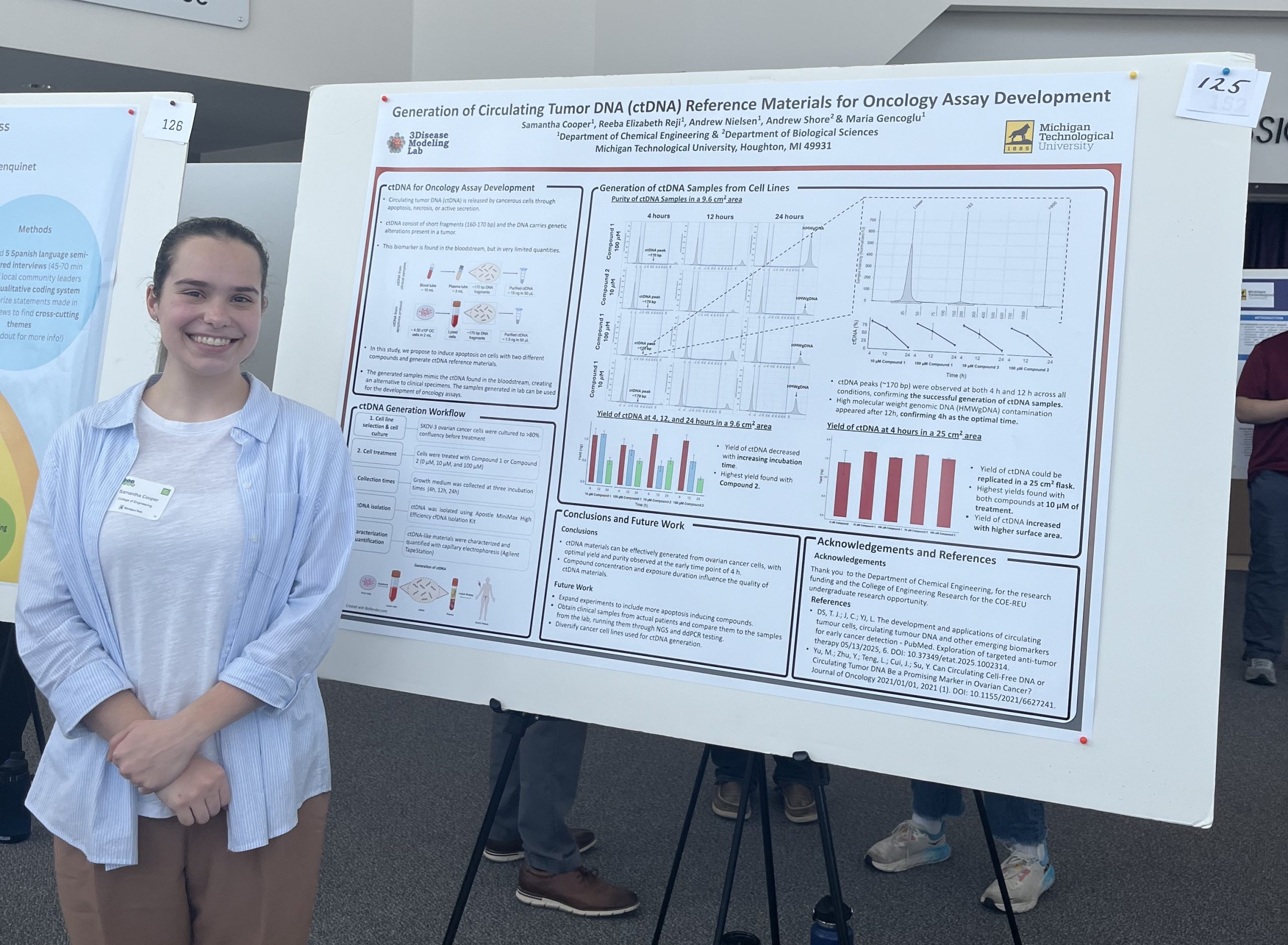
First Place: Samantha Cooper – Generation of Circulating Tumor (ctDNA) Reference Materials for Early Ovarian Cancer Detection
Cooper’s research focuses on advancing early cancer detection through the development of circulating tumor DNA (ctDNA) reference materials. By studying the short DNA fragments released into the bloodstream by tumor cells, her work supports the development of more effective diagnostic tools for ovarian cancer—an area where clinical screening options remain limited.
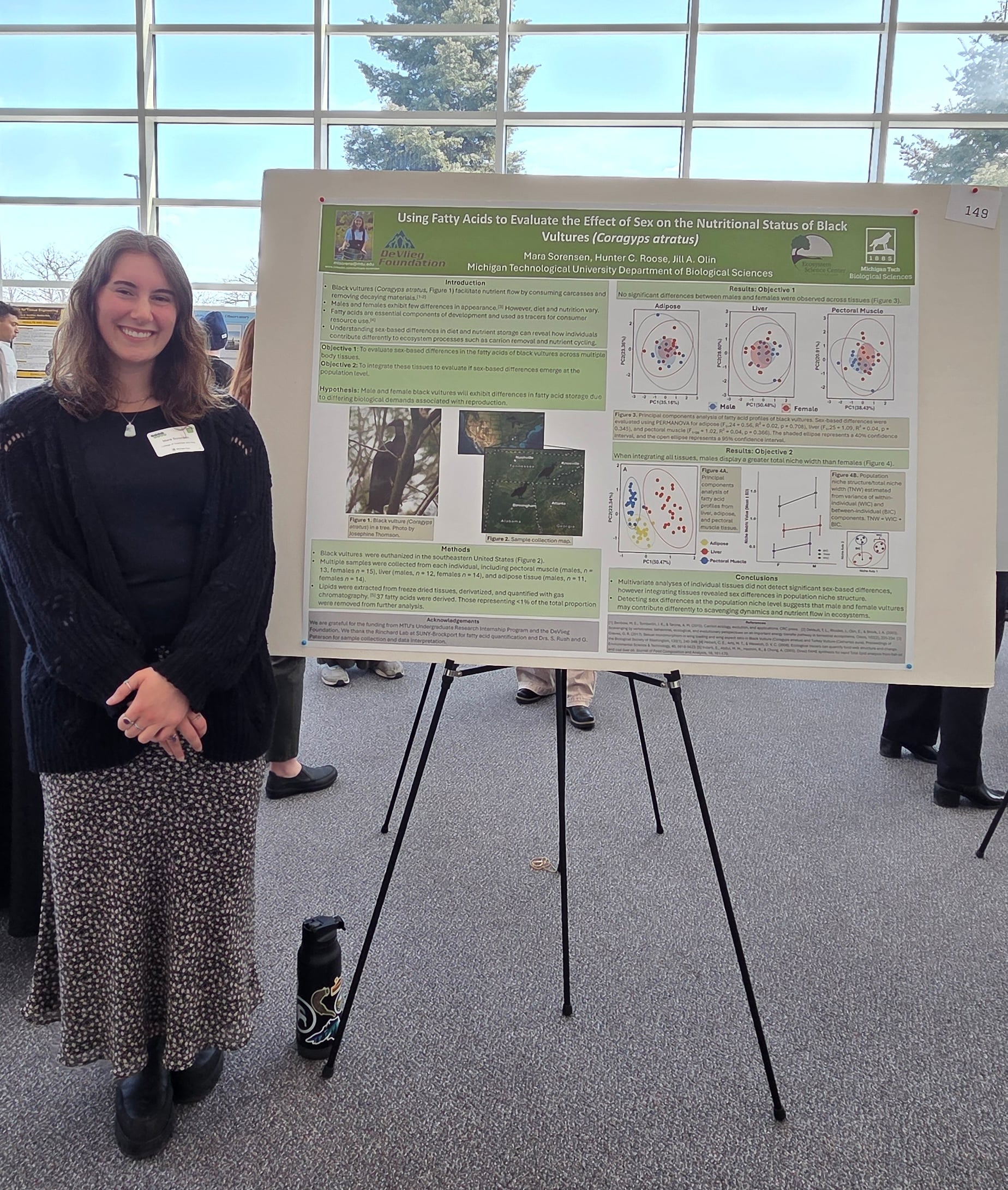
Second Place: Mara Sorensen – Using Fatty Acid Analysis to Evaluate the Effects of Human-Altered Landscapes and Sex on the Nutritional Status of Black Vultures
Sorensen examines how environmental changes and biological differences influence the nutritional health of black vultures. Using fatty acid analysis as a tool, her research provides insight into how human-altered landscapes may impact wildlife and nutrient flow within ecosystems.
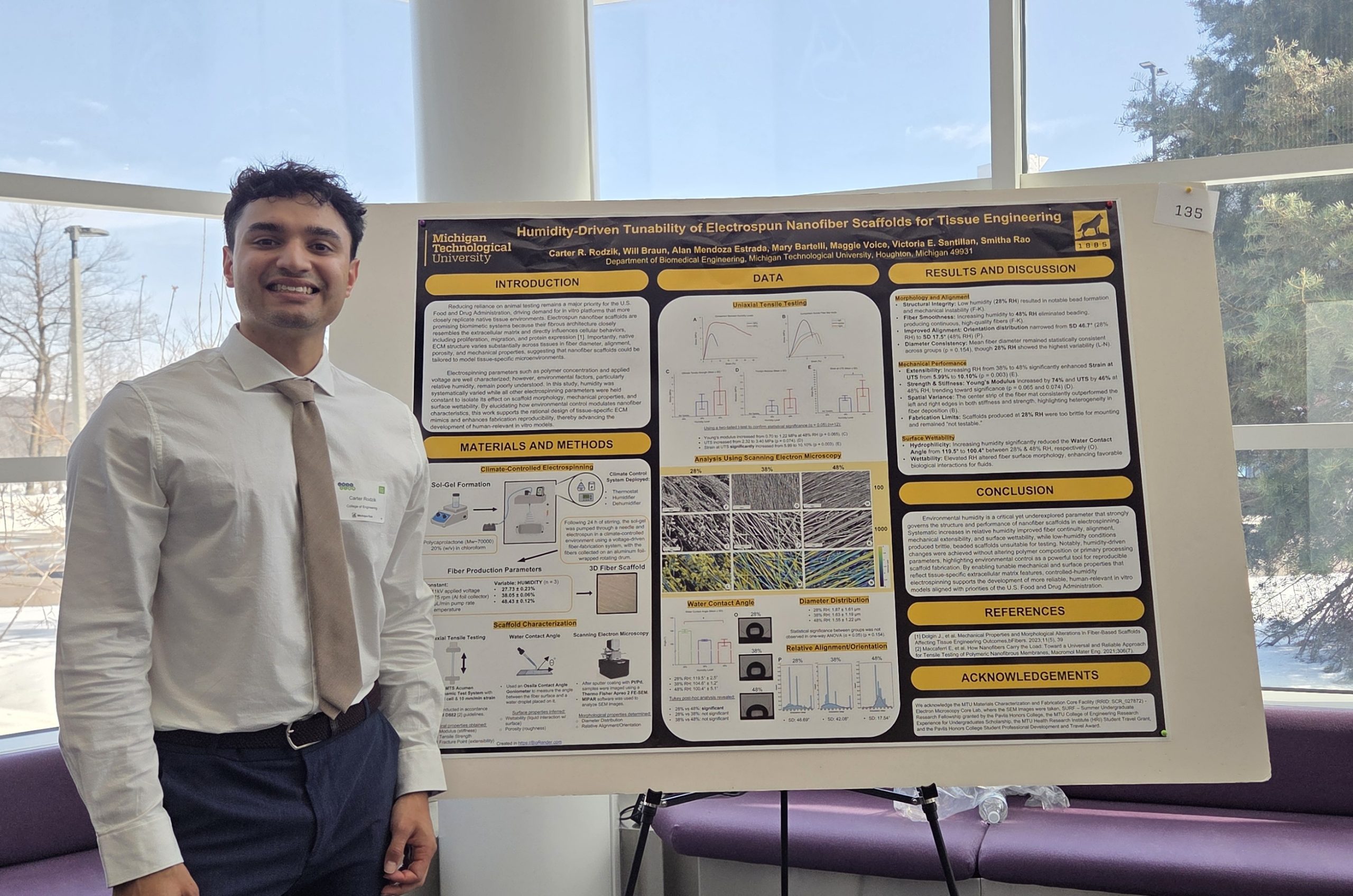
Third Place: Carter Rodzik – Humidity-Driven Tunability of Electrospun Nanofiber Scaffolds for Tissue Engineering
Rodzik’s work explores how humidity affects the fabrication of nanofiber scaffolds used in tissue engineering. By isolating humidity as a key variable in the electrospinning process, his research contributes to the development of more accurate, lab-based models that could reduce reliance on animal testing and improve biomedical research outcomes.
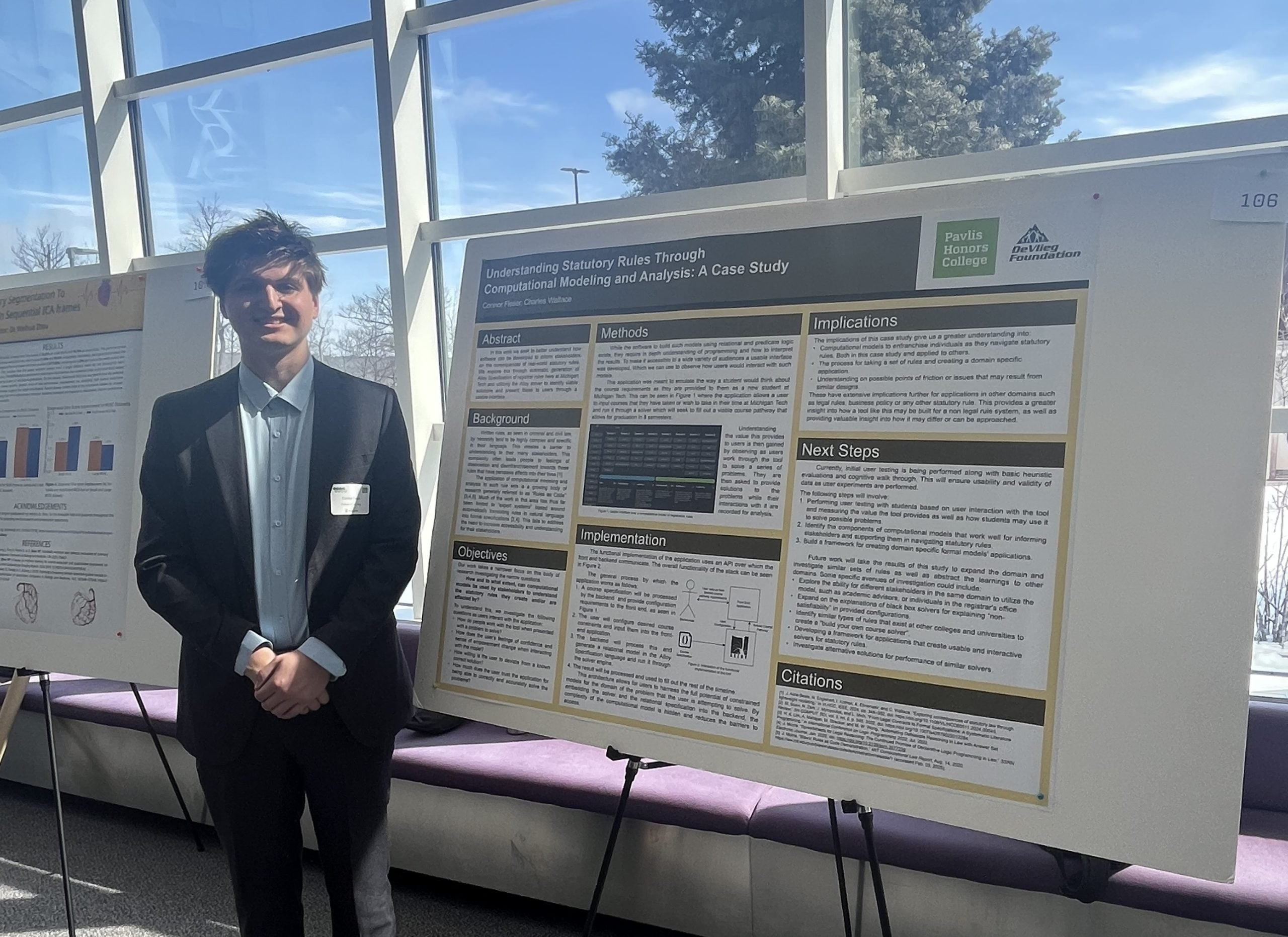
Audience Choice Award: Connor Fleser – Creating Understanding of Statutory Rules through Formal Computational Representations
Fleser’s project investigates how computational models can help make complex rule systems—like legal codes or university registration policies—more understandable. By translating dense, technical language into interactive representations, his work aims to improve accessibility and decision-making for non-experts.
Looking Ahead
The Undergraduate Research & Scholarship Symposium continues to grow, highlighting the incredible work being done by undergraduate students across disciplines. It also offers a glimpse into the future—one shaped by curiosity, innovation, and a willingness to explore the unknown. Events like URSS are a powerful reminder that undergraduate research is more than an academic exercise—it’s a hands-on experience that builds confidence, sharpens critical thinking, and prepares students to make meaningful contributions beyond the university.
To all of this year’s presenters: thank you for sharing your work, your ideas, and your passion. Your contributions make URSS an inspiring and impactful experience for our entire community.